• TalkBass has been independent since 1998. Add your voice.
    Create a free account to reply to discussions, view embedded media, and browse with fewer display ads.
    Join freeLog in
    Want zero display ads or expanded classifieds tools? Compare plans.

Double Bass Doubling instruments for an upright bassist?

I've been playing electric for a couple years now and I started playing upright about a year ago. It's a challenge, but I really love it. What I don't love is how non-portable it is. I'm thinking about getting into something a little more portable, an instrument to take out on the porch or to the park to play. For what it's worth, I play and listen to pretty much everything under the sun: jazz, blues, classical, funk, rock, bluegrass, and so on. I was thinking about either mandolin or violin, but I wanted to ask what TBers have chosen to play on the side. Do you have another instrument (or several) that you play besides bass? What are they, and why did you choose them?
 
I play violin and piano. I sometimes teach those instruments and like to use them in random creative projects. I also sing, which is the ultimate portable instrument.

Other instruments are fun to discover and tinker with. Every new one you learn teaches you that much more about music. On piano, I learned a lot about arranging and voice leading. Violin helped a lot with finger patterns, speed, and possibilities for hand shapes. Singing forced me to hear notes and phrases a completely different way. I sang in the Jazz Singers at UNT, so I was forced to improvise - learning improvisation through the voice helped me see things in a whole new light. Also, the idea of "head voice" and "chest voice" really resonated with me, and I've enjoyed applying those ideas to the bass.

Every single instrument I've learned has taught me a new way to think about phrasing. The way a violinist phrases is completely different than the way most bass players phrase. Part of this is because of the large differences in the instruments, but also the way we're taught. While we're used to being the supporting member of any group we're in, the violin often has the melody in the orchestra, and they seem to study more of the solo repertoire than we do. The same goes for cellists, pianists, vocalists, and all of the other more common solo instruments.

You can learn a lot by just listening and studying recordings by other instrumentalists, but I do enjoy taking on a completely different role sometimes. I love the bass more than any other instrument, but some variation, even if it's just playing music with friends out on the back porch, can be fun.
 
Having played way too many instruments at various levels of proficiency, I very much agree with Lauren that they help you grow as a musician. "Melody instruments" such as violin and trumpet helped to develop a better sense of phrasing and where the line is going, and really helped with "singing" the music. "Counter-melody instruments" like french horn and trombone helped me to hear and appreciate how much those second fiddle instruments can add, and made me thing a lot about harmonizing things differently. "Harmony/Rhythm instruments" like piano, guitar, and mandolin expanded my knowledge of theory and also really helped with rhythm, subdivision, and polyrhythms. Wind instruments helped with phrasing and thinking about where it is appropriate to breathe, take a moment, and give each phrase a focal point. Studying voice made me realize that every note has a meaning behind it, which is easily forgotten on other instruments. All of them together have helped each other in many different ways, and although I almost exclusively play electric and double bass now.

As for "why" I started on piano because my sister played piano and we had one in the house. I inherited my great-grandfather's violin, so I started playing that. My dad had a guitar lying around, boom guitar. They needed bass players in the school orchestra and I could read bass clef from piano, so I was asked to do it. French horn was because I wanted to play trombone and my high school music teacher talked me out of it. Trombone was because I still wanted to. Trumpet was because a friend of mine also played bass, so I switched to trumpet so we could both be in the jazz band. Electric happened in high school so I could play in a rock band. Mandolin was something that someone wanted added to a song and they figured I could learn it pretty quick because I already played guitar and violin. I'm likely forgetting something.

If you are thinking about violin or mandolin they are tuned the same and relatively the same size, which can be a bonus if you pick up one now and the other down the road. As beneficial as piano can be, it really isn't portable. And I really think you have to want to play an instrument to really develop on it, instead of playing it because you feel you should, you get told to in music class, or something like that. Sometimes those things do work out for you and I wouldn't be a bass player if my music teacher didn't say "we need a bass player, can you learn it?" but if it's something you don't want to put down, that is what you are going to get the most enjoyment out of.
 
  • Like
Reactions: lcpierce
Portable
- Vocals tops my list of suggestions. It'll help your music abilities more than any other suggestion here, plus you can do it while playing bass.
- acoustic bass guitar, or Kala Ukulele bass. Maybe a hollowbody electric bass. All of them you could gig with occasionally.
- acoustic or classical guitar are an obvious choice. Extremely common and used in nearly every style of music.
- Ukulele and mandolin are extremely portable and use familiar techniques to bass inst's. Banjo is more niché.
Ukulele is trendy and Ukulele groups seem to be everywhere. I'm about to start in a duo: me on DB and jazz singer/ Uke.
I was jamming last night with a mate: each of us both play guitar and Uke. Sang songs with his kids for a while too.
You can sing with all the above also.


- harmonica is ultra portable BUT chromatic is very complex and diatonic a bit repetitious.
- brass and woodwind take quite a while to pick up and get good at. Loud too so you really need to consider people around you.
 
I've been playing electric for a couple years now and I started playing upright about a year ago. It's a challenge, but I really love it. What I don't love is how non-portable it is. I'm thinking about getting into something a little more portable, an instrument to take out on the porch or to the park to play. For what it's worth, I play and listen to pretty much everything under the sun: jazz, blues, classical, funk, rock, bluegrass, and so on. I was thinking about either mandolin or violin, but I wanted to ask what TBers have chosen to play on the side. Do you have another instrument (or several) that you play besides bass? What are they, and why did you choose them?

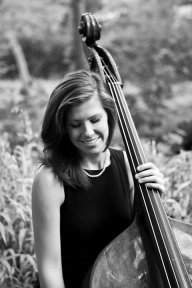
IMO, it depends on your goals. Do you just want to have fun on the URB or do you want to master it? All of the posts thus far will help you have fun but only a few will help you be a better musician, IMO. Voice and piano, in that order. Singing makes it real. It makes you clarify what you hear and realize it in a measurable way - am I off pitch? IMO, every serious musician should sing. After that, piano is unparalleled in providing the entire enchilada, harmony, voice leading, melody, and rhythm. Voice needs nothing to be portable; a keyboard might need batteries. I play guitar too and I gotta say, it's a beautiful instrument but a miserable replacement for a piano.
 
+1 to the comments about learning other instruments helping you grow as a bass player. I'm still learning to French bow, and every time I play my viola, which I do rather poorly but still well enough to crank out a simple tune on, I bow better on my bass.

Why hasn't anyone suggested guitar? It's quite a flexible instrument - you can play solo in an essentially unlimited number of types of music, and it's quite portable. I recommend taking up classical guitar - it's acoustic so no amp needed, you'll learn things with your right hand that you won't if you only play with a pick and, thanks to the law of supply and demand, decent guitars are quite inexpensive, e.g., a $300 Cordoba classical would do you just fine.

-S-
 
  • Like
Reactions: pnchad
Thanks for the advice so far, everyone! I guess I should have mentioned that I do pay electric bass as well, and I own an electric guitar (though I'm not great at it). I think that rather than get the mandolin, I should get a nylon string classical guitar. I do like playing with them when I'm at the music store, and the fact that the tuning is more familiar to me is appealing. I do still like the portability of the mando, but I think I'll save that for later once my bass and guitar playing skills are more solid.
 
Thanks for the advice so far, everyone! I guess I should have mentioned that I do pay electric bass as well, and I own an electric guitar (though I'm not great at it). I think that rather than get the mandolin, I should get a nylon string classical guitar. I do like playing with them when I'm at the music store, and the fact that the tuning is more familiar to me is appealing. I do still like the portability of the mando, but I think I'll save that for later once my bass and guitar playing skills are more solid.

A classical guitar is a good choice but I think you'll find steel strings to be louder. Serious classical guitarists spend a ridiculous amount of time on perfecting their right-hand technique, which is brilliant if you're playing Bach, but maybe not if you're playing Bluegrass.
 
I played bass guitar as well as guitar about equally from when I was a kid until my mid-30s, then I took a long break to raise kids. When I "returned," I decided to put the guitar away - there are so many guitar players out there - and take up double bass and mandolin to go along with bass guitar. This required lessons on both double bass and mandolin, but it's been well worth it - it's a great combination of three instruments to have in terms of getting gigs. It's also educational to play an instrument tuned in fifths like a mando instead of in fourths like a bass (or, except for the G, the guitar).

One caveat though - mandolin is very addictive and decent ones aren't cheap even though they're small.
 
Tom, improved right hand technique carries over, classical to bluegrass (if you're fingerpicking, of course) and vice versa, IMHO.

Chris, piano ought to be everyone's first instrument, IMHO, or at least learned along the way. I didn't start to play until college and have spent the last 40 years making up for lost time - successfully, I might add, as I now teach and play it and also work as a church organist. But, man, do I wish I'd started earlier.

I will also observe that piano does not address the OP's complaint about the non-portability of playing double bass, unless you count my $60 Casio with 44 mini-sized keys that runs forever on a set of batteries. :)

My father's father was a pianist, and my father started me on guitar because he'd decided that playing guitar was both more portable and better for garnering the attention of the opposite sex. He was right on both counts. :)

-S-
 
  • Like
Reactions: Chris Fitzgerald
Guitar is a great choice, and the intervallic relationship of notes to each other on the bottom 4 strings map directly onto the bass, so I would recommend it to anyone. And guitars are CHEAP. I just bought my son a new acoustic guitar that actually plays well for under $200.
 
Last edited:
  • Like
Reactions: HateyMcAmp
If you'll forgive me nit-picking, Chris, the notes are in the same places but the fingering patterns are different, at least as I play both instruments - I do 1-2-3-4 on the guitar but 1-2-4 on the upright bass, and I play a confused mix of the two on electric bass. :). Any which way, I agree it's a great head start.

And I also agree about cheap guitars - I'm been recommending something called the Dirty Thirty Recording King, which sounds _way_ better than a $200 acoustic guitar has any right to sound.

-S-
 
If you'll forgive me nit-picking, Chris, the notes are in the same places but the fingering patterns are different, at least as I play both instruments - I do 1-2-3-4 on the guitar but 1-2-4 on the upright bass, and I play a confused mix of the two on electric bass. :). Any which way, I agree it's a great head start.

You are quite right: I was in a hurry and should have said "intervallic relationship of notes to each other" instead of "fingering patterns". In fact, I'll go back and edit that now. :)
 
Intervallic - that's actually a word. Whooda thunkit? :) :)

BTW, the Hal Leonard electric bass method teaches both ways of fingering - you learn 1-2-4 until somewhere into Volume 2, and then they teach scales and other patterns with guitar-style fingerings. I'm working through these right now with a sixth grade student and, even on a small electric bass (Ibanez Mikro - I think scale length is 29 inches or so), he can't reach things with 1-2-3-4 until he's up to the 5th fret or so.

-S-
 
I actually discuss this pretty frequently in person because I teach both guitar and double bass, and often encourage my guitar students to take up the double bass by telling them, "The notes are in the same places as on your lowest four strings." Not as succinct, I realize, but better both for my 9-year-old students and my feeble brain. :)

I once had an intervallic relationship with a woman - but that's another story ...

-S-
 
  • Like
Reactions: Chris Fitzgerald