
Can't you just drill it out a fraction?The only problem I have with mine is the B string. It is a bitch. You need shortscale or small gauge like 120 to make it in the hole at the headstock.

Enjoy the benefits of a premium membership!
Upgrade Account
-
TalkBass has been independent since 1998. Add your voice.
Create a free account to reply to discussions, view embedded media, and browse with fewer display ads.
Join free Log in
Want zero display ads or expanded classifieds tools? Compare plans.
You are using an out of date browser. It may not display this or other websites correctly.
You should upgrade or use an alternative browser.
You should upgrade or use an alternative browser.
Downsides/Cons of Headless Basses?
- Thread starter halcyo
- Start date
More options
Who Replied?
The most obvious compromise is the one already mentioned - the additional complexity at the bridge-end of the bass, which requires a lot of ingenious engineering to do it right. But this problem has been solved with good solutions by Steinberger, Kiesel and the like.
Another slightly less obvious, but certainly well known, compromise is the other end of the bass (where the headstock used to be). And a good way to secure the string. The humble Steinberger solved this the right way with double ball-end strings, but Kiesel and a few others do it the wrong way with awful set screws, etc., which mash into the jagged amputated string ends sticking out. That must be cut off with wire cutters and you still have little knives and needles sticking out of the tip of the bass. These are just awful. But there may be other non-awful solutions that don't involve double ball ends; this seems to me to be a solvable problem.
I think they're a great idea and the problems are probably solvable...
Every mechanical derailleur on a bicycle works by pinching the cable down using a screw. Modern derailleurs work under pretty high tension.

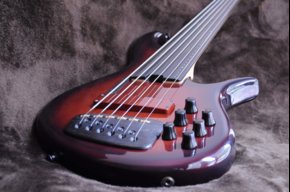
String availability is my only con... my buddy has / had an awesome Mike Kinal headless bass. It was 35" scale and it being headless made it really portable. It was purchased as a "travel bass" and for a long time it was his daily driver. It was a great bass.

- Jun 30, 2010
- 49,588
- 221,965
- Disclosures
- musician/artist/owner - Gildaxe
...a T-bird shaped object not prone to neck dive? That would be considered a "pro", not a con... 
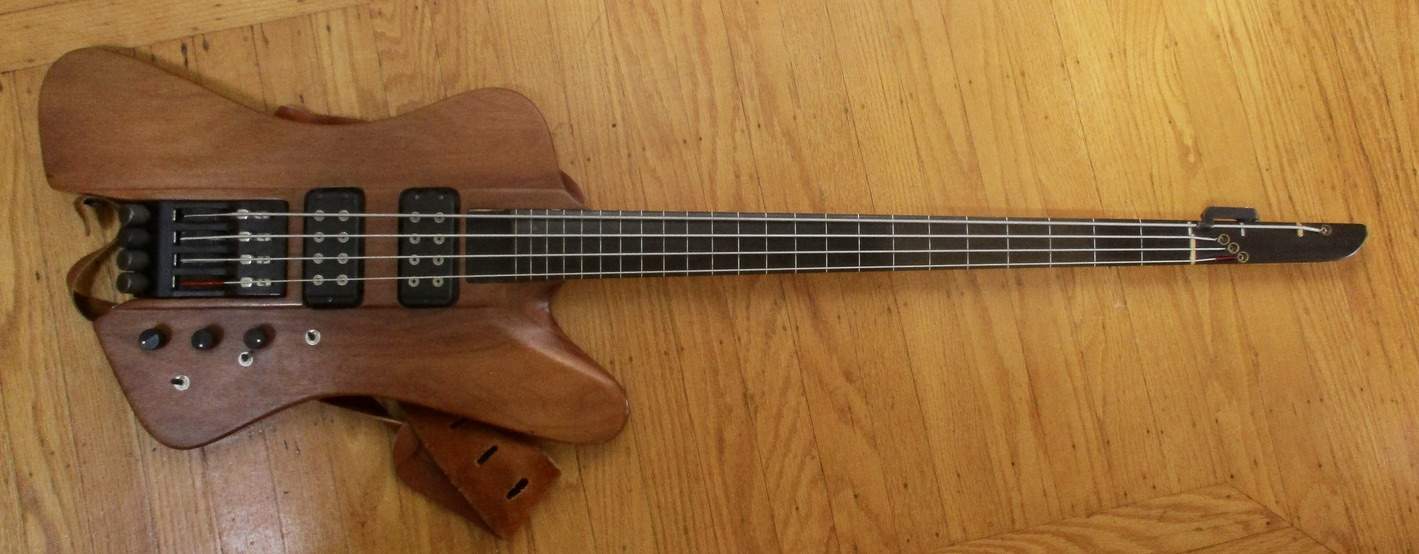
Do itBeen formulating a “dream bass” build in my mind for a time. For some reason, without any significant proof, I’ve fixated on ideas like doing a headless bass (and maybe even multiscale).
For the sake of discussion, I’ll keep the question vague and open ended- what’s the DOWNSIDE to a headless instrument? Seems like the obvious cure for an ugly headstock, and why not have the instrument be a little less lengthy?
 I found absolutely none with my custom build.
 Not sure why there's mention of your hand "sliding away" out of the neck; the sides of the headstock are not supposed to stop your hand, it's never in the way, but the sculpture behind the nut is (see attached picture) ! I'd say this comes from people that never played one, but who knows...

If you really want a downside, here's one : you're paying for an additional 8" of case that you're not really using !

Hummergeist
Commercial User
- Jul 21, 2020
- 1,269
- 3,084
- Disclosures
- Tutorials, reviews, and interviews for Future Publishing.

For short-scale bassists, string choices might be much wider. I bought this bass:
SOLD - Ibanez Gary Willis Fretless w/ Short Scale Nova Headless Mod
...a headless, fretless, short-scale 5-string, and had no options at all for an appropriate short-scale string set. So I just bought one of many available long-scale sets (La Bella LTF-5A flats), chopped them off to fit, and they work perfectly.
That is basically the same thing I did with the adaptor. It too a few tries to get it right, but now it works well. I lock down the strings at the head and cut them. Then nibble away as much of the cut end as possible and put a small piece of black tape to cover any sharp end pieces. I can loosen the strings with the tuners and completely remove the adaptor with all the strings locked in it. The first few tries the cut ends were too long and when I tried to redo them they came unwound. Strings too long also will max out the tuners.
Big headless fan ,have had several , no downsides from my point of view ,easier to travel with,kinetically comfortable to play ,barrel tuners are deadly accurate 1-60 vs i think 1-18?ratio of regular tuners ,great tone ....I shipped my Moses key 5 in a gig bag in a box from NY- Calif UPS,it was in tune on arrival ,granted that is an all graphite bass ,the only down side I have found is that some lower end headless basses lack natural sustain ,found this particularly true with the new Ibanez models , great for slap and pop , but not so much for anything else, and ive played very few higher end headless that have wood necks and there are many , for me graphite or aleast a mix of graphite and wood in the neck might be a necessity for headless , my experience with headless has always been with graphite ...Steinberger ,Zon and Moses though not necessarily in everyones price range can't beat em .......cept for maybee a Modulus .....nothing sounds like a Modulus

Ric5
Inactive
- Jan 29, 2008
- 29,772
- 30,452
- Disclosures
- I like 5, 8, 10, and 12 string basses

The only genuine problem I found from headless basses arose in the case of nylon/tapewound strings, on a bass that has headpiece which uses set-screws (i.e. almost everything else other than LeFay's attachment method, though those are not really 'headless')
If you want to compare various strings & need to non-destructively remove them, you might find that (most) headless headpiece set-screws cut through the nylon & will have it unravel after you've removed the string. This may also happen if you accidentally mis-install the string, and need to fix it later.
There didn't seem to be a problem with the strings working fine after being installed - the set-screws would cut through the nylon & keep it in place well enough. But if you need to remove & re-install the string, you may have problems. Double ball-end tapewounds would fix this problem, but I don't know how many of those are around.
Steel flatwounds seem to be fine for installing/reinstalling.
If you want to compare various strings & need to non-destructively remove them, you might find that (most) headless headpiece set-screws cut through the nylon & will have it unravel after you've removed the string. This may also happen if you accidentally mis-install the string, and need to fix it later.
There didn't seem to be a problem with the strings working fine after being installed - the set-screws would cut through the nylon & keep it in place well enough. But if you need to remove & re-install the string, you may have problems. Double ball-end tapewounds would fix this problem, but I don't know how many of those are around.
Steel flatwounds seem to be fine for installing/reinstalling.
Don’t wear pants and no one will notice.The only downsides are to be found in the limited imaginations of the people looking on.)

Now that everybody uses clip-on tuners, it's hard to find tuners to clip onto headless basses. Most don't have clips that open wide enough.
The many "bodyless" basses like the Steinberger L/XL, Kramer Duke, Cort and Hohner headlesses won't fit on normal guitar stands. As noted earlier, you can't use hanging stands either. Steinberger sold their own stands which are now as rare as hen's teeth.
The many "bodyless" basses like the Steinberger L/XL, Kramer Duke, Cort and Hohner headlesses won't fit on normal guitar stands. As noted earlier, you can't use hanging stands either. Steinberger sold their own stands which are now as rare as hen's teeth.
The only genuine problem I found from headless basses arose in the case of nylon/tapewound strings, on a bass that has headpiece which uses set-screws (i.e. almost everything else other than LeFay's attachment method, though those are not really 'headless')
If you want to compare various strings & need to non-destructively remove them, you might find that (most) headless headpiece set-screws cut through the nylon & will have it unravel after you've removed the string. This may also happen if you accidentally mis-install the string, and need to fix it later.
There didn't seem to be a problem with the strings working fine after being installed - the set-screws would cut through the nylon & keep it in place well enough. But if you need to remove & re-install the string, you may have problems. Double ball-end tapewounds would fix this problem, but I don't know how many of those are around.
Steel flatwounds seem to be fine for installing/reinstalling.
This ("set-screw-damaged-tapewounds") is my only headless concern as well. I believe that Status was having their string supplier produce some double-ball tapes for a while, but they have stopped recently. My workaround is just to use the headless for rounds, and use more conventional instruments for tapewounds. Actually, having a separate bass for each string type seems to reduce my need to remove/re-install strings frequently (used to swear by the 'quick-change' bridge designs just for that reason...)
...
The many "bodyless" basses like the Steinberger L/XL, Kramer Duke, Cort and Hohner headlesses won't fit on normal guitar stands. As noted earlier, you can't use hanging stands either. Steinberger sold their own stands which are now as rare as hen's teeth.
There is one model of Hercules stand that works fine with headless ( see below):
I believe I also used this same stand for my Status Streamline, while it was here...

Yes! I often used to do this if I didn't have keys to follow. Haven't played guitar regularly for a few years now. When playing I, sadly, need something to follow, be it a chart (of any variety) keys or bass.One of my bandmates used to play a headless guitar sometimes and the other guitarists didn't like it because they said they found it harder to figure out what he was playing by watching his hands. So I suppose if you have guitarists who watch the bass player's hands to figure out, say, the key of a song or jam, they might gripe about a headless bass. But I dunno: Are there guitarists who do this?

devnulljp
Supporting Member
Always wanted a Status, but they've always been too damn expensive


I think maybe I should have consulted the headless experts here before using my clip-on tuners and stands with all my headless basses. 


Then I might have know I couldn’t do these things
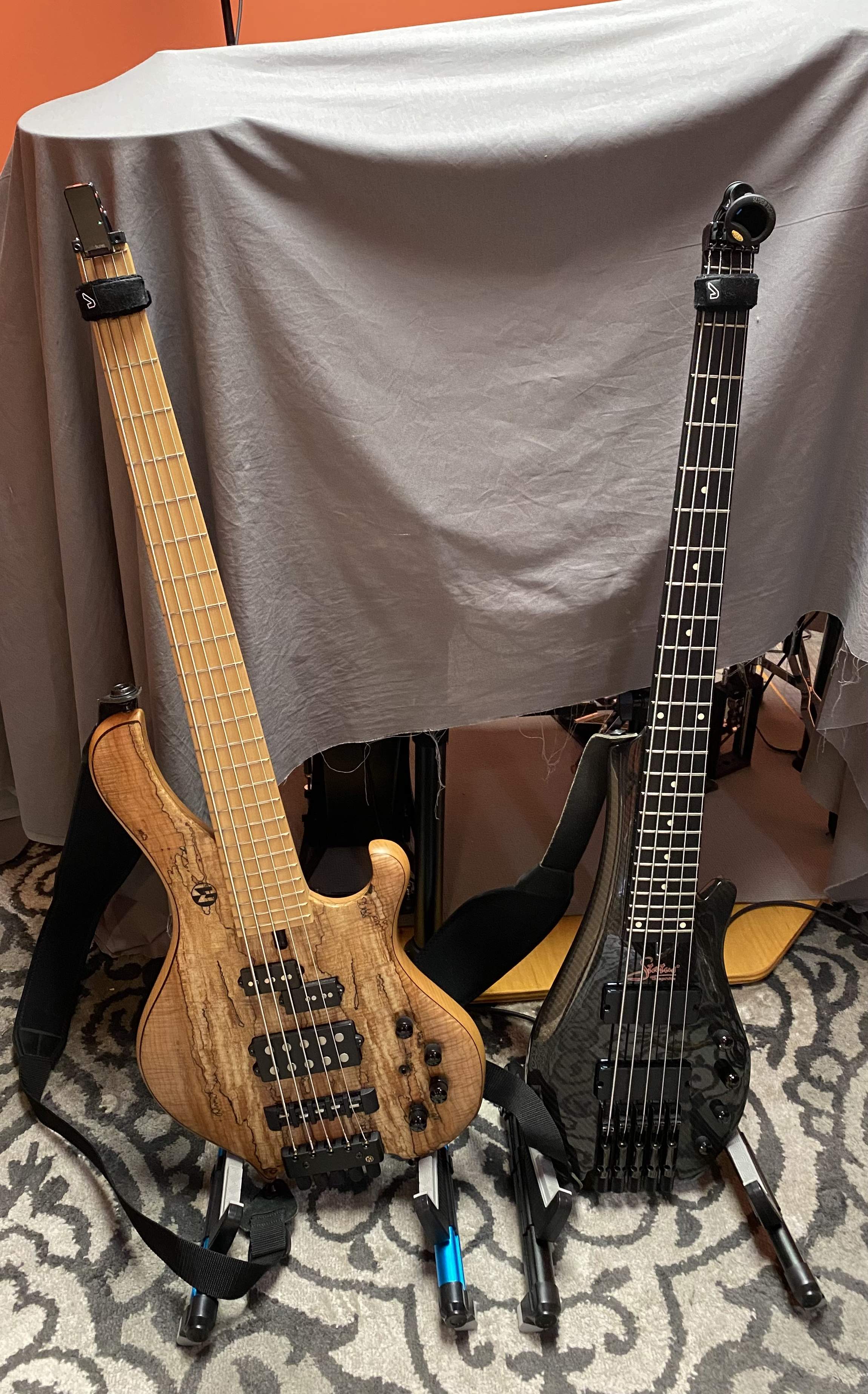
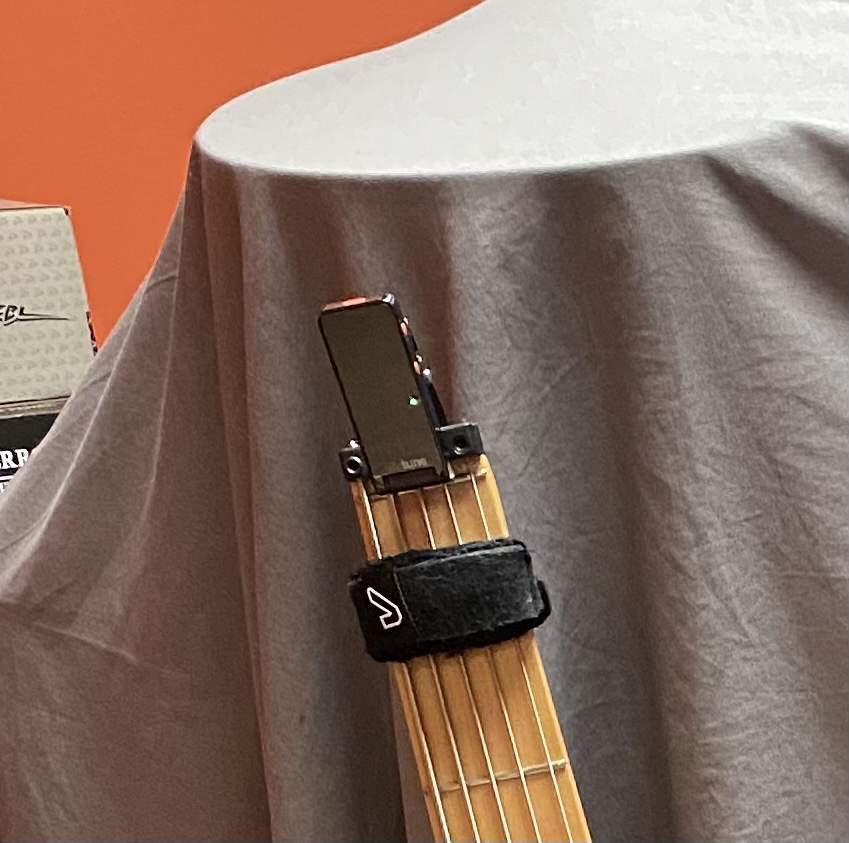
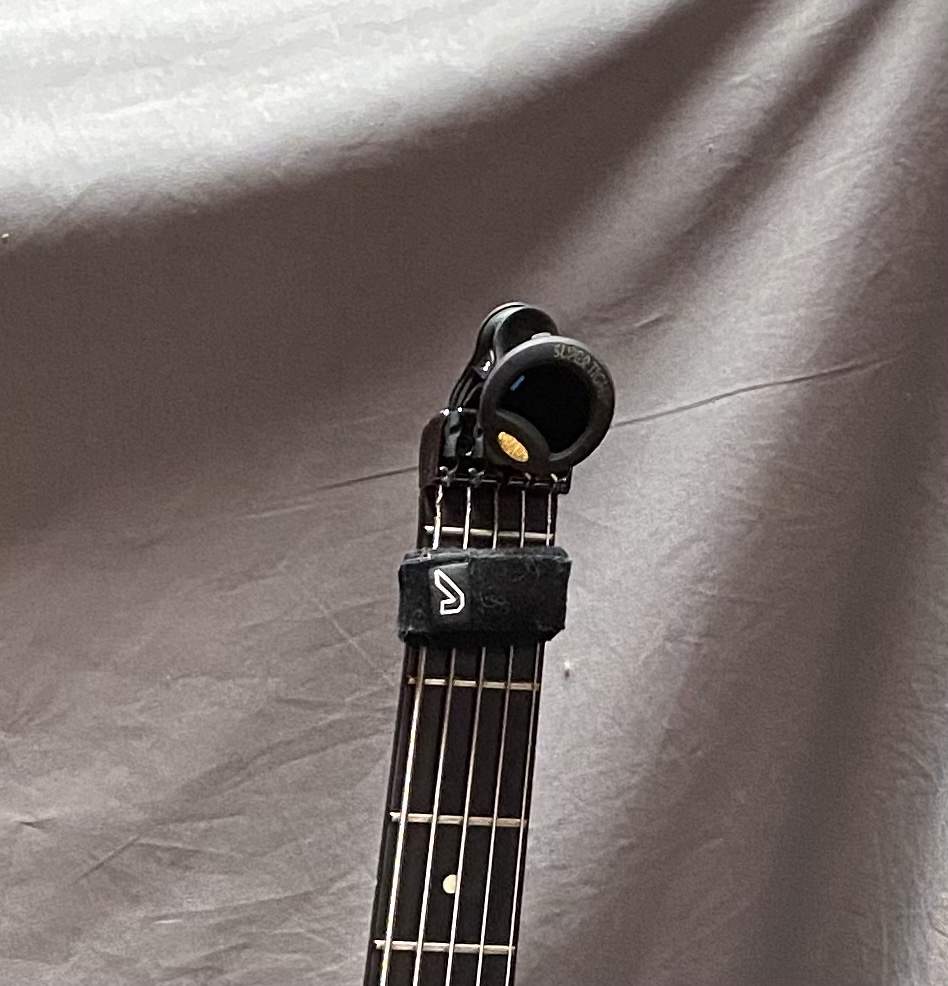
Then I might have know I couldn’t do these things

Headless guitars/basses are a great idea and the only "downsides", if they can be called that, are relatively limited range compared to traditional designs anyone's personal preferences regarding ergonomics, appearance, or possibly ease of tuning, given that many players have been using a different tuning system for a very long time in some cases.
Will headless guitars and basses relegate those with headstocks and current tuners to a curiosity of history? Probably not. While there are some advantages to headless instruments and at bridge tuning, it isn't exactly technology that recreates the whole concept of a stringed instrument. If it was, it would have replaced conventional instruments over the the past 40 to 50 years it's been around. That's not to condemn the concept, I happen to like headless basses, but I still like plenty of "headed" ones too.
As for the often mentioned subject of appearance, well that's just a matter of them looking different (until people get more used to seeing them) and different can be a challenging proposition for humans. All of us, sometimes, about some things.
Headless basses are another option, like passive or active controls and all the other things we tend to have preferences about.
Will headless guitars and basses relegate those with headstocks and current tuners to a curiosity of history? Probably not. While there are some advantages to headless instruments and at bridge tuning, it isn't exactly technology that recreates the whole concept of a stringed instrument. If it was, it would have replaced conventional instruments over the the past 40 to 50 years it's been around. That's not to condemn the concept, I happen to like headless basses, but I still like plenty of "headed" ones too.
As for the often mentioned subject of appearance, well that's just a matter of them looking different (until people get more used to seeing them) and different can be a challenging proposition for humans. All of us, sometimes, about some things.
Headless basses are another option, like passive or active controls and all the other things we tend to have preferences about.


