
Enjoy the benefits of a premium membership!
Upgrade Account
-
TalkBass has been independent since 1998. Add your voice.
Create a free account to reply to discussions, view embedded media, and browse with fewer display ads.
Join free Log in
Want zero display ads or expanded classifieds tools? Compare plans.
You are using an out of date browser. It may not display this or other websites correctly.
You should upgrade or use an alternative browser.
You should upgrade or use an alternative browser.
More options
Who Replied?


right. no windings to make it stiff(er).Consider the fact that the core wire goes around a very small bend at the ball end and doesn't break there.
what I don't know about the engineering: do the wraps make the string act as one unit, or separate units (core separate from windings). My gut tells me that, for hex core strings, as a single unit; for round core strings, as separate units. Because on a round core, the winding can "slip." with the hx core "biting" into the wrap, the core and wrap acts more like a single unit, making it stiffer overall, which is why the core will break when bent at the winding portion, rather than anywhere else.
In other words, it's a flex (ductility or plasticity) thing rather than a tension thing.
In other words, it's a flex (ductility or plasticity) thing rather than a tension thing.

Reasoning this through with you guys, I'm betting the Fat beams won't break on the B string. why? Round cores. you know I'm going to have to try them...
I need you to tell me all about the bass in your avatar picture.
It's self-made. Warmoth body and neck, fender P and SD dual coil NY pickups. custom pickguard, hipshot hardware. Laquer rattle can paint. it now has a new neck, roasted maple with rosewood board, which i love. in the pic it's passive, but i have since added EMG T-B circuit, which adds to controllability of tone. currently it's in a good place, although (nearly) every bass in my stable is a work in progress. I have a router and not afraid to use it.I need you to tell me all about the bass in your avatar picture.

It's self-made. Warmoth body and neck, fender P and SD dual coil NY pickups. custom pickguard, hipshot hardware. Laquer rattle can paint. it now has a new neck, roasted maple with rosewood board, which i love. in the pic it's passive, but i have since added EMG T-B circuit, which adds to controllability of tone. currently it's in a good place, although (nearly) every bass in my stable is a work in progress. I have a router and not afraid to use it.
purple with maple neck black block inlays is basically what I want in every bass ever. looks awesome man.
It looks purple to you? it's flat black with a shiny black pickguard. I'm a gear head, and this was the inspiration:purple with maple neck black block inlays is basically what I want in every bass ever. looks awesome man.
No, it's very definitely a tension thing. This toy illustrates the problem. Imagine the pirate's leg is the string. The 'meat' of his leg is the wrap wire. The string in the center is the core. In order for his leg to bend, the core has to get longer.In other words, it's a flex (ductility or plasticity) thing rather than a tension thing.
argh...No, it's very definitely a tension thing. This toy illustrates the problem. Imagine the pirate's leg is the string. The 'meat' of his leg is the wrap wire. The string in the center is the core. In order for his leg to bend, the string has to get longer.
Dwaynie: you got me stoked over reminiscing about the build... here it is in its first iteration. All electrics in it are diff now, but IMO it was so tasteless it was cool, cool, cool...

and of course, since this a DR thread, it had to have Red Devils. and no, they didn't break.

and of course, since this a DR thread, it had to have Red Devils. and no, they didn't break.
Then you don't actually understand... : D It's all good. The round core might work better because it can slip under the wrap wire more easily than hex.David: I understand what you are saying, but disagree.
If you're saying I copied it, not really. I just went with the flow of the Warmoth necks since they build the best neck in the business - way better than I can make.A huge part of the problem is a headstock design that puts the tuner post for the largest string too close to the nut. 34" scale with 2 x 3 and also, most 3 x 2 arrangements don't have this problem. And for someone to copy a poor design...? Oh, well.
I'm with you about headstock design. I had Brubaker (friend of mine) make me a custom P-bass-ish thing, 34" scale, and it has a 3+2 headstock. No breakages.
I have played around with tuner placement on the headstock, and one of the most interesting things about that is how it affects the dead spot. That stands to reason, because dead spots are caused in part by the "pendulum effect" of the headstock mass on the resonant frequency of the neck. move it around in relation to the neck length (which you can't change), and you move the dead spot. I have a beater bass with no dead spots, but you should see the dog's breakfast of a headstock from experimenting.
I have a drill, too, and not afraid to use it!
some guys just never give up...Then you don't actually understand... : D It's all good. The round core might work better because it can slip under the wrap wire more easily than hex.
It looks purple to you? it's flat black with a shiny black pickguard. I'm a gear head, and this was the inspiration:
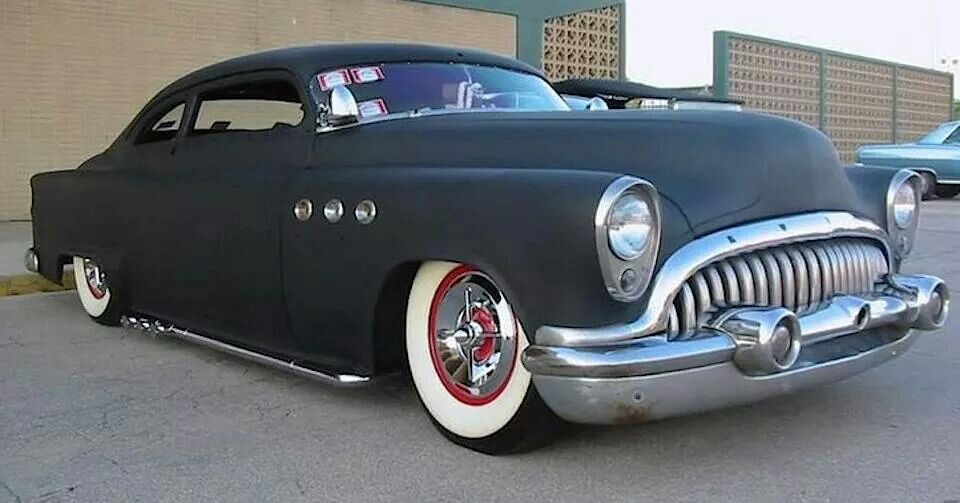
that's pretty sweet, yeah it totally looks purple to me. (in your avatar, not the pics you posted later)
is the dress white and gold or black and blue?


