• TalkBass has been independent since 1998. Add your voice.
    Create a free account to reply to discussions, view embedded media, and browse with fewer display ads.
    Join freeLog in
    Want zero display ads or expanded classifieds tools? Compare plans.

Dragging myself kicking and screaming into DAWland. Help?

Yeah. I liked his approach too. You can spend so much time looking for "the best" that you never get started. Sometimes you're better off just getting something and start doing it. It's like my mechanical engineer Dad used to say: "Most times it's smarter to put the polish on when it's on the way out the door rather than when it's first coming in."

If you get a chance, check out this video when you have an hour to spare. Interesting insights from two of the big names in the recording world. It's amazing how little things like equipment concerns (other than "use good equipment") factor into their equation when they're involved with a recording project. Unlike the amateur who is always wishing and hoping for that last bit of kit that will finally allow them to "do it for real."


I remember spending hours tweaking a track I recorded(I'm a bad singer) compressing EQing, researching mic distances etc Sounded awful. Then I had a friend who is a pro vocalist come and sing into at $70 At2020 into a little Scarlett 2i2 interface. No EQ, no comp. nothing. Sounded so good. Lesson learned.
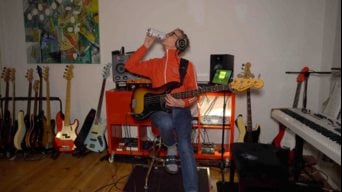
 
Frankly, while I respect other people's opinions..making music on an Ipad is a PITA. I think an Ipad can be a great tool as a control surface or a virtual "sketchbook" for ideas on the go. They are also great practice tools when you don't have an amp handy.

On the other hand, using it as your daw is just very very roundabout and I advise against it. I could mop my floors with a toothbrush and tell people it can be done..but why would I make life harder on myself?

Sorry for the rant.

Did you ever try Auria Pro on a decent iPad in combination with a good audio-interface? If I understand the situation of the initial poster, he doesn't want to record 20 instruments at once.
The main advantage of the iPad - not just as a control surface - is that you don't have to use a mouse, but have direct access to all functions AND record directly to the iPad.
Halfway decent iPads don't have a problem running software synth and recording 4-8 tracks at the same time. And if you later need the functions of a huge DAW, you could still simply integrate the recorded tracks into a project on your laptop or desktop DAW.
Why brush your teeth with a gigantic mop?
 
Did you ever try Auria Pro on a decent iPad in combination with a good audio-interface? If I understand the situation of the initial poster, he doesn't want to record 20 instruments at once.
The main advantage of the iPad - not just as a control surface - is that you don't have to use a mouse, but have direct access to all functions AND record directly to the iPad.
Halfway decent iPads don't have a problem running software synth and recording 4-8 tracks at the same time. And if you later need the functions of a huge DAW, you could still simply integrate the recorded tracks into a project on your laptop or desktop DAW.
Why brush your teeth with a gigantic mop?

I checked out the Auria Pro website. Looks really promising. The Fab filter plugs are great too.
Does auria still require a sound card? A little confused about input and output.
 
Ableton Live is a blessing and a curse. I hated it at first, but came back to it after spending time learning and loving NI Maschine. It has some features that seem like double edged swords, in that they can greatly simplify and complicate learning it as a DAW. Trying to learn Session vs. Clips and how they relate can be a bit unusual.

It's not the most economical option but it isn't awful.

The built in sounds are pretty good.

A buddy of mine is testing out MuLab and liking it.
 
Another vote here for Focusrite interfaces. My DAW preference is ProTools, but I know I am in the minority. I came into DAWs after some experience with video editing tools, and I just kinda like the more professional-ish look/feel. Having said that, all DAWs are pretty great and have 90% or more overlap in functionality. I would check out the look and feel of a few of them, and go with whatever you find to be most intuitive. All our brains are wired somewhat differently. I have an aversion to "lite" versions of software because of how many dead-ends I have found, and sadly in many cases time invested learning the lite version doesn't transfer directly to the workflows of the full version.
 
Yeah. I liked his approach too. You can spend so much time looking for "the best" that you never get started. Sometimes you're better off just getting something and start doing it. It's like my mechanical engineer Dad used to say: "Most times it's smarter to put the polish on when it's on the way out the door rather than when it's first coming in."

If you get a chance, check out this video when you have an hour to spare. Interesting insights from two of the big names in the recording world. It's amazing how little things like equipment concerns (other than "use good equipment") factor into their equation when they're involved with a recording project. Unlike the amateur who is always wishing and hoping for that last bit of kit that will finally allow them to "do it for real."


Thanks, they offer a good perspective. I think the comments on recording people playing together when possible and the comments on imposing limitations, time constraints, and demanding the best possible performance are particularly relevant and needed today. Also, the attitude that whatever the gear, we'll make it great.

Otto
 
Thanks, they offer a good perspective. I think the comments on recording people playing together when possible and the comments on imposing limitations, time constraints, and demanding the best possible performance are particularly relevant and needed today. Also, the attitude that whatever the gear, we'll make it great.

Otto

Absolutely. One of the nicest recordings I ever heard was by an acoustic new-agey kind of group. Their sound was full but with a gentle hint of reverb and phase. I asked them which studio they recorded it at and they all laughed. They recorded everything in the hallway of the house they were renting. The set up and mic'ced themselves at one end, put a mic on a stand halfway down the hall, and a third mic in the fully tiled bathroom at the end of the hall. They recorded each mic on a separate track of their old boat anchor of a 4-track reel-to-reel, mixed the two ambient channels down to one track and then mixed that and the close-up mic track to stereo on the two available channels. It sounded gorgeous. No fancy board, no special mics (they had two SM57s and some bigass very old stand type mic that nobody knew what it was), no effects, some primitive metering, zero compression or EQ - and no provisions for editing. Just their ears, some discipline when it came to their arrangements and playing levels, their exquisite taste, and what they had to work with. Even the recording pros who heard their recordings said they were ready for mastering as is.


There's a lesson lurking in there somewhere.

I liked their 'technique' so much that I 'acquired' and used it with bands I was in over the years.
 
  • Like
Reactions: beatnut and verstft
Absolutely. One of the nicest recordings I ever heard was by an acoustic new-agey kind of group. Their sound was full but with a gentle hint of reverb and phase. I asked them which studio they recorded it at and they all laughed. They recorded everything in the hallway of the house they were renting. The set up and mic'ced themselves at one end, put a mic on a stand halfway down the hall, and a third mic in the fully tiled bathroom at the end of the hall. They recorded each mic on a separate track of their old boat anchor of a 4-track reel-to-reel, mixed the two ambient channels down to one track and then mixed that and the close-up mic track to stereo on the two available channels. It sounded gorgeous. No fancy board, no special mics (they had two SM57s and some bigass very old stand type mic that nobody knew what it was), no effects, some primitive metering, zero compression or EQ - and no provisions for editing. Just their ears, some discipline when it came to their arrangements and playing levels, their exquisite taste, and what they had to work with. Even the recording pros who heard their recordings said they were ready for mastering as is.

There's a lesson lurking in there somewhere.

I liked their 'technique' so much that I 'acquired' and used it with bands I was in over the years.

I started recording over 30 years ago with a 4-track Otari "boat anchor" and wish I hadn't sold it. Anyway, for me, the challenges in recording are mostly a matter of vision, ideas, listening, making decisions and persistence. Perhaps above all, making the time and mental space in a busy schedule for all that stuff to arise.

I appreciated the video linked in this thread about setting up a home recording rig for $350. It reminds me that all I need is something like $100 for an interface if I want to start recording on a laptop. The limited version of ProTools sounds perfect, because it imposes a track count limit of 16, which is just about right for me! :)

That said, I am wary about using DAWs because I think there is a tendency for using a computer, mouse and keyboard to shift my mental focus in a way that using big, simple appliances like tape machines doesn't do. It seems that I resemble a musician more when computers are not nearby.

Otto
 
I'd suggest a small Focusrite Scarlett interface to start with. If you're learning, invest some money on:

an online course (I can recommend this one if you're starting at ground zero)
a good book or dvd if you're a little more advanced (recommend: Alan Parsons Art & Science Of Sound Recording)

- or head over to YouTube and check out the Home Recording Revolution channel for some really good no-BS direction.


-----

Software-wise Reaper is a good starting point.

I use something called Invalid Link Removed which is offered by Harrison Consoles. It's inexpensive, but some pieces you'll probably want are paid add-ons, so it's not the cheapest thing out there. But I love the way it works and sounds. And they do native versions for Windows, MacOS, and Linux - which is an important consideration to me. (And probably nobody else. :laugh:)


Great video and advice from this guy.

Will save those wanting to get started thousands.
 
  • Like
Reactions: 40Hz
I started recording over 30 years ago with a 4-track Otari "boat anchor" and wish I hadn't sold it. Anyway, for me, the challenges in recording are mostly a matter of vision, ideas, listening, making decisions and persistence. Perhaps above all, making the time and mental space in a busy schedule for all that stuff to arise.

I appreciated the video linked in this thread about setting up a home recording rig for $350. It reminds me that all I need is something like $100 for an interface if I want to start recording on a laptop. The limited version of ProTools sounds perfect, because it imposes a track count limit of 16, which is just about right for me! :)

That said, I am wary about using DAWs because I think there is a tendency for using a computer, mouse and keyboard to shift my mental focus in a way that using big, simple appliances like tape machines doesn't do. It seems that I resemble a musician more when computers are not nearby.

Otto

I understand where you're coming from. I'm an IT person who works with all things computer on a daily basis. I understand systems, have done more than a little programming, and understand MIDI as well as the next guy. Cut my teeth on computers way back when by reading a book called Friendly Stories about Computers/Synthesizers by John Simonton and poring over Bernie Hutchins' paper newsletter Electronotes.

At one time I thought digital might be the answer to everything. But in the '80s I became increasingly disenchanted with most music electronics - especially digital. I felt we were going down the wrong path with much of it. Time hasn't changed that belief either.

Never had the Otari. But I did have a pair of Revox stereo reel-to-reels that I used in conjunction with a homemade 5-channel mixing board I based off circuits in Craig Anderton's recording project book. That worked really well and sounded great once I got ping-ponging tracks down cold. I was very sorry when those recorders finally stopped working and the cost of getting them fixed was beyond my means at the time. I stopped doing any recording for many years after that. And I still prefer those old decks to any DAW or snazzy software I've since used.

But I prefer the sound of actual analog over digital for most things anyway. So that's hardly surprising. I'm pretty much a semi-Luddite in that regard.
 
Last edited:
  • Like
Reactions: ScottTunes
I checked out the Auria Pro website. Looks really promising. The Fab filter plugs are great too.
Does auria still require a sound card? A little confused about input and output.

No, but it wouldn't make much sense to use the analog audio-in of the iPad. I love to use it with my SPL Crimson. A very good interface for the price are the new Zoom U-44 and U-24. They run on batteries or a usb-power plug and can be used only as a A/D or D/A and have a tablet mode. I was really surprised regarding their prices.
Although a software engineer I was always struggling with DAWs. Just hate it to have a bass around my shoulder and seeking in endless submenues after the one or the other function with my mouse.
Too many evenings wanting to make music and ending studying the DAW or manuals for hours and losing the lust to play or compose.
Auria simply fits me. Used the small version for a year or so and bought the Pro Version, 'cause I wanted midi.
I felt a bit like being of topic 'cause the initial poster clearly said he has a windows laptop etc.
But I could relate a lot to his problematic relationship with DAWs.

For me it makes a real difference that I only have to touch the screen in front of me (I have a small mic-stand for my iPad) and can start recording or playing along or operating my Eventide H9. The iPad and the Crimson, that works standalone as a monitor controler and kind of switcher between different audio sources, have really improved my creativity and allow me to focus on making music.
 
I bought a Focusrite Scarlett Solo by accident - one 1/4" mono, one XLR, RCA and headphone outputs (the V2 version has better latency than the first generation). Came with a license for Ableton Live Lite, and Novation Bass Station. Every now and then they offer licenses for free plugins. Don't really use Ableton, bought Reaper. You would have to learn how to use Reaper, but it's not too hard given enough persistence. Having a controller is convenient, but you can make do with using the onscreen MIDI editor for everything. You can also use the computer keyboard as a musical keyboard.

If you're familiar with trackers there's also Renoise. If you're not familiar with trackers don't worry, it's an acquired taste ;), and also quite a learning curve.

Another thing I'm interested in is music programming languages like Supercollider, Chuck and Csound. I won't give you links to them because that's another rabbit hole. If you want to explore them, it's on your own head!
 
A lot depends on the process you use to record.

I'm in full agreement with Alan Parsons about getting at least two or three people in a room playing together when you're recording, doing it all the way through a few times, and then picking the best, and then redoing anything that is just plain not good. Laying it down track by track in complete isolation gives the music I like a totally different and less enjoyable feel. More like it's assembled rather than sculpted. At least to my ears. Others may hear and feel differently about it however. And that's fine by me.

I also agree with Colbeck on how mistakes and "less than perfect" takes are something to be cherished and protected for the human element they add to a piece of music. Which is pretty funny coming from an old school progger like me who goes back to the days when progrock represented the undisputed bleeding edge of music technology. We were the ones most responsible for putting synths and samplers on the map. And creating albums with music difficult or impossible for the technologies of the times to perform live without vanning a warehouse full of equipment and a boatload of techs along to support it on a tour. (And we have a lot to atone for for doing so. :laugh:;))

But bottom line is we're all in the same boat with the army commander who said: you go to war with the army you have, not the one you wish you had.

So best bet (only bet actually) is to use whatever works best for you and not worry too much about what the other guy has, or what you should be using.
 
Last edited:
A lot depends on the process you use to record.

I'm in full agreement with Alan Parsons about getting at least two or three people in a room playing together when you're recording. Laying it down track by track in complete isolation gives the music I like a totally different and less enjoyable feel. At least to my ears. Others may feel differently.

I also agree with Colbeck on how mistakes and "less than perfect" takes are something to be cherished and protected for the human element they add to a piece of music. Which is pretty funny coming from an old school progger like me who goes back to the days when progrock represented the undisputed bleeding edge of music technology. We were the ones most responsible for putting synths and samplers on the map. (And we have a lot to atone for by doing so. :laugh:;))

Yeah, it's funny that I was quite the techno-boy in the late 80s and early 90s. I had all the types of synth I knew of and every synth control I could afford. All slaved to tape tracks and running Opcode Vision, the best MIDI sequencer of the era.

Studio as instrument is still a part of what inspires me, but I do a lot more recording of electric and acoustic instruments, much as I did when I first started in the early 80s.

Who knows? In a few years, I may be doing mostly stuff in a DAW and having a great time of it. I guess the plus side is that I already have a handle on all the stuff "outside the box."

Otto
 
  • Like
Reactions: 40Hz
Stay away from Pro Tools for now. It's the most expensive one on the market, Avid is the evil empire of the audio world, and it's known for crashing because you looked at it funny.

I personally really like it nowadays, but I've also been using it for the last 8 years. If I had to go back and do it all over though... I'd probably go with Logic.

Go ahead and give Reaper a shot, it'll give you a nice stepping stone into learning modern DAW's. Can't argue with that price point, and it has a good reputation.