
I can relate.View attachment 5226953
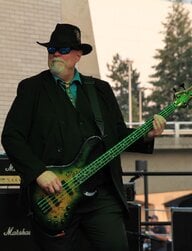
That's definitely in the top three coolest basses I've ever seen. Gotdam.

TalkBass has been independent since 1998. Add your voice.
Create a free account to reply to discussions, view embedded media, and browse with fewer display ads.
Join free Log in
Want zero display ads or expanded classifieds tools? Compare plans.
I can relate.View attachment 5226953


Thanks! I’m a classic car nut so it was perfect, IMO.That's definitely in the top three coolest basses I've ever seen. Gotdam.
Yes!!!Sweet!
GT-40 Gulf Livery!!!!!!


Oh yeah!!Just got this today. The forementioned Jedibass is going to build me a Lee Sklar style dual P
Stay tuned

Awwww, thought I would be next. So, I am happy to learn from you!Just got this today. The forementioned Jedibass is going to build me a Lee Sklar style dual P
Stay tuned
I've recently read through a lot, but not all, of this thread. I saw almost entirely positive opinions about all the different configurations. The one negative that I saw was for the standard P in the bridge position. The negative feedback for that was specific to the E and A strings.I'm curious, but don't have time to dig through the 22 pages of this thread, might have already been discussed.
What are folks' preferences of configuration for dual split Ps: Standard vs. reverse, bridge vs. neck? Matched or opposite?
I'd probably do both reverse; not necessarily sure why, other than I don't have that configuration in any of my basses, and more importantly, if it's good enough for Leland Sklar...

It’s one of my favorites if this bass didn’t have an extremely thin Doug Wimbish neck profile I never would have sold it .. deep tight and punchy with warm highs and strong thick mids one of the best sounding basses I have owned
I forgot to ask you, what model EMGs did you have in that bass ?It’s one of my favorites if this bass didn’t have an extremely thin Doug Wimbish neck profile I never would have sold it .. deep tight and punchy with warm highs and strong thick mids one of the best sounding basses I have owned

EMG Geezer butler passive pickupsI forgot to ask you, what model EMGs did you have in that bass ?

A phone call is all it will take. They'll do standard or reverse in any position (for an upcharge.)Hello! For those of you that got their Double P-routed bodies through Warmoth, what was the ordering process like? They don't seem to offer a Double P option on their website, so I'm guessing a phone call is in order? And do they let you choose between standard or reverse for either position? Any info would be great, thanks.
I have done exactly that. At the time I did it, it was an extra $45. Of course, that assumes you want one of your Ps in the spot they would normally route for it. If you wanted two custom locations, it would be two additional charges. And yes, you can specify forward or reverse. But again, if you want a reverse P even in the normal location, it counts as a custom route, so you're going to get charged for it.Hello! For those of you that got their Double P-routed bodies through Warmoth, what was the ordering process like? They don't seem to offer a Double P option on their website, so I'm guessing a phone call is in order? And do they let you choose between standard or reverse for either position? Any info would be great, thanks.
I am indeed interested in your take on reverse placement! Explain away.I have done exactly that. At the time I did it, it was an extra $45. Of course, that assumes you want one of your Ps in the spot they would normally route for it. If you wanted two custom locations, it would be two additional charges. And yes, you can specify forward or reverse. But again, if you want a reverse P even in the normal location, it counts as a custom route, so you're going to get charged for it.
My unsolicited option on the matter: Reversing the P at the bridge or anywhere else doesn't do anything beneficial for the sound. I'll explain why if you're interested (I'm not going to bother you with it if you're not interested).
Since you asked...I am indeed interested in your take on reverse placement! Explain away.
That actually makes a lot of sense! I never thought in terms of the fretboard. I'm inclined to think this was part of the design when Leo Fender developed the split coil pickup in the first place.Since you asked...
When you play up the neck, typically you play more on the D & G strings than the E & A strings. That's not universally true, but it's true as a rule. Likewise, when you play the low notes at frets 1-5, you're often playing on the E & A strings more than the D & G strings. What that means is that the standard layout for the split P pickup has you playing, the majority of the time, on an area of the string that is proportionally similar relative to the section of the pickup that's doing the picking up.
To illustrate, I'm taking measurements on my P (with one pickup). It's approximately 5 inches from my bridge saddles to the midpoint of then D/G segment and 6.25 inches from my bridge saddles to midpoint of the E/A segment. Ten more inches on the D/G gets me to the 14th fret, while another 12.5 inches on the E/A strings gets me to about the 10th fret. So when I'm playing on those two places on the neck -- 10th fret on E/A and 14th fret on D/G -- the strings vibrations are behaving roughly equally relative to the part of the pickup that's actually picking up the sound.
Now, if you were to flip the segments, now the 10th fret on the D/G is proportionally similar to the 14th fret on the E/A. How often do you play on those two areas? You probably do sometimes, but the majority of the time you are likelier to to be playing higher up the neck on the D/G strings and lower on the neck on the E/A strings.
That came out nerdier than I anticipated, but hopefully it was clear enough to understand. If I failed at that, ask, and I'll try to explain it better.