
- Sep 26, 2005
- 1,955
- 641
- Disclosures
- endorsing artist: Dean guitars, Marshall , Rotosound strings

TalkBass has been independent since 1998. Add your voice.
Create a free account to reply to discussions, view embedded media, and browse with fewer display ads.
Join free Log in
Want zero display ads or expanded classifieds tools? Compare plans.

 Details are in the link to my Fender Blacktop Jazz's original thread.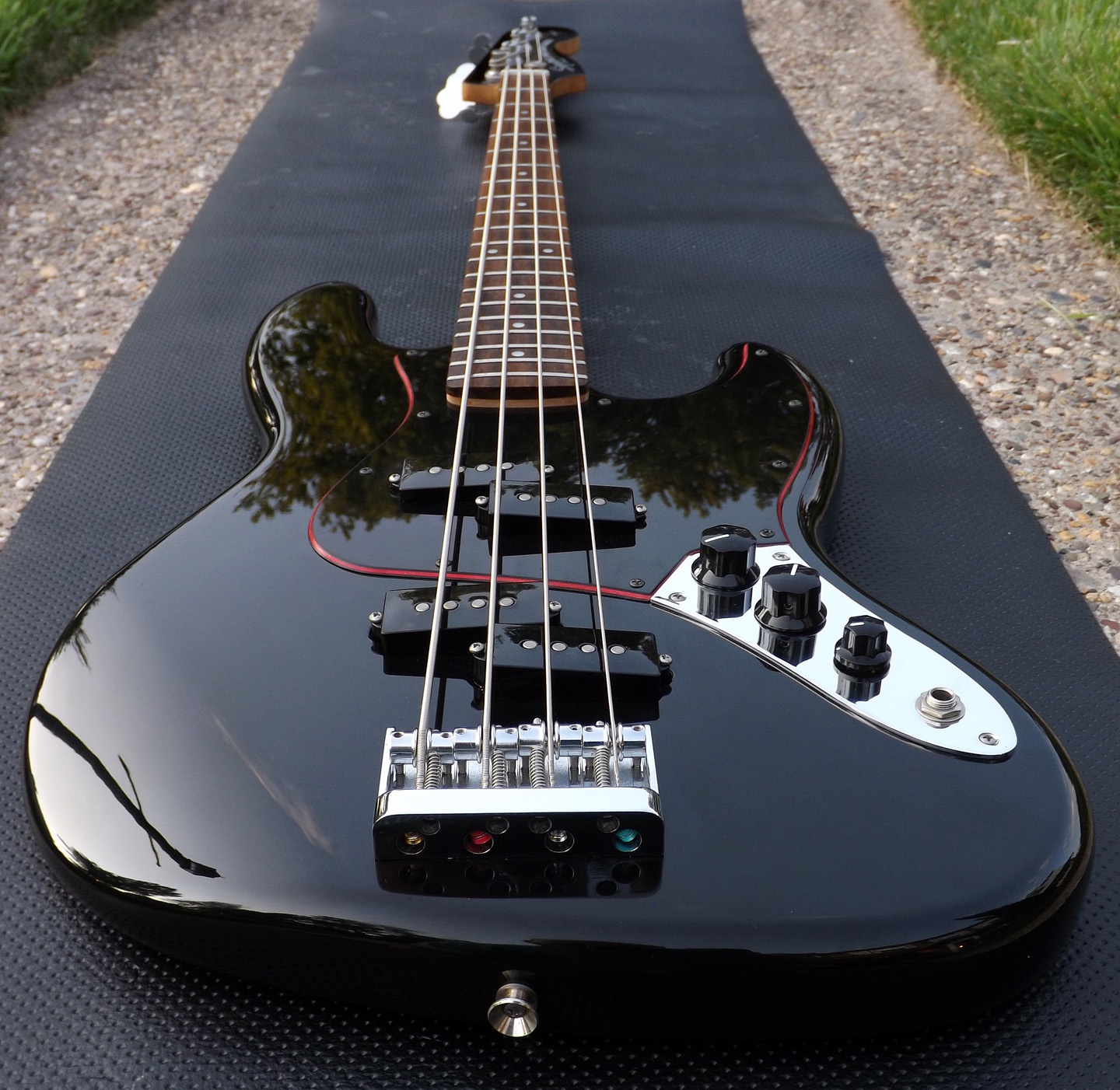

Silly me...I forgot to link this here!
Thanks!Great pic!
Looks like you need to yank that neck to the left a bit.
Is it normal to have that much "extra" space between the strings and the edge of the fretboard?



I forgot to mention -- my philosophy is that overall, pickup placement doesn't matter nearly as much as most people here think. This is my opinion, and I'm comfortable with the fact that most here disagree with me. We don't have to agree. But I believe what I believe partly because of the split P pickups on basses. Some people here talk about the quintessential P bass tone, others here are in a never-ending search for it (this amuses me). I sometimes troll people here by calling the P bass a one-trick pony. And I believe that, in the sense that you're never going to get a different sound out of a P bass without changing pickups (or changing strings), which essentially makes it a different pony with a new single trick. (Arguments about the one trick pony being used in many different genres don't impress me -- it's still the same sound.)That actually makes a lot of sense! I never thought in terms of the fretboard. I'm inclined to think this was part of the design when Leo Fender developed the split coil pickup in the first place.

...or technique.I sometimes troll people here by calling the P bass a one-trick pony. And I believe that, in the sense that you're never going to get a different sound out of a P bass without changing pickups (or changing strings)...
Hush....or technique.
Too late. Most everyone knows already anyway. But, I promise not to belabor the point.Hush.
Nah. I think your pic is fine and the neck is a little crooked. This is actually common and trivially easy to fix - loosen each neck screw a turn or two, pull the neck to the left, and tighten the screws back up. You don’t even need to detune the bass.Thanks!
As for the spacing, it's actually fine. If you look at the aspect of the face dots, they're leaning a little to the right, which means I was not perfectly lined up when I snapped that pic. To include a little outside verification, between the time I added that neck and took those pictures, I'd let a professional bassist noodle around on it for about an hour. The action was higher than she was used to...no surprise, since we're built very differently...but there were no complaints about the neck being shifted too far to either side.
That being said, I did have to ever-so-slightly sand down the neck heel so it would fit. Squier Standard necks are almost always a millimeter or two too wide at the heel to fit most modern Fender/Squier basses. And while I made a big deal about sanding equal amounts off both sides, I'll keep an eye out for any considerable variance. Worst case scenario; I need to remove it and buzz it down a bit more on one side.
I agree with you, but I want the effect of a reverse P as you explained.it.Since you asked...
When you play up the neck, typically you play more on the D & G strings than the E & A strings. That's not universally true, but it's true as a rule. Likewise, when you play the low notes at frets 1-5, you're often playing on the E & A strings more than the D & G strings. What that means is that the standard layout for the split P pickup has you playing, the majority of the time, on an area of the string that is proportionally similar relative to the section of the pickup that's doing the picking up.
To illustrate, I'm taking measurements on my P (with one pickup). It's approximately 5 inches from my bridge saddles to the midpoint of then D/G segment and 6.25 inches from my bridge saddles to midpoint of the E/A segment. Ten more inches on the D/G gets me to the 14th fret, while another 12.5 inches on the E/A strings gets me to about the 10th fret. So when I'm playing on those two places on the neck -- 10th fret on E/A and 14th fret on D/G -- the strings vibrations are behaving roughly equally relative to the part of the pickup that's actually picking up the sound.
Now, if you were to flip the segments, now the 10th fret on the D/G is proportionally similar to the 14th fret on the E/A. How often do you play on those two areas? You probably do sometimes, but the majority of the time you are likelier to to be playing higher up the neck on the D/G strings and lower on the neck on the E/A strings.
That came out nerdier than I anticipated, but hopefully it was clear enough to understand. If I failed at that, ask, and I'll try to explain it better.

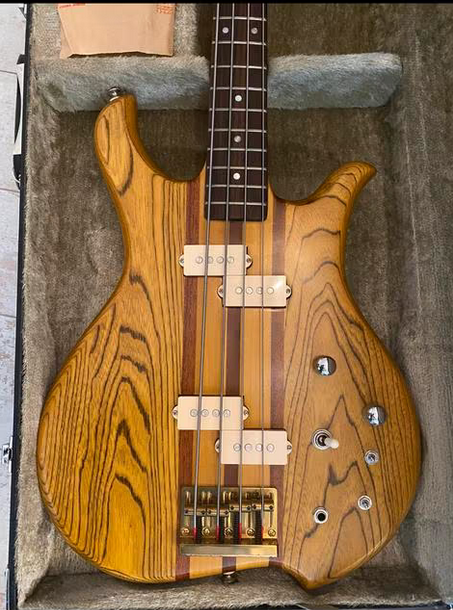
 , but this is the only one with two P pickups: Wotan Shark, MIJ +/- 1978.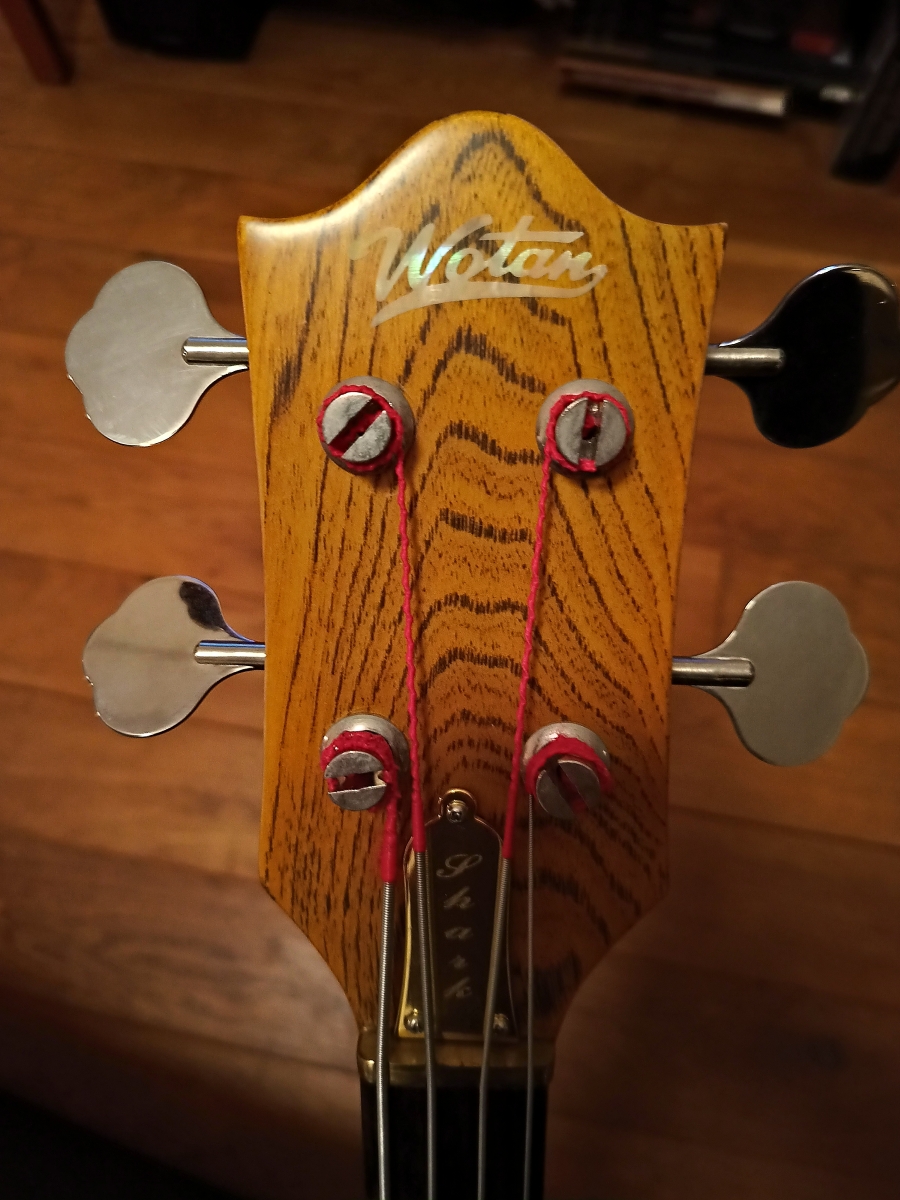

Well, there's my daily recommended amount of irony! I just sold my Blacktop Jazz bass body yesterday, leaving me woefully without a dual-P pickup bass!Been a year. Time to put a fire under this thread!

You know how to fix that problem ;-)Well, there's my daily recommended amount of irony! I just sold my Blacktop Jazz bass body yesterday, leaving me woefully without a dual-P pickup bass!

This bass absolutely slays! If funds become available for me, I would not hesitate to snag it. Love the sound. Sounds good, looks good, but @JEDI BASS, fret and neck work is exceptional. For me this bass would be a definite keeper if I had it. After years of acquisitions, I make my bass choices very carefully with intention not to sell. This would be a keeper. Three very distinctive tones. Pup spacing contributes to its distinctive tone. Awesome bass!I finished this Sklar tribute bass (natural alder - on the left) towards the end of May and shipped it to its owner in Milwaukee. Before shipping, I (of course) played it and let another bassist @MaxSpinrun play it. We both absolutely loved it for its growly tone, super comfy neck, and low low action with a straight firm neck. But, I gave the neck more relief, setting it up to the buyer’s preferred specs and shipped it off. John (owner) loved my work but didn’t bond with its sound. It happens. So, I’m currently doing a J bass for him and this one is available, at least until Max gets the funds together or I sell a bass. I’m telling you, this Sklar growls like nothing in my collection!
Message me if interested in details. I’m currently trying to keep the sale local, but I’ll make a listing if no one bites.
View attachment 7302367View attachment 7302368View attachment 7302369
IKR?!!! Dang! I need to sell something and keep it for myself LOL!This bass absolutely slays! If funds become available for me, I would not hesitate to snag it. Love the sound. Sounds good, looks good, but @JEDI BASS, fret and neck work is exceptional. For me this bass would be a definite keeper if I had it. After years of acquisitions, I make my bass choices very carefully with intention not to sell. This would be a keeper. Three very distinctive tones. Pup spacing contributes to its distinctive tone. Awesome bass!
Not for sale anymore. I’m keeping it!! I played a 3 hour gig with it yesterday, and loved every minute of it!I finished this Sklar tribute bass (natural alder - on the left) towards the end of May and shipped it to its owner in Milwaukee. Before shipping, I (of course) played it and let another bassist @MaxSpinrun play it. We both absolutely loved it for its growly tone, super comfy neck, and low low action with a straight firm neck. But, I gave the neck more relief, setting it up to the buyer’s preferred specs and shipped it off. John (owner) loved my work but didn’t bond with its sound. It happens. So, I’m currently doing a J bass for him and this one is available, at least until Max gets the funds together or I sell a bass. I’m telling you, this Sklar growls like nothing in my collection!
Message me if interested in details. I’m currently trying to keep the sale local, but I’ll make a listing if no one bites.
View attachment 7302367View attachment 7302368View attachment 7302369


