• TalkBass has been independent since 1998. Add your voice.
    Create a free account to reply to discussions, view embedded media, and browse with fewer display ads.
    Join freeLog in
    Want zero display ads or expanded classifieds tools? Compare plans.

EBMM StingRay Special Club

Is Music Man the Apple of bass? ;)

I hope not, or @Moonskunk can expect the police to raid their home, and seize all their digital devices, followed by legal action for property theft, and industrial espionage.

We can also expect some bunch of dipsticks to scramble to be the first to get one, then post videos of themselves smashing it up, under the pretence of show how well built they are (when really it's just about click-baiting traffic towards their channel).
 
I recently got a Black special with a maple fretboard. Being the first maple board I ever had, I have some questions about it:

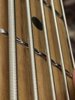
1. Are the frets glued? There seems to be some discolouration around the frets similar to what's near the Compensated Nut. Check the pictures. I'm not sure that's normal or not.
2. How to treat it? I only had rosewood/wenge boards and I'd oil it up whenever I change strings (~4 months).

IMG_0101.jpegIMG_0102.jpegIMG_0103.jpegIMG_0104.jpeg
 
  • Like
Reactions: GitmoMango
There seems to be some discolouration around the frets similar to what's near the Compensated Nut. Check the pictures. I'm not sure that's normal or not.
  1. If it’s just dust, try blowing on it with compressed air.
  2. If that doesn’t fix this issue and this is a bass you bought from a dealer, call the dealer. If this is a new bass, it may be something covered by the warranty.
  3. I suspect these might be cracks/chips in your fingerboard. If so, that’s a concern.
 
Last edited:
I recently got a Black special with a maple fretboard. Being the first maple board I ever had, I have some questions about it:

1. Are the frets glued? There seems to be some discolouration around the frets similar to what's near the Compensated Nut. Check the pictures. I'm not sure that's normal or not.
2. How to treat it? I only had rosewood/wenge boards and I'd oil it up whenever I change strings (~4 months).

View attachment 4124892View attachment 4124894View attachment 4124896View attachment 4124897


The compensated nut looks as if it's maybe got some residual wax / polish left on it, that should just wipe off.

1) The frets aren't glued, the nut may have a little dab of glue, but are usually held in place by a combination of string tension, and lacquer on the sides of the neck (not sure if compensated nut ends are actually covered by lacquer, so it may well be a little glue).

The frets look pretty typical of any maple board to me - there can be a little cracked lacquer where they're tapped in, a little trapped polish, and dirt that's more visible against maple.

2) You don't need to do anything to a maple board - No treatment etc, just wipe any gunk off (or don't, and just call it 'mojo').
 
Last edited:
  1. If it’s just dust, try blowing on it with compressed air.
  2. If that doesn’t fix this issue and this is a bass you bought from a dealer, call the dealer. If this is a new bass, it may be something covered by the warranty.
  3. I suspect these might be cracks/chips in your fingerboard. If so, that’s a concern.

1. It doesn't look like dust, I'll try using a soft old toothbrush and see if it comes out.
2. I've sent them an email already with the same pictures since it's a brand new bass. It didn't come wrapped in plastic so I suspect it may have been in a display area.
3. They don't look like cracks even though they look like that in the some of the pictures. They look more like dirt.

The compensated nut looks as if it's maybe got some residual wax / polish left on it, that should just wipe off.

1) The frets aren't glued, the nut may have a little dab of glue, but are usually held in place by a combination of string tension, and lacquer on the sides of the neck (not sure if compensated nut ends are actually covered by lacquer, so it may well be a little glue).

The frets look pretty typical of any maple board to me - there can be a little cracked lacquer where they're tapped in, a little trapped polish, and dirt that's more visible against maple.

2) You don't need to do anything to a maple board - No treatment etc, just wipe any gunk off (or don't, and just call it 'mojo').

1. There's no lacquer as far as I know in the maple neck and fretboard of the Specials except the headstock.
2. Since they are not lacquered I imagined they would need some nutrition/waxing from time to time, just like the back of the neck.

I'll come back with more info after trying the toothbrush thing.
 
I recently got a Black special with a maple fretboard. Being the first maple board I ever had, I have some questions about it:

1. Are the frets glued? There seems to be some discolouration around the frets similar to what's near the Compensated Nut. Check the pictures. I'm not sure that's normal or not.
2. How to treat it? I only had rosewood/wenge boards and I'd oil it up whenever I change strings (~4 months).

View attachment 4124892View attachment 4124894View attachment 4124896View attachment 4124897

1. It doesn't look like dust, I'll try using a soft old toothbrush and see if it comes out.
2. I've sent them an email already with the same pictures since it's a brand new bass. It didn't come wrapped in plastic so I suspect it may have been in a display area.
3. They don't look like cracks even though they look like that in the some of the pictures. They look more like dirt.


1. There's no lacquer as far as I know in the maple neck and fretboard of the Specials except the headstock.
2. Since they are not lacquered I imagined they would need some nutrition/waxing from time to time, just like the back of the neck.

I'll come back with more info after trying the toothbrush thing.
Looks like fret-polishing compound.

The fretboard is not lacquered. Oil it if that suits you. I do.
 
  • Like
Reactions: Wood and Wire
So the white parts came right off with toothbrush. It looks like it was just dust really, even though I didn't expect a brand new bass to have dust on it. The darker spots, though, didn't seem to come off so they may be some more annoying dirt deposits. But it's only in 2 frets now.

Looks like fret-polishing compound.

The fretboard is not lacquered. Oil it if that suits you. I do.

What oil do use? I have one of those infinite Dunlop Ultimate Lemon oil.
 
1. There's no lacquer as far as I know in the maple neck and fretboard of the Specials except the headstock.
2. Since they are not lacquered I imagined they would need some nutrition/waxing from time to time, just like the back of the neck.

I'll come back with more info after trying the toothbrush thing.

Every maple board I've ever seen on a StingRay has been finished.

Since they stopped putting a gloss lacquer on the back of the neck, you are advised to periodically sand the wood, and reapply a gunstock oil, and wax coating - assuming you like that fast, bare wood feel.

If you don't bother, it basically turns back into a gloss finish - albeit a grubby one.

You don't need to do anything to the finger / fret board itself, when it's maple.
 
Every maple board I've ever seen on a StingRay has been lacquered.

Since they stopped putting a gloss lacquer on the back of the neck, you are advised to periodically sand the wood, and reapply a gunstock oil, and wax coating - assuming you like that fast, bare wood feel.

If you don't bother, it basically turns back into a gloss finish - albeit a grubby one.

You don't need to do anything to the finger / fret board itself, when it's maple.
What about ebony?
 
@Moonskunk, I'm with ya. I bought a used but mint Burnt Apple Special (maple/flats) soon after the Specials rolled out, and a year later got an exceptional deal on a used seafoam Special with ebony (rounds) that I couldn't pass up. Each is beautiful in its own way.
Edit: Cruz Teal is what EBMM calls its version of Seafoam Green.
Do you find much difference in tone with different fretboards?
 
  • Like
Reactions: Groovegestapo
So the white parts came right off with toothbrush. It looks like it was just dust really, even though I didn't expect a brand new bass to have dust on it. The darker spots, though, didn't seem to come off so they may be some more annoying dirt deposits. But it's only in 2 frets now.


What oil do use? I have one of those infinite Dunlop Ultimate Lemon oil.
I use Dunlop 65 Ultimate Lemon Oil. Used other brands too. I apply it whenever I change strings. :bookworm:
Personally, I wouldn't do anything until you find out why you received it that way. New bass and all. :cautious:
Good luck man.
 
I believe I read that you aren't supposed to use lemon oil on maple fretboards. I'm not sure what the reasoning is though
Don't use it on finished necks. Naptha to clean that.
From their website,
"Some of our instruments have necks that are finished with a glossy or matte polyester finish. These necks can be cleaned and maintained with a polish cloth similar to the body of the instrument.

However, many of our necks are not finished that way. They are finished with tru-oil and gunstock wax for a smooth natural feel.

For routine conditioning and cleaning of these necks we recommend Ernie Ball Wonder Wipes Fretboard Conditioner.

If the Wonder Wipes are not available try using a high grade of lemon oil. It will work both on maple, rosewood and ebony. If the neck is very dirty, you can use a small amount of Murphy's Oil Soap, diluted 3:1 with water, to clean it. Keep in mind that if the dirt has gotten into the wood, it cannot be removed except by sanding it down, which we do not recommend a lot of. It is better to keep it clean in the first place. Washing your hands first helps!

On an maple neck, some discoloration after many hours of playing is normal.

An annual (or so) dose of tru oil and gunstockwax will help to keep the neck maintained; we use and recommend Birchwood-Casey Tru-oil, but any good quality gunstock oil will work.

Click here to watch a how-to video

Birchwood-Casey products are available at most sporting goods or gun stores, or now you can order them direct. Their web address is Invalid Link Removed.

Be sure to follow all of the manufacturers recommended safety precautions when using any oils or waxes."
FAQ | Ernie Ball Music Man
 
  • Like
Reactions: Wolfhound32
So the white parts came right off with toothbrush. It looks like it was just dust really, even though I didn't expect a brand new bass to have dust on it. The darker spots, though, didn't seem to come off so they may be some more annoying dirt deposits. But it's only in 2 frets now.


What oil do use? I have one of those infinite Dunlop Ultimate Lemon oil.
I use Kyser Dr. Stringfellow Lem-Oil.
 
Every maple board I've ever seen on a StingRay has been finished.

Since they stopped putting a gloss lacquer on the back of the neck, you are advised to periodically sand the wood, and reapply a gunstock oil, and wax coating - assuming you like that fast, bare wood feel.

If you don't bother, it basically turns back into a gloss finish - albeit a grubby one.

You don't need to do anything to the finger / fret board itself, when it's maple.
Older StingRays and StingRay Classics with finished necks have finished maple boards, but both my StingRay 5 and StingRay 5 Special with maple boards are oil/wax finished like the back of the necks. It's easy to see the finished headstocks are darker.

One only needs to sand the back of the necks if dirt has penetrated the wood. Otherwise they can be cleaned with Murphy Oil Soap or gunstock oil. To keep them clean only requires an occasional wipe of oil and wax. I do it when I change strings.
 
Older StingRays and StingRay Classics with finished necks have finished maple boards, but both my StingRay 5 and StingRay 5 Special with maple boards are oil/wax finished like the back of the necks. It's easy to see the finished headstocks are darker.

One only needs to sand the back of the necks if dirt has penetrated the wood. Otherwise they can be cleaned with Murphy Oil Soap or gunstock oil. To keep them clean only requires an occasional wipe of oil and wax. I do it when I change strings.
I did a 'refinish' of my 2005 'Big Green Monster' as EBMM instructed with oil soap/oil/wax and it was absolutely killer. So smooth… not sticky. And you can control the finish if you're careful.
Why 'Big Green Monster?' The bass weighed upwards of 12 lbs. and I could only get one sound that I liked out the ceramic/preamp system of the day so I sold it. But… that neck, oh…, was the best fiver neck I ever played to this day. Don't know who built it but it was a bit thinner, a bit rolled on the edges, and the fretwork was absolutely perfect.
 
I recently got a Black special with a maple fretboard. Being the first maple board I ever had, I have some questions about it:

1. Are the frets glued? There seems to be some discolouration around the frets similar to what's near the Compensated Nut. Check the pictures. I'm not sure that's normal or not.
2. How to treat it? I only had rosewood/wenge boards and I'd oil it up whenever I change strings (~4 months).

View attachment 4124892View attachment 4124894View attachment 4124896View attachment 4124897
Congrats on the new bass!

What I see in those photos is most likely just polish residue. However, it could be slight scratching of the wood from the fret installation/dressing/polishing/etc.

Maybe I’m in the minority here, but there is nothing in those photos that would give me ANY concern whatsoever. That fretboard is going to get dirty from normal use (remember the bass is an instrument— i.e. a tool). Have fun, enjoy it and play like you stole it! ;)

Again, congrats on the new bass!
 
Last edited:
  • Like
Reactions: N4860