how do flats work with overdrive compared to rounds?
Yes, they're flats.


TalkBass has been independent since 1998. Add your voice.
Create a free account to reply to discussions, view embedded media, and browse with fewer display ads.
Join free Log in
Want zero display ads or expanded classifieds tools? Compare plans.
how do flats work with overdrive compared to rounds?
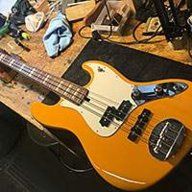
I think that's a fretted bass isn't it? From what I have read, he says he's playing his original 61 P with a 63 neck

I myself use flats on my P bass (on a squier affinity no less) you get a thumpier sound with flats.
i prefer GHS stainless steel flats.
+1 on GHS precision flats. They are the same as laklands Joe osborn flats. I'm even going to try these on my modulus.
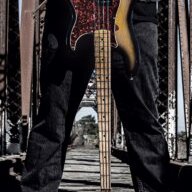
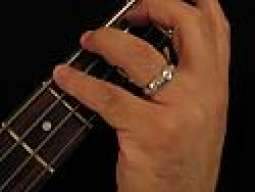
Look closely at the fretboard, and what's him slide...pretty sure it's fretless....then again...I could be wrong...it's known to happen;-)
The playing is smooth and the frets are small, but surely there's frets on that clip.


I know that flats on a P bass is an old school concept and I really appreciate you guys that have been around the block explaining things to me. I'm still basically a noob and I am just begining to realize how many different variables effect tone. I have been struggling to get the tone I want out of my American Standard P bass. I'm thinking this is the bass that started it all pretty much and I can't get it to sound very good to my ears. When I push the button on my amp to engage the graphic eq it just seemed like it was too much and did not matter how I adjusted I couldn't get it to sound right. When I pushed the button for the -15db it was just too subdued. Messing with the tone knob on the bass didn't seem to dial things in either. I was reading a discussion on here today about G&L SB-2 vs P bass and one poster talked about how the volume knob changed the resistance hence effecting the tone. Ding ding ding! Light bulb moment! I have basically just been playing with the volume knob wide open and changing the volume with the gain keeping the master pretty much set in one place. Well I turned the volume knob on the bass down some adjusted the gain a little and turned the master up and voila! Much better tone! I guess I was overdriving the input for lack of a better term. I also never realized how much different the tone sounds when you stand farther away from the cab. Long story short I've got a lot to learn and I'm glad you guys don't mind discussing stuff that has been talked about so many times before. I'll crawl back under my rock now and listen.
Gunner
Sounds a bit strange- normally Ps sound best with the volume knob up all the way. Have you tried adjusting the gain structure at the amp better with the volume wide open?
Mabe your PUP height needs adjusting, too. This single thing can radically change the tone of a P from boomy and bottom heavy to very middy and growly, and allsorts in between.
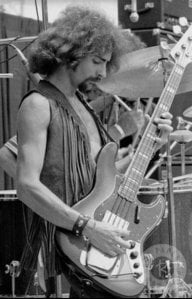
Am I the only one who just can't get used to the feel of flats?
Cant stand 'em!
They are not for everyone. I'm trying them for the third time in about five years, but this time I went with Thomastik-Infeld Jazz Flats. It's a whole new ball game this time. When I pick up one of my basses with rounds, it sounds like I have the bass of my amp EQ at "0" & that's not an exaggeration.
No I haven't tried those two things. Do they respond in a big way to small adjustments to the pickup height? In other words how big of an adjustment should I make at one time?
Gunner
I agree that Jamerson is a good example of a vintage recording of a flat wound P-bass sound, but that was yesterday.James Jamerson should be all the education you need
As it was explained to me, the cycle of the frequency of your low E string takes about 8 feet to complete. In other words, you basically don't get the entire low 'E' (open string) tone if you are closer than 8 feet to the cab. Closer than 8 feet it will sound brighter. This is one reason why many players struggle with their sound on stage. They don't realize that what they hear from their amp on stage is different from what people in the audience hear....I also never realized how much different the tone sounds when you stand farther away from the cab...
Gunner
As it was explained to me, the cycle of the frequency of your low E string takes about 8 feet to complete. In other words, you basically don't get the entire low 'E' (open string) tone if you are closer than 8 feet to the cab. Closer than 8 feet it will sound brighter. This is one reason why many players struggle with their sound on stage. They don't realize that what they hear from their amp on stage is different from what people in the audience hear.