
In my experience the biggest difference between the regular fretless bass and a DB is in transients. Specifically, the attack, tone of the attack, level of the sustained note relative to the level of the attack are all different. My Ibanez UB-804 is miles ahead of any fretless that I've heard (including excellent Rob Allen's basses) and yet it's not a DB and there's a difference between EUB and DB. But the question is - how good an imitation you want and in what context? Advice would be different depending on a use case: do you want to play it live and sound "somewhat" like a DB? Or do you want the people listening to a recorded song and saying "that sounds like a DB"?

Enjoy the benefits of a premium membership!
Upgrade Account
-
TalkBass has been independent since 1998. Add your voice.
Create a free account to reply to discussions, view embedded media, and browse with fewer display ads.
Join free Log in
Want zero display ads or expanded classifieds tools? Compare plans.
You are using an out of date browser. It may not display this or other websites correctly.
You should upgrade or use an alternative browser.
You should upgrade or use an alternative browser.
Electric bass that sounds like a double
- Thread starter themickster
- Start date
More options
Who Replied?

Comparing Jaco's sound to that of a double bass is like comparing ice cream to baloney.
Jaco said he was going for the upright sound which drove him to defretting his bass. JACO said it HIMSELF

1000000%I've been told that tone is in the fingers. You have to use double bass fingers on an electric bass.
The sound of an instrument is more than just its "tone," IE it's harmonic content.. The sound also has a physicality, where in the listener is told things about the object, making the sound in the process of the sound creation (Stopping well short of the tone-wood debate, lol..). The sound has artifacts from the object's construction and playing technique. The sound has an envelope and either it decays or can be pushed through.
I DON'T suggest making the rule of thumb "emulate double bass technique" BUT the very close relative of "inform your technique with the physical data from double bass technique" is absolutely money.
The little 'whiff' that comes from the common upright technique of dragging the inside length of your index finger is something we need. Playing with that kind of finger movement works well.
Very important is the left hand. Playing positionally with a lot of deliberate and precise shifting, rather than using 4 spider fingers bridging whole steps, is going to lend itself more to the vocabulary and play style of an upright player. Another thing you can recognize from Gustav's playing is a very fluid combination of being informed by the left hand idiosyncrasies, while taking advantage of what a bass guitar needs from you itself.
This is absolutely one of those things where all the gear in the world won't get it done, but for once it's also something that does need some gear considerations, if only the mute.
One more little thing in terms of the physical artifacts of instrument's sound- I said I dislike the Tapewounds I've tried for the proxy double bass role.. but one thing I LOVE about them is the particular thwack sound they make both as fret noise and right hand 'bite' . It's a fantastic addition to the upright sound, because counterintuitively I think that very low action is actually better for pulling out the sound to mimic upright, just because of the frequency of string/board contact and because is allows you to really pull the right hand with the claw without being able to over do it.. with tapewounds this sound is absolutely great, but the ones I've tried were too floppy. I may re explore this with the ones suggested above
Last edited:

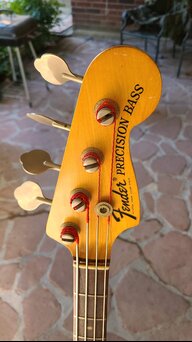
I was going to say the closest that I have came to an upright tone on a electric was a Rickenbacker. At least in my experience, the Hofners sound pretty close too. Maybe Paul was on to something?< Avatar pic is a 1978 Rickenbacker 4001 fretless. Believe it or not, this is the bass that gets closest to the typical DB sound in my collection (which includes a humbucking Telecaster, 2 fretless Js, a fretless P, a fretless Hohner P/J and a Prestige violin shaped Hofner copy). You'd never in a million years put a Ric on this list unless you heard one in action. It has Rickenbacker round wound strings on it, too. The trick is to turn the volume down (this reduces the click of the attack) and use a blend of the two pickups favoring the bridge and turn the tone almost all the way off. Using a compressor smooths out wave even more. Palm muting to taste and, voila!

did anyone mention the line6 variax bass yet? 
could someone make a definitive thread regarding this matter and have it turned into a sticky? mods? something like 'bass guitars that sound more uprightish than other bass guitars' ~
could someone make a definitive thread regarding this matter and have it turned into a sticky? mods? something like 'bass guitars that sound more uprightish than other bass guitars' ~

Where did you get that pickguard?This one I built definitely has DB sound to it depending on how the onboard mixing is set to.
Note this bass now has bridge modified to 4 saddles and no diy temp headstock decal lol.(this is oldpic)
View attachment 5223769

My Gretsch G5440B hollowbody get a pretty close tone to an upright using flatwound strings and rolling off the treble.

Cool man, never heard of these.Now and then we get asked about electric basses that sound like a DB. I heard an Epiphone Rumblekat this evening. Its hollow body and two pickups at the neck make sound almost like a DB. I was told it did, but I didn't think it would be that near.
Thing sounds great.
Epiphone Allen Woody Rumblekat Bass Guitar Review - YouTube

Again, what you are saying has next to nothing to do with his post. Go post in one of the thousand threads that asks the question you are attempting to answer, if you so desire.
I don't answer a question that hasn't been asked. I am responding to your comment. And I expect that a person who posts a topic on a forum about what he has heard will be open to the opinions of others, regardless of whether he phrases his post as a question or as a statement.
In fact, this is just one of many topics in which one person heard something that others did not hear. There is no evidence. It's a Russell's teapot!
I'd need to hear an audio recording of this amazing bass guitar that sounds like a double bass. And I would like the participants of the dark side of TB to hear this recording. Until then, these are just words and I justifiably doubt them.

The pickguard is my own custom design, i make them myself.Where did you get that pickguard?

I'd need to hear an audio recording of this amazing bass guitar that sounds like a double bass....Until then, these are just words.
Correct. At that point, you will be able to offer an informed opinion.

Turnaround
Commercial User
But what he ended up with is very different from a double bass. From that standpoint I think he might have been disappointed. He ended up with something that he exploited to great advantage, but I think even Jaco would have said it wasn't much like a double bass.Jaco said he was going for the upright sound which drove him to defretting his bass. JACO said it HIMSELF

buldog5151bass
Kibble, milkbones, and P Basses. And redheads.
I'm guessing most people who say a BG can mimic an UB have never played one, nor have they spen5 a ,ot of time listening to one live.

did anyone mention the line6 variax bass yet?
I had one specifically for it's "upright" setting but I was very dissapointed in it. I had much better luck approximating an upright tone with my Hofner Ignition Club bass, Hofner HCT 500/5 President bass and Ibanez AFB200 all strung with nylon tapewound strings and using upright hand positioning, techinque and thinking note selection like I was playing my upright.
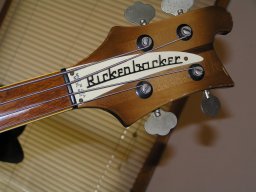
One thing about a Rickenbacker that seems to make sense of this is the placement of the pickups. The bridge pickup is close to where the bottom half of a split P pickup sits and the neck pickup is in EB-O territory. There is a comparison chart on TB with some of the most iconic bass models and their relative pickup placements. Undoubtedly, that has a huge bearing on the overall tone of an instrument.
Jaco was wrong.Jaco said he was going for the upright sound which drove him to defretting his bass. JACO said it HIMSELF
I like it, you did a good job! I've had an idea knocking around in my brain for a modded Bronco. If I ever do it, I might need to come to you for some pickguard advice.The pickguard is my own custom design, i make them myself.
I had one specifically for it's "upright" setting but I was very dissapointed in it. I had much better luck approximating an upright tone with my Hofner Ignition Club bass, Hofner HCT 500/5 President bass and Ibanez AFB200 all strung with nylon tapewound strings and using upright hand positioning, techinque and thinking note selection like I was playing my upright.
interesting stuff, thanks for sharing. i got a tone on my variax that i liked using your same general approach, including the black tapewounds. i would dial the pickup back all the way to the 'neck setting' and also add some 'frowny face' eq. still, the tone i like best on that instrument is the 'tacoma thunderchief' setting ~
Latest posts
-

-

-

-
 Need recommendation on Preamp Pedal with DI, EQ, Compressor and Overdrive
- Latest: Michael Eisenman
-
 How can Fender release a "Vintage" series with an unplayable bridge?
- Latest: MultiScaleMale