
Te distance from ball end to bridge saddle looks pretty short in your design (not sure if I'm seeing what you want to do exactly) Most bridges have an inch or a bit more in their design for this distance. If you don't do that, the doubled over.thing part of the string will be on the bridge, or even extend past the bridge a bit into the active area of the string; that'll affect your tone and intonation.

Enjoy the benefits of a premium membership!
Upgrade Account
-
TalkBass has been independent since 1998. Add your voice.
Create a free account to reply to discussions, view embedded media, and browse with fewer display ads.
Join free Log in
Want zero display ads or expanded classifieds tools? Compare plans.
You are using an out of date browser. It may not display this or other websites correctly.
You should upgrade or use an alternative browser.
You should upgrade or use an alternative browser.
Engineering the cheapest headless system
- Thread starter shai-ga
- Start date
More options
Who Replied?
Have a look at some of the “traveling “ guitars and basses out on the market. Standard tuners used at the end of the body where the bridge usually goes. At least one bass used this design (Kramer Duke I think).


Thanks!
Regular tuners are not an option, since my basses are really small, and that's too much routed space, and I prefer the headless body to be a "closed" slab.
Using metal cubes sounds nice, I can see how I drill the ball end room, but using a threading tool didn't give me great results in the past.
I didn't include saddles in the current drawing, maybe tomorrow with some extra thinking
But the breakthrough for me was finding the right piece (that barrel-flammi nut) to stretch & hold the string. I think that with the correct height setup these will be flush and tight against the bottom surface.
Regular tuners are not an option, since my basses are really small, and that's too much routed space, and I prefer the headless body to be a "closed" slab.
Using metal cubes sounds nice, I can see how I drill the ball end room, but using a threading tool didn't give me great results in the past.
I didn't include saddles in the current drawing, maybe tomorrow with some extra thinking
But the breakthrough for me was finding the right piece (that barrel-flammi nut) to stretch & hold the string. I think that with the correct height setup these will be flush and tight against the bottom surface.

Like anything else, experience helps, and learning how to do it right helps. It's not terribly difficult to do right, but it's also easy to do wrong in a multitude of ways, which can give poor results. But it's certainly well within "home shop" abilities if you are willing to learn. And probably easier to learn to do right than drilling the hole you show into a barrel nut, where you show it being drilled (not easy at all.)but using a threading tool didn't give me great results in the past.

As an Amazon Associate, TalkBass may receive commissions from qualifying purchases made via links on this site.

Problem : with high tension strings, if they are high enough above the center axis of the hex head bolt, might put too much rotational force on the threads. Grease the bolts or you might find you'll have some binding issues.
Trust me, this one only looks like it would work.
The headpiece is useless, with plastic clamping bar, couldn't make it work.
And I'll pass on the bulky bridge system as well. Just sold a real steinberger piece that I could use..
As an Amazon Associate, TalkBass may receive commissions from qualifying purchases made via links on this site.
Trust me, this one only looks like it would work.
The headpiece is useless, with plastic clamping bar, couldn't make it work.
And I'll pass on the bulky bridge system as well. Just sold a real steinberger piece that I could use..
OK. Good luck.
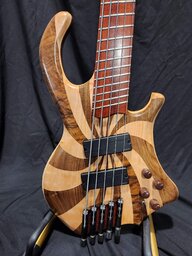
Again, I'm looking forward to seeing your design, but since we're talking about commercially available units: I have used this bridge it works great. In this one the ball end goes up on the head and the string gets inserted into a hole in the bridge, I've had no problems with strings coming loose or anything. The knobs pull out about 3/4" when you're tuning. It's a clever design, but the finish on it is not done that well.
Black Roller saddle 4 String Bass Guitar Bridge for Headless Bass Guitar T4 | eBay
Black Roller saddle 4 String Bass Guitar Bridge for Headless Bass Guitar T4 | eBay
As an eBay Associate, TalkBass may earn a commission from qualifying purchases.
Trust me, this one only looks like it would work.
The headpiece is useless, with plastic clamping bar, couldn't make it work.
And I'll pass on the bulky bridge system as well. Just sold a real steinberger piece that I could use..
I tried a similar tailpiece unit and found that you needed gorilla grip strength to bring the strings all the way up to pitch... Either that or pliers.
Edit - it was exactly the unit in post @Jisch 's post #29. I even have a spare unit that I will give away to an enemy. BTW, it has 20mm string spacing, too wide for an off the shelf replacement neck.
I used some of these on this build. You need an imperial hex key to tune them but they work well and can be spaced however you want.

Here's the build thread >>> 2groggy's Short Scale Travel Bass
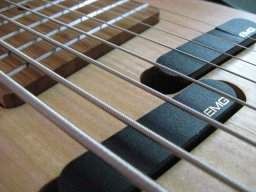
I made my own tuners on my first build. The pictures are scattered through the build, but here is the link to where they start. 1st build, old cat, 8 string tapping instrument, mostly hand tools, great title hu?
The system works well once I realized the tuners would spin without something holding them in place and fixed that. Tuning is easy and stable, I just really don't like having to use a hex wrench to tune, but the leverage is need as just putting thumb screws on this design would never work. Not shown in pictures, is a magnet I put behind the bridge to hold the hex wrench.
The system works well once I realized the tuners would spin without something holding them in place and fixed that. Tuning is easy and stable, I just really don't like having to use a hex wrench to tune, but the leverage is need as just putting thumb screws on this design would never work. Not shown in pictures, is a magnet I put behind the bridge to hold the hex wrench.
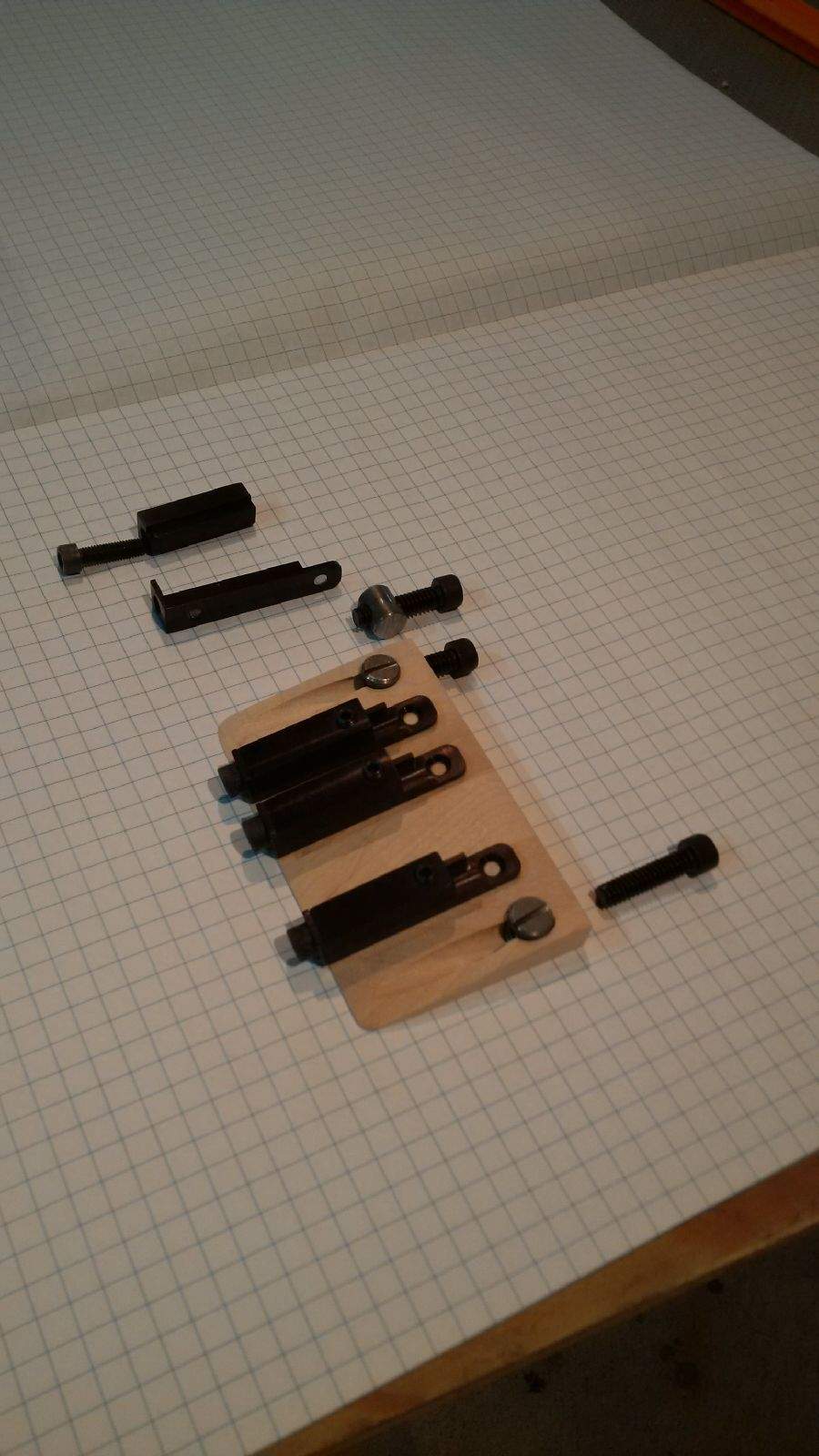
Here's the latest design, I will do tapping for all necesarry 3mm holes.
First is cutting the aluminum \ brass pieces and polishing them to mirror.
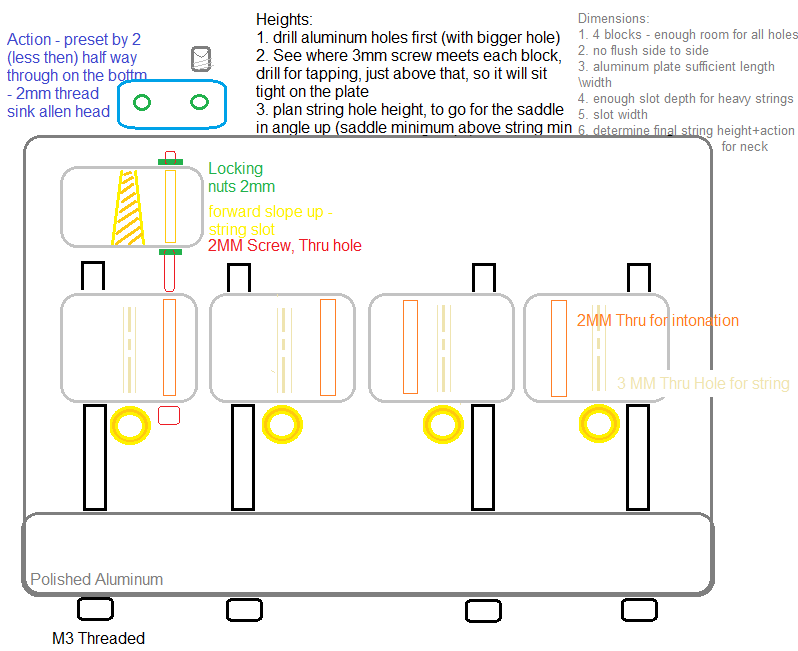

First is cutting the aluminum \ brass pieces and polishing them to mirror.

It’s an interesting design. It looks like the saddles are locked to the tuning portion of the bridge. Doesn’t that mean that the saddles will move and change the intonation when you tune?
They will, and then you correct the final saddle location with some iterations.
I'm confused about why you'd want them linked. It seems like you'll get in a frustrating endless feedback loop. Tuning will throw off intonation, and then when you fix the intonation it's not in tune any more. So you tune it, but now the intonation is slightly off...
Interesting project, as you see, you are not the first..... Putting the tuners themselves aside for a moment, the weak point in the various adapters and widgets devised to clamp strings at the nut (to avoid using double-ball strings) is that they tend to crush the strings in a way that separates the string core from the windings, so you get string breaks at the nut. My Steinberger XP-2 actually came with such an adapter, and it was useless, strings broke constantly. Double ball can still be found in most common guages, I use super-light sets with a .030-.090, and haven't had any trouble finding them. I'd seriously consider using double ball strings, one less problem to solve.
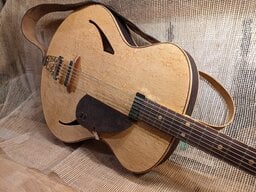
I spent a lot of time designing and building my own headless bridge and tuner system for a concept build I did a few years ago. I probably spent a good 100 hours just on the bridge and tuners. There are a whole lot of things to consider. For anyone trying to make their own, here are some points off the top of my head:
Those are things that I learned over a lot of prototyping. Here's a few pictures of the guitar, the bridge, and some in-progress shots of the machining. I have lots of thoughts of how I would improve it and I will be doing another headless build at some point.
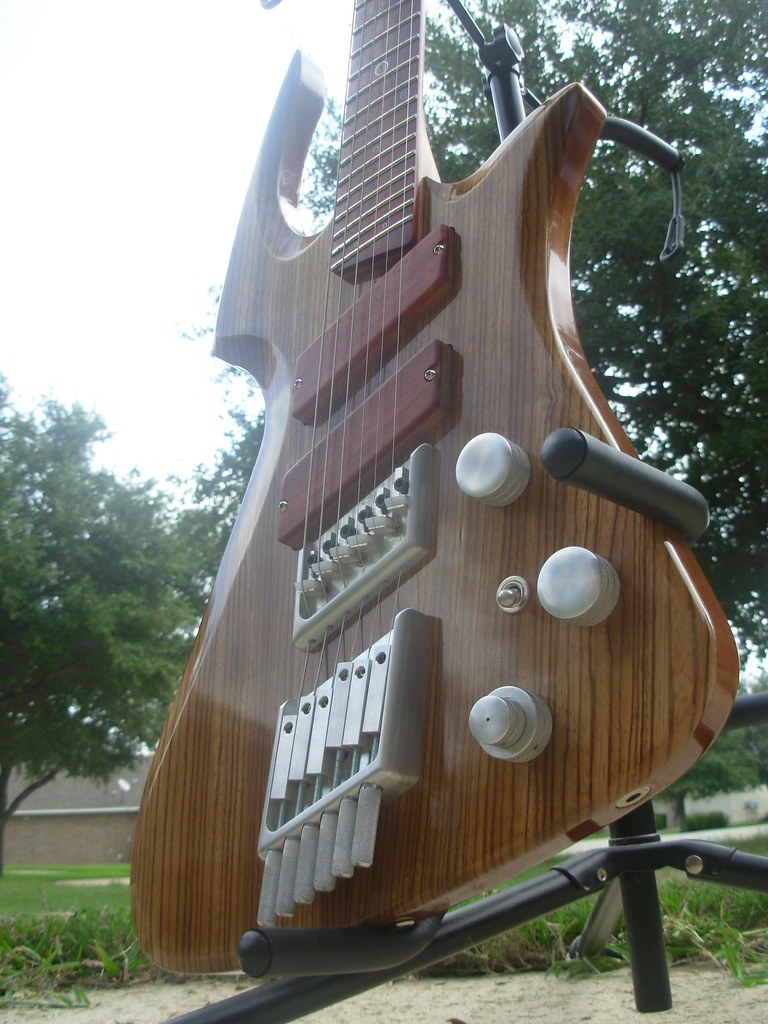


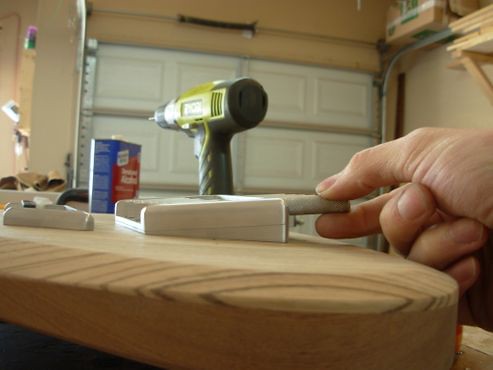
- Ensure enough break angle over the saddle. This can be done a bunch of ways, just make sure you have enough. What is enough? That's kind of up to you, but something like 10 degrees at minimum should be ok.
- Use a fine pitch thread. As fine as you can reasonable get. This allows for precision of tuning as well as less torque required to turn it.
- Use small ball thrust bearings between your knob and bearing surface (back plate). This greatly reduces friction and therefore torque to bring to pitch. I did PTFE washers on my first go and it was much better than nothing, but bearings are a whole new step up.
- If you don't want an ugly cutout, use a slanted mounting piece for the tuner. I found 7 degrees to work quite well, allowed full clearance for my fingers under the tuning knobs. If you go this route, ensure you have a mechanism in place for keeping the break angle over the saddle.
- You want to make sure that the string retaining block doesn't twist when you tune. The way I solved this was using square cross section retaining blocks and keeping them closely spaced. There are more complicated ways, such as channels, dovetails, etc., but I don't see them as strictly necessary.
- Any external tool for tuning is not ideal. I know it can make some parts easier to deal with, but at a cost. I originally toyed with the idea of a hex key, but decided it would be way too inconvenient.
Those are things that I learned over a lot of prototyping. Here's a few pictures of the guitar, the bridge, and some in-progress shots of the machining. I have lots of thoughts of how I would improve it and I will be doing another headless build at some point.
On the Nova headless system the headpiece clamps the strings under a large set screw. I haven't had any strings break on me with that system. When I mounted my first strings the tuner body was too far forward, so I had to unclamp the string and move it back to intonate, exposing the crushed string. I figured that one would break, but it's been fine for a few months now. Because you pull the string through the headpiece and you can pull it tight, you know you're not going to run out of threads before the string is up to tune.
The Mera headless system clamps the string in the tuner and the ball end goes up at the headstock. It's MUCH harder to get the string length correct when you cut them, and if you don't insert the string just right the clamping mechanism cuts the string. You only get one shot at clamping, it's clamping with a sharp edge, so if you have to move anything, the string breaks. I broke probably 4 or 5 strings before figuring out how to do it, at this point I don't remember all I went through, I'd probably break more strings when I replace strings on that one. I would avoid that system.
The Mera headless system clamps the string in the tuner and the ball end goes up at the headstock. It's MUCH harder to get the string length correct when you cut them, and if you don't insert the string just right the clamping mechanism cuts the string. You only get one shot at clamping, it's clamping with a sharp edge, so if you have to move anything, the string breaks. I broke probably 4 or 5 strings before figuring out how to do it, at this point I don't remember all I went through, I'd probably break more strings when I replace strings on that one. I would avoid that system.


