• TalkBass has been independent since 1998. Add your voice.
    Create a free account to reply to discussions, view embedded media, and browse with fewer display ads.
    Join freeLog in
    Want zero display ads or expanded classifieds tools? Compare plans.

Epoxy as Inlay.....

As the title of the thread implies.....

For those of you who make bass necks (I'm still learning....), do you make your own inlays? And if you do, do you use any epoxies? I'm trying to start a side hustle with branding and the like, and I'd like to have a representation of my logo as the octave marker. In a way, I think that epoxy would be an easy way to learn how to accomplish this, as I acquire more knowledge and materials that won't break the bank.:meh::rollno:

I only have 5 projects under my belt and I used cheap pre-fab necks in all of them. Yes, I'm branching out and starting to make necks, so this is just as good a time to learn......from the ground up, if you will.

Any help is greatly appreciated.

Thank you!
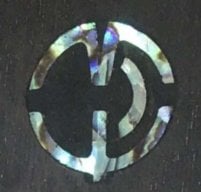
 
I've experimented with epoxy filled routes and decided they always looked cheap and not particularly attractive.
If you're serious you can do your own logo and have them cut from pearl. My pearl logo inlays from DePaule were $6 each when I first started using them but the last batch of name logos were double that. (Probably more now.)

If you're serious about branding don't shoot yourself in the foot.
 
  • Like
Reactions: Twysted Thystle
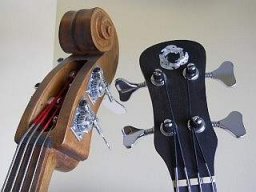
fretboardfini.jpg


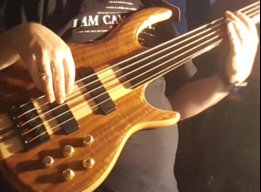
inlaycloseup.jpg


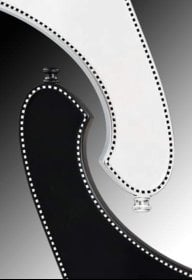
inlays.jpg


Here's a few examples of using epoxy as inlays. Obviously, it's mixed with stuff to give it color or texture. On most of these, I used mica powder. And for what it's worth, I did not have to seal the walls of the inlay prior to filling them. No issues with "seeping". Use quality epoxy (like West Systems) and you should have no issues.
 
View attachment 4394454

View attachment 4394458

View attachment 4394460

Here's a few examples of using epoxy as inlays. Obviously, it's mixed with stuff to give it color or texture. On most of these, I used mica powder. And for what it's worth, I did not have to seal the walls of the inlay prior to filling them. No issues with "seeping". Use quality epoxy (like West Systems) and you should have no issues.
I did some not so intensive research when I was looking at inlay options a few months ago. So, I don't have it all committed to memory. But, one of the things I think I remember reading was a concern with a difference in hardness from the epoxy to the surrounding fingerboard wood when sanding.
Did you run into any issue with this and/or how did you address it?
 
I did some not so intensive research when I was looking at inlay options a few months ago. So, I don't have it all committed to memory. But, one of the things I think I remember reading was a concern with a difference in hardness from the epoxy to the surrounding fingerboard wood when sanding.
Did you run into any issue with this and/or how did you address it?
Good question. I haven't started it yet, but I plan on practicing on a bunch of scrap pieces to get the feel of it. Although pearl or abalone seems more genuine, it's almost price prohibitive. Again, lots of practice.....
 
  • Like
Reactions: dkelley
I did some not so intensive research when I was looking at inlay options a few months ago. So, I don't have it all committed to memory. But, one of the things I think I remember reading was a concern with a difference in hardness from the epoxy to the surrounding fingerboard wood when sanding.
Did you run into any issue with this and/or how did you address it?

No issues. These inlays have been stable for several years now. The top picture is from a bass that has since been disassembled. The neck has sat out in my workshop for a couple of years, which gets to well over 110 degrees during the summer. It's still stable.

And the maple wood I used for each of these necks has no seeping, not "less seeping".
 
  • Like
Reactions: RichterScale
for what it's worth, I did not have to seal the walls of the inlay prior to filling them. No issues with "seeping"
On the flame design inlay... you cut the pocket on a laser, if I remember correctly.
So the pocket was essentially sealed by the heat of the laser ... much like a Shou Sugi Ban treatment.
... just saying. :p
 
  • Like
Reactions: dkelley
On the flame design inlay... you cut the pocket on a laser, if I remember correctly.
So the pocket was essentially sealed by the heat of the laser ... much like a Shou Sugi Ban treatment.
... just saying. :p

Yes, the flame design was cut by the laser. However, the Ric style inlays I cut by hand with a fret saw.
 
No issues. These inlays have been stable for several years now. The top picture is from a bass that has since been disassembled. The neck has sat out in my workshop for a couple of years, which gets to well over 110 degrees during the summer. It's still stable.

And the maple wood I used for each of these necks has no seeping, not "less seeping".
I believe that he was asking about sanding, not seeping, in the question you quoted.
 
  • Like
Reactions: RichterScale
Black or dark epoxy inlay will indeed seep pretty badly on maple, there was a thread devoted to the problem a while back:
Maple soaking up black epoxy on inlay, horrible results, HELP!
The cure seems to be sealing the grain on the inlay recess first. I dont know if just clear epoxy first is better than CA glue, but at least im sure epoxy will stick to more epoxy. Ive done crushed pearl inlays like @mapleglo, but only on bubinga boards. I pre-sealed the inlay recesses with tinted epoxy, but mainly just to keep the dark wood from showing through the inlay.
 
As the title of the thread implies.....

For those of you who make bass necks (I'm still learning....), do you make your own inlays? And if you do, do you use any epoxies? I'm trying to start a side hustle with branding and the like, and I'd like to have a representation of my logo as the octave marker. In a way, I think that epoxy would be an easy way to learn how to accomplish this, as I acquire more knowledge and materials that won't break the bank.:meh::rollno:

I only have 5 projects under my belt and I used cheap pre-fab necks in all of them. Yes, I'm branching out and starting to make necks, so this is just as good a time to learn......from the ground up, if you will.

Any help is greatly appreciated.

Thank you!
People don’t like to buy brand markings at the 12th fret, but epoxy is workable as inlay material.
 

Latest posts