• TalkBass has been independent since 1998. Add your voice.
    Create a free account to reply to discussions, view embedded media, and browse with fewer display ads.
    Join freeLog in
    Want zero display ads or expanded classifieds tools? Compare plans.

Extended low B...Huh??

http://cgi.ebay.com/SUPERB-Fodera-Imperial-5-Elite-with-Extended-low-B_W0QQitemZ190298270128QQcmdZViewItemQQptZGuitar?hash=item190298270128&_trksid=p3286.c0.m14&_trkparms=72%3A1205%7C66%3A2%7C65%3A12%7C39%3A1%7C240%3A1309%7C301%3A1%7C293%3A1%7C294%3A50

Ok, i was reading the "should i buy a fodera bass" or whatever thread and figured id check out what the ebay market was for such a bass. I came across this (see link).

What impact does this "extended low B" have. Cause' i thought such a thing had no impact on various things that make a B a good B. Tension, what not, etc.

I do recall reading a Tim Commerford thread where he had a lefty headstock strung BEAD, and said that the length of the B string makes it more playable.
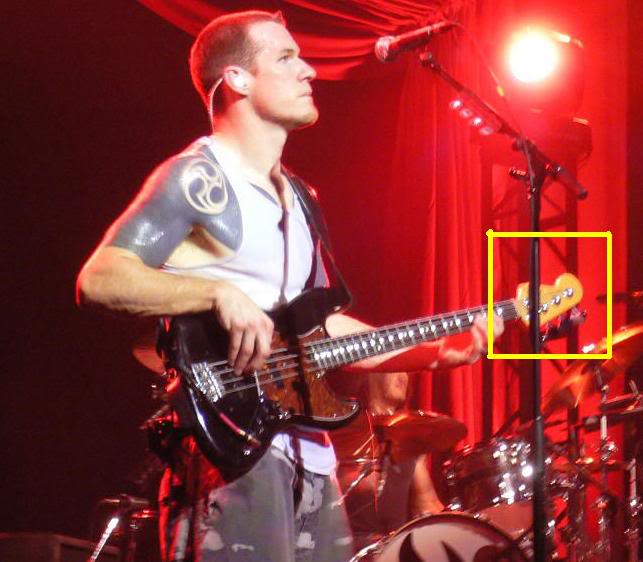
DropB.jpg


Im looking for clarity here. Drop some knowledge people.
 
As an eBay Associate, TalkBass may earn a commission from qualifying purchases.
Unfortunately all anyone has on this subject is opinion, nothing that could be called an established or agreed-upon fact. Some people think it makes a difference, others argue that it can't make a difference, others argue that maybe it could possibly make a difference but they don't hear a difference anyway, etc. Usually the people that "hear a difference" prove their point by saying "if it didn't make a difference then why would a premier boutique luthier like Fodera say it makes a difference--are you saying he doesn't know what he's talking about?" ...completely ignoring that other world-class luthiers disagree with Fodera. It's all very vague and subjective and IMO based on voodoo more than anything else. A Fodera may have an excellent low B, so a fan of Foderas will point to the extended section as a reason why. But that may not actually be the reason why.
 
The extended B is a much debated design, with some camps convinced it makes a difference, and other camps saying it's physically impossible for it to make a difference. I've tried a Fodera and a non-Fodera bass with this headstock design, and the basses in question did have great B strings. However, I'm not ready to fully credit the extended B headstock as the reason why they worked so well. AFAIK, the extended B headstock does not add anything to the cost of a Fodera bass, so the notion of "it's GOTTA be better because it costs more" is out of the equation, IMO.

Do a search on username "thepontif", which is the handle that Mike Pope posts under - he's a preamp designer for Fodera as well as for his own company, and is a great player to boot. He explains the reasons why the extended B works for him on his Fodera bass.

Ultimately, I don't think there is a "right" answer regarding whether or not the design is effective in improving the B string performance. For me, If there was an immediately obvious difference with an extended B string, I think there'd be as many basses available with this headstock design as there are 35" scale basses now.
 
Yeah, the lefty neck on a righty bass trick. Looks cool. Does nothing.
Well, OK, maybe it does SOMETHING, but nobody knows exactly what. No, I've never tried it.
Makes the B string longer, IF you ignore the nut. If anything, this would make the B string feel softer, as there is more stretch available, provided the nut allows the string to slip easily back and forth as you fret/bend notes. But I doubt it.
It DOES NOT affect the tension at pitch, at all. Anyone who says otherwise is full of it. The nut make this so.
Difference in mass distribution? Sure. No idea what that would do, but my guess is, nothing. There's a reason this design hasn't been mass-adopted.
 
It DOES NOT affect the tension at pitch, at all. Anyone who says otherwise is full of it. The nut make this so.
Difference in mass distribution? Sure. No idea what that would do,

QFT ('quoted for truth', for those of you not up on your internet acronyms ;))

And my guess is that the whole 'more stretch to the string' theory is useless in any practical situation. When you fret the B-string, how much does it actually stretch past the nut? Look closely. I can't see anything stretching. Maybe on some microscopic level, but nothing that would noticeably affect the tone. Same for any kind of normal string bending.
 
[Devil's Advocate] Does it matter whether a string fits properly in the nut slot? Isn't it true that tension is the only thing affecting the string's performance, and the width or depth of the slot has no bearing on the tension. Right? [/D.A.]
 
Interesting debate. Logically it does nothing to lengthen the part of the string that vibrates, and therefore does nothing directly. Indirectly the string is lengthened in an unplayable part (much like through body designs at the bridge), which should give you some sort of improvement in sustain, but not very much and is certainly debatable.

More than that trick, I'd be interested in buying a 35 inch scale bass that physically can be fitted with a longer string in the playable area that can give more tension, or I'd be interested in buying a set of strings that inherently have more tension in them (ie. rotosounds can have lower tension than d'addario, etc etc). Changing the headstock is a gimick - although it "might" give you some more sustain on your b string, but I doubt you'd be worried about that or even notice the difference. What kind of strings does it come with?
 
[Devil's Advocate] Does it matter whether a string fits properly in the nut slot? Isn't it true that tension is the only thing affecting the string's performance, and the width or depth of the slot has no bearing on the tension. Right? [/D.A.]

You're right that the nut has no affect on the string's tension. The nut is basically just another fret that is always 'fretted'. It isn't pulling the string one way or another. The nut does affect the string's performance though, since it keeps the string from buzzing on open notes (if it's cut to the proper width/depth) and it keeps the string at a certain height.
 
I agree. The effects of the extended B has not been, and probably never will be, quantified. The non-speaking length of strings may or may not affect the sound of a guitar or bass. It's a known fact that it does in some piano designs, so it probably plays some role in guitars and basses. Mason & Hamlin (a Steinway level instrument) uses aliquots which are little tunable "bridges" that tune the non-speaking length of most of the treble strings to be consonant with the tuned pitch of the speaking length. So either a 4th, 5th, or octave (or a combination) away from the speaking length's pitch.

Stretched strings have two modes of vibration...one is transverse and one is longitudinal. The nut does NOT necessarily stop the longitudinal vibration of the string. This depends on the angle of the string over the nut. Steeper means less vibration gets through. It obviously stops the transverse vibration. For that reason, the actual tension at pitch is not affected by anything beyond the "stops" that determine the speaking length. But because the longitudinal vibration frequency DOES change with changes in length beyond the string's speaking length and is not affected by tension in the same manner as the transverse vibration, changing the non speaking length of a string DOES change the sympathetic interaction between the transverse and the longitudinal vibration of the string. This interdependency between the longitudinal vibration and the transverse vibration of a stretched string is the whole basis for Harold Conklin's synchro-tone strings found in the Baldwin SD-10. He came up with the formulas for winding strings so the longitudinal vibration was always consonant with the transverse vibration. It's patented and very, very documented.

This is documented and proven fact. BUT, the extent to which it has a REAL effect on the sound of a 34" long B string is mostly subjective in practice. I believe that all things being equal, the extended B most definitely CHANGES the character of the B string. I also believe that it could be in part because of the very real principles I mentioned before.

In fact, my bass has an extended B because I was trying to keep the non speaking length of as many strings as possible to be the same as a J bass. It was an experiment. So the E needed to be first and the A second. The only thing left was the end. So we tried it. And now we're having a conversation about its relevance which is....irrelevant :-)
 
[Devil's Advocate] Does it matter whether a string fits properly in the nut slot? Isn't it true that tension is the only thing affecting the string's performance, and the width or depth of the slot has no bearing on the tension. Right? [/D.A.]

It doesn't effect the static tension at pitch. But if the groove isn't deep enough, the string will be hard to push down near the nut. C'mon. That's obvious.
 
And to put some clarity into this in a useful way, you'd probably have much more significant gains from simply getting a longer scale-length bass than from extending your B string. But don't call it a gimick. It was an experiment that somebody took too seriously and it wasn't Fodera.
 
Personally I feel the extended "INK" in the photo has as much impact on the Low B than the extended string length.

Some like the look, some think it helps... Someday I'll mod another P-bass with a reverse tele neck in one of the many fashions I keep mocking up...

Invalid Link Removed
 
I agree that string past the bridge and nut doesn't make too much of a difference for me.

Makes the B string longer, IF you ignore the nut. If anything, this would make the B string feel softer, as there is more stretch available, provided the nut allows the string to slip easily back and forth as you fret/bend notes. But I doubt it.

Just to clarify this point. If you plug your bass into a good tuner, play a note and then press gently down on the string between nut and tuner, you should be able to see that the nut tends to let the string slip pretty well.