
Enjoy the benefits of a premium membership!
Upgrade Account
-
TalkBass has been independent since 1998. Add your voice.
Create a free account to reply to discussions, view embedded media, and browse with fewer display ads.
Join free Log in
Want zero display ads or expanded classifieds tools? Compare plans.
You are using an out of date browser. It may not display this or other websites correctly.
You should upgrade or use an alternative browser.
You should upgrade or use an alternative browser.
Extreme left thumb muting
- Thread starter Cat Fancier
- Start date
More options
Who Replied?


I don’t really do it on bass but I use my thumb to mute and also to play some walked bass notes when chording on guitar.
Bobby Vega mutes and sometimes frets with his thumb.
Off topic, but is that Bobby's Precision that the EMG Geezer Butler pickup is cloned from?
Yep!Off topic, but is that Bobby's Precision that the EMG Geezer Butler pickup is cloned from?

Muting with the fretting hand thumb, in and of itself, Is not bad. But, if the change in hand shape affects the ability of the fretting fingers to do their job speedily and efficiently, Then I would reconsider doing it.

OP says he doesn't do any real technical "spider finger"stuff all over the fretboard so.........

Bobby Vega does this kinda thing when he’s playing toward the lower register and he’s killer
https://youtu.be/MPzwuiJCSbs?si=ipDdA6IC5AacnsER
https://youtu.be/MPzwuiJCSbs?si=ipDdA6IC5AacnsER

...
Is there a compelling reason why I should tough it out and retrain myself in a more orthodox method?
Yes there is. The consequence of positioning you arm/wrist/hand in such a way that your thumb can reach over to touch the E, A and D strings is that your fingers are pulled away from free access to the fingerboard. You are inducing severe bends into your fingers that will reduce mobility and create constant tension in the muscles and tendons used to get them there. This reduced mobility will severely limit your play to the most simple parts and reduce the time before fatigue sets in. I would caution against taking anything from those pictures of Sting and all of the other static images folks will inevitably post to justify playing that way - in all likelihood he is not actually playing anything of any consequence. We all have moments between songs where we hold the neck that way - taken out of context they don't mean anything.
YMMV

Half what I play I do with a pick (fat crunchy HC/punk/metal style), in an aggressive "guitar" wrist swinging manner, even on 5 strings. Left hand muting is all, thumb included. The way I mute I don't need to go past the E string with my thumb, either on 5 or 4 strings. I consider that totally legit by the only standard I care about really: gets the job done nice without hurting my fretting hand/wrist. I say do it if it doesn't do any damage or forces you into an unnatural position. Try adding the rest of your fretting hand fingers to your muting technique for efficiency (thus less thumb intervention). Once I got into that game it quickly became second nature to strategically keep applying "non-fretting" pressure on strings with all the fingers that aren't fretting to mute them. It greatly impacted my fingerstyle playing too, cleaner and really enabling if you're into groovy stuff full of ghost notes (not my case sadly, except when practicing).

It's not proper technique but it's how I taught myself. My thumb will mute the E & A but not the D or G. Huge hands help with reach but I've also learned to incorporate the thumb behind the neck as well, depending on the song.
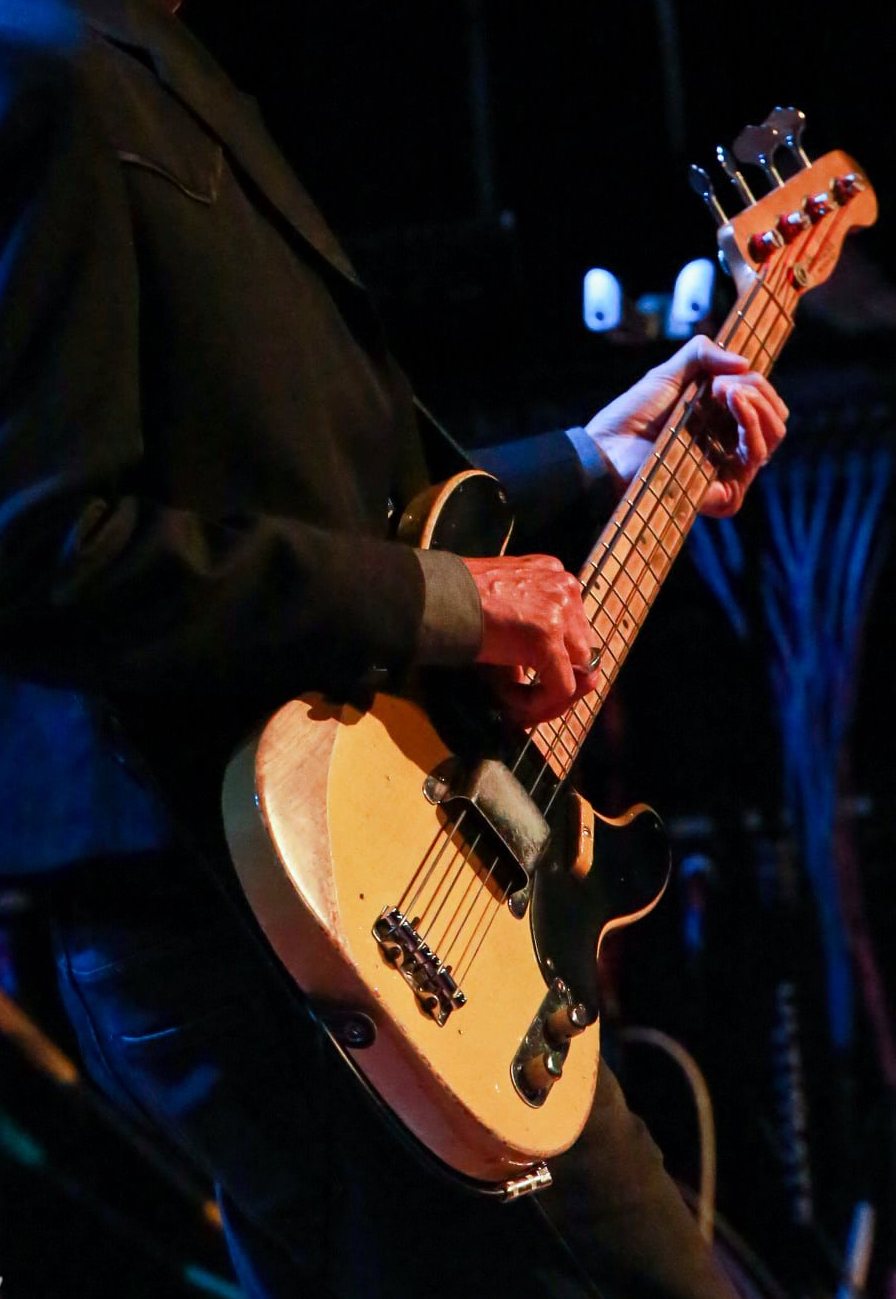


I think that since you ask, you are probably open to move on with your technique. I'd learn the 'proper' technique, if only just for the fun of it. It's not hard, and it will greatly strenghten your pallete of fingering choices, endurance, and musical expression.
This cool old video pretty much sums up all important stuff to think about regarding why:
This cool old video pretty much sums up all important stuff to think about regarding why:



I'm just coming back to stringed instruments after years of making music on computers. I was never a great instrumentalist and I developed a technique on bass and guitar of muting the bottom strings with my left thumb. No just the E string--all stings below the one I'm playing. I'm not interested in any virtuoso stuff. Just walking bass and riffing. I've got a lot of muscle memory that never went away. Is there a compelling reason why I should tough it out and retrain myself in a more orthodox method?
No.
Someone beat me to it--- but Louis Johnson does some cool stuff that I can't do with my left thumb.
I've been playing over 50 years and my 1st teacher came from the upright world, so he was strict about thumb behind the neck at all times. I also learned DB after about 6 years of playing and play EUB quite often.
Louis probably couldn't play some really technical stuff, but his originality and creativity sure made him an in demand player.
I've been playing over 50 years and my 1st teacher came from the upright world, so he was strict about thumb behind the neck at all times. I also learned DB after about 6 years of playing and play EUB quite often.
Louis probably couldn't play some really technical stuff, but his originality and creativity sure made him an in demand player.

My little girly-man hands are not nearly big enough to do what he's doing. Having long fingers does open up possibilities for using your thumb for fretting or muting.


