• TalkBass has been independent since 1998. Add your voice.
    Create a free account to reply to discussions, view embedded media, and browse with fewer display ads.
    Join freeLog in
    Want zero display ads or expanded classifieds tools? Compare plans.

Fanned frets 4 string

It has been awhile since I posted some pictures.
So an update what I so far.

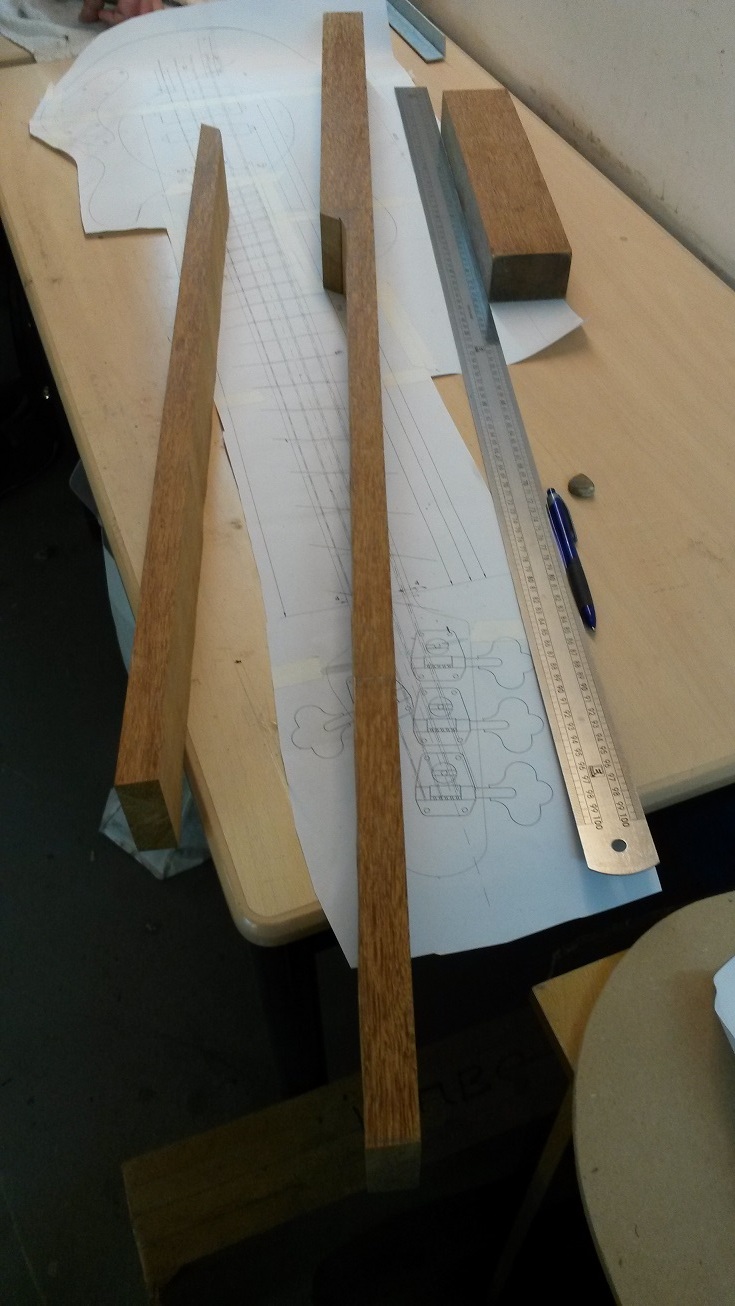
First I cut out the shape of the neck:
FFB20.jpg


FFB21.jpg


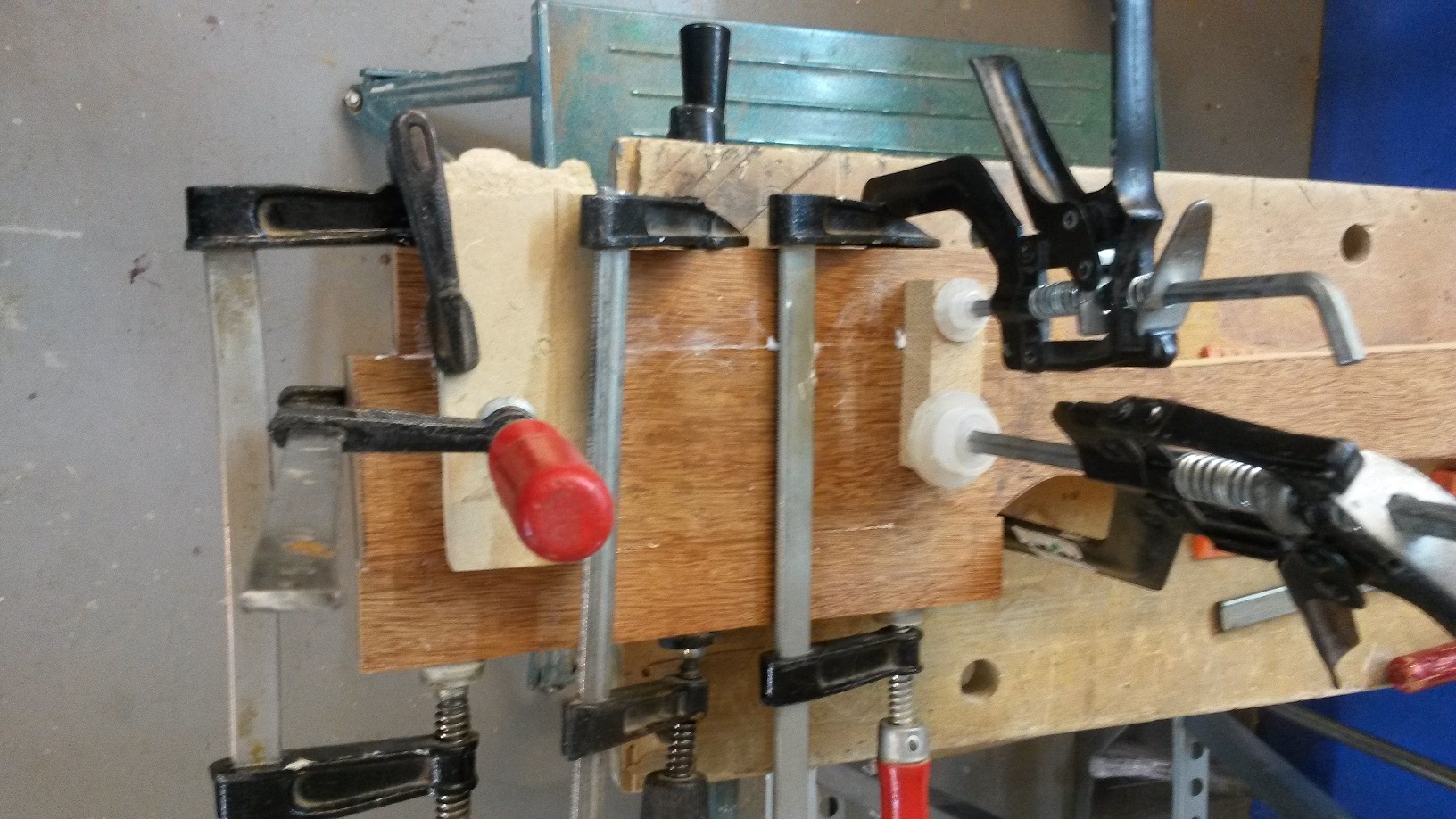
Then I glued some pieces of the left over wood for the headstock:
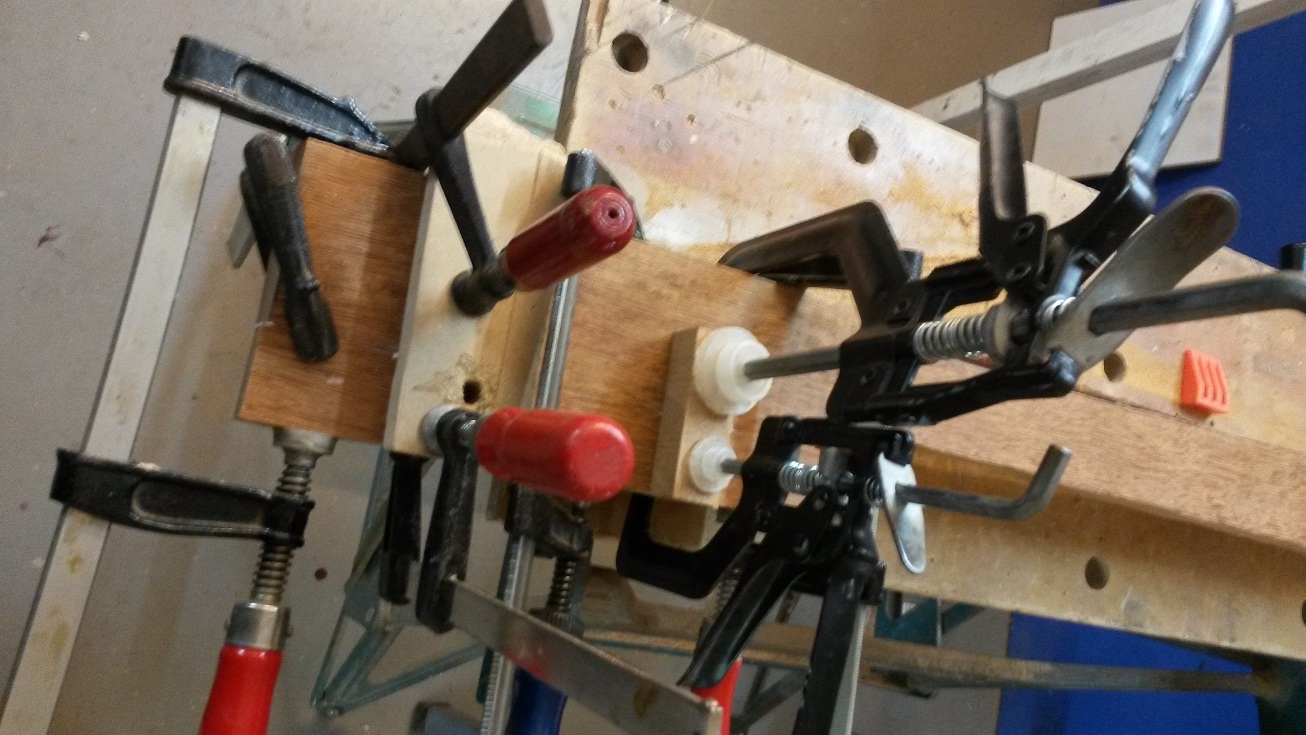
FFB23.jpg


FFB24.jpg


Time for the fretboard!

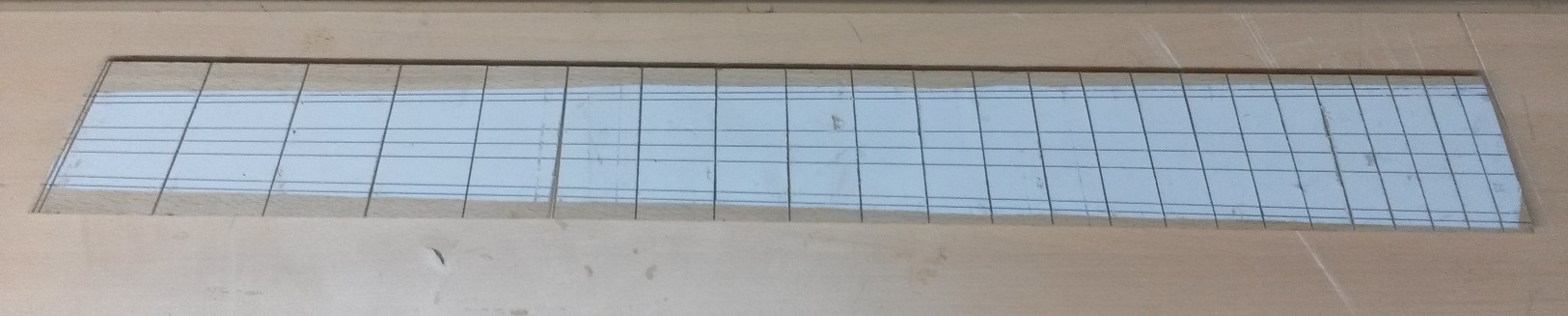
With the program fretfind2D ekips.org - FretFind2D I was able to create a PDF of the positions and angles of the frets.

Then I printed the PDF on 2 A3 sheets and glued it to a piece of beech wood (5mm thick). Beech wood is, I think comparable with maple.
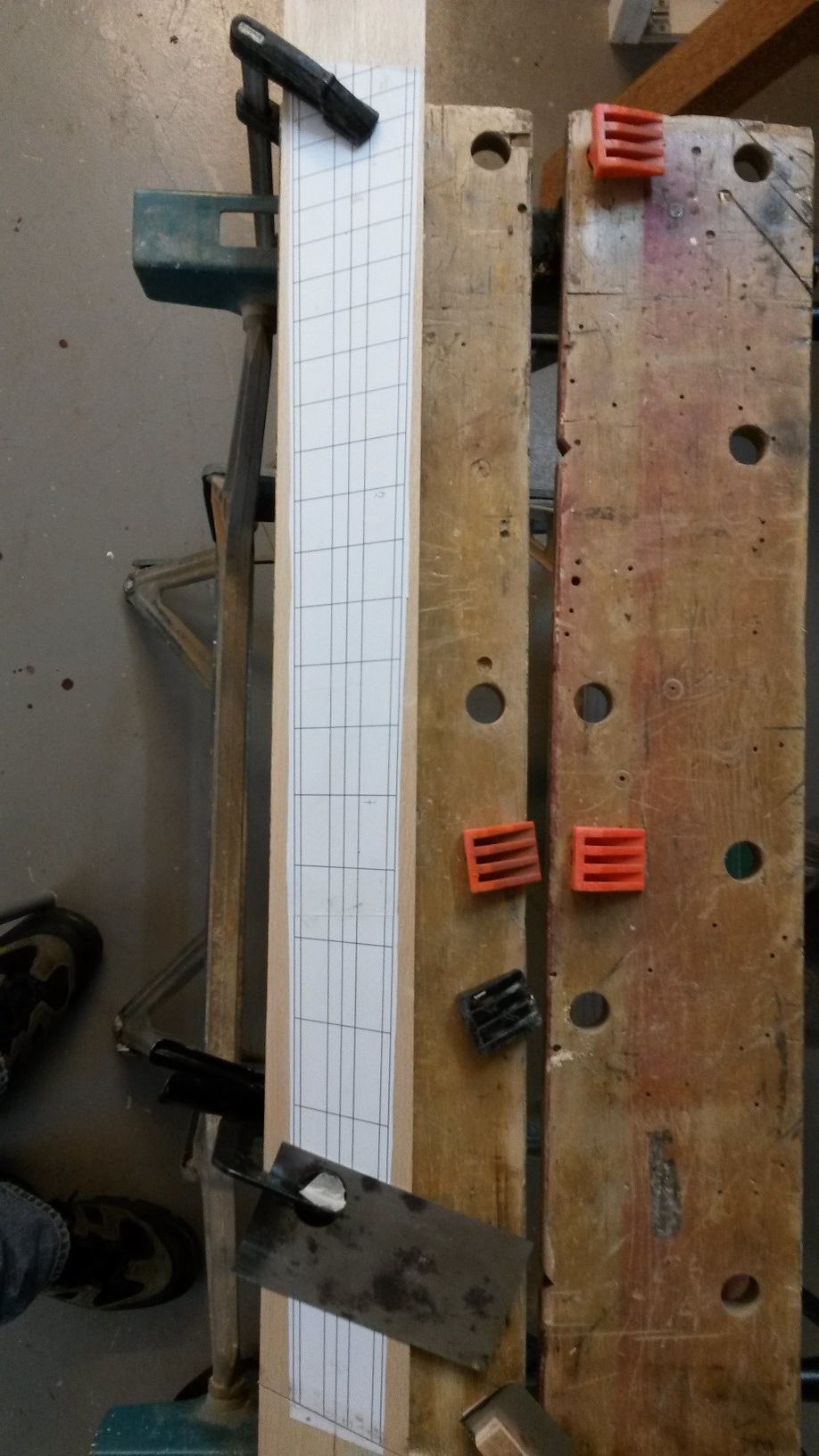
FFB26.jpg


Then with a metal scraper as a guide and a tool I made of a part of the blade of a Japanese saw, I could cut out the fret slots.
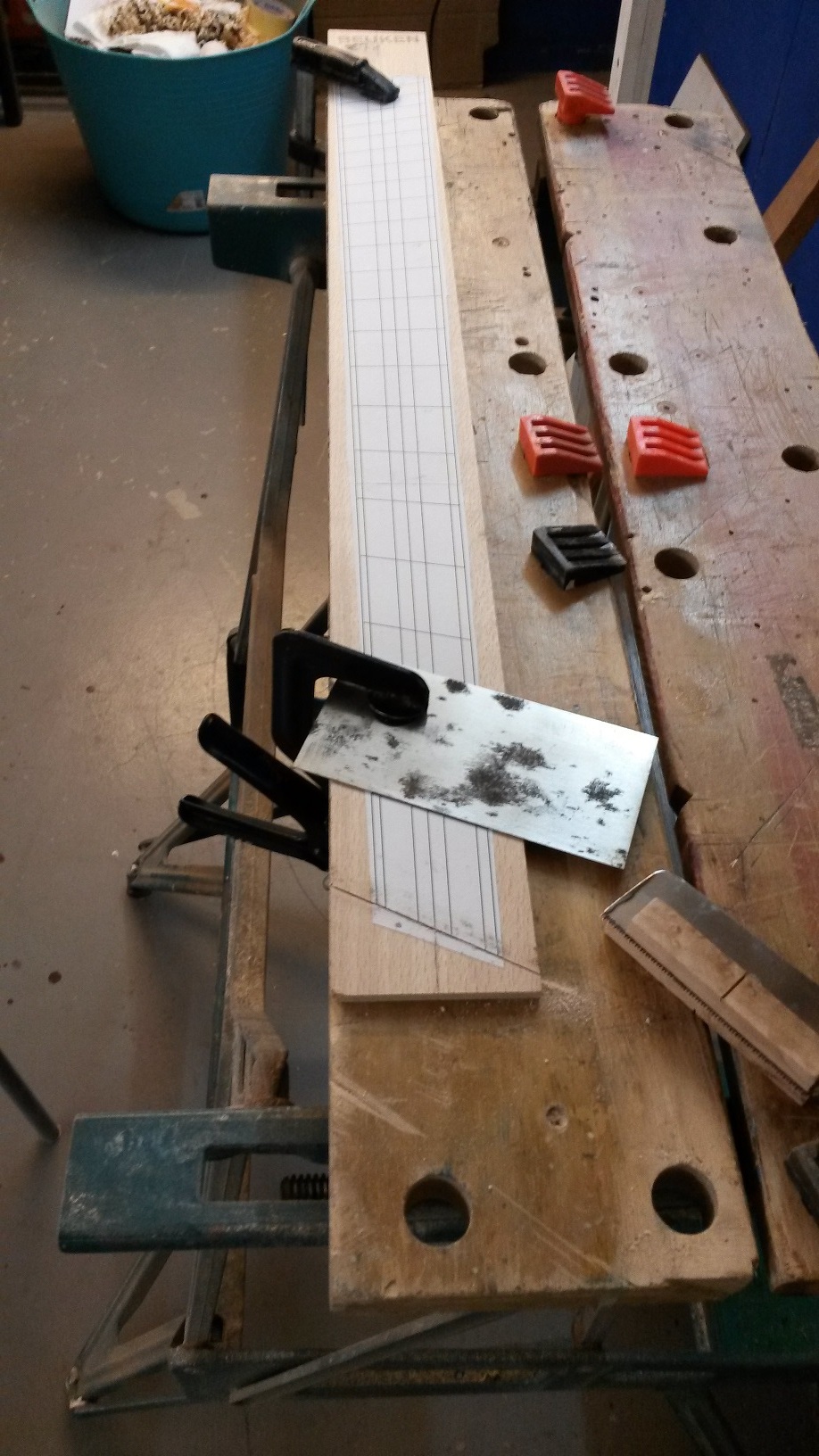

FFB25.jpg


All fretslots done!

FFB29.jpg


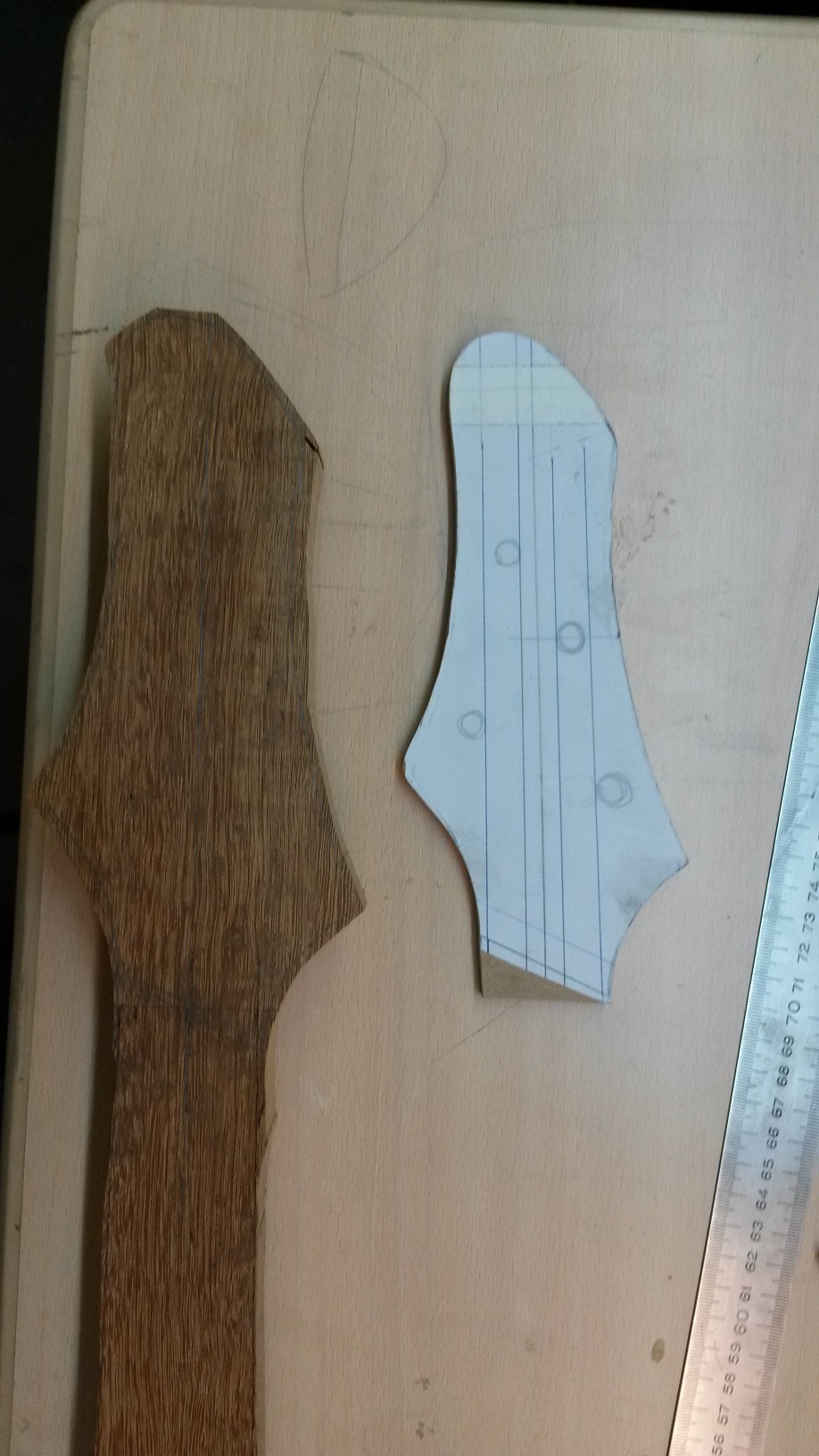
Time for the headstock.

FFB30.jpg


Meanwhile I made a slot for the trussrod and glued the fretboard on the neck blank. Because the fretboard is just 5mm I removed some wood of the neck blank to create a hight of 10mm between the top of the fretboard and the body.
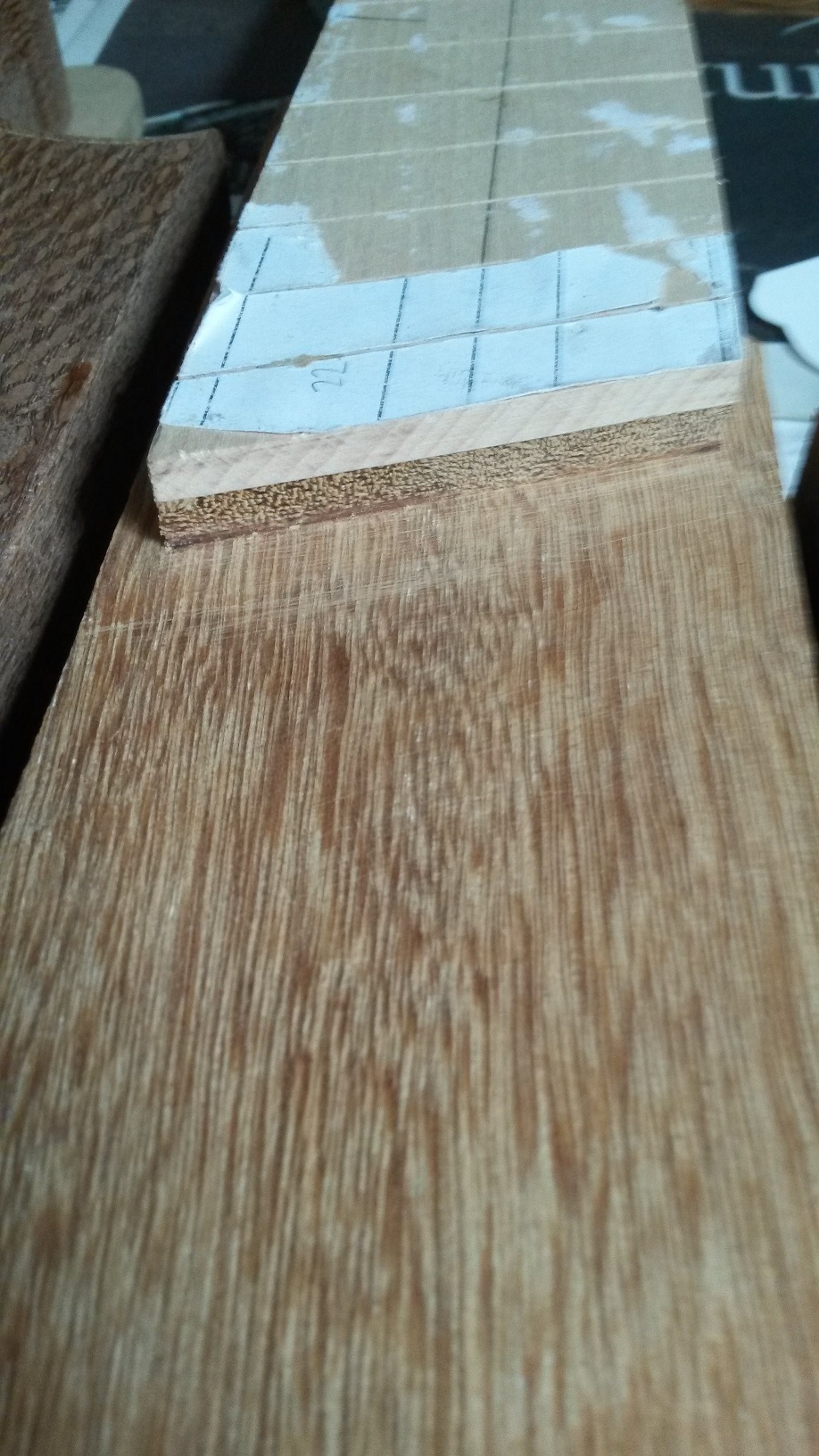
FFB31.jpg


I was also able to cut out the wings out of the lacewood with a round over on the top side.
It starts to look like a bass now.
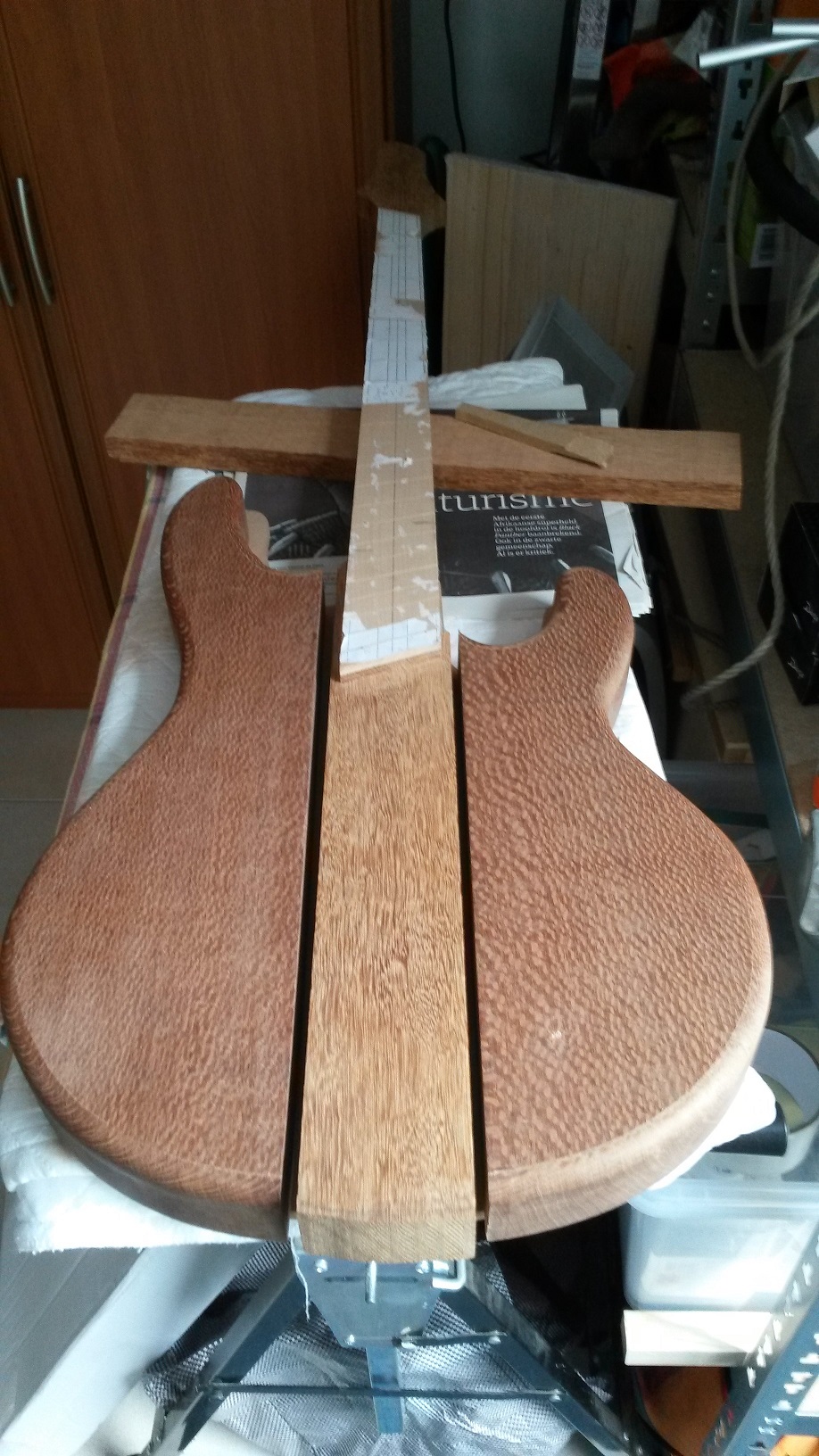
FFB32.jpg


The headstock with help of the template and the router:
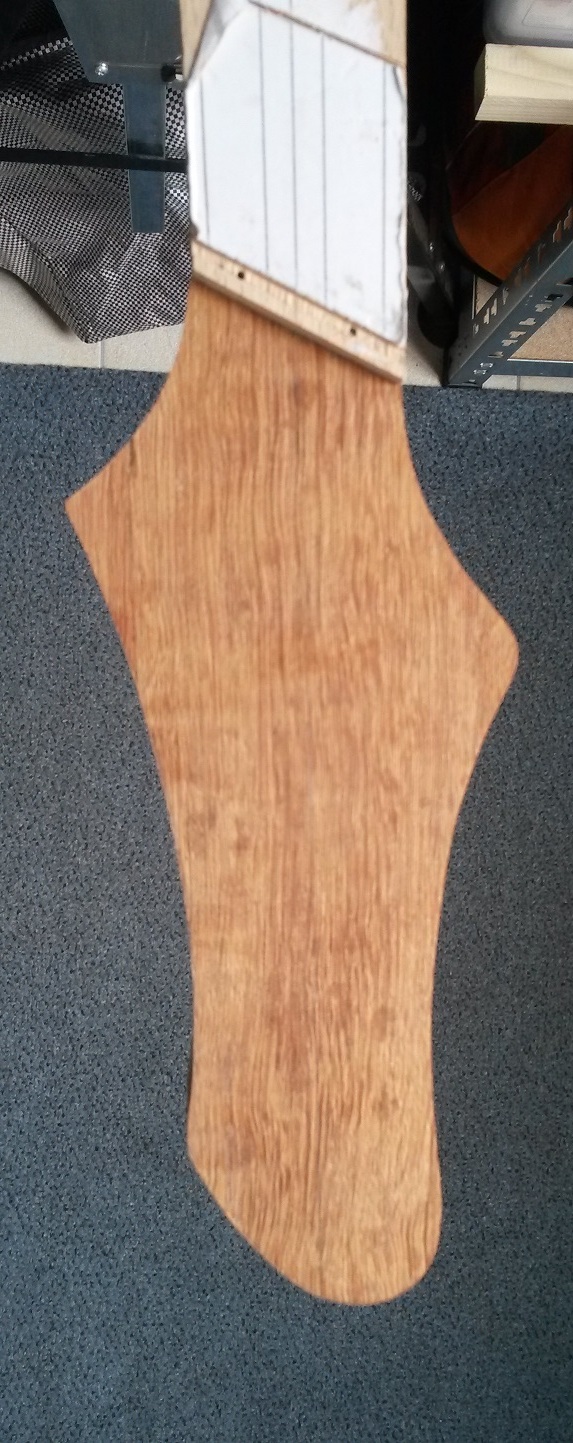
FFB33.jpg


More to come!!
 
Last edited:
Don't understand if you made a compound scarf-joint for the headstock or if you simply used the leftovers to gain some width for the headstock. Is it flat?
I hope it will work for you but have to admit I'm not sure Lacewood was the best choice for the neck. I have some, it's not a stiff wood at all (at least for my standards).
You risk to end up with something like a Mahogany neck... but maybe it's what you're after?
Good job on the body shape, though!
 
It is time for an update!
First I did was doing the profile of the neck and the transitions from the neck to the headstock and body (roughly).
FFB34.jpg


FFB35.jpg

FFB36.jpg


I am going to use a Diego soapbar pickup meant for a 5 string, but because it it wil be placed in an angle I need the extra length.
FFB37.jpg

The body wings are not glued to the neck in this picture above.

FFB38a.jpg


A few weeks later the wings are glued to the neck and all the pieces are levelled.
FFB40.jpg


The back, as you can see I also made a cavity for the electronics.

FFB41.jpg


FFB43.jpg

A detail of the fretboard, neck, body:
FFB44.jpg

The headstock:
FFB45.jpg


FFB47.jpg


The lacewood is heay. As it is now the bass weighs 4.3kg (9.5lbs). I did drilled holes in the wings to reduce weight otherwise it would have gone to 5kg (11lbs).

More work to do and more (pictures) to come.
 

Attachments

  • FFB38.jpg
    FFB38.jpg
    291.2 KB · Views: 28
  • FFB38.jpg
    FFB38.jpg
    235.4 KB · Views: 25
Last edited:
Today I didn't have to go to work, so I could spend some time on the bass.
The weahter is nice, so I can work outside.

I dediced to make a 9.5 raduis on the fretboard. With a strip of aluminium as a guide...

FFB51.jpg


FFB52.jpg

FFB53.jpg


And after an hour, this is the result. The beech fretboard lookgood, nice grain.
FFB54.jpg


And a hole for the output:
FFB55.jpg


FFB56.jpg


FFB57.jpg


I gave a piece of scrap lacewood several layers of clear coat, to see what the effect is:

FFB58.jpg


FFB59.jpg


Suggestions for finishing lacewood are welcome!
 
If you do go Tru-Oil or similar, please post progress shots! I've seen 10 different videos with 10 different techniques, anywhere from satin to high gloss. I'm planning on using it on my Hossenfeffer II bass, which is figured walnut. I did one gunstock with Tru-Oil years ago, but I kinda botched it.
 
If you do go Tru-Oil or similar, please post progress shots! I've seen 10 different videos with 10 different techniques, anywhere from satin to high gloss. I'm planning on using it on my Hossenfeffer II bass, which is figured walnut. I did one gunstock with Tru-Oil years ago, but I kinda botched it.

I will make some samples with oil. In the past I used Danish oil for some of my guitars. Most of the time they became "satin" after awhile. Will there be a difference in result between Danish oil and Tru Oil?

Here are some earlier projects with Danish Oil:
36a.jpg


51a.jpg


EUB, Danish oil just applied and stil glossy:
PICT0058a.jpg


PICT0061a.jpg
 
  • Like
Reactions: Matt Liebenau
I've never used Danish Oil, so I can't compare, but I've used Tru Oil on the last 6 or 7 instruments I've made.

On the first coat I keep applying until the wood won't absorb any more finish, how much oil I apply depends on the wood, then I apply 2-3 more coats. Then I'll do a slurry coat where I use 400 grit sandpaper to sand the finish using Tru Oil as the lubricant, basically sand until it starts to get sticky, this does the pore filling and smooths out the coat. When you get done with that coat your bass will look terrible and you think you've ruined everything.

Once the Tru Oil is dry, I dry sand it with 400. Then I add thin coats until I have good coverage and sheen overall - usually another 6-10 coats. On my recent built I used a foam polishing wheel in my drill and swirl remover to polish the bass up after it was complete. If you don't do that step Tru Oil gets shiny, but I wouldn't consider it a really glossy finish. After the anti-swirl treatment it's a high gloss finish, but it's not thick like a sprayed on finish.

On my necks I do the same as above, but I knock the shine down with 600 grit sandpaper and put a coat of wax on them. They end up super smooth and never sticky.

That lacewood looks nice. I've never used it before, but it looks like I should!
 
Ive used Danish on a couple basses, it is stupid easy, and great for satin finish. It seems to take a longer time to cure than Tru-Oil, and I don’t think it dries as hard. If you want semi gloss, Tru takes a shine better. I hand buffed a gun stock up pretty shiny, I’d like to try the wet sanding technique.
 
  • Like
Reactions: TonH