• TalkBass has been independent since 1998. Add your voice.
    Create a free account to reply to discussions, view embedded media, and browse with fewer display ads.
    Join freeLog in
    Want zero display ads or expanded classifieds tools? Compare plans.

Fanned frets 4 string

After several builds where I learned a lot, it is time to go to the next challenge and do a fanned frets bass.

I have played 5 strings basses but I don't like them, so I do a 4 string bass.

Design considerations:
- scale 35inch for E string, scale 34 inch for G string
- perpendicular fret: 8

The body? There must be enough room for the solo rail bridge for the E string.
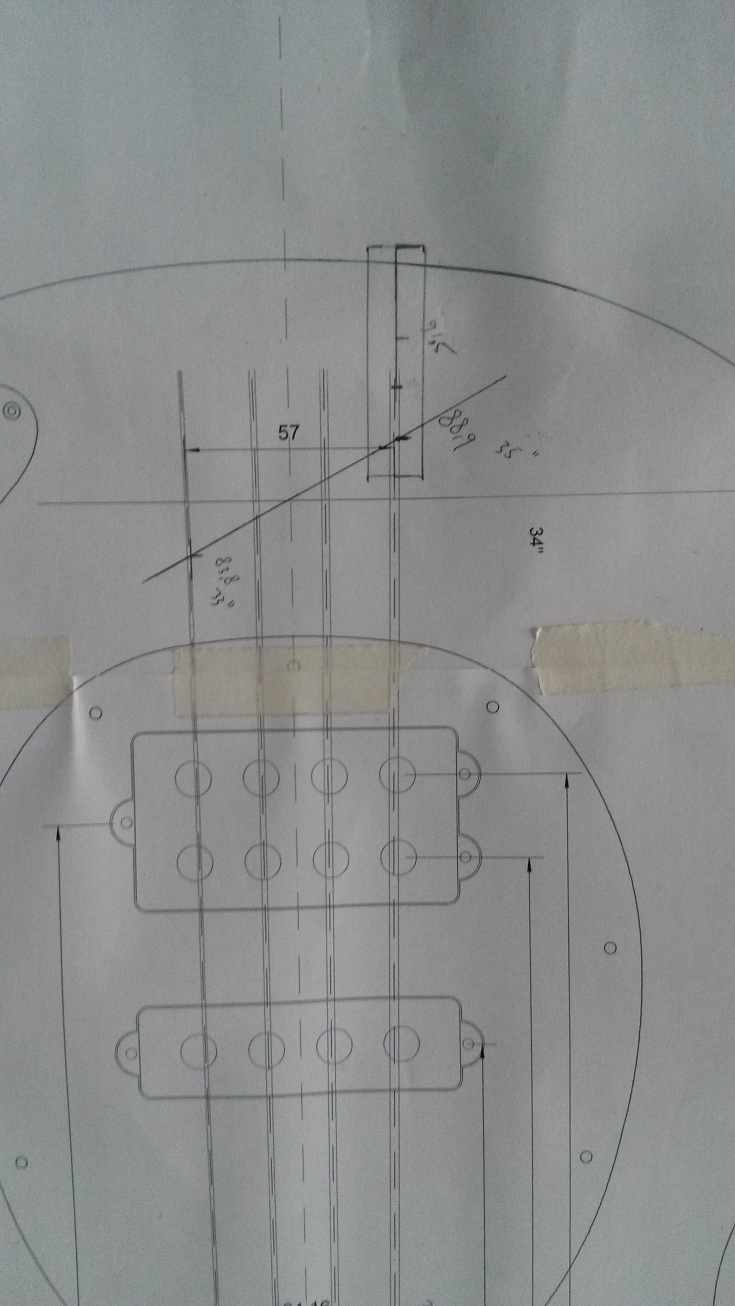
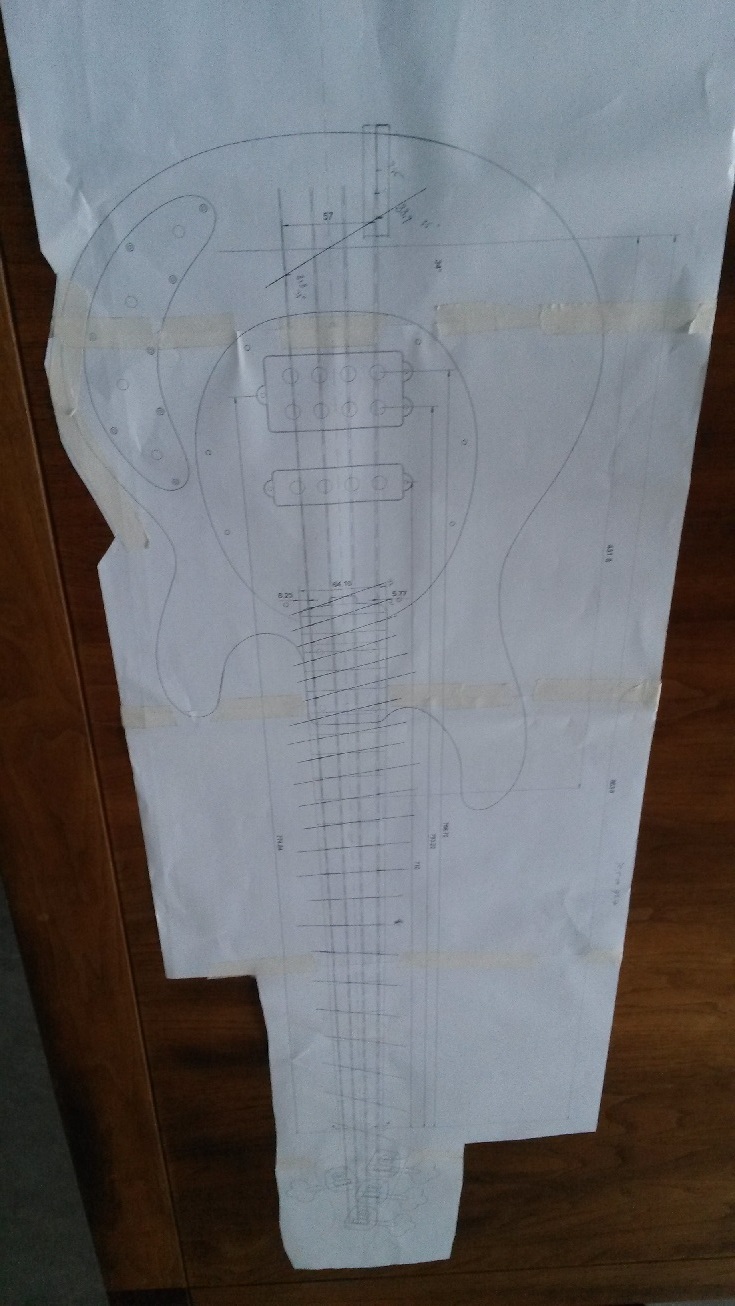
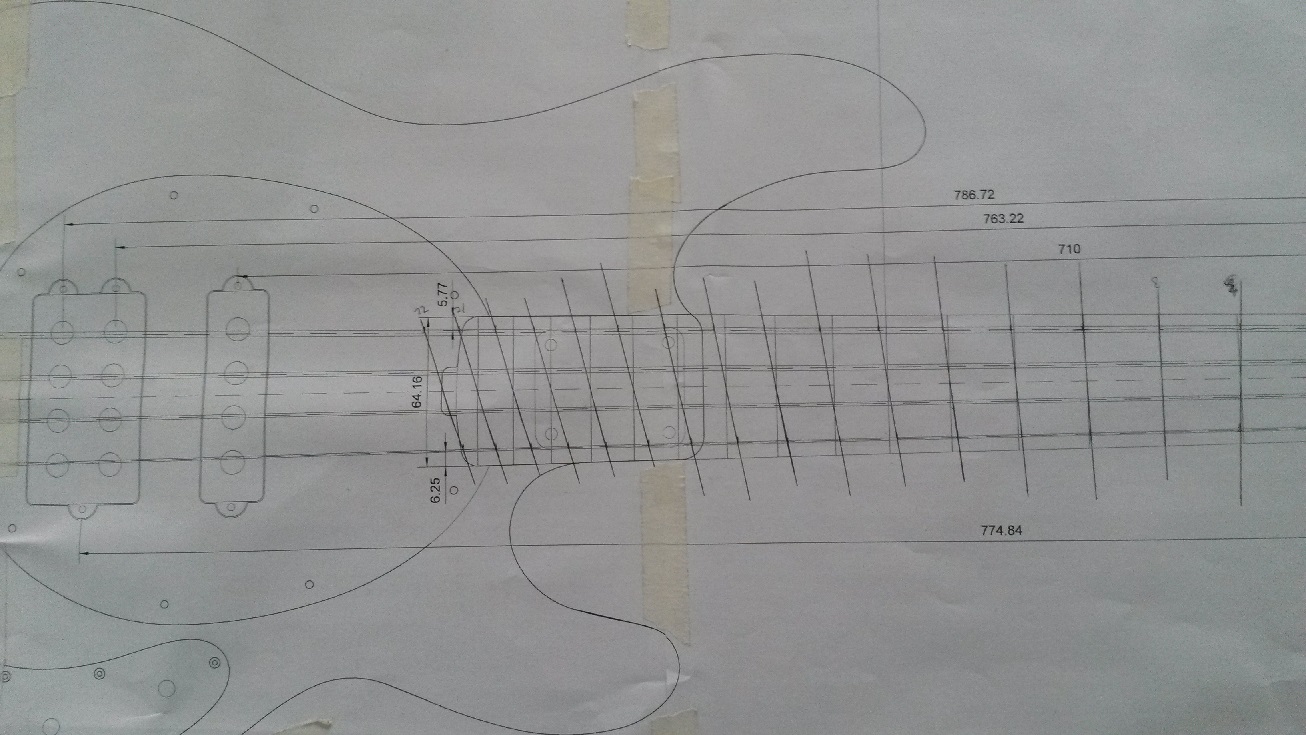
So let's start on paper with a MM Stingray body:
FFB4.jpg


FFB6.jpg


FFB5.jpg


As you can see, with a solo rail bridge of 60mm there is not enough room. It would stick out.

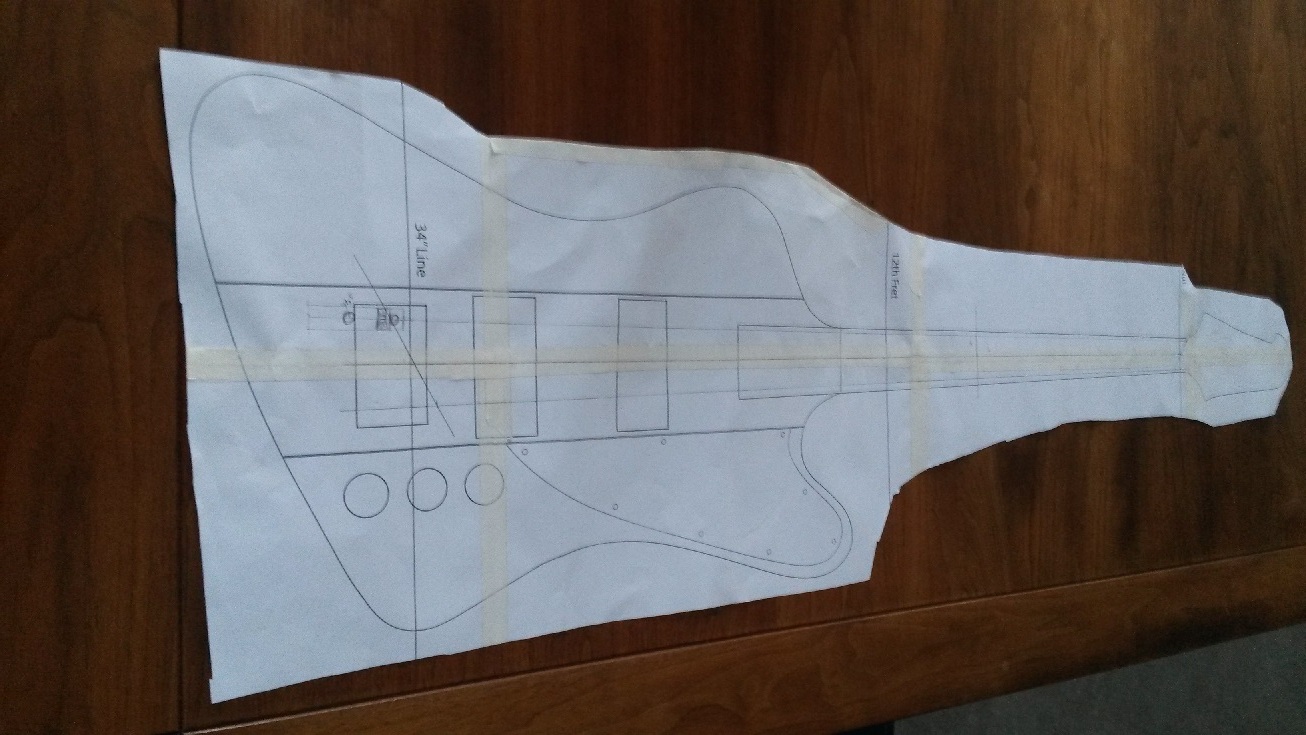
So I need a fanned body-style. Perhaps the Gibson T-bird:
FFB7.jpg


FFB8.jpg


Much more room/space for the solo rail bridge!

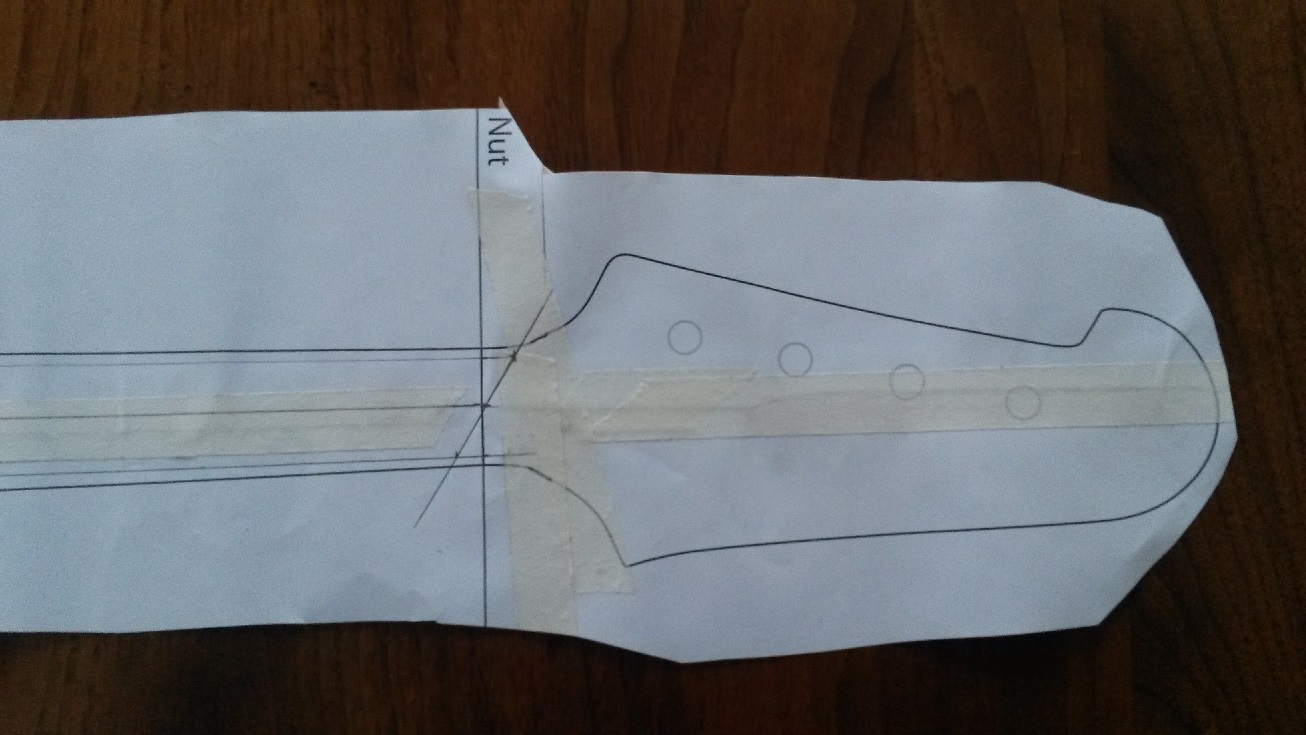
At the nut:
FFB10.jpg


So let me know what you think of it and your advice, tips and trics are welcome!
 
Can you move the neck on the first plan to make it work? To me the first one looks better, T-bird is a recipe for neck heavy and longer neck will not help it. I’ve made one fanned fret four stringer with same scales you’re using. I found no advantage or disadvantege compared to single scale bass.
 
Can you move the neck on the first plan to make it work? To me the first one looks better, T-bird is a recipe for neck heavy and longer neck will not help it. I’ve made one fanned fret four stringer with same scales you’re using. I found no advantage or disadvantege compared to single scale bass.

Like you said I could move the neck, but wouldn't that increase the risk of neck dive?

Didn't sound the E string on your fanned fret different (better)?
 
This weekend I went to the timbre yard for some wood.

I found these beautiful pieces of lacewood!
Btw in Dutch it is called "parelhout" which literraly means "pearlwood". You can see why.

FFB11.jpg


FFB12.jpg


FFB13.jpg


For the fretboard I found a piece of bloodwood. Has anybody got any experience of using bloodwood for fretboards?
I also bought a piece of beechwood with a nice grain. Hard as maple.

FFB14.jpg
 
  • Like
Reactions: b3e and dukeorock
Like you said I could move the neck, but wouldn't that increase the risk of neck dive?

Didn't sound the E string on your fanned fret different (better)?

Moving the neck a bit on MM will still be less risk for neck dive than anything TB. I’ve made basses from 30” to 35” scale and all scale lengths have had great E string sounds. I don’t see or hear a need for longer scale.
 
  • Like
Reactions: TonH
Moving the neck a bit on MM will still be less risk for neck dive than anything TB. I’ve made basses from 30” to 35” scale and all scale lengths have had great E string sounds. I don’t see or hear a need for longer scale.


So you say fanned frets makes no sense?
Recently I made a 30" scale bass and the E strings has a lot of low end, but not rich in overtones.
Same goes for a sigarbox bass (29").

Anyway I wan't to give fanned frets a try.
 
So you say fanned frets makes no sense?
Recently I made a 30" scale bass and the E strings has a lot of low end, but not rich in overtones.
Same goes for a sigarbox bass (29").

Anyway I wan't to give fanned frets a try.

Hard to say if they make sense or not. For me fanned frets or multiscales didn’t give anything I’m missing with conventional frets and single scale. In fact I’m not missing anything on my current 32” scale bass.
I’m for sure going to watch this thread and see how you like fanned frets.
 
  • Like
Reactions: TonH and dukeorock
When I first saw fanned fret, I assumed it was just ergonomics to match the natural spread of your fingers, but the common discussion is that it evens out string tension? Never played one or even seen one in a store to try. I always wondered how this would benefit a short scale to get more tension in the E string.
 
  • Like
Reactions: TonH
There are two things with fanned frets:

1 - ergonomics
2 - string tension

1) good to hear that aother people get used to fanned frets quickly. I hope I like them and get used to them fast.

2)
I had a Cort 3535 bass, 5 string 35" scale. It sounded very good but I didn't like playing it.
The B-string and E-string played very well, but pulling the D and G-string didn't feel right. I had the idea that I had to work to hard.
I also have a squier HM bass 5 string, scale 34". But on that bass the B-string sounds "floppy", not tight.

So why not have the best of both worlds? Scale 35" for B or E-string and 33" for the G-string.
 
As the builder of a few fanned fret basses and some close to thirty 30s playing bass...

1. Fanned frets will give you a more even tension across the bass.
2. Moving the neck out of the MM body half an inch to fit the 35" E string makes a lot more sense. At the same time, you can lengthen the upper horn 1/2" to allow for that.
3. While you're at it, make sure you put 2 PUs in the MM body.
 
  • Like
Reactions: TonH
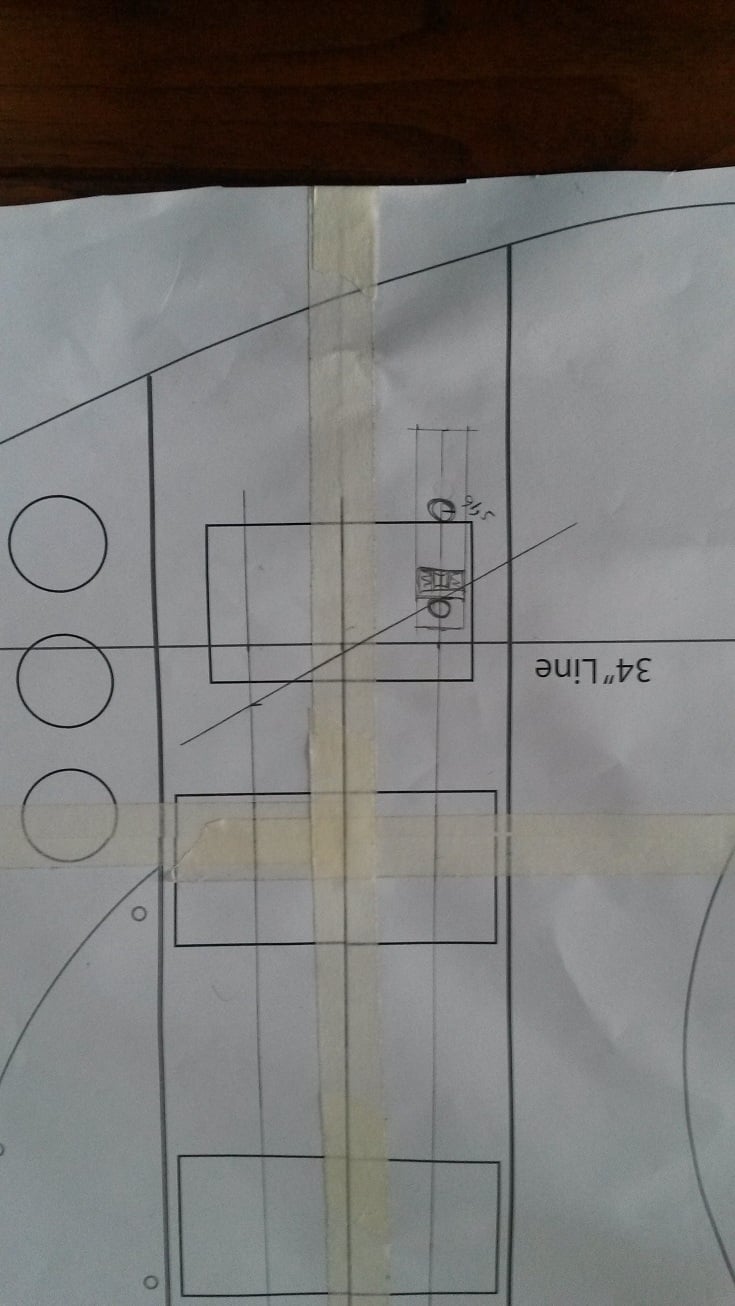
Some redesign.

I like the body of the MM more than that of a T-bird.
So I cut out the neck of the paper model and put it 1 fret further out of the body (15mm).

FFB15.jpg


The 12th fret now is around the tip of the upper horn:

FFB17.jpg


And there is enough space for the solo bridge for the E-string:

FFB16.jpg


On paper every thing is alright now.

Grrrr, TB puts my pictures upside down again o_O
 
Last edited:
TB actually just uploads them directly in the format in which they are saved. It's more likely that you have taken the pictures "upside down" but your camera/device corrects for it when you're viewing them on your devices... :)

I think I know what the problem is. My (not so) smartphone thinks I am left handed. So when I take a picture as a right handed persion in landscape the Phone thinks it's upside down.