• TalkBass has been independent since 1998. Add your voice.
    Create a free account to reply to discussions, view embedded media, and browse with fewer display ads.
    Join freeLog in
    Want zero display ads or expanded classifieds tools? Compare plans.

Favorite Neck / FB Wood Combos?

Plain ole 1 pc rosewood.
Every Good Boy Deserves Fudge.
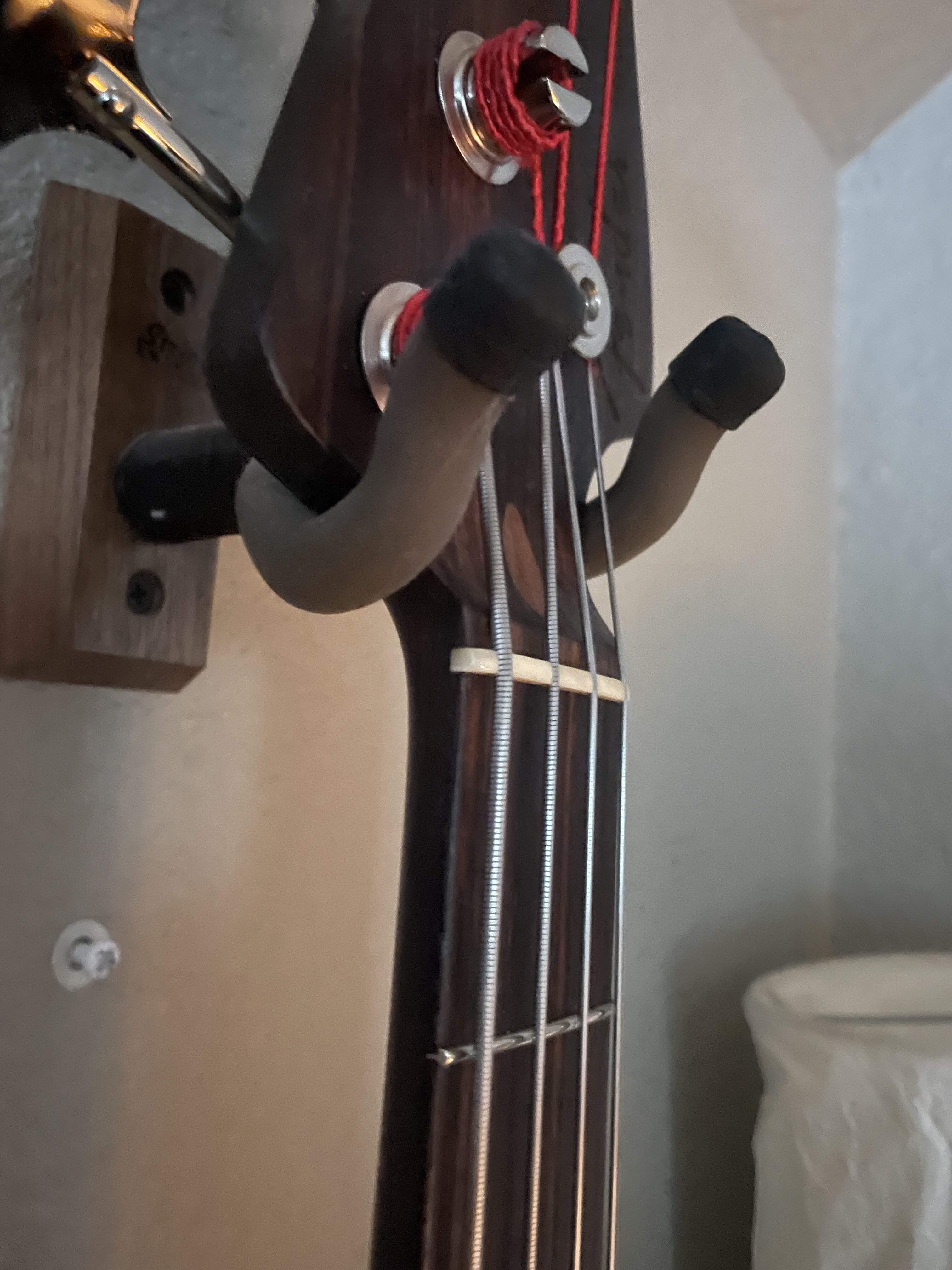
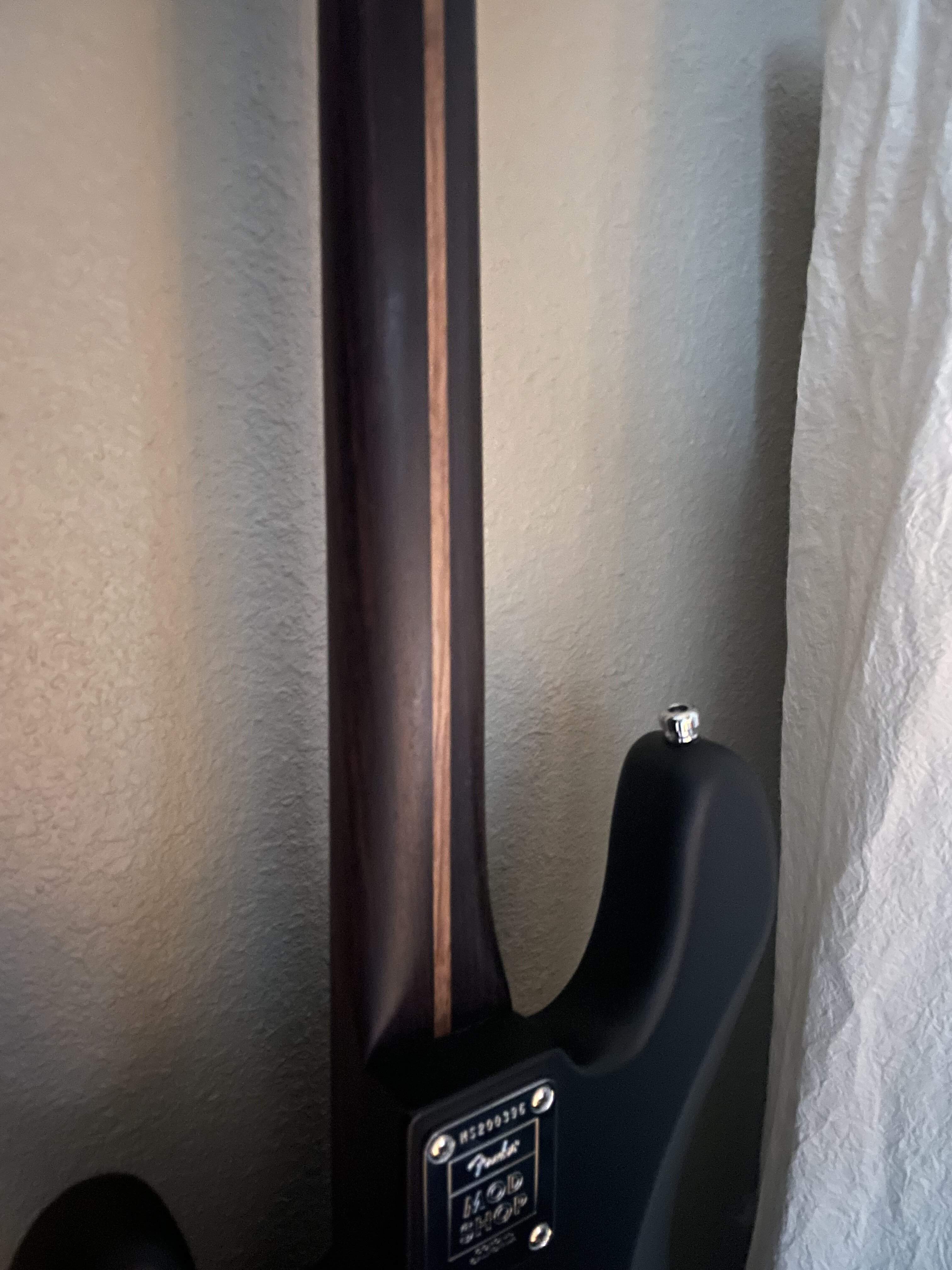
upload_2022-4-25_16-8-44.jpeg


upload_2022-4-25_16-9-45.jpeg
 
i believe @LetItGrowTone has some thoughts on the subject of neck/fingerboard impact on sound/tone that pretty much match my own experience.

per the discussion: i like 'em all! :D i don't think i've ever had the experience of thinking "i don't like this fingerboard" that had anything to do with materials, including but not limited to: ebony(s), ebonol and composites, rosewood(s), pau ferro (i think), coated maple(s), other oddball materials: glass, metals, plastics. the dimensions and profile might not be 'my type' but it wouldn't have anything to do with the construction materials. IME, so far.

that's not to say that there aren't any differences in the fretless tones, it's just that i'm not a tone-chaser per se, and i'm open to any fingerboard material.

show me your fav combos for neck/fb wood, and maybe a bit of "why."
i've only played fretless --- so in the earlier years they were all maple/ebony, and i usually only had one or two at a time --- ebony always works for fretless, IMO.

but for fretless "looks" i always wanted that maple fingerboard thing and i finally got one ~2019:
front and back copy.png and then another one for-the-hell-of-it just because it's red: red P copy.png :D


here's a nice looking rosewood: J copy.png and i'm thinking this one's pau ferro BLUE PJ.png but whatever it is, it doesn't matter, i like it!


I was also considering possibly pau farro for the FB wood, but I've never had hands on.
i'm only guessing that the blue-burst PJ pictured above is pau ferro (i've never seen rosewood like that). it was sold to me as "rosewood" but as soon as i saw it i knew it was different than any rosewood i'd ever seen --- it was uniformly lighter in color and it felt harder (when sanded or played). it's a great feeling fingerboard and assuming it's pau ferro i'd highly recommend one!

anyway, good luck with your neck/fingerboard decisions! :thumbsup:
 
Apparently there's like this holy grail of mahogany "Cuban Mahogany" that, while it's characteristics are very similar to Honduran Mahogany, it's also more dense and way harder. Of course, we can't get that here in the good ol' US of A.

According to the Wood Database, Cuban Mahogany had/has a range from south Florida to the Caribbean, though it's extensive use as the go to mahogany for furniture making, led to it's severe depletion, or extinction, across most of it's range. Cuba banned it's harvesting and export to conserve the little that was left in that country.

In weight and hardness/density, it is very similar to Honduran Mahogany.
Typically,
Cuban -37lbs per cubic foot and 4120N on the Janka hardness scale.
Honduran -37lbs per cubic foot and 4020N

 
  • Like
Reactions: GlennRH and 6-3-2
According to the Wood Database, Cuban Mahogany had/has a range from south Florida to the Caribbean, though it's extensive use as the go to mahogany for furniture making, led to it's severe depletion, or extinction, across most of it's range. Cuba banned it's harvesting and export to conserve the little that was left in that country.

In weight and hardness/density, it is very similar to Honduran Mahogany.
Typically,
Cuban -37lbs per cubic foot and 4120N on the Janka hardness scale.
Honduran -37lbs per cubic foot and 4020N
Guess you can't believe everything ya read! Thanks for the info!
 
My number one choice for necks is graphite or carbon fiber. It's very stable, consistent toned, and can survive re-entry. However this is not necessarily an option for every builder.

But my number one wood is definitely wenge. As already mentioned it is also very stable, beautiful, and has such personality to the touch. It's great as a fretboard too.
 
  • Like
Reactions: 6-3-2
Guess you can't believe everything ya read! Thanks for the info!

Of course those figures are averages, depending on where a tree grows can mean that those figures vary somewhat, but the Wood Database is a good guide and also includes a fair bit of information about how each wood type listed performs when worked, how they take glues and finishes, etc. Plus there are photographs of samples. All round a great resource.

One of the things that tends to happen with anything rare, or hard to get, is that it tends to take on mythical qualities. Sometimes the rare element, metal, mineral, wood type, or whatever, does have some unique features, but often the myth, or the price, doesn't justify the hype.

Honduran Mahoganyy (Swietenia macrophylla) is widely grown in plantations across the world and plantation growth generaly produces faster growth and lighter weight wood, some people claim that plantation grown is inferior, (it's certainly cheaper and more sustainable, as long as native forest isn't being cleared to grow it...) but thats debatable. After all, Swamp Ash and Northern Hard Ash are the same species, just grown under different climates. When it comes to solid bodies guitars and basses, most people seem to think the lighter weight Swamp Ash is preferable.
 
  • Like
Reactions: Zak TMD
I typically prefer the sound of a heavy/solid (back-breaking) bass, but on a lengthy prior thread here, the guys quoting physics/studies - and providing recorded audio samples - suggested that most of the talk about wood was hype. The most conclusive information seemed to suggest that the neck, not the body, was key. Here is one of the longer threads on tone woods:
Does body wood matter?

Again, I just have had the best luck with heavy basses. I learned on a 70's Jazz purchased new: very heavy. The 80's Jazz I bought (new) was very light, but sounded "thin". I have had several other basses over the years.

I defer to the experts: I am just parroting back what I read here, and noting my better luck with weight. Note: Fender originally used pine.

Now if looks matters, I lust after Ash with a clear finish, like my first bass.
 
Last edited:
  • Like
Reactions: Zak TMD
Both my current custom build and the one that's being completed now have multi-laminate maple necks with a Macassar ebony fretboard. The ebony is so hard and dense, it feels better than rosewood for tapping and other techniques. I've never liked maple boards, they always feel "sticky" to me.

I don't know how it changes the tone but my bass with ebony feels faster and smoother to play than one with a rosewood board. It's also held up very well after 14+ years of full-time gigging. Plus it looks really nice, and more exotic and interesting than boring old rosewood.
 
  • Like
Reactions: Zak TMD
I typically prefer the sound of a heavy/solid (back-breaking) bass, but on a lengthy prior thread here, the guys quoting physics/studies - and providing recorded audio samples - suggested that most of the talk about wood was hype. The most conclusive information seemed to suggest that the neck, not the body, was key. Here is one of the longer threads on tone woods:
Does body wood matter?

Again, I just have had the best luck with heavy basses. I learned on a 70's Jazz purchased new: very heavy. The 80's Jazz I bought (new) was very light, but sounded "thin". I have had several other basses over the years.

I defer to the experts: I am just parroting back what I read here, and noting my better luck with weight. Note: Fender originally used pine.

Now if looks matters, I lust after Ash with a clear finish, like my first bass.

Since I noticed I diverged from the OP (too late to edit my post)...
...for me, it is about neck stability: laminated necks, reinforcement, and good truss-rod.

Having had "neck-sprout" on 2 basses recently, a "roasted" neck seem practical.

Sorry for the first off-topic post. Guess I am more tired than I realized.
 
Last edited:
Neck shaft: maple/walnut/maple or maple/cherry/maple laminated.

Fretboard: pau ferro, ovangkol, ziricote, or Macassar ebony.

Wenge feels great, but is quite heavy.
 
  • Like
Reactions: Zak TMD
I have Maple necks on 3 of my basses and Indian rosewood on one. I've also had Bubinga on a warmoth guitar build and if you're a fan of maple but want a different flavor I recommend looking into Bubinga which I believe is used on some Rickenbacker's as a fretboard so you can research the tone there. It's snappy and bright similar to Maple but still different.
 
  • Like
Reactions: Zak TMD
My preference is a maple neck and ebony fingerboard. I think maple is great in general as a tone wood and for stability. Honestly, I like ebony more for aesthetics on the fingerboard. I don't think it matters much for tone or feel unless going fretless.

My best sounding fretted bass has a pau ferro board but is otherwise totally maple. Does the pau ferro matter? I am not sure it does. I would argue the wood used for the fingerboard is only important to the extent that it is high quality and does not warp or create structural problems. Tone effect may be negligible.

So my conclusion is that you should go maple on the neck and then whatever makes you feel good on the fingerboard.
 
  • Like
Reactions: Zak TMD
I like all maple necks.

They look good.

They feel good.

They are good.

I like other boards too, quite a lot. But there's something special about a maple board under the fingers, and in terms of aesthetics/attitude...unless it has a matte finish (yuck). I tolerate the matte finish on my G&L L-5500, because it's a rare bass that I don't want to modify. But I really think it looks sub-par/cheap, especially against that beautiful glossy body. If it was a run-of-the-mill bass, I already would have made it glossy, as I have done on several of my low-end basses with matte finished necks (e.g. Squier, Sterling).
 
Last edited:
  • Like
Reactions: Zak TMD