

Enjoy the benefits of a premium membership!
Upgrade Account
-
TalkBass has been independent since 1998. Add your voice.
Create a free account to reply to discussions, view embedded media, and browse with fewer display ads.
Join free Log in
Want zero display ads or expanded classifieds tools? Compare plans.
You are using an out of date browser. It may not display this or other websites correctly.
You should upgrade or use an alternative browser.
You should upgrade or use an alternative browser.
fdecks HPF, Part II
- Thread starter Chef
- Start date
More options
Who Replied?
I'd consider the 12+12 configuration a 'big benefit' on the HPF3. The original is really intended for acoustic bass, while the 3 is for both electric/acoustic.
The original has a 12db per octave roll off that you can adjust between 35-140. The HPF-3 has two filters, one that is 12db at 35hz, then the sweepable second filter for another 12db giving a steeper roll off when you've combined it with the first at 35hz, or acting as a double knee filter if you move it above that. As someone who has one of the very early HPF3's, that extra knob for volume doesn't really add much complexity. Set it all the way up and forget it.
I guess my question is - is that extra 12db filter really needed? I don't do anything extreme with the lows or play super loud - I'm mainly looking to tame boom in the room. But if it really sounds better with the electric I would consider shelling out the extra cash for the S3.
BurningSkies
CRAZY BALDHEAD
- Feb 20, 2005
- 27,956
- 20,350
- Disclosures
- Endorsing artist: Dingwall Guitars
I guess my question is - is that extra 12db filter really needed? I don't do anything extreme with the lows or play super loud - I'm mainly looking to tame boom in the room. But if it really sounds better with the electric I would consider shelling out the extra cash for the S3.
You should discuss with @fdeck ...I don't think he'll steer you wrong.

- Apr 29, 2003
- 9,081
- 9,804
- Disclosures
- Contributor- Bass Musician Magazine | Marketing Manager- Trickfish Amplification
Having owned both, I would strongly recommend S3 for electric. As thats what it was designed for, and IME worked better for electric bass room boom, than the S1.
I am going to get back active on this forum; I had needed a break from forums for a bit. If any non-US bassists are in needed of an Fdeck, I am available as a middle-man. I think the only continent I have not helped send an Fdeck to is Antarctica.
I will send you PM
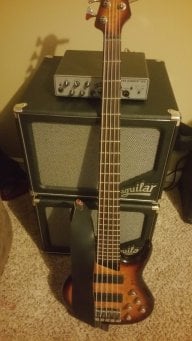
I bought used HPF-Pre Series 3 from a a local gentleman who purchased another pedal. I have used it a few times and I'm pretty impressed. As I initially tested it at home I thought it might be too subtle to be effective, but on the gig I found it to be a good tool to have around. Funny thing is - A few weeks after I purchased it he asked me if I wanted it back!

Sorry for not being able to read both threads.
I understand how a HPF works, and while I don't seem to have low end issues, I'd like to give one a try.
I also understand the difference between the Series 1 and 3.
Is the 3 with the double filter that much better for electric bass?
Thought I would save some money if results were close to the same for you guys.
I understand how a HPF works, and while I don't seem to have low end issues, I'd like to give one a try.
I also understand the difference between the Series 1 and 3.
Is the 3 with the double filter that much better for electric bass?
Thought I would save some money if results were close to the same for you guys.
Having owned both, I would strongly recommend (fdeck) S3 for electric. p
As thats what it was designed for, and IME worked better for electric bass room boom, than the S1.
Sorry for not being able to read both threads.
I understand how a HPF works, and while I don't seem to have low end issues, I'd like to give one a try.
I also understand the difference between the Series 1 and 3.
Is the 3 with the double filter that much better for electric bass?
Thought I would save some money if results were close to the same for you guys.
If you don't have low end issues, an HPF will most likely be useless for you. You probably don't cranck enough low end (unlike me) to need one.and while I don't seem to have low end issues, I'd like to give one a try.
I also understand the

I didn't have a low end issue.If you don't have low end issues, an HPF will most likely be useless for you. You probably don't cranck enough low end (unlike me) to need one.
I tried a HPF.
Now every gig and rehearsal I have an HPF.
Ymmv.
Yep.I didn't have a low end issue.
I tried a HPF.
Now every gig and rehearsal I have an HPF.
Ymmv.
IME, a HPF (high pass filter) also:
1) helps deals with boomy venue and/or stage acoustics (like putting your rig on a stand, which I also recommend, to disconnect from stage)
2) decreases speaker "floppyness" by reducing mechanical movement
3) Protects speakers from transient spikes
4) Keeps your amp from working so hard and gives more headroom by cutting unneeded frequencies (below port tuning or speaker range).
5) Can help balance string to string volume
6) Better stage volume and clarity
7) Allows your bass tone control to increase or decrease frequencies that matter. If you add an LPF (low pass filter), depending on your style, you can tame your highs as well.
8) Allows you to control what you send to the FOH mixing board. Same for LPF.
9) Helps keep your rig from stepping on the kick drum's slot
10) Can also be used by guitar or keyboard players to cut their low-end incursions into bass guitar territory
11) Helps you sit in the mix better because your rig is not reproducing muddy and/or non-hearable lows even if it sounds good on stage
12) Allows your passive or active bass guitar tone controls to be more effective
13) Controls and protects speakers from effects that produce sub-octave tones
Also known as a low-cut filter, rumble filter or sub-sonic filter, it could also be called an anti-distortion filter or equalizer.
@agedhorse has included one in top-of-line Mesa amps. Gotta mean something.

FYI, I use the Broughton Audio adjustable, always-on HPF.
See my HPF mega thread for more info.
Last edited:
- Apr 29, 2003
- 9,081
- 9,804
- Disclosures
- Contributor- Bass Musician Magazine | Marketing Manager- Trickfish Amplification
I didnt think I needed an HPF until I started using one. Now its basically indespensible. And I dont use crazy deep cabs either. Berg CN's are pretty tight and punchy down low, but the rig benefits SO much from controlling the sub lows and those transient spikes, not to mention its an insurance policy for using suboctave effects.
Ironically, I am able to get a "bigger" low end with an HPF. This is because I can remove the super low unusable stuff thats hogging up power and headroom and making cabs work harder than they need to, and then boosting low end in the usable range. The net effect is a tighter, more controlled, but BIGGER bass response. From my rig anyways.
In closing, dont knock it or rule it out until you try it, and get an S3 for electric bass.
Ironically, I am able to get a "bigger" low end with an HPF. This is because I can remove the super low unusable stuff thats hogging up power and headroom and making cabs work harder than they need to, and then boosting low end in the usable range. The net effect is a tighter, more controlled, but BIGGER bass response. From my rig anyways.
In closing, dont knock it or rule it out until you try it, and get an S3 for electric bass.
THAT is exactly MY experience! No more amp without HPF, and my cabs thank me too.I didnt think I needed an HPF until I started using one. Now its basically indespensible. And I dont use crazy deep cabs either. Berg CN's are pretty tight and punchy down low, but the rig benefits SO much from controlling the sub lows and those transient spikes, not to mention its an insurance policy for using suboctave effects.
Ironically, I am able to get a "bigger" low end with an HPF. This is because I can remove the super low unusable stuff thats hogging up power and headroom and making cabs work harder than they need to, and then boosting low end in the usable range. The net effect is a tighter, more controlled, but BIGGER bass response. From my rig anyways.
In closing, dont knock it or rule it out until you try it, and get an S3 for electric bass.
Yep.
IME, a HPF (high pass filter) also:
1) helps deals with boomy venue and/or stage acoustics (like putting your rig on a stand, which I also recommend, to disconnect from stage)
2) decreases speaker "floppyness" by reducing mechanical movement
3) gives more headroom by cutting unneeded frequencies (below port tuning or speaker range)
4) Can help balance string to string volume
5) Better stage volume and clarity
6) Allows your bass tone control to increase or decrease frequencies that matter
7) Allows you to control what you send to the FOH mixing board.
8) Helps keep your rig from stepping on the kick drum's slot
9) Can also be used by guitar players to cut their low-end incursions into bass guitar territory
Also called a low-cut filter, rumble filter or sub-sonic filter, it could also be called an anti-distortion filter or equalizer.
@agedhorse included one in the Mesa d800+ amp. Gotta mean something.
FYI, I use the Broughton Audio adjustable, always-on HPF.
See my HPF mega thread for more info.
This ^^^^^
- Apr 29, 2003
- 9,081
- 9,804
- Disclosures
- Contributor- Bass Musician Magazine | Marketing Manager- Trickfish Amplification
Yep.
IME, a HPF (high pass filter) also:
1) helps deals with boomy venue and/or stage acoustics (like putting your rig on a stand, which I also recommend, to disconnect from stage)
2) decreases speaker "floppyness" by reducing mechanical movement
3) gives more headroom by cutting unneeded frequencies (below port tuning or speaker range)
4) Can help balance string to string volume
5) Better stage volume and clarity
6) Allows your bass tone control to increase or decrease frequencies that matter
7) Allows you to control what you send to the FOH mixing board.
8) Helps keep your rig from stepping on the kick drum's slot
9) Can also be used by guitar players to cut their low-end incursions into bass guitar territory
Also called a low-cut filter, rumble filter or sub-sonic filter, it could also be called an anti-distortion filter or equalizer.
@agedhorse included one in the Mesa d800+ amp. Gotta mean something.
FYI, I use the Broughton Audio adjustable, always-on HPF.
See my HPF mega thread for more info.
this post should be a HPF sticky
Yep.
IME, a HPF (high pass filter) also:
1) helps deals with boomy venue and/or stage acoustics (like putting your rig on a stand, which I also recommend, to disconnect from stage)
2) decreases speaker "floppyness" by reducing mechanical movement
3) Keeps your amp from working so hard and gives more headroom by cutting unneeded frequencies (below port tuning or speaker range).
4) Can help balance string to string volume
5) Better stage volume and clarity
6) Allows your bass tone control to increase or decrease frequencies that matter
7) Allows you to control what you send to the FOH mixing board.
8) Helps keep your rig from stepping on the kick drum's slot
9) Can also be used by guitar players to cut their low-end incursions into bass guitar territory
10) Helps you sit in the mix better
Also called a low-cut filter, rumble filter or sub-sonic filter, it could also be called an anti-distortion filter or equalizer.
@agedhorse included one in the Mesa d800+ amp. Gotta mean something.
FYI, I use the Broughton Audio adjustable, always-on HPF.
See my HPF mega thread for more info.
Amen.

I'm double posting this from the DB side as I'm not sure where the best place to ask is.
So, I've recently come across a few comments on TB regarding the input impedance of various devices actually being above optimal. A few comments claim that something like 3-4MOhm is optimal for most piezos. One TBer (I forget who and where, can't seem to find it now) even mentioned DIYing a simple adapter with a resistor in parallel with the input jack in order to lower the impedance. Has anyone here actually tried this with the fdeck? Does anyone here think that the fdeck 10MOhm impedance is higher than optimal?
I'm really just asking out of curiosity. I don't think I've ever actually used a device with rating anywhere in between 1MOhm and 10MOhm. The fdeck with my copper Realist pickup seems to work very well, and definitely sounds better than going directly into the various amps I've used with 1MOhm inputs, although I have no way of knowing how much of that improvement is due to the HPF and how much, if any, is due to the higher impedance.
A number of BG players seem to prefer the fdeck in the effects loop. Perhaps such an adapter would be useful to BG players when using amps without an effects loop?
Sorry if this question has already been addressed. I tried searching, but I wasn't really sure what search terms to use.
So, I've recently come across a few comments on TB regarding the input impedance of various devices actually being above optimal. A few comments claim that something like 3-4MOhm is optimal for most piezos. One TBer (I forget who and where, can't seem to find it now) even mentioned DIYing a simple adapter with a resistor in parallel with the input jack in order to lower the impedance. Has anyone here actually tried this with the fdeck? Does anyone here think that the fdeck 10MOhm impedance is higher than optimal?
I'm really just asking out of curiosity. I don't think I've ever actually used a device with rating anywhere in between 1MOhm and 10MOhm. The fdeck with my copper Realist pickup seems to work very well, and definitely sounds better than going directly into the various amps I've used with 1MOhm inputs, although I have no way of knowing how much of that improvement is due to the HPF and how much, if any, is due to the higher impedance.
A number of BG players seem to prefer the fdeck in the effects loop. Perhaps such an adapter would be useful to BG players when using amps without an effects loop?
Sorry if this question has already been addressed. I tried searching, but I wasn't really sure what search terms to use.
@fdeckI'm double posting this from the DB side as I'm not sure where the best place to ask is.
So, I've recently come across a few comments on TB regarding the input impedance of various devices actually being above optimal. A few comments claim that something like 3-4MOhm is optimal for most piezos. One TBer (I forget who and where, can't seem to find it now) even mentioned DIYing a simple adapter with a resistor in parallel with the input jack in order to lower the impedance. Has anyone here actually tried this with the fdeck? Does anyone here think that the fdeck 10MOhm impedance is higher than optimal?
I'm really just asking out of curiosity. I don't think I've ever actually used a device with rating anywhere in between 1MOhm and 10MOhm. The fdeck with my copper Realist pickup seems to work very well, and definitely sounds better than going directly into the various amps I've used with 1MOhm inputs, although I have no way of knowing how much of that improvement is due to the HPF and how much, if any, is due to the higher impedance.
A number of BG players seem to prefer the fdeck in the effects loop. Perhaps such an adapter would be useful to BG players when using amps without an effects loop?
Sorry if this question has already been addressed. I tried searching, but I wasn't really sure what search terms to use.
This is a duplicate post from the HPF/LPF megathread, but I figured it belonged here, too:
I recently figured out how to do some frequency sweeps with my audio interface (Focusrite Scarlett 2i4 - nothing spectacular) and the program Room EQ Wizard. I tried this with a couple of preamps and with the HPF3. So far, I am mainly looking at SPL vs. frequency, though the program measures myriad other things (like phase relationships and distortion) that I haven't really gotten into. (To be clear, I'm not measuring anything acoustically -- signal is generated from the program and looped from the interface, through the device being measured, and back into the interface.)
I learned that it's easy to make errors that can skew your results (like using inappropriate signal levels or not disengaging the direct-monitor function on the interface, which can feed-back through the device you're scoping and give you skewed results and weird resonances -- which, since you're not monitoring, you don't hear). I'll come back and elaborate (here or elsewhere) on my methodology (not that there's much to it) at some point -- the last thing I want to do is misrepresent someone's work and, if I'm making a mistake somewhere, I want to know.
Meanwhile, though, after several trial runs, checking my results, and running them by @fdeck before posting here, I think that I've got things reasonably sorted.
I measured the response of my interface beforehand and used that as a calibration file in REW.
At any rate, this is the measured response of my HPF3. The title indicates that the numeric SPL levels given are at 35 Hz (the HPF3's minimum adjustment) but they are actually at 34.9 Hz -- couldn't get the cursor exactly on 35 Hz. It was exactly -3 dB there, though, and the -3 dB at max was exactly at 140 Hz (top of the adjustment range), too. Impressive correlation (at least to me) with the nominal specs.
I ran the sweep from 2 Hz to 21 KHz (my interface tops out around 22 KHz), using the response at 1 KHz as my "0 dB" reference. I've zoomed-in on the are of interest for an HPF, but the response from 1 KHz on up is pretty much ruler flat.
I know that we've seen several visualizations of what an HPF is supposed to do, but I thought you might all be interested in an actual, measured response.
View attachment 3933980
I recently figured out how to do some frequency sweeps with my audio interface (Focusrite Scarlett 2i4 - nothing spectacular) and the program Room EQ Wizard. I tried this with a couple of preamps and with the HPF3. So far, I am mainly looking at SPL vs. frequency, though the program measures myriad other things (like phase relationships and distortion) that I haven't really gotten into. (To be clear, I'm not measuring anything acoustically -- signal is generated from the program and looped from the interface, through the device being measured, and back into the interface.)
I learned that it's easy to make errors that can skew your results (like using inappropriate signal levels or not disengaging the direct-monitor function on the interface, which can feed-back through the device you're scoping and give you skewed results and weird resonances -- which, since you're not monitoring, you don't hear). I'll come back and elaborate (here or elsewhere) on my methodology (not that there's much to it) at some point -- the last thing I want to do is misrepresent someone's work and, if I'm making a mistake somewhere, I want to know.
Meanwhile, though, after several trial runs, checking my results, and running them by @fdeck before posting here, I think that I've got things reasonably sorted.
I measured the response of my interface beforehand and used that as a calibration file in REW.
At any rate, this is the measured response of my HPF3. The title indicates that the numeric SPL levels given are at 35 Hz (the HPF3's minimum adjustment) but they are actually at 34.9 Hz -- couldn't get the cursor exactly on 35 Hz. It was exactly -3 dB there, though, and the -3 dB at max was exactly at 140 Hz (top of the adjustment range), too. Impressive correlation (at least to me) with the nominal specs.
I ran the sweep from 2 Hz to 21 KHz (my interface tops out around 22 KHz), using the response at 1 KHz as my "0 dB" reference. I've zoomed-in on the are of interest for an HPF, but the response from 1 KHz on up is pretty much ruler flat.
I know that we've seen several visualizations of what an HPF is supposed to do, but I thought you might all be interested in an actual, measured response.
View attachment 3933980

