• TalkBass has been independent since 1998. Add your voice.
    Create a free account to reply to discussions, view embedded media, and browse with fewer display ads.
    Join freeLog in
    Want zero display ads or expanded classifieds tools? Compare plans.

Fender Am. Std. Jazz Bass sharp fret edges

Redrama

Guest
Apr 19, 2013
117
66
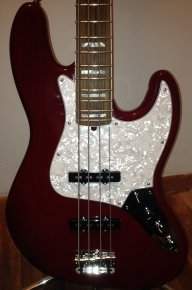
Bought a brand-new Fender american standard Jazz bass a few months ago, and I've been noticing more and more that it has really sharp fret edges. I would expect an instrument of this cost to have smooth edges but I guess I was wrong, anyone else noticed this on theirs?

The even more weird part is that my 250 quid Höfner Ignition has buttery smooth fret edges...
 
Bought a brand-new Fender american standard Jazz bass a few months ago, and I've been noticing more and more that it has really sharp fret edges. I would expect an instrument of this cost to have smooth edges but I guess I was wrong, anyone else noticed this on theirs?

The even more weird part is that my 250 quid Höfner Ignition has buttery smooth fret edges...
The problem occurs mostly on newer instruments as the wood of the fingerboard shrinks slightly across the width. The frets don't shrink, so you get a case of "fret sprout" or "whiskers". It's quite common and the fix is to have the fret ends dressed. You can do it yourself if you proceed carefully with a fine-cut file. Or take it to a competent pro - not an expensive operation.
 
The problem occurs mostly on newer instruments as the wood of the fingerboard shrinks slightly across the width. The frets don't shrink, so you get a case of "fret sprout" or "whiskers". It's quite common and the fix is to have the fret ends dressed. You can do it yourself if you proceed carefully with a fine-cut file. Or take it to a competent pro - not an expensive operation.
Agreed. It's pretty easy & cheap. :) Had mine done for like $30 & an hour in the shop on my lunch break. lol
 
The problem here is actually Fender QC. Seriously. There is a $1900 Dimension at my local L&M right now with fret ends so long that if you turn the bass around you can actually see them protruding from both sides of the neck. I am astounded it made it past QC and the local store's initial once over.

Fret sprout is pretty common and an easy fix. Take it to a good tech, shouldn't cost much. I do mine myself but I wouldn't learn on an expensive instrument, trust me from experience.
 
Climate makes all the difference here. It may have passed QC with flying colors at the factory, but once it gets into a shipping container, or transport truck, or sits on a warehouse, then gets to retail and/or your home, the temperature may have swung up and down several times. The woods will expand and contract while the frets don't and since you used the word "quid" it's safe to assume you're in the UK somewhere, which is going to have a different climate than any of the Fender factories, especially if the distributor's warehouse isn't kept at "room temperature". The seasons are now changing and the temperature is cooling, which is why you're noticing it getting worse.

Some woods are more resistant than others, but two necks made from the same tree could probably react differently, due to consistency of the wood being different in terms of density or hardness.

Either buy some fret files and learn how to work on your instruments, or take it to someone who knows what they're doing. The store may offer an exchange or have their tech go at it for a few minutes, but it really wasn't their fault either. It's like buying some clothes that stretch or shrink a little - they may need the attention of a tailor.
 
Climate makes all the difference here. It may have passed QC with flying colors at the factory, but once it gets into a shipping container, or transport truck, or sits on a warehouse, then gets to retail and/or your home, the temperature may have swung up and down several times. The woods will expand and contract while the frets don't and since you used the word "quid" it's safe to assume you're in the UK somewhere, which is going to have a different climate than any of the Fender factories, especially if the distributor's warehouse isn't kept at "room temperature". The seasons are now changing and the temperature is cooling, which is why you're noticing it getting worse.

Some woods are more resistant than others, but two necks made from the same tree could probably react differently, due to consistency of the wood being different in terms of density or hardness.

Either buy some fret files and learn how to work on your instruments, or take it to someone who knows what they're doing. The store may offer an exchange or have their tech go at it for a few minutes, but it really wasn't their fault either. It's like buying some clothes that stretch or shrink a little - they may need the attention of a tailor.

Sounds possible about the temperature changes. I live in Finland, so even further from from the US, and even colder climate.

Not going to start filing on a 1500€ instrument with no experience...

Bought it from Thomann so can't send it there. But I'll try the local instrument shop.
 
  • Like
Reactions: GregBass1979
It's only a matter of QC if it left the factory like that. My new Mike Lull has edges that aren't sharp, but they're just the slightest bit rough. But that's not Mike's fault. The bass was built last year and sat around in a shop in a different climate until I bought it a month or two ago. It has a maple fretboard so the chances are good they were going to sprout this winter anyway. I'll get it taken cared of in the spring.
 
Even my Roscoe had a little Fret Sprout this past winter, I left it out of the case hanging on the wall for about a week. I have gas heat so the dryer air and the natural loss of moisture from the fretboard reared it's ugly head. I have thought about getting a humidifier, anyone have one they are using, thoughts? Keith Roscoe filed and dressed the frets in about 30 minutes and all is good.
 
I had the same problem with a Squire VM V J. Tech shaved them down, but it wasn't expensive. I don't recall the line item because I was having a setup and new strings on the same ticket.
Humidity seems to be the factor. I can see where my Indonesian made instrument where the humidity is high would suffer when brought to Fort Worth, Texas, where 50% is considered high, but from Southern California? Doesn't seem right unless you live in Phoenix.
 
I noticed that years back 2000 I think Fender made a point of saying the New US basses had rolled fret edges. All the models I owned felt great. The last two I have owned 2014 and 2015 didn't. I don't see that they mention that anymore on their site.
 
If you want a neck that doesn't move depending on the weather, get a modulus or other carbon graphite neck. Unless you are a Tonewood believer, I doubt most could hear a sound difference. My Steinberger is exactly the same EVERY time I pick it up. No bowing, no fret sprout, no perceptible change at all. The things we put up with for a pretty stick of wood.....
 
I noticed that years back 2000 I think Fender made a point of saying the New US basses had rolled fret edges. All the models I owned felt great. The last two I have owned 2014 and 2015 didn't. I don't see that they mention that anymore on their site.

On the Fender site, The "Rolled Edges" on the Am. Std. Jazz, is listed on Am. Std. Jazz, HIGHLIGHTS / MODERN NECK. I have a 2015 Am. Std. Precision, and two 2016 Am. Std. Jazzes that all have rolled edges.
 
Last edited:
Climate makes all the difference here. It may have passed QC with flying colors at the factory, but once it gets into a shipping container, or transport truck, or sits on a warehouse, then gets to retail and/or your home, the temperature may have swung up and down several times. The woods will expand and contract while the frets don't and since you used the word "quid" it's safe to assume you're in the UK somewhere, which is going to have a different climate than any of the Fender factories, especially if the distributor's warehouse isn't kept at "room temperature". The seasons are now changing and the temperature is cooling, which is why you're noticing it getting worse.

Some woods are more resistant than others, but two necks made from the same tree could probably react differently, due to consistency of the wood being different in terms of density or hardness.

Either buy some fret files and learn how to work on your instruments, or take it to someone who knows what they're doing. The store may offer an exchange or have their tech go at it for a few minutes, but it really wasn't their fault either. It's like buying some clothes that stretch or shrink a little - they may need the attention of a tailor.

This. My Sadowsky was finished in the autumn, and it had sprout in January in New York. 10" of filing and good as gold.
 
  • Like
Reactions: MarkoYYZ