I strongly recommend that you don't buy a Fender untested (and that includes brand new ones) because they can be very inconsistent. If we had been talking about a $400 instrument it might have been worth the risk, but at the prices MIA Fenders typically sell for, it's simply not worth the risk IMO. Fender's QC is absolutely shocking when considering the prizes they charge for their instruments.
As for your specific questions:
Question is, I have an American standard jazz and a 50's American original P bass, is this ultra ii an upgrade?
The objective build quality should be a small step up from those two, but you really can't say for certain with Fenders, they're so inconsistent. Ultras are generally well made (and beautiful looking) instruments, but you really can't say for sure until you test it.
If you mean TONALLY... This will purely be a matter of taste. It will certainly be different than either of those two. Obviously not as different as something like a Rick vs a Stingray, but just about as different as it's gonna get when comparing Fender branded Ps and Js.
And does it offer more versatility sound wise with PJ pickup configuration?
Well, that depends on whether the tones provided by the extra J-pickup are tones you're actually gonna use. If you end up only using the P-pickup then no, it won't be more versatile than a P-bass. But if you end up using the neck pickup soloed, or both pickups blended then yes, it will obviously be more versatile than a P-bass (or more or less the same versatility as a J-bass, just slightly different).
My point is: More pickups only give you more versatility if you actually use them.
Personally I hardly ever use the thinner, nasal sounding tone of bridge pickups, or the mid-scooped/combed filtered tone you get from blending pickups, so for me personally the answer would be NO. Lots of bass playes use and love those kinds of tones though, and for them the answer would be a very big YES.
The ability to change between active/passive tone controls can add some versatility though. Or at least it could have if Fender had designed it better. Unfortunately the output volume in active mode is so much louder than in passive mode, that switching between them on the fly isn't really an option. Which sadly makes passive mode more of a "worn out battery failsafe". Other bass manufactured have figured out how to make basses with nicely balanced output volumes in active/passive mode, but not Fender.
You could use it in passive mode ONLY of course, but personally I found the Ultra P-basses a bit dull and uninspiring in passive mode, lacking the midrange presence of a classic, "vintage" P-bass tone. The good news is that I actually liked the tone a lot more in active mode, and that unlike the Ultra I, Fender has made it possible to use the passive tone control in active mode on the Ultra II (no passive tone control is a dealbreaker for me).
The bad news, and this is REALLY bad news, is that the switch for active/passive on the Ultra II series is the dreaded S-1 switch. With these switches it's not a matter of IF they will fail, but WHEN they will fail. I honestly can't understand why Fender still use this JUNK, unless they WANT their instruments to break down. This type of S-1 switch has a long, proven record of failing. Do a search online for "S-1 switch failing" and you'll see what I mean. How Fender can keep installing this junk in their instruments, and even in their top-of-the-range models, is beyond me...
Also, if you've never actually played an Ultra P-bass, you really should try one before making up your mind. The neck profile is very different from the classic Fender C-profile. You may love it... or not. Personally I didn't like the neck very much. The "Modern D" profile was too "flat" on the back for my taste. Within Fender's current range of P-bass models I much prefer the neck profile of the Squier CVs or the AmPro. This is purely a matter of personal taste of course.




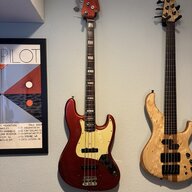


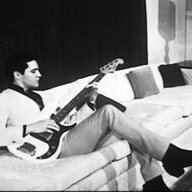



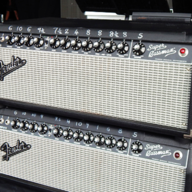
 ). etc.... The point is, you usually get the best particular sound you are looking for out of "versatile" instruments, you are better off going for "tha thing" you are looking for, you'll have less problems and be less disappointed in the end. It's better to focus on the music than the instruments anyway.


