• TalkBass has been independent since 1998. Add your voice.
    Create a free account to reply to discussions, view embedded media, and browse with fewer display ads.
    Join freeLog in
    Want zero display ads or expanded classifieds tools? Compare plans.

Fender Mustang Club

Just discovered this thread, maybe somebody can help:

Picked up a near-mint ‘66 Mustang this past July which instantly became my gig bass because it plays and sounds so good. One issue I notice, however, is that there is this snap/slap/thud noise coming off the fretboard. It seems most prominent with notes below the fifth fret on the A-string. This noise seems to be coming from the headstock end of the board as opposed to the slapping sound you’d get closer to the body when you’re digging in too hard. Although I never hear it “in the mix” when playing with the band, it is audible through an amplifier when playing on my own.


This is my first shortscale, so I’m wondering if this may be normal and inherent to them? Is it a setup issue? I’d hate to make adjustments because it plays and intonates perfectly as is. Ultimately I can live with it but I’m wondering if anyone else has experienced this and may have a fix I’m overlooking.

Thanks
 
  • Like
Reactions: Real Soon
Just discovered this thread, maybe somebody can help:

Picked up a near-mint ‘66 Mustang this past July which instantly became my gig bass because it plays and sounds so good. One issue I notice, however, is that there is this snap/slap/thud noise coming off the fretboard. It seems most prominent with notes below the fifth fret on the A-string. This noise seems to be coming from the headstock end of the board as opposed to the slapping sound you’d get closer to the body when you’re digging in too hard. Although I never hear it “in the mix” when playing with the band, it is audible through an amplifier when playing on my own.


This is my first shortscale, so I’m wondering if this may be normal and inherent to them? Is it a setup issue? I’d hate to make adjustments because it plays and intonates perfectly as is. Ultimately I can live with it but I’m wondering if anyone else has experienced this and may have a fix I’m overlooking.

Thanks

Nice score! But... pics or it didn't happen :cool:

As for the noise issue, does it happen when you fret notes down there? It might be worth checking your neck relief just in case it's a little too flat and the strings are hitting the frets.
 
Nice score! But... pics or it didn't happen :cool:

As for the noise issue, does it happen when you fret notes down there? It might be worth checking your neck relief just in case it's a little too flat and the strings are hitting the frets.
It happens fretting the notes below the fifth fret and open strings, too. I think it must be the strings hitting the frets. There is what looks to me as a reasonable amount of relief in the neck and the action isn’t particularly low. I guess raising the action or increasing neck relief should help, I’d just hate to have to do it because the bass is so effortless to play as is.

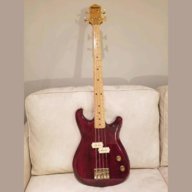
Anyway, here’s the bass. Have the mute assembly and the original case, too, which is in great shape other than the ubiquitous broken center latch.

985FFE1C-412D-45DC-B421-021990A1EDCA.jpeg
 
It happens fretting the notes below the fifth fret and open strings, too. I think it must be the strings hitting the frets. There is what looks to me as a reasonable amount of relief in the neck and the action isn’t particularly low. I guess raising the action or increasing neck relief should help, I’d just hate to have to do it because the bass is so effortless to play as is.

Anyway, here’s the bass. Have the mute assembly and the original case, too, which is in great shape other than the ubiquitous broken center latch.

View attachment 4662956

That's a babe!

It's surprising to hear the noise is happening on open strings as well, though. If you press down at the first fret and the 12th fret, are any strings sitting on the fretboard? Also, are they sitting nicely in the nut slots, does anything different happen if you touch/mute the strings behind the nut, etc?

I love me some buttery smooth bass action & agree it's preferable to keep it there if possible... so a lil diagnosis might go a long way.
 
It happens fretting the notes below the fifth fret and open strings, too. I think it must be the strings hitting the frets. There is what looks to me as a reasonable amount of relief in the neck and the action isn’t particularly low. I guess raising the action or increasing neck relief should help, I’d just hate to have to do it because the bass is so effortless to play as is.

Anyway, here’s the bass. Have the mute assembly and the original case, too, which is in great shape other than the ubiquitous broken center latch.

View attachment 4662956
Beautiful Mustang bass... -Am strongly hoping they come out with that color again, especially on the newer PJ Stangs.
Don't know if this applies to you but I was also getting a snapping, clicking sound for a while when hitting the A string on my Squier CV Mustang.. :eek:
~Turned out to be my technique; my fingers were following thru too much and hitting the lower edge of the E string! :meh: -Once I began arching my hand a bit more when picking, the problem was solved... :p
 
  • Like
Reactions: OtherLisa
I sold my blue JMJ Mustang last year and regret it. This week I picked up this black one to go along w my 76. Loving it!

View attachment 4658328

That's a beauty! I'm probably the only guy on TB who doesn't love the Daphne blue (had a 67 DB Mustang back then), but the black talks to me! (It's saying "BUY ME!" :D

The 76, however, is singing to me! And it's a sexy, "come hither", kind of a song at that!

Two beauties, lucky man!!
~
Ya, that '76 ! :drool:

What else is there to say ?! :cool:
~
 
  • Like
Reactions: AntonB
....Picked up a near-mint ‘66 Mustang this past July which instantly became my gig bass because it plays and sounds so good. One issue I notice, however, is that there is this snap/slap/thud noise coming off the fretboard. It seems most prominent with notes below the fifth fret on the A-string. This noise seems to be coming from the headstock end of the board as opposed to the slapping sound you’d get closer to the body when you’re digging in too hard. Although I never hear it “in the mix” when playing with the band, it is audible through an amplifier when playing on my own.

This is my first shortscale, so I’m wondering if this may be normal and inherent to them? Is it a setup issue? I’d hate to make adjustments because it plays and intonates perfectly as is. Ultimately I can live with it but I’m wondering if anyone else has experienced this and may have a fix I’m overlooking.

Thanks

Nice score! But... pics or it didn't happen :cool:

As for the noise issue, does it happen when you fret notes down there? It might be worth checking your neck relief just in case it's a little too flat and the strings are hitting the frets.

It happens fretting the notes below the fifth fret and open strings, too. I think it must be the strings hitting the frets. There is what looks to me as a reasonable amount of relief in the neck and the action isn’t particularly low. I guess raising the action or increasing neck relief should help, I’d just hate to have to do it because the bass is so effortless to play as is.

Anyway, here’s the bass. Have the mute assembly and the original case, too, which is in great shape other than the ubiquitous broken center latch.

View attachment 4662956
~
It might well be that the truss rod is a bit too tight, and that is better news than if it was not tight enough and could not be tightened further.

Since it is easier and safer to adjust the heights of the bridge saddles than to turn a truss rod, this may be what the last owner has done, or someone on their behalf.

Raising the saddles will mainly stop buzz on the higher frets, but can leave some on the lower ones.

What you noticed might even be the reason that the bass was for sale, who knows ?

Anyway, IF it had been adjusted as I just speculated, then loosening the truss rod ought to help your issue, and as you gradually do so, perhaps a quarter turn at a time, a day or so apart, you should notice that it does, but your action will also get higher overall.

THEN, you can begin to gradually lower the bridge saddles, and that will most likely make up for the higher action, but your buzz will hopefully be gone, and if you keep going sufficiently far, it might move to the higher frets.

You might be able to speed up the process a bit by pushing the headstock upward as you loosen it, and because you are loosening, the strings can remain at normal tension throughout the entire time.

ONE OTHER THING : STRINGS [and you might wish to examine them before turning the truss rod]

What make, type, and gauges are they ?

If they are a set with a 4th which is 90 or 95 thou, try a set where the 4th is 100 thou or more.

I like the LaBella 760FL DT Flats series [43-60-82-104], and use them on other short scale basses, so 760FL-S, but if your Mustang bass has strings which pass thru the body at the bridge, they make a special 'MUS' set for it, otherwise you would just need the short scale version of 760FL which I use.

Short scale basses frequently begin or end up with strings which ought not to be on them [too light gauge], because some string makers incorrectly and stupidly insist upon only offering such strings for short scale basses, and far too many players blindly trust them.

Going heavier, with any brand which offers them, might help pull the neck up enough without adjusting the truss rod, and then you can just lower your bridge saddles a bit if this succeeds.

Hopefully one or both of the above solutions will be of help. :)
~
 
Last edited:
Converting my Player P to a Jazz neck made all the difference for me but, YMMV...I still have a Jag to fall back on ;).
~
And as I am sure that I've posted already, SOMEwhere on TB, last October I managed to accomplish the opposite of what you did.

I snagged a MIM Jazz with a [Brad] Lowe 32" conversion neck already on it, and the neck just happens to be about 1.65" at the nut, similar to a lot of P basses.

For me, having a Precision neck on a Jazz body has long been what many of us now call a 'Bucket List' item.

Sometime this year I will try gigging it, and will post what I think, most likely in the Medium Scale Bass Club thread.

The only issues which I foresee could be hum from the single coil pickups, and possibly not liking the VVT control arrangement.

I have some stray active EMGs which will fit it, and if I install those, I might look for a balance pot to introduce at the same time.
~
 
Last edited:
  • Like
Reactions: SoulReflection
It happens fretting the notes below the fifth fret and open strings, too. I think it must be the strings hitting the frets. There is what looks to me as a reasonable amount of relief in the neck and the action isn’t particularly low. I guess raising the action or increasing neck relief should help, I’d just hate to have to do it because the bass is so effortless to play as is.

Anyway, here’s the bass. Have the mute assembly and the original case, too, which is in great shape other than the ubiquitous broken center latch.

View attachment 4662956

Are the nut slots low? If they are worn or cut too low then it is possible that the strings behind the fretted notes can hit the frets. If so it may be better to address this rather than add more relief to the neck. Beautiful Mustang by the way!
 
It happens fretting the notes below the fifth fret and open strings, too. I think it must be the strings hitting the frets. There is what looks to me as a reasonable amount of relief in the neck and the action isn’t particularly low. I guess raising the action or increasing neck relief should help, I’d just hate to have to do it because the bass is so effortless to play as is.

Anyway, here’s the bass. Have the mute assembly and the original case, too, which is in great shape other than the ubiquitous broken center latch.

View attachment 4662956

Wow. Jealous!
 
Are the nut slots low? If they are worn or cut too low, then it is possible that the strings behind the fretted notes can hit the frets. If so it may be better to address this rather than add more relief to the neck. Beautiful Mustang by the way!
~
Bear in mind that having this problem alone would only cause buzz at the first and no other fret.

As soon as a note is fretted there, the issue would vanish.

It's worth a look though.
~
 
Any other basses that the La Bella mustang flats will work on? I have an almost new set and the silk on the extra long flexible part near the ball end prevents them from working on any of my other short scale basses?
~
It depends upon how you look at things.

GHS 'CONTACT CORE SUPER STEELS' taper core bass strings deliberately allow the core to sit on the saddles.

Bass strings of an acoustic piano have exposed core at the ends as well.

And I have made posts here which address your question [not the exact post - look a few days back from now] :

Hofner-(not just Beatle Basses)-Group Part 2

Also I recently posted in the Medium Scale Bass Club, where I researched what else might fit onto some medium scale basses, after some of us were lamenting and commiserating over the revelation that LaBella has disco'd their medium scale DT Flats set of that gauge, and the Mustang set was 1 of 3 alternate LaBella sets which I proposed for that situation [also not the exact post - look a few days back from now].

The Official Medium Scale Bass Club | TalkBass.com

The 'bottom line' is that the fully wrapped part of each string needs to make it past the nut, but not around the tuner post, and since on the Mustang customized LaBella set, the transition from that part to the headstock silks begins at 34 inches, in theory they should fit any bass on which the distance from the balls to the nut is slightly less than that, say 33.75".

That is why they could be candidates for some medium [32"] scale basses.

They might also fit Hofner Beatle [and similar, like Epiphone Viola] basses, where the full wrap may not quite reach the tuner posts, and the taper near the balls is completely South of the bridge saddles.

What happens at the bridge saddles is less worrisome than what occurs at the nut and tuning peg posts, so they could work on selected other short scale basses where everything at the headstock measures within the spec of the strings.
~
 
Last edited:
  • Like
Reactions: don21480
Any other basses that the LaBella Mustang flats will work on?

I have an almost new set, and the silk on the extra long flexible part near the ball end prevents them from working on any of my other short scale basses?
~
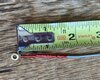
As a followup to my last post, and since you have a set of those and I do not, might I talk you into examining them, and posting a pic of the E string near the ball end, including the tapered section ?

And could I get you to also measure that string, to confirm for us that the length of the tapered part is 1.75" from the ball, and that the headstock silk begins at 34" from the ball, like the company publishes ?

Thanks ! :)
~
 
Last edited: