Here's my $.02...
During the '70s the wood selection changed.. for better or worse is debatable, but there's no denying that the Northern ash that Fender used in the mid-late '70s was much heavier and denser than the alder and swamp ash used in the '50s, '60s and early '70s. Some people love the sound of the '70s heavy ash, but I personally much prefer lighter woods, partly because my back isn't what it used to be, and also because I prefer the resonance and tone of lighter body wood in general.
Also, all the tooling and jigs that were used to make the guitars/basses really started to wear out by the '70s, which made for sloppy tolerances in the '70s (i.e. big neck pocket gaps, sloppy routes, crooked/unaligned bridges, etc..). IMO, those are the main reasons that mid-late '70s Fenders have a bad rep with many people (and it's justified as far as I'm concerned). HOWEVER.. there are most definitely some Fenders that somehow made it out of the factory during the '70s that are excellent, pro-grade instruments.. just not nearly as high of a percentage as in the previous decades, IME.
So it's not so much a year by year thing, but more that Fender really just needed to update, maintain and revamp their factory by the mid-'70s, so quality just became more of a crap shoot. And keep in mind, Fender was also owned by CBS at this time.. who really only cared about the almighty dollar at the end of the day - not pride and quality in their guitars. And that way of thinking caught up with them when players just started giving up on them by the thousands. Fender finally figured it out in 1982.. when they decided to listen to their customers and start "making 'em like they used to again"... and they introduced the American Vintage Series. That was the 1st step in turning their reputation around, and the next step was CBS selling the company to the employees in '85. The moral of the story is.. when a TV station buys a guitar company to exploit it for all it's worth, sh*t goes south.




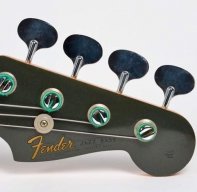

 But the SX P I bought for $110 new a month before the 79 sounded better, believe it or not.