I think what we can gather from this is that whilst the XLR output works, you shouldn't fiddle around with your EQ after the sound guy is done mixing, otherwise you'll possibly have bad surprises and an angry sound guy.
EQ and tone are not the primary concern with this setup.
The XLR line out is tapped off the power amp output, after the master volume control. If you make even a relatively minor adjustment to your stage volume, you risk clipping the bass channel on the board, and/or blowing up everyone else's monitor mix.
Not a great way to make friends and influence people. The only way to use this in a professional manner, is to negotiate a volume balance with the FOH guy during sound check, and then keep your hands off the amp for the rest of the gig. This is a pain in the neck, especially if you're playing with relatively green musicians.
That's the part of the Rumble's XLR out that's strictly amateur hour. Off the top of my head, I can't think of any other DI out, pre or post, that has this fault. With a normal DI output, you can tweak your stage levels within reason without incurring the wrath of the FOH guy, the monitor mix engineer, or the rest of the band.
The frustrating thing is that Fender could have easily made a speaker simulated output that was ahead of the master volume, where it belongs. As it is, the XLR out is much more suited to tasks like home recording, where you tend to set the output level and forget it.



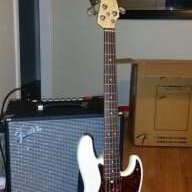







 Welcome to the Fender Rumble Club, Squierbassjake! You are member #264