• TalkBass has been independent since 1998. Add your voice.
    Create a free account to reply to discussions, view embedded media, and browse with fewer display ads.
    Join freeLog in
    Want zero display ads or expanded classifieds tools? Compare plans.

Fender Rumble Club

What pictures, dORry? Do you have assembly line photos? Let's see the evidence, please.
same construction. (so as the thomann cabs, I got one of these, same materials and build style/quality/paint)
obviously different (pre)amp. that is where the "style" comes from.

not surprised, a ton of guitars/basses are also built in the same Cort factories oversees for various brands.

don't believe me, i'm just a musician, watch this instead :)

there's nothing wrong with using the same OEMs.

You know, if it walks like a duck and talks like a duck... :)

if I seen only this, well, hard to tell it wasn't a rumble (maybe the 2 silver screws...)
1770797915790.png
 
Last edited:
Looks somewhat similar (esp. the rear of the combo), but the preamp is different, the baffle & porting is different, and it weighs over 35 lbs.
Cort 15":
  • Dimensions (H x W x D): 44 x 44 x 36 cm
  • Weight: 16 kg
vs. Rumble 200 (15"):
  • Dimensions (H x W x D): 58.42 x 48.26 x 35.56 cm
  • Weight: 15.65 kg
don't see that much of a difference, TBH :)

even the grille is held up the same velcro-style, but it's a single port:

1770796246269.png
 
Last edited:
Cort 15":
  • Dimensions (H x W x D): 44 x 44 x 36 cm
  • Weight: 16 kg
vs. Rumble 200 (15"):
  • Dimensions (H x W x D): 58.42 x 48.26 x 35.56 cm
  • Weight: 15.65 kg
don't see that much of a difference, TBH :)

even the grille is held up the same velcro-style, but it's a single port:

View attachment 7430025
That Cort combo is a 12" unit and you're comparing a 12" Cort to a 15" Fender.

I'm not trying to bust your b@LL$.

From that video, Fender's are definitely produced in the same plant.
I bet the power section of that Cort is the same as the R100c uses as the R100c has a boatload of dynamic headroom, which means that Cort can rate it higher power just by bumping up the distortion it is measured at.
 
That Cort combo is a 12" unit and you're comparing a 12" Cort to a 15" Fender.

I'm not trying to bust your b@LL$.

From that video, Fender's are definitely produced in the same plant.
I bet the power section of that Cort is the same as the R100c uses as the R100c has a boatload of dynamic headroom, which means that Cort can rate it higher power just by bumping up the distortion it is measured at.
Yes, the speaker is just 12". Not that 3 inches matter much.

And it's a 6Ohm one, so definately not the r100's speaker. (old or new). Sounds higher rated, that could add a kilo or 2.
RATED LOAD IMPEDANCE
4Ω, 8Ω, 16Ω
Speaker
12″ 6Ω

It might not even be a class D. We don't know. (if not, that's alone a couple of kilos, like Boss Katanas which use class AB)

Definately not the same power. It's 150W. The r100's class D chip is limited to 100W by it's input voltage. There is no "extra headroom". It's clearly in the schematics/documents.
However when I measured power consumption during playing the amp, it uses the fraction of that 100W. (that is why we call it peak)

But the cab and construction is the same. So as my 0 Watt speakerless Harley Benton cab... :)

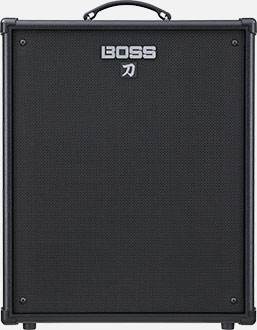
They make interesting combos, that's for sure :) this reminds me of the Roland (Boss) cube boxes: Cort Guitars

Shoulda compared the 40W ;-D (love the blacked looks, like the studio40). Smaller cab again, roughly a kilo weightier. (class AB amp inside? :))
 
Last edited:
Yes, the speaker is just 12". Not that 3 inches matter much.

And it's a 6Ohm one, so definately not the r100's speaker. (old or new). Sounds higher rated, that could add a kilo or 2.
RATED LOAD IMPEDANCE
4Ω, 8Ω, 16Ω
Speaker
12″ 6Ω ... ... ...
Except that you shouldn't measure 8 ohms with a multimeter, that's the nominal impedance. The measurement will be DC resistance and will be roughly 60-80% of the nominal impedance.
 
  • Like
Reactions: GonePlaid
Yes, the speaker is just 12". Not that 3 inches matter much.

And it's a 6Ohm one, so definately not the r100's speaker. (old or new). Sounds higher rated, that could add a kilo or 2.
RATED LOAD IMPEDANCE
4Ω, 8Ω, 16Ω
Speaker
12″ 6Ω

It might not even be a class D. We don't know. (if not, that's alone a couple of kilos, like Boss Katanas which use class AB)

Definately not the same power. It's 150W. The r100's class D chip is limited to 100W by it's input voltage. There is no "extra headroom". It's clearly in the schematics/documents.
However when I measured power consumption during playing the amp, it uses the fraction of that 100W. (that is why we call it peak)

But the cab and construction is the same. So as my 0 Watt speakerless Harley Benton cab... :)

They make interesting combos, that's for sure :) this reminds me of the Roland (Boss) cube boxes: Cort Guitars

Shoulda compared the 40W ;-D (love the blacked looks, like the studio40). Smaller cab again, roughly a kilo weightier. (class AB amp inside? :))
Why are you comparing to the Rumble 200 and not the 100? If the cabs were really the same, then that would be the comparison to make.

The Rumble 100 is dramatically lighter than the Cort and not the same size, either.

R100: 419 x 470 x 356 mm, 10 kg

CM150: 440 x 440 x 360 mm, 17 kg

It's 70% heavier than the Fender.

1000036960.jpg

1000036958.jpg
 
  • Like
Reactions: GonePlaid
The R100 also has the speaker mounted in the center, with ports below on each side, rather than offset.

It's a different cabinet (wider and shorter than the Fender, because of the different speaker/port arrangement), probably made of heavier material, with a different speaker, not even remotely the same thing.
 
Last edited:
  • Like
Reactions: GonePlaid
Why are you comparing to the Rumble 200 and not the 100? If the cabs were really the same, then that would be the comparison to make.

The Rumble 100 is dramatically lighter than the Cort and not the same size, either.

R100: 419 x 470 x 356 mm, 10 kg

CM150: 440 x 440 x 360 mm, 17 kg

It's 70% heavier than the Fender.

View attachment 7431194
View attachment 7431195
also 50% less Watts. I compared the similar build quality/materials and hardware. look at the pic from top with removed preamp controls. I could not tell if I was seeing a rumble or a cort. same handle, same corners, same cutout. also same metal amp box... :)
also compared them to my 0 inch 0 Watt Harley Benton cab. hope that does not bother You, cause it's infinately less power and speaker inches.
:)

we can also compare an r40 and an r100 and and an r200 and find similarities. at least I hope so.

cort is an OEM for Fender, PRS, Ibanez, You name it. does that mean a Squier is the same as a PRS SE? no! what You CAN say tough is that the build qualities, materials, etc. can be very similar. and although cort has dozens of factories in multiple countries out there, sometimes those even come out of the same buildings.
 
Last edited:
  • Like
Reactions: GonePlaid
The R100 also has the speaker mounted in the center, with ports below on each side, rather than offset.

It's a different cabinet (wider and shorter than the Fender, because of the different speaker/port arrangement), probably made of heavier material, with a different speaker, not even remotely the same thing.
what makes You think heavier materials? :) have You seen them? could be thicker plywood, but I doubt it. might be more bracing or filling (an r100 has none). if I have to guess its class AB with those hefty transformers, but if You know something else, please enlighten me! I'm really curious!
 
Last edited:
  • Like
Reactions: GonePlaid
Cort CM150 manual states that power consumption is 200 W, which would be unrealistic for a class AB amplifier. Even at 70% efficiency, power consumption would still be above 200 watts and this doesn't even include power supply efficiency.

It's very unlikely that CM150 uses anything but a class D amplifier, there's no good reason not to.
 
  • Like
Reactions: GonePlaid
Cort CM150 manual states that power consumption is 200 W, which would be unrealistic for a class AB amplifier. Even at 70% efficiency, power consumption would still be above 200 watts and this doesn't even include power supply efficiency.

It's very unlikely that CM150 uses anything but a class D amplifier, there's no good reason not to.
Not convinced. Look at a class AB amp's specs:

Output Power 160 W Continuous (RMS)
300 W Peak
Power Consumption 117 W

Your math seems to be made up TBH :-)
Boss (Roland) somehow found a "good reason", but they are only in this business for decades. :rolleyes: (disclaimer: I love class D)
 
Last edited:
  • Like
Reactions: GonePlaid
Not convinced. Look at a class AB amp's specs:

Output Power 160 W Continuous (RMS)
300 W Peak
Power Consumption 117 W

Your math seems to be made up TBH :-)
Boss (Roland) somehow found a "good reason", but they are only in this business for decades. :rolleyes: (disclaimer: I love class D)
117 W power draw with 160 W continuous output power? That 117 W figure is simply useless without any context.


The manual states 200 W power consumption. If it's at program power, it would mean barely 37.5% efficiency, which is ridiculously low and the combo can do double duty as a small space heater.


Class B maximum efficiency is below 80%. Textbooks frequently quote 78.53% efficiency. That's for class B amps. Class AB amps will necessarily have lower efficiency or they're not class AB.
At 78.53% efficiency, class B amp with 150 W output power would draw 191 watts. This means that the power supply would have to be at least 95.5% efficient at maximum power for the combo to draw 200 watts at maximum output.

That's wildly unrealistic, especially since the combo is equipped with a global power supply (runs on a wide range of input voltages). 80 plus certified power supplies are typically 2-4% higher efficiency at the upper range, which would put this power supply at 97-99% efficiency at 230 V,

That said, I bought a "Class D" amplifier on aliexpress and when examined, the output stage has two transistors, so unless somebody made a magical class D IC with just three terminals, it's definitely not a class D amplifier.
 
117 W power draw with 160 W continuous output power? That 117 W figure is simply useless without any context.


The manual states 200 W power consumption. If it's at program power, it would mean barely 37.5% efficiency, which is ridiculously low and the combo can do double duty as a small space heater.


Class B maximum efficiency is below 80%. Textbooks frequently quote 78.53% efficiency. That's for class B amps. Class AB amps will necessarily have lower efficiency or they're not class AB.
At 78.53% efficiency, class B amp with 150 W output power would draw 191 watts. This means that the power supply would have to be at least 95.5% efficient at maximum power for the combo to draw 200 watts at maximum output.

That's wildly unrealistic, especially since the combo is equipped with a global power supply (runs on a wide range of input voltages). 80 plus certified power supplies are typically 2-4% higher efficiency at the upper range, which would put this power supply at 97-99% efficiency at 230 V,

That said, I bought a "Class D" amplifier on aliexpress and when examined, the output stage has two transistors, so unless somebody made a magical class D IC with just three terminals, it's definitely not a class D amplifier.
theese numbers say nothing, cause RMS is a derivated/aggregated/calculated number, and power consumption could mean anything from average to peak. :)
"the output stage has two transistors" > ? :D what do you mean?
1770986920762.png
1770987022540.png

1770987200562.png

1770987611934.png


If Your amp has transistors as power stage, then it's not a class D amp.
 
Last edited:
  • Like
Reactions: GonePlaid
I'd like to see Fender put out higher power 112 combo similar to the 800 watt 2x10 (vs. the Rumble 500). They could just pop the 500 power amp from the Rumble 500 into the 112 box, add a more robust 8 ohm 250 watt neo speaker, defeatable horn, extension speaker out.

I had a rumble 100, liked it but didn't love it. It was a bit too big for my small acoustic gigs and not big enough for my louder gigs. Just a bit more headroom would have made it useable as a stage monitor for louder stuff while still being very portable.
 
I'd like to see Fender put out higher power 112 combo similar to the 800 watt 2x10 (vs. the Rumble 500). They could just pop the 500 power amp from the Rumble 500 into the 112 box, add a more robust 8 ohm 250 watt neo speaker, defeatable horn, extension speaker out.

I had a rumble 100, liked it but didn't love it. It was a bit too big for my small acoustic gigs and not big enough for my louder gigs. Just a bit more headroom would have made it useable as a stage monitor for louder stuff while still being very portable.
That's why many of us have 2 of'em! :)
I changed the speaker in one of mine, it has slightly more volume (specially mids), which makes it "cut through" more. Although the speaker itself was half the price of a brand new r100.
You could have that kind of setup, not in a combo form, but with the r500 head + 1x12 cab (250W). Sadly both are discontinued AFAIK.
 
Last edited:
Ok forget it then.:laugh:

I prefer to carry a single cab. Just find it easier to deal with the load ins I have, I know other like to carry multiple. For me 2 would defeat portability.
Most of the time I carry 1.

If it's a small gig: 1
If it's a large gig: 1 (FoH should do their job)
If it's a large gig with no proper FoH: 2
Or when I want to show off :D (I don't)
 
I have bigger cabs that I use for bigger gigs. Honestly, 212s would be Overkill for stage monitoring on some of my louder gigs that have PA support. I don't play that loud. Right now I'm using a 112 cab with 250 watts for that stuff. It would be nice to have that in a combo. The rumble 100 didn't quite get me there and the bigger combos would be less portable than what I have now.
 
  • Like
Reactions: dORSY and GonePlaid