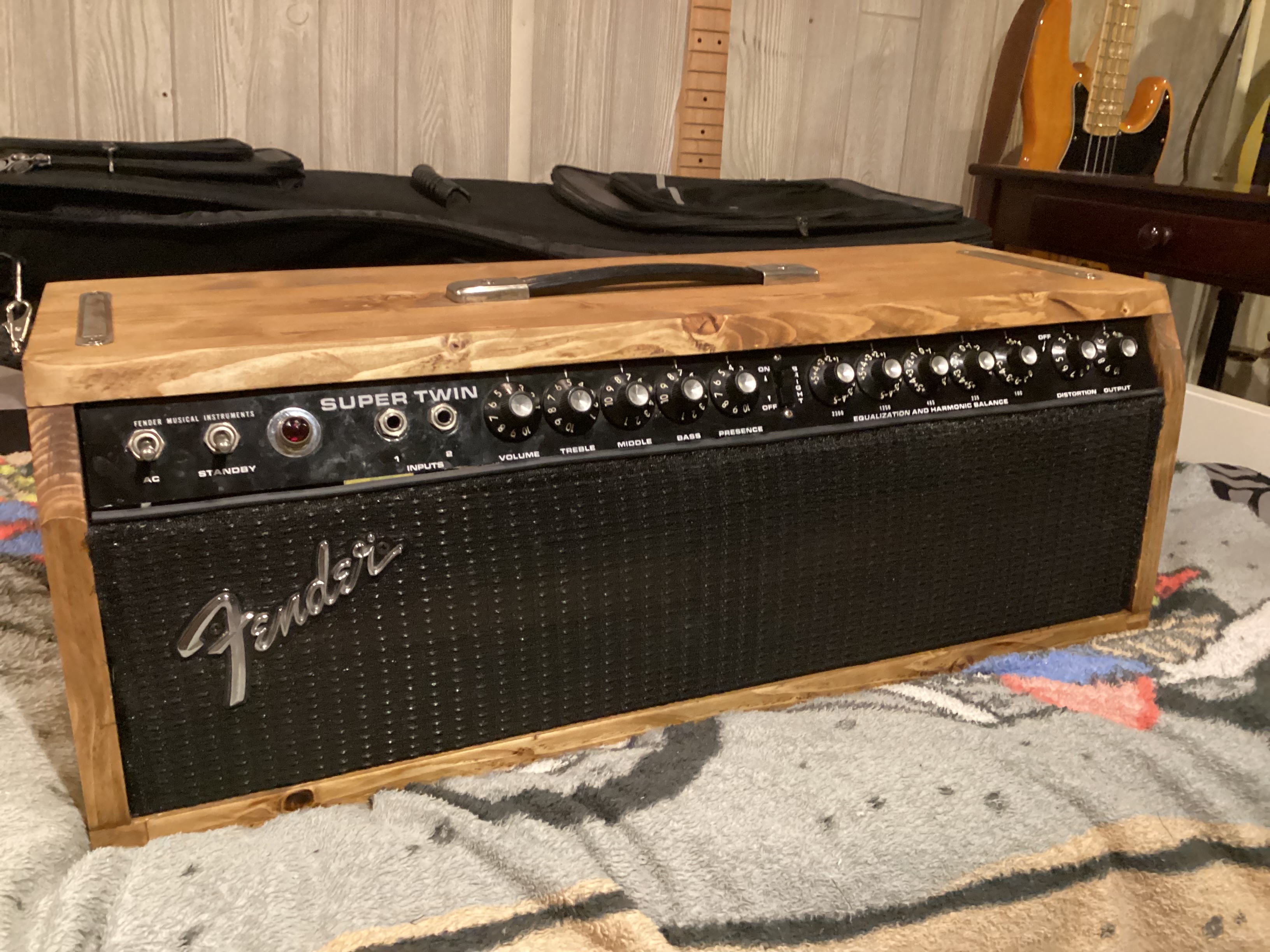
Finally! Not perfect (the grill work particularly) but close enough for government work!

Enjoy the benefits of a premium membership!
Upgrade Account
-
TalkBass has been independent since 1998. Add your voice.
Create a free account to reply to discussions, view embedded media, and browse with fewer display ads.
Join free Log in
Want zero display ads or expanded classifieds tools? Compare plans.
You are using an out of date browser. It may not display this or other websites correctly.
You should upgrade or use an alternative browser.
You should upgrade or use an alternative browser.
Fender Super Twin Bass Head
- Thread starter johnk_10
- Start date
More options
Who Replied?
Finally, found a little bit of space 
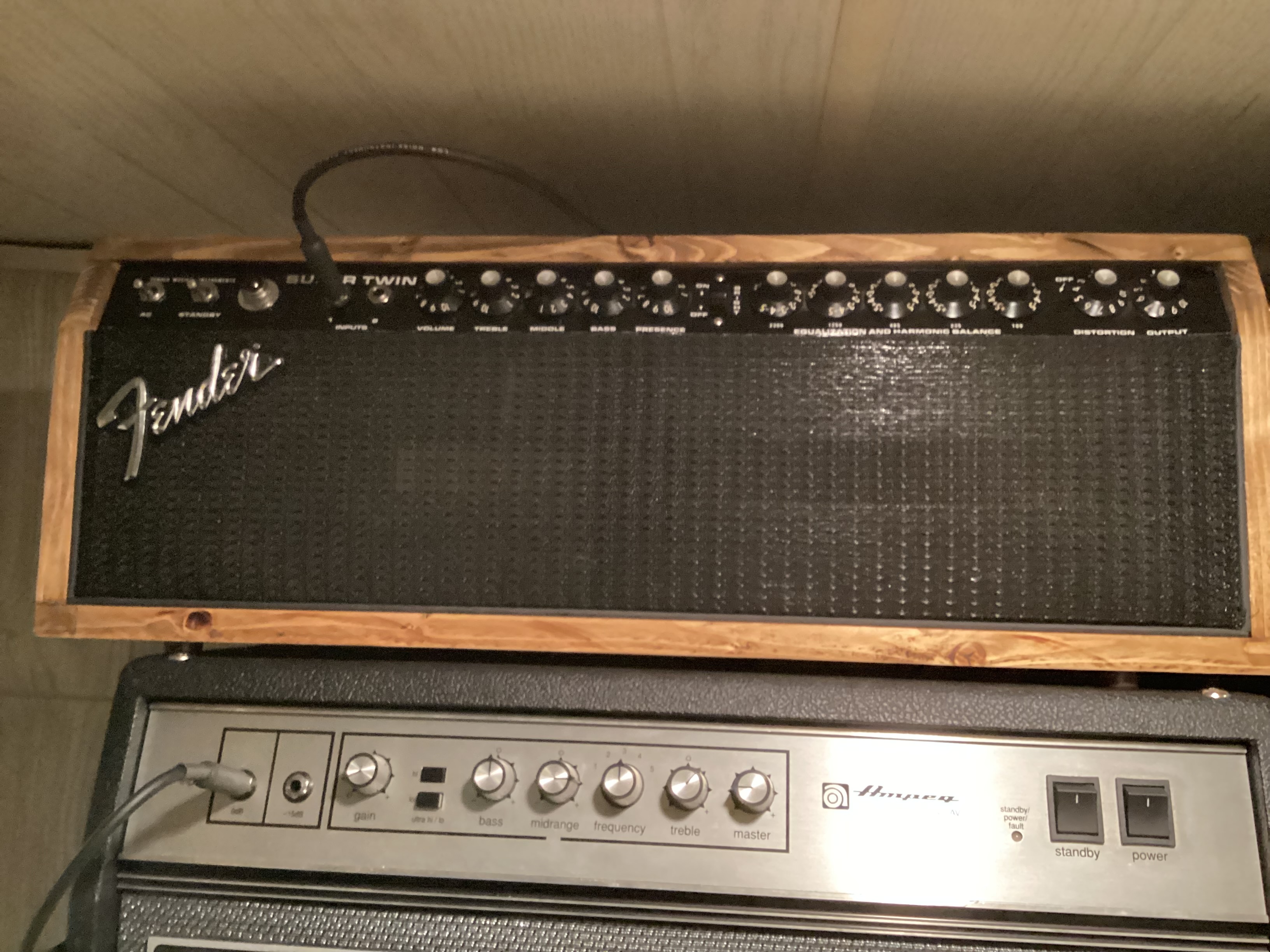
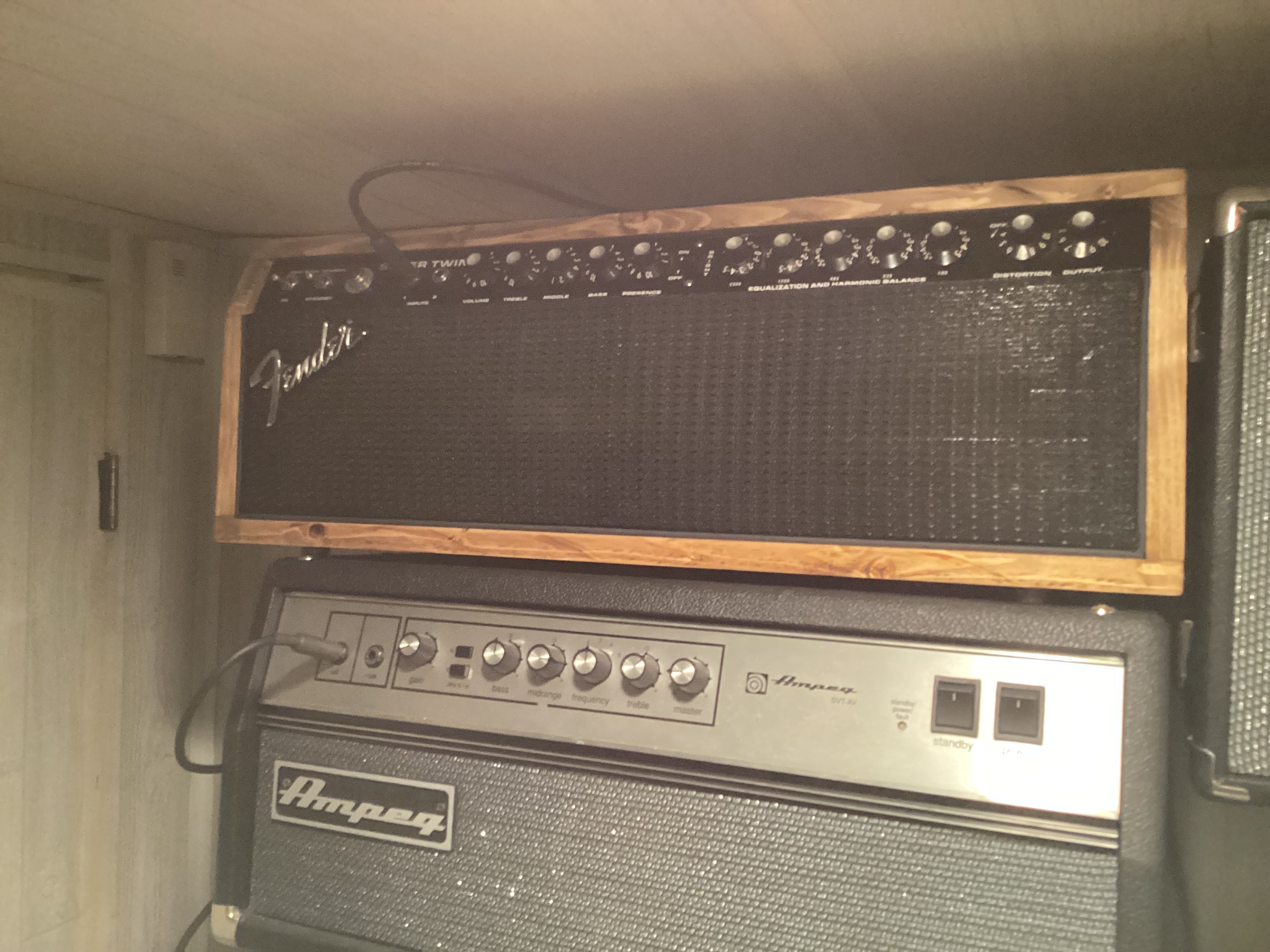
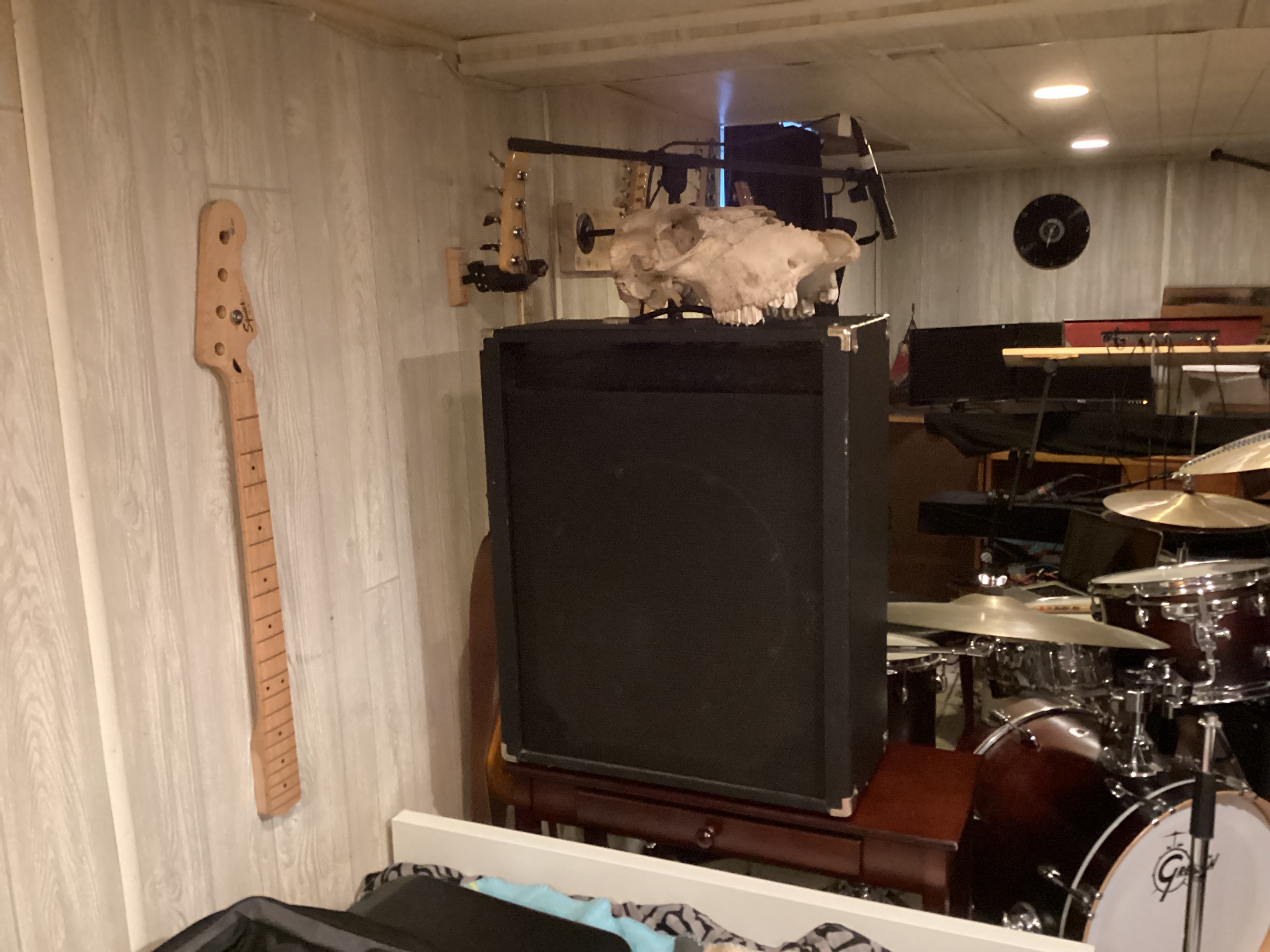
This is the ugly cab sporting a 4 ohms 15 inches Black Widow… about 10 feet farther!
***Now, a quick question: once on the top and cab plugged, really low volume and, indeed, the 12AU7 was dead. It’s the third one in there. The original one died last week then I’ve replaced it with an old US one. Today, the filament was dead! Is there something I should check in the vicinity of the 12AU7 circuit? BTW, now there is a strong Rogers in the socket but I suspect there is something fishy here and I don’t want to burn my stash of good old 12AU7’s!
**It looks the 12AU7 is in the EQ section but I guess that even with EQ off, it’s part of the preamp stage… or not?
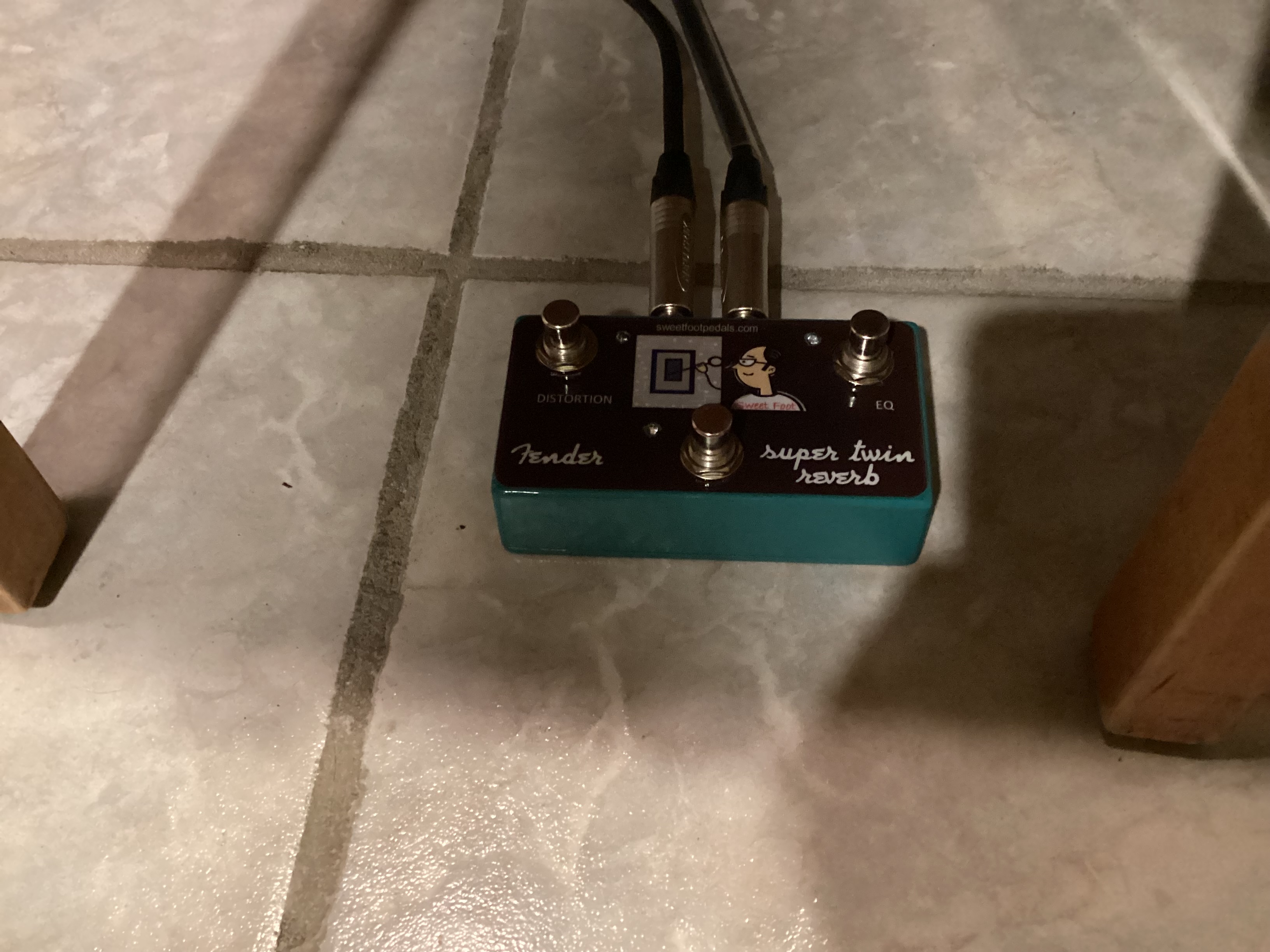
***Footswitch:
Thanks,
Patrice
This is the ugly cab sporting a 4 ohms 15 inches Black Widow… about 10 feet farther!
***Now, a quick question: once on the top and cab plugged, really low volume and, indeed, the 12AU7 was dead. It’s the third one in there. The original one died last week then I’ve replaced it with an old US one. Today, the filament was dead! Is there something I should check in the vicinity of the 12AU7 circuit? BTW, now there is a strong Rogers in the socket but I suspect there is something fishy here and I don’t want to burn my stash of good old 12AU7’s!
**It looks the 12AU7 is in the EQ section but I guess that even with EQ off, it’s part of the preamp stage… or not?
***Footswitch:
Thanks,
Patrice
Last edited:

- Feb 16, 2008
- 21,240
- 23,636
- Disclosures
- John K Custom Basses
i'd check the schematic for the amp to see what's going on with your 12AU7.

I don't have a schematic for that amp, but it should only be a 6.3volt heater supply with a grounded center heater. Is there physical damage to the tube (loss of vacuum)? Check for improper clearances on tube socket pins.
Thanks, kinda strange. Maybe a resistor (22k plate?) as all electrolytics are following specs and new including the small values. I will have to check if voltages are ok compared to schematic too...i'd check the schematic for the amp to see what's going on with your 12AU7.
The first one (original to the amp) was indeed bumped and lost vacuum. As for the second one, completely dead. The Rogers is still going fine... after a few hoursI don't have a schematic for that amp, but it should only be a 6.3volt heater supply with a grounded center heater. Is there physical damage to the tube (loss of vacuum)? Check for improper clearances on tube socket pins.
.
Heater failure is really rare but can happen. It was more common with series heater circuits in old TV sets or table top radios where no separate heater tap was found on the power transformer. I have run into people trying to sell good tubes where the heaters were stressed to provide a short period of acceptable output on emission "style" tube testers. Heaters could fail in short order after placed in a working circuit. Just a little trick that likely doesn't apply to you, just a (not so) fun factoid. Old guy ramblings.
It’s quite possible the last tube was already near death and simply didn’t stood the working voltages.Heater failure is really rare but can happen. It was more common with series heater circuits in old TV sets or table top radios where no separate heater tap was found on the power transformer. I have run into people trying to sell good tubes where the heaters were stressed to provide a short period of acceptable output on emission "style" tube testers. Heaters could fail in short order after placed in a working circuit. Just a little trick that likely doesn't apply to you, just a (not so) fun factoid. Old guy ramblings.

Now, a quick question: once on the top and cab plugged, really low volume and, indeed, the 12AU7 was dead.
Check the value of the cathode resistor.
Different schematics show different tubes. I see 12AU7 in one schematic and 6CX8 in another. The cathode resistor is 2200 for 12AU7 and 470 for 6CX8
I’ll check cathode and plate resistors values and also, voltages around the 12AU7.Check the value of the cathode resistor.
Different schematics show different tubes. I see 12AU7 in one schematic and 6CX8 in another. The cathode resistor is 2200 for 12AU7 and 470 for 6CX8

The 6CX8 is a triple-triode Tube that's only used in the Super Twin amp that has the additional spring-reverb circuit in it, the non-reverb Super Twin just uses a 12AU7 Tube in the EQ circuit if my memory serves me right.
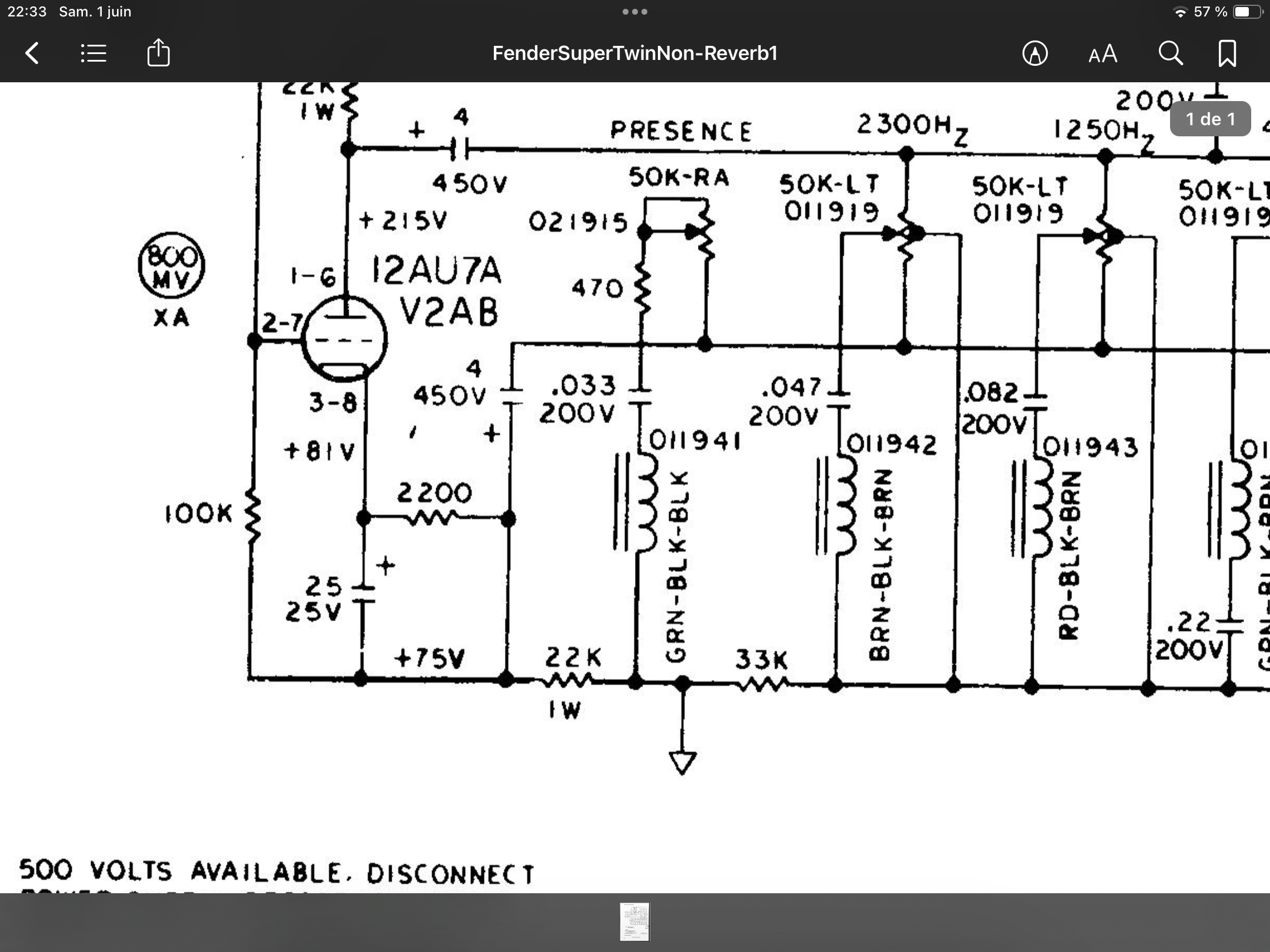
Ok, checked against schematic and all is fine:
- 82.9 VDC at pin 3, schematic calls for 81;
- 75.8 VDC at junction of 22K@1w, 25uf@25v and 2200 ohms cathode resistor. 75v on schematic;
- 2.2K cathode resistor measure 2.16K, well within tolerance;
- the two 22K@1w around the 12AU7 circuit measure 24K;
- plate voltage however climbs a lot (in the 350-375 range) once standby is flipped but finally drops at 225.5 VDC. Maybe a weak 12AU7 can’t stand that inrush voltage?
Anyway, it’ll go back in the head cab and then, where it belongs, on top of my amplifier stack.
- 82.9 VDC at pin 3, schematic calls for 81;
- 75.8 VDC at junction of 22K@1w, 25uf@25v and 2200 ohms cathode resistor. 75v on schematic;
- 2.2K cathode resistor measure 2.16K, well within tolerance;
- the two 22K@1w around the 12AU7 circuit measure 24K;
- plate voltage however climbs a lot (in the 350-375 range) once standby is flipped but finally drops at 225.5 VDC. Maybe a weak 12AU7 can’t stand that inrush voltage?
Anyway, it’ll go back in the head cab and then, where it belongs, on top of my amplifier stack
.The 6CX8 is a triple-triode Tube that's only used in the Super Twin amp that has the additional spring-reverb circuit in it
Not familiar with any triple triode tubes, so thanks for the explanation.
Still makes sense to check the resistor values and operating voltages if the amp is eating tubes.
- plate voltage however climbs a lot (in the 350-375 range) once standby is flipped but finally drops at 225.5 VDC.
Are you saying the plate voltage is 350-375V when the amp is in standby and then drops to 225V when set to operate?
I don't believe it should work that way. From what I see, the preamp supply appears to be tapped off the HT supply after the standby. So the preamp should not receive voltage in standby.
However, if you set the amp immediately to operate before the tubes are ready to conduct, the voltage will ru high and then drop as the preamp tubes start drawing current.
Not familiar with any triple triode tubes, so thanks for the explanation.
Still makes sense to check the resistor values and operating voltages if the amp is eating tubes.
Each of the three triodes in a 6CX8 is equivalent to one half of a 12AX7 if I remember correctly.
BTW pins 4 and 5 to ground should be around 6.3volts (two heater sections) to chassis with pin 9 grounded to chassis ground.
https://tube-data.com/sheets/127/1/12AU7.pdf
https://tube-data.com/sheets/127/1/12AU7.pdf
You are right, I flipped the two switches together, didn’t wait a bit, my bad!Are you saying the plate voltage is 350-375V when the amp is in standby and then drops to 225V when set to operate?
I don't believe it should work that way. From what I see, the preamp supply appears to be tapped off the HT supply after the standby. So the preamp should not receive voltage in standby.
However, if you set the amp immediately to operate before the tubes are ready to conduct, the voltage will ru high and then drop as the preamp tubes start drawing current.
Fine after all… but shouldn’t flip the standby immediately I guessNot familiar with any triple triode tubes, so thanks for the explanation.
Still makes sense to check the resistor values and operating voltages if the amp is eating tubes.
.You are right, I flipped the two switches together, didn’t wait a bit, my bad!
Another amp where this is not a good idea.


