My experience and qualifications are limited. I'm neither a professional luthier or an engineer, I've only built a couple of instruments from scratch, and assembled a few guitars and basses from parts. However, I'm a pretty serious player with over 40 years experience, my best friend is a respected luthier (mainly acoustic and electric guitars) and I've studied construction for years, so I'll risk giving the OP's question a go:
How close to the Warwick do you want to get? You can probably build a Jazz copy that shares some characteristics, but if you really want to nail that tone, you should probably just buy a Warwick.
Here are some thoughts, and a few educated guesses:
I can't buy the idea that tonewoods don't matter. You might not be able to tell whether an Alder body came off the south side of the tree, but if you can't hear the difference between a Les Paul and an SG, you've got cloth ears. For that matter, I've put good hardware into Epiphone Les Pauls for a number of kids, and although they sound better, they never end up with the brash, ringing tone of a real Les Paul Standard. And the only difference left after you change out the pickups, machine heads, and bridge/tailpiece on a set-neck LP, is the lumber...
I agree with the suggestion that pickup/preamp choice probably has the largest effect on tone. Stick a vintage Jazz pickup set in a Stingray, and you pretty much lose the plot.
I would also agree that the neck is a big contributor. I've played numerous basses and guitars with Wenge necks, and there has definitely been a common thread in terms of the midrange character and sustain. I had a baritone strat with a Black Limba body, Wenge neck and ebony fingerboard. It definitely had the impressive sustain and throaty midrange I expect from Wenge. When I swapped the neck out for birdseye maple with a rosewood fingerboard, the guitar moved much closer to conventional Strat territory, despite the unusual, high-density body wood.
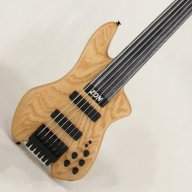
So on to specifics: The Streamer Jazzman has a small, lightweight ash/maple body, a tilt-back paddle headstock, and an Alembic-ish separate bridge and tailpiece. If you re-package it in a Jazz bass configuration, it's going to be a heavy mother, due to the larger body. There are going to be some minor tonal differences from the larger inline headstock and the integrated bridge/tailpiece, as well.
Still, the Warwick has that quirky neck wood combination, and IME that tends to give an instrument a dominant character. So my guess is that an Ovangkol/Wenge-necked Jazz with Warwick electronics, would have definite tendencies in the right direction.
However, that's the first real hitch: Unless he's building from scratch, I doubt that the OP can perfectly match the Warwick's lumber package. Two issues immediately come to mind:
1.) The maple cap on the Warwick is pretty thick, so both woods will contribute to the body resonance (back to the Les Paul vs SG issue). That suggests a big bottom, with some extra snap on top. In contrast, exotic-top Jazz bodies general have a thin cosmetic cap. Since guys like Rick Turner, Sadowsky and Warmoth agree that cosmetic caps have relatively little effect on tone, I'd expect an exotic-top Warmoth body to have more of a conventional ash resonance.
2.) Good luck finding a parts company that sells Ovangkol bass necks. It apparently sounds kind of like Rosewood in the lows and mids, but with a bit more zing on top.
If the OP still intends to go ahead, I would be thinking about Indian Rosewood or maybe Wenge for the neck, with a Wenge fingerboard. It would also seem reasonable to go with a chambered body, in order to keep the weight down and hopefully stay a little closer to the Warwick tonal recipe.
I would personally ditch the maple fingerboard idea. Maple is at the brighter end of the scale, whereas Wenge sounds pretty dark. Plus, it has that distinctive midrange character. I know that the fingerboard is only the icing on the cake, but I'm thinking that the OP has made enough changes already...
I don't know how close the end product would come to a real Warwick in tone, but it would certainly be an interesting-sounding instrument, and the look would be stunning. And IME, unfinished exotic wood necks feel terrific.
How close to the Warwick do you want to get? You can probably build a Jazz copy that shares some characteristics, but if you really want to nail that tone, you should probably just buy a Warwick.
Here are some thoughts, and a few educated guesses:
I can't buy the idea that tonewoods don't matter. You might not be able to tell whether an Alder body came off the south side of the tree, but if you can't hear the difference between a Les Paul and an SG, you've got cloth ears. For that matter, I've put good hardware into Epiphone Les Pauls for a number of kids, and although they sound better, they never end up with the brash, ringing tone of a real Les Paul Standard. And the only difference left after you change out the pickups, machine heads, and bridge/tailpiece on a set-neck LP, is the lumber...
I agree with the suggestion that pickup/preamp choice probably has the largest effect on tone. Stick a vintage Jazz pickup set in a Stingray, and you pretty much lose the plot.
I would also agree that the neck is a big contributor. I've played numerous basses and guitars with Wenge necks, and there has definitely been a common thread in terms of the midrange character and sustain. I had a baritone strat with a Black Limba body, Wenge neck and ebony fingerboard. It definitely had the impressive sustain and throaty midrange I expect from Wenge. When I swapped the neck out for birdseye maple with a rosewood fingerboard, the guitar moved much closer to conventional Strat territory, despite the unusual, high-density body wood.
So on to specifics: The Streamer Jazzman has a small, lightweight ash/maple body, a tilt-back paddle headstock, and an Alembic-ish separate bridge and tailpiece. If you re-package it in a Jazz bass configuration, it's going to be a heavy mother, due to the larger body. There are going to be some minor tonal differences from the larger inline headstock and the integrated bridge/tailpiece, as well.
Still, the Warwick has that quirky neck wood combination, and IME that tends to give an instrument a dominant character. So my guess is that an Ovangkol/Wenge-necked Jazz with Warwick electronics, would have definite tendencies in the right direction.
However, that's the first real hitch: Unless he's building from scratch, I doubt that the OP can perfectly match the Warwick's lumber package. Two issues immediately come to mind:
1.) The maple cap on the Warwick is pretty thick, so both woods will contribute to the body resonance (back to the Les Paul vs SG issue). That suggests a big bottom, with some extra snap on top. In contrast, exotic-top Jazz bodies general have a thin cosmetic cap. Since guys like Rick Turner, Sadowsky and Warmoth agree that cosmetic caps have relatively little effect on tone, I'd expect an exotic-top Warmoth body to have more of a conventional ash resonance.
2.) Good luck finding a parts company that sells Ovangkol bass necks. It apparently sounds kind of like Rosewood in the lows and mids, but with a bit more zing on top.
If the OP still intends to go ahead, I would be thinking about Indian Rosewood or maybe Wenge for the neck, with a Wenge fingerboard. It would also seem reasonable to go with a chambered body, in order to keep the weight down and hopefully stay a little closer to the Warwick tonal recipe.
I would personally ditch the maple fingerboard idea. Maple is at the brighter end of the scale, whereas Wenge sounds pretty dark. Plus, it has that distinctive midrange character. I know that the fingerboard is only the icing on the cake, but I'm thinking that the OP has made enough changes already...
I don't know how close the end product would come to a real Warwick in tone, but it would certainly be an interesting-sounding instrument, and the look would be stunning. And IME, unfinished exotic wood necks feel terrific.