
All just by hand, although I wrapped the paper around a block for the back (which was painted as well). I can't remember the grits exactly, but I generally try not to go more coarse than I absolutely have to. I may have used 80 on the back, but think I didn't go lower than 100 or 120 on the front, and think I may have only gone through 180 and 220 or 240. I may have gone higher than that, but 220 would likely have been enough. I am a woodworker, and have learned the hard way to buy high grade sandpaper, and that skipping grits never saves time.how did you sand the finish off? Did you use an orbital sander or just do it by hand? Care to share details about grits, etc?

Enjoy the benefits of a premium membership!
Upgrade Account
-
TalkBass has been independent since 1998. Add your voice.
Create a free account to reply to discussions, view embedded media, and browse with fewer display ads.
Join free Log in
Want zero display ads or expanded classifieds tools? Compare plans.
You are using an out of date browser. It may not display this or other websites correctly.
You should upgrade or use an alternative browser.
You should upgrade or use an alternative browser.
Finished with the refinish.
- Thread starter dune
- Start date
More options
Who Replied?
how did you sand the finish off? Did you use an orbital sander or just do it by hand? Care to share details about grits, etc?
FWIW, 220 and finer is working for me. I started with 320, but that’s not quite enough to get down to the stain in the pores. 220 and 320 is probably all you really need. I am going finer, through 600, in part because I have the materials on hand to do so. (Also, I need to sand for awhile while my shellac flakes dissolve for a sealer coat.)
hand sanding all the way for me
Last edited:

Blonde shellac from flakes wiped on as sealer:
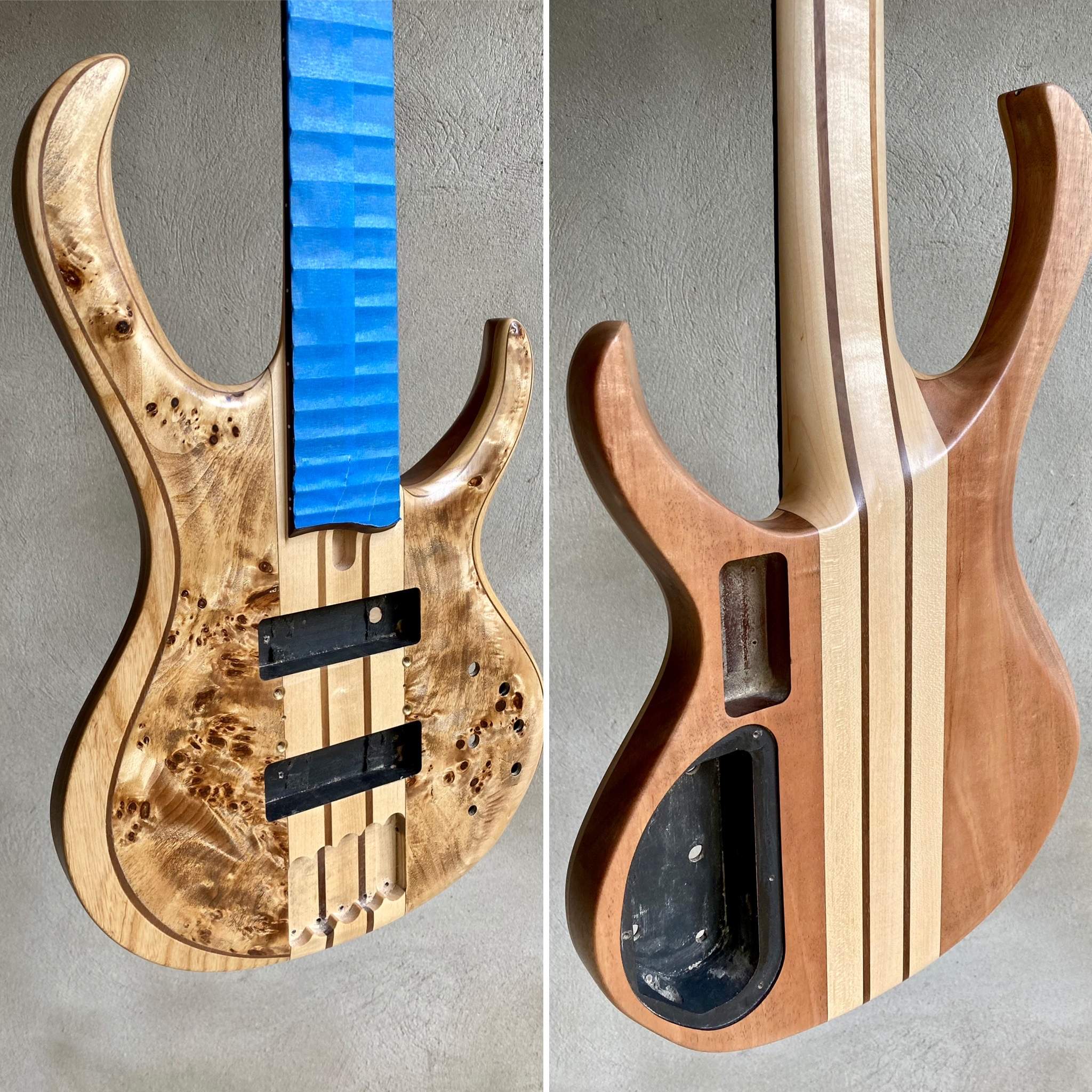
I was on the fence about whether to use the shellac as a sealer coat only or to keep building the shellac and do more of a French polish finish.The quality of the shellac is leading me towards the latter.
This is after one day of building up micro layers of blonde shellac:
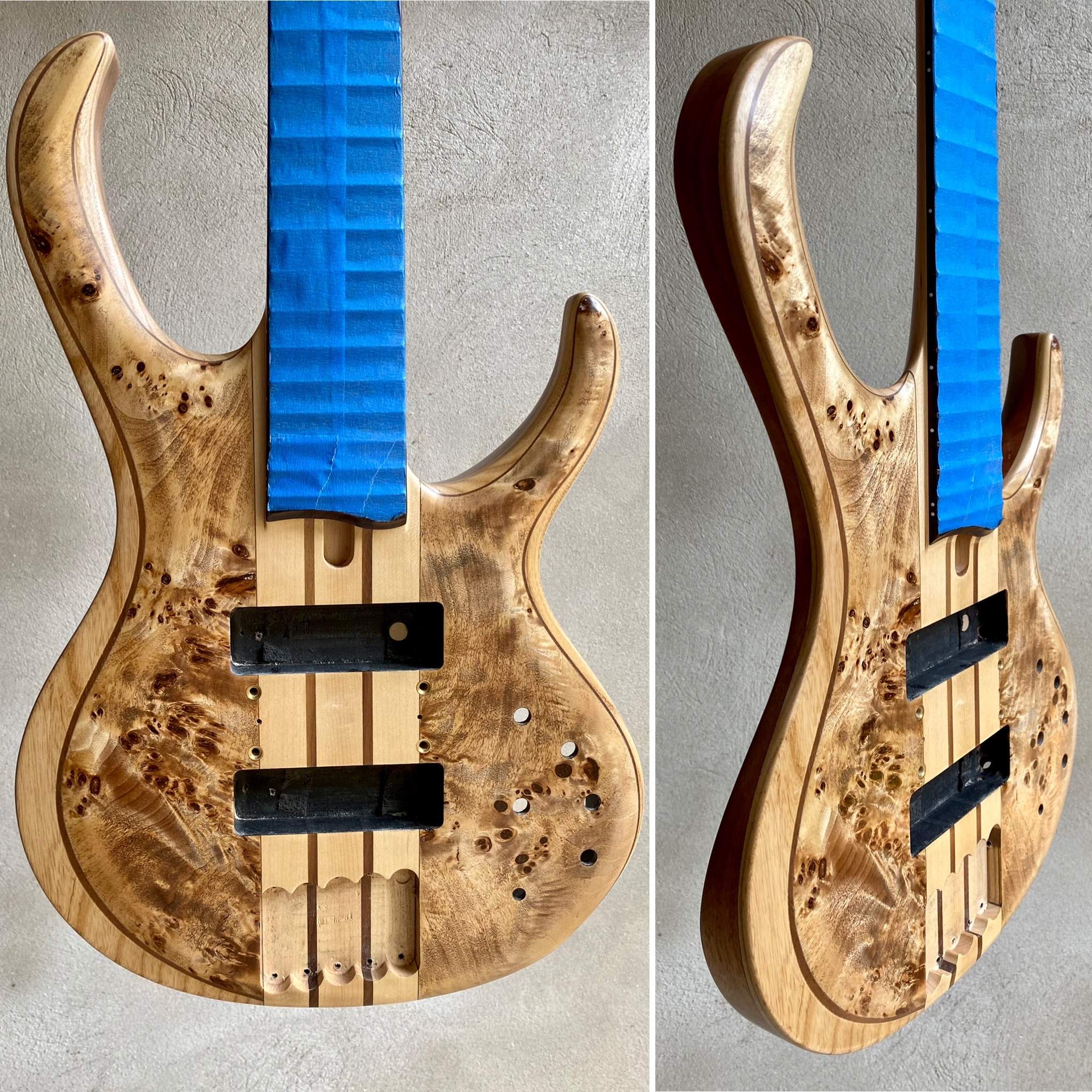
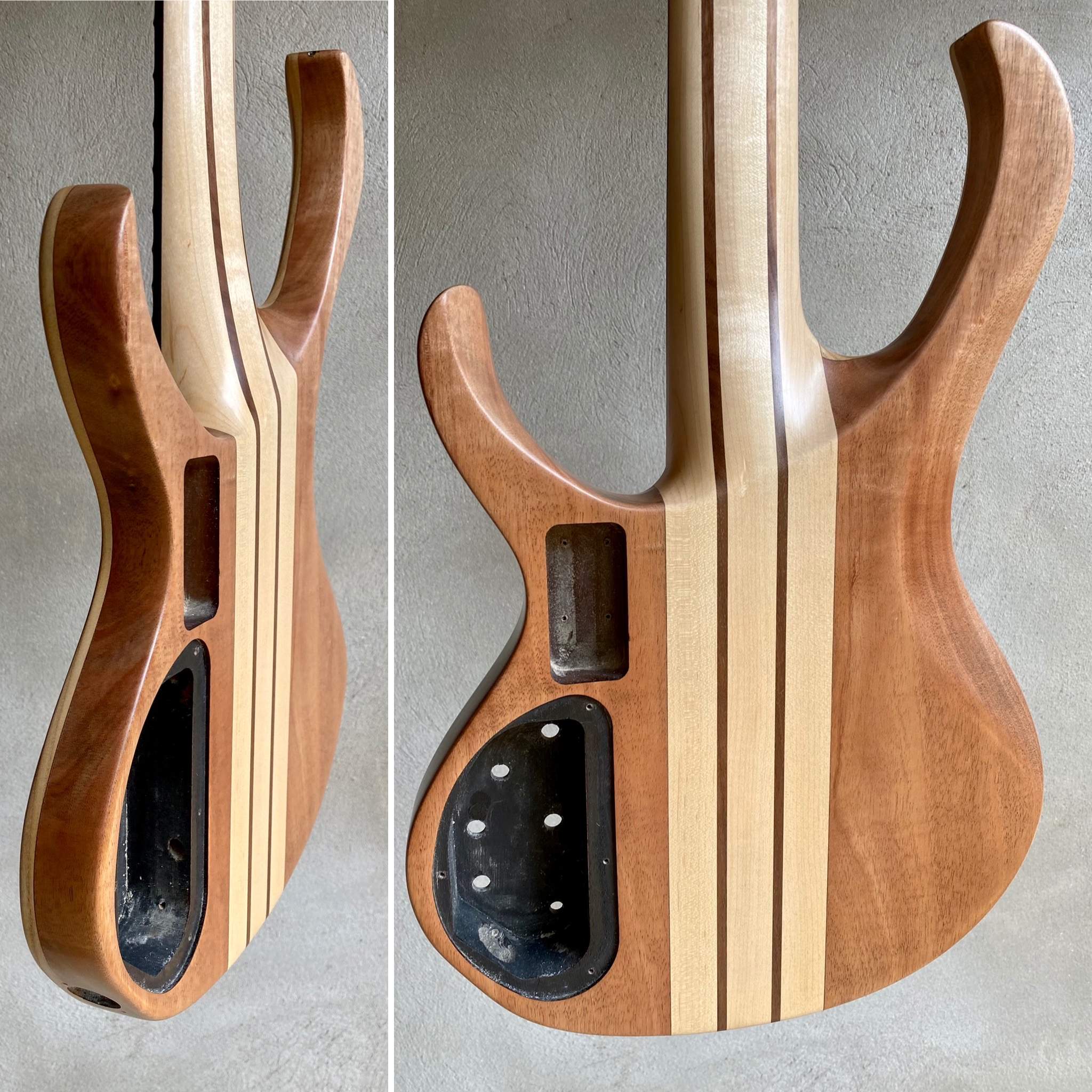
So far, I’ve just been working though a complete series of micro-mesh pads after each coat dries. Tomorrow, after these coats harden up, I’ll start incorporating the mineral oil into my pad application routine. After I build up another day’s wort of shellac, I’ll probably just wait a day, do a final series of micro-mesh, polish and wax.
It sounds like a quality shellac can provide a similar level of protection as a nitro finish. This shellac is exceptional, based of how quickly it dissolved and how quickly I can handle and work it after application. I don’t think I need any additional protection besides a paste wax.
This is after one day of building up micro layers of blonde shellac:
So far, I’ve just been working though a complete series of micro-mesh pads after each coat dries. Tomorrow, after these coats harden up, I’ll start incorporating the mineral oil into my pad application routine. After I build up another day’s wort of shellac, I’ll probably just wait a day, do a final series of micro-mesh, polish and wax.
It sounds like a quality shellac can provide a similar level of protection as a nitro finish. This shellac is exceptional, based of how quickly it dissolved and how quickly I can handle and work it after application. I don’t think I need any additional protection besides a paste wax.
Last edited:

I have the 6 string version of this bass, and was also considering refinishing it, cause I've take out and sanded off sections for comfort and exposed the Mahogany wings from the back that were black before. Maybe staining a different color something bright on the burl.
How much of the surface burl veneer did you have to remove to get past the factory stain?
How much of the surface burl veneer did you have to remove to get past the factory stain?
I have the 6 string version of this bass, and was also considering refinishing it, cause I've take out and sanded off sections for comfort and exposed the Mahogany wings from the back that were black before. Maybe staining a different color something bright on the burl.
How much of the surface burl veneer did you have to remove to get past the factory stain?
An insignificant amount, I would say. I could have removed more wood and stain off the burl on the front. I basically stopped sanding when I liked the amount of color and figuring. But some of that color is still stain.
The film finish comes off very easily. The stain is more work. Starting with 150-grit might have been prudent in hindsight. That would get the stain out faster. I just hate fighting my own sanding marks later. So, I took a conservative approach.
How much of the surface burl veneer did you have to remove to get past the factory stain?
FWIW, I just sanded the ramp down, which had received a fair amount of product and stain. Sanding from 150- to 600-grit prior to apply a new finish was the perfect workflow for that burl.
Last edited:
Day of rest before the final polish and re-assembly:
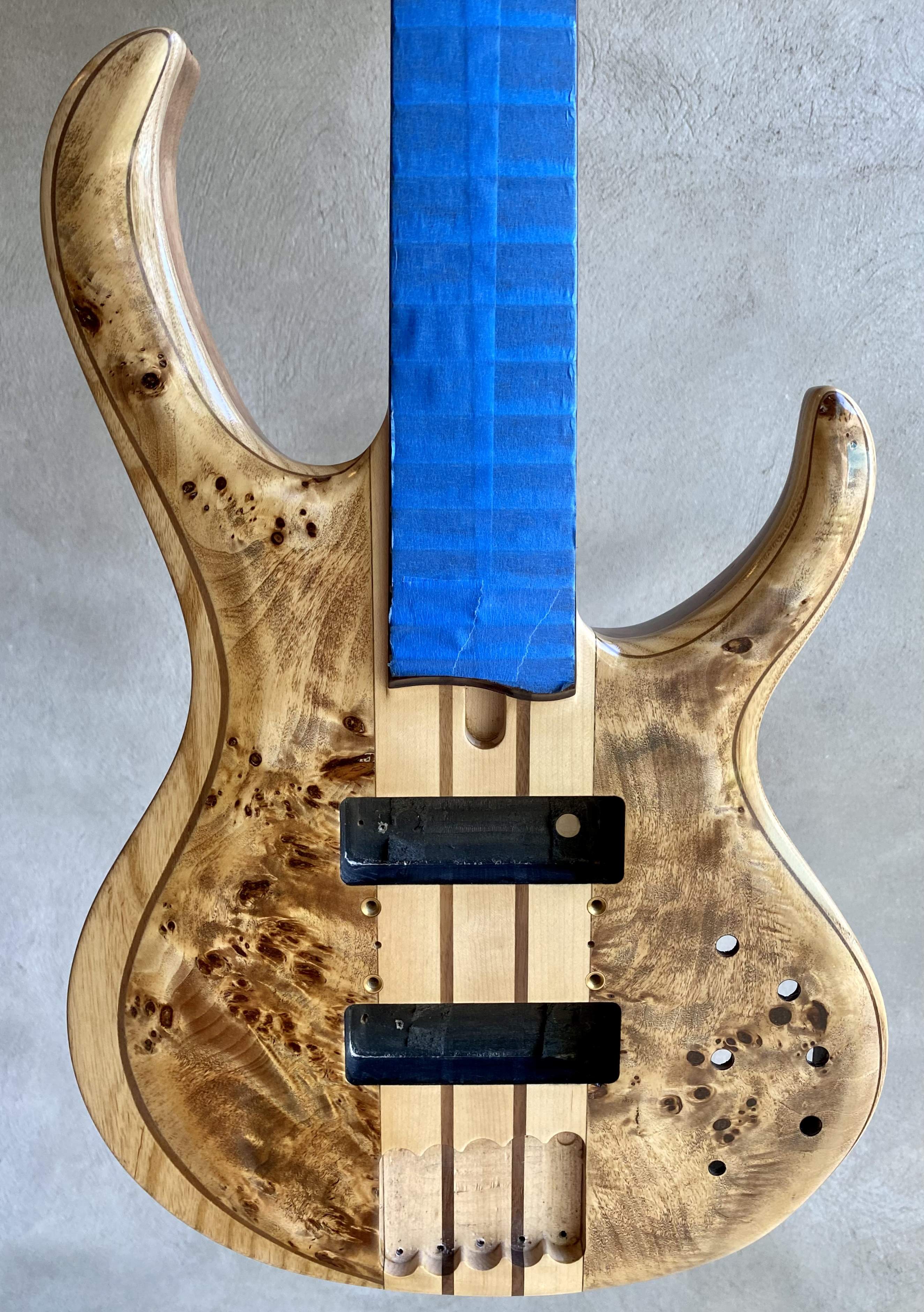
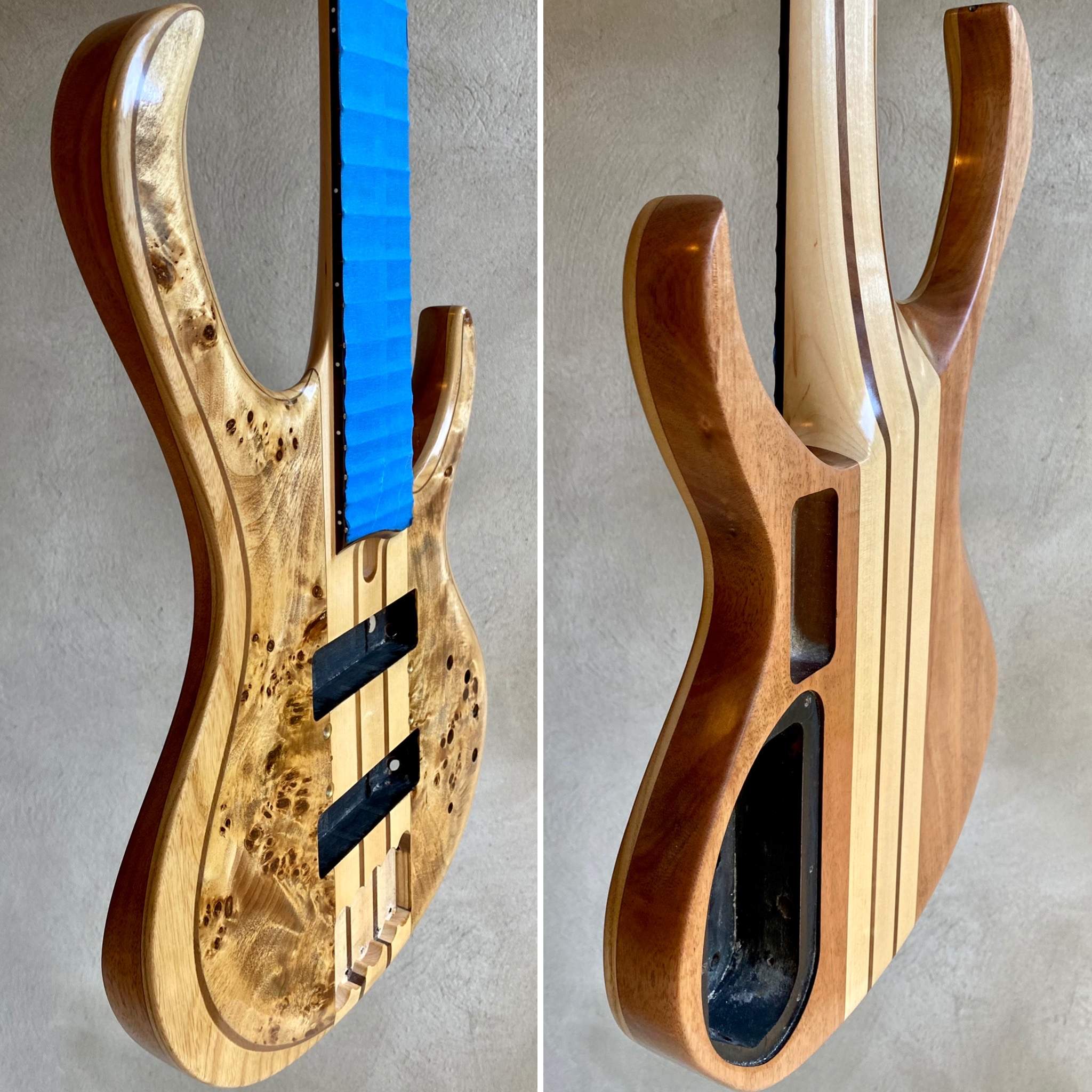

Day of rest before the final polish and re-assembly:
View attachment 4313475
View attachment 4313477
View attachment 4313476
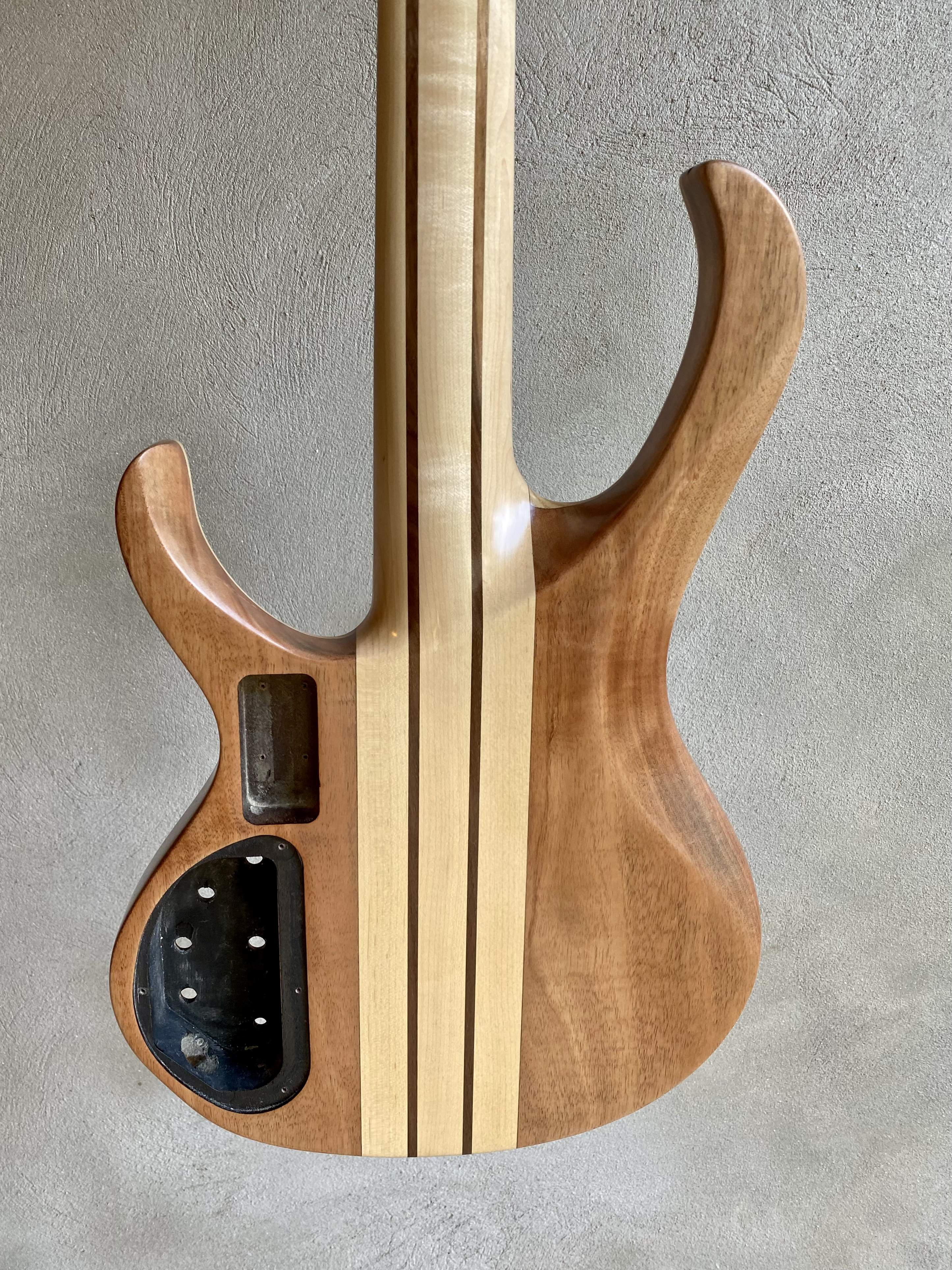
Do you guys/gals know/recognize the exact type of mahogany on the back wings? This term is thrown around liberally for a number of different woods. There is mention that the wings were stained black here and at some point the spec was changed from mahogany to okoume, which I think is a much more unambiguous wood name.
What I am trying to figure out is how big a difference there is between the mahogany (or "mahogany") and the okoume Ibanez used on this. Mostly density/weight/balance-wise but also resistance to scratches/dents.
Just through deduction it's most likely to be either African Mahogany or Meranti (Philippine Mahogany). From the colour of the mahogany ones and the relative availability, I'd guess Meranti, but I don't know for sure.Do you guys/gals know/recognize the exact type of mahogany on the back wings? This term is thrown around liberally for a number of different woods. There is mention that the wings were stained black here and at some point the spec was changed from mahogany to okoume, which I think is a much more unambiguous wood name.
What I am trying to figure out is how big a difference there is between the mahogany (or "mahogany") and the okoume Ibanez used on this. Mostly density/weight/balance-wise but also resistance to scratches/dents.

Just through deduction it's most likely to be either African Mahogany or Meranti (Philippine Mahogany). From the colour of the mahogany ones and the relative availability, I'd guess Meranti, but I don't know for sure.
Thanks for your response. These are made in Indonesia so some variant of Meranti is most probable but African Mahogany can not be excluded of course. Looking the woods up on wood-database.com reveals that Meranti variants are generally denser and harder. My main concern as I mentioned is durability but most importantly balance. Although it's a 33" scale bass, it's still a fiver after all.
So I have a seller sending me pics of his BTB845V and I need to make a quick assessment if the back wing wood is okoume or some kind of "mahogany" (not okoume). Can you guys eyeball this wood? Note: it is very possible that it is stained darker, as mentioned by previous posters on this thread.
Attachments


Man that's a tough one - the grain of okoume and african mahog are quite similar - colour would help distinguish, and inspecting it in person as there's more chatoyance in mahog and usually more "movement" in the grain. It's certainly been sprayed with colour but you can see some of the grain patterns. All this to say I have no idea. 

Quick search says that model is:
Maple/walnut neck with CF reinforcement,
Body wings are mahogany back, ash middle layer and poplar burl top.
So, it's probably sprayed with a dark tinted clear. Unless they actually stain it, then clear.
Maple/walnut neck with CF reinforcement,
Body wings are mahogany back, ash middle layer and poplar burl top.
So, it's probably sprayed with a dark tinted clear. Unless they actually stain it, then clear.
Quick search says that model is:
Maple/walnut neck with CF reinforcement,
Body wings are mahogany back, ash middle layer and poplar burl top.
So, it's probably sprayed with a dark tinted clear. Unless they actually stain it, then clear.
They switched from "mahogany" to okoume at some point.
Looks like it's hard to tell them apart visually. Especially through pics, a dark tint and gloss.
Okoume is lighter and softer than African mahogany. Similar to yellow poplar in weight and hardness. So, a little on the soft side, but not crazy soft like pine. It would take a pretty good ding to make a dent. The only thing I can think is see if the seller can find a serial#/build date on it anywhere and maybe attempt to contact Ibanez and see if they can offer any info.
Okoume is lighter and softer than African mahogany. Similar to yellow poplar in weight and hardness. So, a little on the soft side, but not crazy soft like pine. It would take a pretty good ding to make a dent. The only thing I can think is see if the seller can find a serial#/build date on it anywhere and maybe attempt to contact Ibanez and see if they can offer any info.
According to the ibanez fandom page, they listed it as mahogany only in 2018 and then changed the listing to okume from 2019-2021. It's possible that it was always okume but they just called it "mahogany" that first year. 

Everyone is entitled to their own preference. I love the "before" look. I like the extra contrast, thouh I can see how you might like the latter. I think my opinion comes from the contrast with the fingerboard. Just me. I love buckeye burl which is what cause a spontaneous purchase of my Sandberg. I still look at the mirror image of both sides which seem to have "eyes", like some creature from StarwarsI'm a woodworker, and I felt like this bass (Ibanez BTB845V) deserved some hand finishing as it clearly hadn't gotten much if any at the factory. There was way too much stain on this one for me and I wanted to also upgrade the electronics. I certainly didn't hate the tone of the stock Barts, but when I took it apart to fix a noisy pot I was a bit disappointed in the quality of the electronics and more disappointed in how "crammed in" everything was. So I took all the finish off, exposing the gorgeous mahogany back, recontoured the body to smooth the uncomfortable edges and put an oil finish on it. I also replaced the "off shore" Barts with US Barts. I like it a lot better and it is far more comfortable to play.View attachment 3849602 View attachment 3849603
. But my BTB1825 really needs some help, looking more like a paint job than subtle stain. 


