
Hi I recently purchased a Squier affinity Jazz bass. It came with .45-.105 strings installed and is 34 inch scale length. It was setup perfectly for me. I want to switch to Flats but I have no idea which to get. I’d prefer to not mess with the set up too much but I know tensions can be different. Any recommendations or tips?

Enjoy the benefits of a premium membership!
Upgrade Account
-
TalkBass has been independent since 1998. Add your voice.
Create a free account to reply to discussions, view embedded media, and browse with fewer display ads.
Join free Log in
Want zero display ads or expanded classifieds tools? Compare plans.
You are using an out of date browser. It may not display this or other websites correctly.
You should upgrade or use an alternative browser.
You should upgrade or use an alternative browser.
More options
Who Replied?Any will work really. If you're not already... it's great to get comfortable doing your own setups. Google the Carruthers Bass setup videos and he'll teach you in about an hour. Follow them to the letter (in the correct order) and you'll be very happy with your bass no matter what strings you put on it. But again, all strings will work. I have Labella Flats on one of mine and Ti flats on another. You'd love both, and yep... you may have to do some setup work to use those. Thats fine.... you wanna be good at doing your own setups.

My informal rule of thumb is to go one gauge down when switching to most flats from rounds if you want similar tension and minimal setup changes. Your current rounds are 45-105 so try a set of flats in the neighborhood of 40-100 or 40-95.
Personally, I’d try Ernie Ball Series IV flats but there are tons of options.
Personally, I’d try Ernie Ball Series IV flats but there are tons of options.

Going from rounds to flats means a proper setup is necessary regardless.Hi I recently purchased a Squier affinity Jazz bass. It came with .45-.105 strings installed and is 34 inch scale length. It was setup perfectly for me. I want to switch to Flats but I have no idea which to get. I’d prefer to not mess with the set up too much but I know tensions can be different. Any recommendations or tips?
That said, I would suggest the Fender 9050L (45-60-80-100), which happen to be my #1 favorite on a Jazz bass. They're a nice "middle of the road" all-purpose flats that are relatively affordable. Their overall tension/stiffness is not too far from a typical 45-105 rounds.
Invalid Link Removed


Good advice there.You could read the 10,000 threads on the topic or just buy the La Bella 760FL right away.
The LaBellas sound great and are the smoothest feeling strings I’ve found, after trying many brands.

D'Addarrio light gauge chromes (ECB81) are very comfortable on the fingers. They are 45-100. Worth a look.
You will have to change the setup when you change strings. 

Brandon Shea
Commercial User
Welcome to the forum! I have Chromes (ECB81) on my J-style bass and I think they sound fantastic. Ernie Ball Cobalt Flats are also wonderful and sound more like rounds if you don't want to change the tone too much. Be aware that most flats are going to feel quite a bit stiffer than the rounds you're used to, and you're almost definitely going to have to tweak your setup a little bit.
If you're like me and doing a setup seems intimidating, buying the right set of tools to help can make a big difference. I bought this little set from MusicNomad and it made everything a lot easier once I had the right gear (with idiot-proof instructions). Very easy to read, too.
If you're like me and doing a setup seems intimidating, buying the right set of tools to help can make a big difference. I bought this little set from MusicNomad and it made everything a lot easier once I had the right gear (with idiot-proof instructions). Very easy to read, too.
As an Amazon Associate, TalkBass may receive commissions from qualifying purchases made via links on this site.

I tried D’addario chrome and labella deep talking bass.
If you want tight strings get chrome: if you want loser tension get la Bella deep talkin bass
If you want tight strings get chrome: if you want loser tension get la Bella deep talkin bass

FullumMusic
Commercial User
- Oct 13, 2022
- 2,008
- 5,683
- Disclosures
- Audio/Music software developer, contracted with a company you've heard of and deving my own stuff.
Unless you buy the exact same string brand, style, and gauge, it's always good to give the bass a setup when you change strings. There's no direct translation from one string to another that'll guarantee not needing a setup. Different strings pull on the neck differently. Different strings sit on the saddle differently depending on how they're wound by the ball-end. Different strings intonate differently. Strings of the same gauge might have different core diameters; Slightly different alloy composition; core shape; etc etc. And that's just going rounds-to-rounds.
Very rarely will you every change strings to a different brand, style, or gauge and have them drop in without needing a slight adjustment somewhere. And if one thing needs to be adjusted, it's best to do the full setup in the proper order, otherwise you're building a straight house on a crooked foundation.
But don't let needing a setup dissuade you from trying different strings, though. It's really not a huge amount of work or alchemy to figure out. Once you're comfortable doing them it takes 15 to 20 minutes extra. And if you can't dial it in exactly perfect, you can always just take it to a tech to have it set up for you again.
Here's two fantastic & easy to follow bass setup guides by two guys who really know what they're talking about:
Pro tip 1: You can go through the steps with your bass right now as-is and just see how the measurements and intonation are. You know it's properly set up, so you can just check the steps along with the video without changing anything and you'll be able to see what's going on in there.
Pro tip 2: When adjusting the truss rod, loosen the strings, make a 1/8 or 1/4 turn adjustment, and then re-tune to check the adjustment; repeat as necessary. Don't try to adjust while under full tension, especially with flats on there. It's a few extra steps but it'll make your life much easier and much less likely to break anything or over-tighten the truss rod.
---
As for which strings to pick, strings are eternally a matter a personal preference. If you ask which is best, everyone will just tell you their personal favorite in their favorite gauge and you'll have as many answers are there are options.
There's no right string beyond what you like the sound & feel of best on your bass. La Bella and Thomastik-Infeld are probably the two most common brands of Flats. I see D'addario chromes mentioned a lot on TB, but also i think they're a bit different sounding from most other flats. I'm a La Bella fanboy. But that's just me.
You best starting point might be just to figure out what flats your favorite players use on songs you love the tone of, and start from there.
Very rarely will you every change strings to a different brand, style, or gauge and have them drop in without needing a slight adjustment somewhere. And if one thing needs to be adjusted, it's best to do the full setup in the proper order, otherwise you're building a straight house on a crooked foundation.
But don't let needing a setup dissuade you from trying different strings, though. It's really not a huge amount of work or alchemy to figure out. Once you're comfortable doing them it takes 15 to 20 minutes extra. And if you can't dial it in exactly perfect, you can always just take it to a tech to have it set up for you again.
Here's two fantastic & easy to follow bass setup guides by two guys who really know what they're talking about:
Pro tip 1: You can go through the steps with your bass right now as-is and just see how the measurements and intonation are. You know it's properly set up, so you can just check the steps along with the video without changing anything and you'll be able to see what's going on in there.
Pro tip 2: When adjusting the truss rod, loosen the strings, make a 1/8 or 1/4 turn adjustment, and then re-tune to check the adjustment; repeat as necessary. Don't try to adjust while under full tension, especially with flats on there. It's a few extra steps but it'll make your life much easier and much less likely to break anything or over-tighten the truss rod.
---
As for which strings to pick, strings are eternally a matter a personal preference. If you ask which is best, everyone will just tell you their personal favorite in their favorite gauge and you'll have as many answers are there are options.
There's no right string beyond what you like the sound & feel of best on your bass. La Bella and Thomastik-Infeld are probably the two most common brands of Flats. I see D'addario chromes mentioned a lot on TB, but also i think they're a bit different sounding from most other flats. I'm a La Bella fanboy. But that's just me.
You best starting point might be just to figure out what flats your favorite players use on songs you love the tone of, and start from there.
Last edited:

Carruthers Bass Setup is always my go-to.Any will work really. If you're not already... it's great to get comfortable doing your own setups. Google the Carruthers Bass setup videos and he'll teach you in about an hour. Follow them to the letter (in the correct order) and you'll be very happy with your bass no matter what strings you put on it. But again, all strings will work. I have Labella Flats on one of mine and Ti flats on another. You'd love both, and yep... you may have to do some setup work to use those. Thats fine.... you wanna be good at doing your own setups.



TI Jazz flats are consider low tension, too low for some.
I love em.
I love em.

You’ll have to experiment. For me a 105 E is as light as I can stand or things just get too floppy feeling. Consider DR Legends 45-105. I put them on a Jazz set up for 45-105 rounds and all I had to do was finesse the intonation a little. And, they sound really good right outta the box and settle in fast.
Or you could read a few threads to get a general idea of how the various sets differ and pick one that fits what you want.You could read the 10,000 threads on the topic or just buy the La Bella 760FL right away.
Also the OP is asking about something very specific - trying to match the overall tension of his current strings to avoid altering the setup too much.

While you still might need a setup anyway, if you really wanted to try to match tension closely you could look up the estimated tension on your current string set and then look up the tensions on various flats to see which gets closest. Some manufacturers have string tension charts or other data that lists the tension for their strings. If you don't know the strings on the bass currently, you could plug in the gauges on the Stringjoy String Tension Calculator, which will give you an estimate based upon their nickel strings (Stringjoy Guitar String Tension Calculator) that you could use for a rough idea, although the actual tension may vary if the strings have a materially different construction.
Flats come on a spectrum. Different sets of flats have different levels of brightness.Hi I recently purchased a Squier affinity Jazz bass. It came with .45-.105 strings installed and is 34 inch scale length. It was setup perfectly for me. I want to switch to Flats but I have no idea which to get. I’d prefer to not mess with the set up too much but I know tensions can be different. Any recommendations or tips?
The brightest ones you can find are the Ernie Ball Cobalt flats. I have never played them personally, but I hear they are similar to roundwounds. D'Addario Chromes are the second brightest of the bunch. They're my favorite flats and my recommendation for your first set. Rotosound 77s are also bright, but their brightness comes with an expiration date of about 4 months, so I can't recommend them for long term use.
Fender 9050s are the middle. They are darker than Chromes and Ernie Balls, but not as dark as others. These are the stock strings on the MIA fretless Jazz Basses, Custom Shop '51 style P Basses, and the American Original '51 style P Basses with the baseball bat necks.
The darkest flats in the world of bass are the La Bella DTFs, particularly the 1954 Originals (AKA Jamersons). I have DTFs on my fretless Sire P5 and they sound great in that context. But they are not for everybody. GHS Precision Flats are another dark alternative.
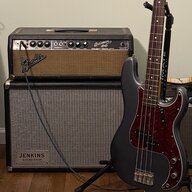
I just put the LaBella 760FL on my PBass and what others are saying about them are true. They are so smooth it feels like playing glass.
I went from the .045-.105 round wounds that came installed on my bass (I think that is what Fenders usually come with) to .043-.104 LaBellas and I didn’t have to really do anything setup wise. My truss rod had already needed a little tightening anyway so I did give it like a 1/8 turn while I was changing the strings but I’m pretty sure it would’ve been just like the rounds if I hadn’t. They don’t feel much higher tension to me…maybe because I went slightly lighter on the gauge?
The LaBellas sound great for that classic 60s flats tone. I’m interested in trying the D’addario Chromes as well, as I know they are a little brighter and I hear great things. I think I read that Catherine Popper is a Chromes user and her tone is always great.
I went from the .045-.105 round wounds that came installed on my bass (I think that is what Fenders usually come with) to .043-.104 LaBellas and I didn’t have to really do anything setup wise. My truss rod had already needed a little tightening anyway so I did give it like a 1/8 turn while I was changing the strings but I’m pretty sure it would’ve been just like the rounds if I hadn’t. They don’t feel much higher tension to me…maybe because I went slightly lighter on the gauge?
The LaBellas sound great for that classic 60s flats tone. I’m interested in trying the D’addario Chromes as well, as I know they are a little brighter and I hear great things. I think I read that Catherine Popper is a Chromes user and her tone is always great.
Last edited:


