• TalkBass has been independent since 1998. Add your voice.
    Create a free account to reply to discussions, view embedded media, and browse with fewer display ads.
    Join freeLog in
    Want zero display ads or expanded classifieds tools? Compare plans.

Fodera Club Part III

Status
Not open for further replies.
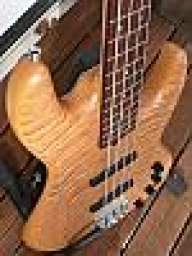
The amazing thing is that ALL of Fodera's Chestnut came from just one tree! Joey and Vinny bought a massive tree that had fallen down and all of the pieces you have ever seen from Fodera I believe came from the same tree!
 
The amazing thing is that ALL of Fodera's Chestnut came from just one tree! Joey and Vinny bought a massive tree that had fallen down and all of the pieces you have ever seen from Fodera I believe came from the same tree!

so where the f are all the fallen trees out there? no one else offers chestnut tops and youd imagine there'd have to be another tree out there somewhere.:confused:
 
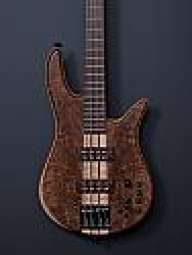
Can anyone give me any info on early NYC Empire Basses. What is the history of the early models? I see Fodera is about to introduce a new line of 4 string models but weren't there 4 string NYC Empire Basses previously. I am in the process of purchasing one but do not know much history about these basses.

Thanks in advance!
 
Can anyone give me any info on early NYC Empire Basses. What is the history of the early models? I see Fodera is about to introduce a new line of 4 string models but weren't there 4 string NYC Empire Basses previously. I am in the process of purchasing one but do not know much history about these basses.

Thanks in advance!
the history is shrouded in mystery:D

seriously, now with jason here, maybe we could get some straight answers (or have we already in one of the earlier threads?).

i can say that i had one of the mid 90's nyc's and it felt way more like a real fodera than the current japanese ones do. i played some at the ampshop in sherman oaks and didnt feel much better than something like a lakland skyline. the old one i had years ago felt like an emperor
 
the history is shrouded in mystery:D

seriously, now with jason here, maybe we could get some straight answers (or have we already in one of the earlier threads?).

i can say that i had one of the mid 90's nyc's and it felt way more like a real fodera than the current japanese ones do. i played some at the ampshop in sherman oaks and didnt feel much better than something like a lakland skyline. the old one i had years ago felt like an emperor

Were they always from Japan? Are they completely assembled in Japan or hardware and pickups etc done in USA?
 
The NYC models have varied a fair amount over the years. Some were good, some not so good. Essentially, the NYC line was in a constant sate of development and evolution and only really in 2008-2009 did the current models really stop being tinkered with.

There were a couple of prototype 4-string NYC's in the past, but they were never a formal model and were built in very, very limited quantities. The new NYC 4 has been in development for almost three years and only this past month did we determine that we had achieved our desired objectives for the line -- in a BIG way.

What I am about to say, I have said many times PRIOR to being an owner here at Fodera (feel free to check my historical posts) -- I have been incredibly consistent on this point and am not just saying this for the Company's benefit...

The NYC's that are being built today are top-to-bottom the finest NYC's Fodera has ever made. The feel of these instruments, their tone and build quality is on par with the very finest basses in the World and, IMHO, suffer only in comparison to our own Custom work and the work of a handful of other builders that make instruments in that class.

On New Year's Eve, a very, very talented local player showed up at the shop with a 4-string from a very well-known, venerable manufacturer's Custom Shop to do a "blind" test for us of the new 4-string NYC. Both instruments used the same woods (Alder body, Rosewood Fingerboards), were the same scale and had a fresh set of Fodera 40-100 Nickel strings. They were played through a Walter Woods Ultra into an Epifani UL-210 (our shop rig).

The Pro Player obviously knew which instrument he was playing, but we all went into an adjacent room so that we could not see which one he was using at any given time as he played the same pieces on each instrument. Absolute unanimity -- the Fodera NYC 4 sounded significantly better -- better dynamics, better low-end oomph, more articulate, more nuanced, more palpable presence. On the playability front the pro player I mentioned above opined that "no neck should feel this good at this price point." The price he was referring was $1,200 LESS (comparing List prices) than the instrument he brought with him to put the NYC through its paces...

IMHO, there is a lot of misinformation out there about the NYC's. We will have 6 stellar examples at the NAMM show this month and I would encourage anyone with questions to visit the both and play the heck out of them and let us know what you think...

Now, for the "juicy secrets" about the line...

1. They are made from the same wood as our Custom instruments (extremely well-aged, stable, top-quality tone woods);

2. They use the same pickups as the ones we use in our custom instruments;

3. The preamp is different than the 3-band Pope / Fodera Preamp we use in the custom instruments. Simply put, that Pre is just too expensive to keep the NYC's priced competitively. We use a proprietary 2-band circuit (bass / treble) that we believe sounds fantastic and was the circuit in the bass that was mentioned above. We ARE in discussions with Mike (Pope) about possibly using a less expensive version of the Pope / Fodera Pre in the NYC's and are eagerly awaiting a prototype. We will ultimately choose the one that we think offers the best price / value relationship, but make no mistake, the current NYC Pre sounds really, really good...

4. The basic woodworking, fretwork and finishing is done in a small shop in Japan (4 workers) and is overseen by our Japanese distributor (and friend) with whom Fodera has worked for over 20 years. The people doing the work spent several months being trained in the shop in Brooklyn and are OUTSTANDING artisans in their own right. these instruments are NOT being built in a factory setting at all...

5. The designs of both the NYC 5's and NYC 4's are uniquely Fodera. Vinny drew them out, built the prototypes and refined them himself. Yes, they share the basic JBass-Clone look, but the feel of them and balance is Fodera all the way as is the actual shape. These are NOT off-the shelf parts, nor are they available from any other bass builder...

6. The painted bodies and necks are sent back to Brooklyn where we assemble them, do the final fretwork (not always necessary, bey EVERY one is looked over carefully), set them up and test them out. Every NYC is initialed by Joey and Vinny in its neck pocket right as we begin final assembly...

That is it. No mysteries. I cannot provide a complete history of every NYC that has ever been built as their WERE some strange iterations over the years, but the above deals with what exists today fairly comprehensively...

Cheers,

J

Can anyone give me any info on early NYC Empire Basses. What is the history of the early models? I see Fodera is about to introduce a new line of 4 string models but weren't there 4 string NYC Empire Basses previously. I am in the process of purchasing one but do not know much history about these basses.

Thanks in advance!

 
I've sent in my deposit, have my build date, and picked out a top.

The specs are;
Emperior II 5 E-C
Buckeye burl top and Peg
Mahogany body
26 fret
3 pc maple neck
Ebony board /abalone blocks
33 inch scale
16.5mm
Duncan Dual Coils/ Burl Covers
Pontif Pre
Black hardware
Dunlop drop

This will be my second shop built, and 4th over all. Jason has been a pleasure to work with. Reponsive, informative, articulate, he gets it. I love Martha, and Joey to death, but this is a different approach to customer service, that works.
And now the wait......

Mr. Thunder sir, would it be possible to mock me up?
 
Hey Jason,
cool.
The NYC comes only in 34" scale, right?

if I wanted a quote for a new Fodera, do I have to contact directly the shop or can I just ask you?

Thanks

M
The NYC models have varied a fair amount over the years. Some were good, some not so good. Essentially, the NYC line was in a constant sate of development and evolution and only really in 2008-2009 did the current models really stop being tinkered with.

There were a couple of prototype 4-string NYC's in the past, but they were never a formal model and were built in very, very limited quantities. The new NYC 4 has been in development for almost three years and only this past month did we determine that we had achieved our desired objectives for the line -- in a BIG way.

What I am about to say, I have said many times PRIOR to being an owner here at Fodera (feel free to check my historical posts) -- I have been incredibly consistent on this point and am not just saying this for the Company's benefit...

The NYC's that are being built today are top-to-bottom the finest NYC's Fodera has ever made. The feel of these instruments, their tone and build quality is on par with the very finest basses in the World and, IMHO, suffer only in comparison to our own Custom work and the work of a handful of other builders that make instruments in that class.

On New Year's Eve, a very, very talented local player showed up at the shop with a 4-string from a very well-known, venerable manufacturer's Custom Shop to do a "blind" test for us of the new 4-string NYC. Both instruments used the same woods (Alder body, Rosewood Fingerboards), were the same scale and had a fresh set of Fodera 40-100 Nickel strings. They were played through a Walter Woods Ultra into an Epifani UL-210 (our shop rig).

The Pro Player obviously knew which instrument he was playing, but we all went into an adjacent room so that we could not see which one he was using at any given time as he played the same pieces on each instrument. Absolute unanimity -- the Fodera NYC 4 sounded significantly better -- better dynamics, better low-end oomph, more articulate, more nuanced, more palpable presence. On the playability front the pro player I mentioned above opined that "no neck should feel this good at this price point." The price he was referring was $1,200 LESS (comparing List prices) than the instrument he brought with him to put the NYC through its paces...

IMHO, there is a lot of misinformation out there about the NYC's. We will have 6 stellar examples at the NAMM show this month and I would encourage anyone with questions to visit the both and play the heck out of them and let us know what you think...

Now, for the "juicy secrets" about the line...

1. They are made from the same wood as our Custom instruments (extremely well-aged, stable, top-quality tone woods);

2. They use the same pickups as the ones we use in our custom instruments;

3. The preamp is different than the 3-band Pope / Fodera Preamp we use in the custom instruments. Simply put, that Pre is just too expensive to keep the NYC's priced competitively. We use a proprietary 2-band circuit (bass / treble) that we believe sounds fantastic and was the circuit in the bass that was mentioned above. We ARE in discussions with Mike (Pope) about possibly using a less expensive version of the Pope / Fodera Pre in the NYC's and are eagerly awaiting a prototype. We will ultimately choose the one that we think offers the best price / value relationship, but make no mistake, the current NYC Pre sounds really, really good...

4. The basic woodworking, fretwork and finishing is done in a small shop in Japan (4 workers) and is overseen by our Japanese distributor (and friend) with whom Fodera has worked for over 20 years. The people doing the work spent several months being trained in the shop in Brooklyn and are OUTSTANDING artisans in their own right. these instruments are NOT being built in a factory setting at all...

5. The designs of both the NYC 5's and NYC 4's are uniquely Fodera. Vinny drew them out, built the prototypes and refined them himself. Yes, they share the basic JBass-Clone look, but the feel of them and balance is Fodera all the way as is the actual shape. These are NOT off-the shelf parts, nor are they available from any other bass builder...

6. The painted bodies and necks are sent back to Brooklyn where we assemble them, do the final fretwork (not always necessary, bey EVERY one is looked over carefully), set them up and test them out. Every NYC is initialed by Joey and Vinny in its neck pocket right as we begin final assembly...

That is it. No mysteries. I cannot provide a complete history of every NYC that has ever been built as their WERE some strange iterations over the years, but the above deals with what exists today fairly comprehensively...

Cheers,

J
 
4. The basic woodworking, fretwork and finishing is done in a small shop in Japan (4 workers) and is overseen by our Japanese distributor (and friend) with whom Fodera has worked for over 20 years. The people doing the work spent several months being trained in the shop in Brooklyn and are OUTSTANDING artisans in their own right. these instruments are NOT being built in a factory setting at all...


J

was this always the case, starting with the introduction of them in the 90's? the one i had in 2001 was a bass made in the 90's and had lane poors and a bart ntmb. it really felt a lot different than the recent stuff.
 
Status
Not open for further replies.

Latest posts