• TalkBass has been independent since 1998. Add your voice.
    Create a free account to reply to discussions, view embedded media, and browse with fewer display ads.
    Join freeLog in
    Want zero display ads or expanded classifieds tools? Compare plans.

Fodera Club Part VII

Status
Not open for further replies.
Hi Jason,

I was wondering if you can just briefly highlight the major improvements/changes the NYC line has undergone over the years. I did a search on TB and my impression is that the opinions have been very mixed...especially regarding the "pre-2009 redesign" models. However, the descriptions on your site as well as the recent BPM review seem to indicate that the NYCs are now killer instruments. Any thoughts on how the line evolved? Thanks!
 
Brazilian is a significantly harder / denser wood than Indian. Indian Rosewood is a fairly warm sounding compared to Brazilian. Although Brazilian IS on the warmer side of the tonal spectrum (at least as compared to Maple and Ebony), it is more full range having uniform tonal response from the lows to the mids into the highs. IMHO, this is why it has historically been so revered -- it kind of does everything well. Add to that its beauty AND that it smells like heaven when your working with it (kind of like cinnamon infused roses). That's also why it has become so darn rare / expensive.

From a tonal perspective, what's the difference between Indian Rosewood and Brazilian Rosewood?
 
Many of the changes that were made during 2008 / 2009 had to do with solving what had been an "identity crisis" of sorts for the NYC line. They were neither JBass clones, nor were they Foderas...they were kind of stuck in a no-man's land.

Although I have had the pleasure of playing MANY great NYC's from earlier years, I have also played some that weren't as appealing (to me personally). As these instruments came back into the shop, we consciously asked ourselves what made the great ones great and what made the ones we liked less inferior. Being an organized, diligent, nutty lover of basses, I kept a little journal about this stuff so that our observations could be memorialized and reflected upon.

As most of you who read this thread know, I am all about team don't take personal any credit for much of anything at the shop because we make every key decision about the instruments and the business as a team. That said, the value that I DID personally add to the process of refining the NYC's was that of being an "outsider." I didn't have anything personally invested in the past decisions that had been made about the product, so I was free to ask questions and be honest about what didn't work. This is a valuable role in any organization, but especially important when a company has been doing something for 28 years. You can risk a case of "that's the way we always have done it" syndrome.

There were many different "batches" of NYC's built over the years and they all used varying neck profiles, parts, pickups, preamps, etc. They ALWAYS were made from great wood, but that is only one part of the mix...and some of the other choices were not always consistent. They were instruments in search of their soul.

So, in looking dispassionately at the many NYC's that came back to the shop over the course of well over a year, some very clear themes emerged...

1. The ones that were built with OUR neck profiles felt better to play.
2. The ones with our high-mass, upgraded, proprietary bridges had more sustain and sounded more "Fodera-like" than ones with various less-expensive, lighter mass "parts" bridges.
3. The pickups from one of the four sources that we had been using for the NYCs consistently sounded the best in these instruments.
4. Two different preamp voicings emerged as the ones that seemed to work work best...our 2-band Fodera preamp was unrivaled for copping a more vintage-style tone and our 3-band Pope / Fodera NYC preamp was most pleasing when being compared directly to our full-blown Custom Shop preamp. Earlier versions of the NYC preamps (other than these two) just were frankly not as good.
5. Aesthetically, we were selling "Deluxe" versions of the NYC's that had beautiful wood tops at the rate of 2 or 3 to 1 compared with painted "standard" NYC's.
6. We offered so many versions of the NYC's over the years (i.e. number of frets, neck build, etc.) that even we couldn't keep them straight.

So, we used these observations when designing what the NYC's now are and ALL of them are being built the same way to ensure consistency. Essentially they no longer are trying to be great JBass-style basses built by Fodera, they are instead aimed at being as much as possible like their bigger siblings given that they cost roughly 50% less. They now unabashedly sound and play very much like our Custom Shop instruments and this is why they now proudly wear the Fodera Butterfly AND the name Fodera on their headstocks.

I hope that this is what you were looking for!

Hi Jason,

I was wondering if you can just briefly highlight the major improvements/changes the NYC line has undergone over the years. I did a search on TB and my impression is that the opinions have been very mixed...especially regarding the "pre-2009 redesign" models. However, the descriptions on your site as well as the recent BPM review seem to indicate that the NYCs are now killer instruments. Any thoughts on how the line evolved? Thanks!
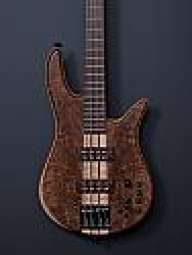
 
Many of the changes that were made during 2008 / 2009 had to do with solving what had been an "identity crisis" of sorts for the NYC line. They were neither JBass clones, nor were they Foderas...they were kind of stuck in a no-man's land.

Although I have had the pleasure of playing MANY great NYC's from earlier years, I have also played some that weren't as appealing (to me personally). As these instruments came back into the shop, we consciously asked ourselves what made the great ones great and what made the ones we liked less inferior. Being an organized, diligent, nutty lover of basses, I kept a little journal about this stuff so that our observations could be memorialized and reflected upon.

As most of you who read this thread know, I am all about team don't take personal any credit for much of anything at the shop because we make every key decision about the instruments and the business as a team. That said, the value that I DID personally add to the process of refining the NYC's was that of being an "outsider." I didn't have anything personally invested in the past decisions that had been made about the product, so I was free to ask questions and be honest about what didn't work. This is a valuable role in any organization, but especially important when a company has been doing something for 28 years. You can risk a case of "that's the way we always have done it" syndrome.

There were many different "batches" of NYC's built over the years and they all used varying neck profiles, parts, pickups, preamps, etc. They ALWAYS were made from great wood, but that is only one part of the mix...and some of the other choices were not always consistent. They were instruments in search of their soul.

So, in looking dispassionately at the many NYC's that came back to the shop over the course of well over a year, some very clear themes emerged...

1. The ones that were built with OUR neck profiles felt better to play.
2. The ones with our high-mass, upgraded, proprietary bridges had more sustain and sounded more "Fodera-like" than ones with various less-expensive, lighter mass "parts" bridges.
3. The pickups from one of the four sources that we had been using for the NYCs consistently sounded the best in these instruments.
4. Two different preamp voicings emerged as the ones that seemed to work work best...our 2-band Fodera preamp was unrivaled for copping a more vintage-style tone and our 3-band Pope / Fodera NYC preamp was most pleasing when being compared directly to our full-blown Custom Shop preamp. Earlier versions of the NYC preamps (other than these two) just were frankly not as good.
5. Aesthetically, we were selling "Deluxe" versions of the NYC's that had beautiful wood tops at the rate of 2 or 3 to 1 compared with painted "standard" NYC's.
6. We offered so many versions of the NYC's over the years (i.e. number of frets, neck build, etc.) that even we couldn't keep them straight.

So, we used these observations when designing what the NYC's now are and ALL of them are being built the same way to ensure consistency. Essentially they no longer are trying to be great JBass-style basses built by Fodera, they are instead aimed at being as much as possible like their bigger siblings given that they cost roughly 50% less. They now unabashedly sound and play very much like our Custom Shop instruments and this is why they now proudly wear the Fodera Butterfly AND the name Fodera on their headstocks.

I hope that this is what you were looking for!
That was a great answer, but I'm still sorting out the identity of the Fodera lines in general.

Here is a photo of my Emperor 5 next to a photo of an NYC from Fodera's website:

[Invalid or Expired Link Removed]Invalid Link Removed

I truly, madly, deeply love everything about my Emperor, from its tone to its playability to its looks to its very heavy weight. And I mean I REALLY love its tone and looks! They are both top drawer and I fall deeper in love with it every time I gig it and hear it in the mix and get the reactions I get with it.

But I do get concerned that the NYC line is growing up so much that it is encroaching on my Emperor's turf, and resale value.

Of course there are differences, but are there enough?

I think even some other bassists, much less the general public couldn't differentiate really between my Emperor 5 and the NYC. I wonder if for most people, the difference is one is blue, one is white.

To be clear, I never intend to sell my Emperor 5. It has gorgeous one of a kind looks, and a meaty tone that makes me want to be so bad when I play it -- so in reality whatever its resale value might be is all academic.

But if a health or financial challenge ever hit that made me have to give up bass playing altogether, I wonder if bassists will take a look at my used Emperor 5, and then at a new NYC 5, and think that the NYC is a better buy, forcing me (and other Emperor owners) to have to lower our prices for used basses.

Again, I love my Fodera and would buy it again regardless what the used market for them is like, but it is really nice to believe when you buy a Fodera that it will not only be a great bass while you have it, but that it will hold its value as well.

I really worry that Fodera competes with the used Fodera market with its NYC line, and while they are bound to make money from the line, we current owners might pay a price for their success.

Hopefully no one warped what I've written to be a criticism of Fodera, because that's not what I've written nor what I am doing.

I'm simply trying to understand the product positioning, and how it may affect the market for used Foderas.
 
Just my humble 2 cents, but in this case it appears to be the other way round instead... your Emperor appears to be specced close to the 70's J vibe: with the white pearloid guard, the maple board/block inlays as well as the single coil p'ups. When the Emperor is specced to move towards these J-aesthetics, and with the NYCs being bumped abit in their body curves towards their big brothers, I suppose SOME resemblance will have to result from the meeting.

However, a quick comparison between the super decked out/exotic Emperors in the gallery and the Deluxe NYCs...well to me the difference is definitely significant. You can immediately tell which is the flagship line.

Furthermore, I noticed that Jason has been quite careful whenever he's comparing the NYC basses with the custom lines. He uses terms similar to "compares favorably" or "comes very close", but never quite pegs the NYCs as direct equals. This probably implies that the customs ARE getting that little bit of magic which their owners have paid the extra for, and I certainly hope that this difference will be worth its weight in the used market!

Disclaimer: I am not a Fodera owner myself (yet!) so take that as you will. I do however understand the concern over re-sale value etc, and I am sure Fodera will provide a better explanation behind the business mechanics. What I am sure glad about is that as part of the less affluent masses, I can have an opportunity to experience part of the Fodera magic at a more attractive price point.
 
Make this bass http://www.fodera.com/Main/NewBornDetails.aspx?FeaturedItemID=50

a four string and add black hardware (maybe without blocks) and you will have the NYC I want :)

Interesting! I must say however, that I don't really "get" the control layout of the NYC/Pope 3-band. It appears to have the same number of knobs as the 2-band version (stacked + 3 singles). I presume that the passive tone function is removed with the 3-band upgrade?
 
In terms of the control layouts...we just did a printed piece that will be shipping with each bass that shows EVERY current Fodera control layout and what everything does. It will also be posted on Monday on the "Proprietary Electronics" page under the "About Us" tab. Since it is not on the site yet, here is a summary:

Fodera 2-band:

Stacked Volume / Passive Tone
Pickup Blend Pot (pull for Passive Mode)
Bass
Treble

Fodera / Pope 3-band

Stacked Volume / Passive Tone
Pickup Bend Pot
Stacked Treble / Bass
Mids

Hope this helps!

J

Interesting! I must say however, that I don't really "get" the control layout of the NYC/Pope 3-band. It appears to have the same number of knobs as the 2-band version (stacked + 3 singles). I presume that the passive tone function is removed with the 3-band upgrade?
 
While I understand your concern, we have been very careful to keep the two lines different enough (in terms of available features) that we do not believe there will be a negative impact on the resale value of any Custom Shop instrument. Actually, we believe that over time quite the opposite will happen. The number of custom Foderas that we are capable of building currently and intend to build in the future is fairly static. As the number of quality NYC's out in the world grows, we believe that the demand for the bigger siblings will grow as well. The available supply of NYC's is elastic (i.e. it can grow with market demand), while the supply of Custom Shop instruments will remain relatively fixed. Everything I have experienced related to supply and demand tells me that your investment in your Emperor is quite safe.

To reiterate the differences between the NYC's and the most basic Custom Shop instruments:

1. Custom instruments are built 100% in Brooklyn and the NYC's are partially built in Japan and partially built in Brooklyn;

2. Custom instruments have 3-piece (or greater) necks with angled pegheads and the NYC's have 1-piece necks with flat pegheads;

3. NYC's presently are only available with 21 frets;

4. Tops on NYC's are generally 3A while Custom Shop tops are 5A or Presentation Grade;

5. The Custom Shop Fodera / Pope Preamp is ONLY available on the Custom instruments and does not fit inside the cavity or drill pattern of the NYC's;

6. The two lines use different versions of the Fodera high-mass bridge. One is only used on the Custom instruments and the other on the NYC's. Their drill patterns (for installation) are different.

7. The NYC's are only available as Bolt-ons. Bolt-ons have represented roughly 5% of Fodera Custom Shop sales over the past two years.

8. There is no customization allowed on the NYC's. What we build is what's available. They are truly intended to be "stock" instruments, albeit at a very high level...

9. The NYC's have a different peghead look and different body shapes than the Custom instruments. These differences have been very consciously maintained (with some great feedback last year from the TB community on the peghead question).

So, yes, we have brought the two lines of instruments closer together than they were in the past in terms of feel, sound and build quality, but we believe that this narrowing of the gap has more to do with the gap being inconsistent (and sometimes too wide) in the past as opposed to us placing custom shop owners in jeopardy in the resale market.

That was a great answer, but I'm still sorting out the identity of the Fodera lines in general.

Here is a photo of my Emperor 5 next to a photo of an NYC from Fodera's website:

[Invalid or Expired Link Removed]Invalid Link Removed

I truly, madly, deeply love everything about my Emperor, from its tone to its playability to its looks to its very heavy weight. And I mean I REALLY love its tone and looks! They are both top drawer and I fall deeper in love with it every time I gig it and hear it in the mix and get the reactions I get with it.

But I do get concerned that the NYC line is growing up so much that it is encroaching on my Emperor's turf, and resale value.

Of course there are differences, but are there enough?

I think even some other bassists, much less the general public couldn't differentiate really between my Emperor 5 and the NYC. I wonder if for most people, the difference is one is blue, one is white.

To be clear, I never intend to sell my Emperor 5. It has gorgeous one of a kind looks, and a meaty tone that makes me want to be so bad when I play it -- so in reality whatever its resale value might be is all academic.

But if a health or financial challenge ever hit that made me have to give up bass playing altogether, I wonder if bassists will take a look at my used Emperor 5, and then at a new NYC 5, and think that the NYC is a better buy, forcing me (and other Emperor owners) to have to lower our prices for used basses.

Again, I love my Fodera and would buy it again regardless what the used market for them is like, but it is really nice to believe when you buy a Fodera that it will not only be a great bass while you have it, but that it will hold its value as well.

I really worry that Fodera competes with the used Fodera market with its NYC line, and while they are bound to make money from the line, we current owners might pay a price for their success.

Hopefully no one warped what I've written to be a criticism of Fodera, because that's not what I've written nor what I am doing.

I'm simply trying to understand the product positioning, and how it may affect the market for used Foderas.
 
While I understand your concern, we have been very careful to keep the two lines different enough (in terms of available features) that we do not believe there will be a negative impact on the resale value of any Custom Shop instrument. Actually, we believe that over time quite the opposite will happen. The number of custom Foderas that we are capable of building currently and intend to build in the future is fairly static. As the number of quality NYC's out in the world grows, we believe that the demand for the bigger siblings will grow

I can vouch for this. I started with a NYC, and as much as I liked it, all it really did is get me interested in a custom (which should arrive in a month or so :hyper:)

I have a custom yin yang on order and briefly felt the same way about the new painted yin yang, but then figured out;

A. I'll never sell it anyway, so what difference does it make
B. The "stock" yin yang is still (I'm sure) an amazing bass
C. Anybody willing to dish out the $$ for a custom Fodera surely knows the difference
D. I'll never sell it anyway so what difference does it make
 
Talkin' about NYC's. I tought I'd share my '06 model. Its a 5-string "all black" NYC with '35 scale (angled headstock), 3-piece maple neck with rosewood fingerboard. Duncan single-coils and pope 2-band pre-amp. Also a brass nut and see-thru pickguard. I've never seen another NYC like this before. Heres some pics of my beauty!

basso.jpg

basso2.jpg

kaula.jpg

kaula2.jpg

lapa.jpg

:bassist:
 
While I understand your concern, we have been very careful to keep the two lines different enough (in terms of available features) that we do not believe there will be a negative impact on the resale value of any Custom Shop instrument. Actually, we believe that over time quite the opposite will happen. The number of custom Foderas that we are capable of building currently and intend to build in the future is fairly static. As the number of quality NYC's out in the world grows, we believe that the demand for the bigger siblings will grow as well. The available supply of NYC's is elastic (i.e. it can grow with market demand), while the supply of Custom Shop instruments will remain relatively fixed. Everything I have experienced related to supply and demand tells me that your investment in your Emperor is quite safe.

To reiterate the differences between the NYC's and the most basic Custom Shop instruments:

1. Custom instruments are built 100% in Brooklyn and the NYC's are partially built in Japan and partially built in Brooklyn;

2. Custom instruments have 3-piece (or greater) necks with angled pegheads and the NYC's have 1-piece necks with flat pegheads;

3. NYC's presently are only available with 21 frets;

4. Tops on NYC's are generally 3A while Custom Shop tops are 5A or Presentation Grade;

5. The Custom Shop Fodera / Pope Preamp is ONLY available on the Custom instruments and does not fit inside the cavity or drill pattern of the NYC's;

6. The two lines use different versions of the Fodera high-mass bridge. One is only used on the Custom instruments and the other on the NYC's. Their drill patterns (for installation) are different.

7. The NYC's are only available as Bolt-ons. Bolt-ons have represented roughly 5% of Fodera Custom Shop sales over the past two years.

8. There is no customization allowed on the NYC's. What we build is what's available. They are truly intended to be "stock" instruments, albeit at a very high level...

9. The NYC's have a different peghead look and different body shapes than the Custom instruments. These differences have been very consciously maintained (with some great feedback last year from the TB community on the peghead question).

So, yes, we have brought the two lines of instruments closer together than they were in the past in terms of feel, sound and build quality, but we believe that this narrowing of the gap has more to do with the gap being inconsistent (and sometimes too wide) in the past as opposed to us placing custom shop owners in jeopardy in the resale market.


Could you please tell me where the new Yin Yang Standards fit the grand scheme of things? Almost everything you stated about the NYC's seems to be also true about the Yin Yang Standard. I was thinking of it as more of a standardized custom shop instrument than a really nice NYC. I know they're not customizable, but are they not considered custom shop instruments?


Michael
 
While I understand your concern ... Everything I have experienced related to supply and demand tells me that your investment in your Emperor is quite safe.
Interesting. And thank you. Speaking of supply and demand, I guess we will see what players are demanding more... angled peg heads, or peg heads with butterfly logos with the Fodera name.

So, yes, we have brought the two lines of instruments closer together than they were in the past in terms of feel, sound and build quality, but we believe that this narrowing of the gap has more to do with the gap being inconsistent (and sometimes too wide) in the past as opposed to us placing custom shop owners in jeopardy in the resale market.
It sounds like you have thought this all through which is good because if resale values do soften, the sales of new instruments may as well.

After all, I'm sure that many buyers justify their sizable investment in a Fodera bass not just with the expectation of legendary Fodera quality, but with the belief that if they do sell the bass on, much of their investment would be recouped.

Without those two assumptions, it might be hard for some to justify the purchase.

I do know that the likely resale value is a vital point in helping me convince my wife to let me buy in the first place! :D

At any rate, thanks for the well thought out answer, Jason.

Cheers.
 
Wow. I just finished reading all 7 Fodera club threads over the course of the last week. I've never had GAS so bad in my life! If anybody has a line on a used Lefty NYC, please let me know!

Being an Alembic owner I'm pretty familiar with their design and build philosophy. I've found it very interesting to read Fodera's take on some of these considerations. In a lot of cases the 2 companies are 180 degrees off from each other (for example: the use of Cocobolo-it's Alembic's favorite top wood, Fodera won't use it for tops). Yet both companies are considered "the Best" by their respective clients and both produce great instruments. Wondering if you guys have any opinions/experience about this?
(Note: I'm not trying to start a "who's better" thread. Just curious. I find this stuff interesting.)

Sean
 
Well for me this wasn't the issue. I just couldn't think of another way to convince Joey and Vinny to build a bass for me.:D

Besides per pound Fodera basses are a lot less expensive than the street value of marijuana.

That's what I based the justification of my Fodera purchase on!


After all, I'm sure that many buyers justify their sizable investment in a Fodera bass not just with the expectation of legendary Fodera quality, but with the belief that if they do sell the bass on, much of their investment would be recouped.
 
I can vouch for this. I started with a NYC, and as much as I liked it, all it really did is get me interested in a custom (which should arrive in a month or so :hyper:)

I have a custom yin yang on order and briefly felt the same way about the new painted yin yang, but then figured out;

A. I'll never sell it anyway, so what difference does it make
B. The "stock" yin yang is still (I'm sure) an amazing bass
C. Anybody willing to dish out the $$ for a custom Fodera surely knows the difference
D. I'll never sell it anyway so what difference does it make
Thanks. BTW, A & D were my favorite points. Like you, I'm not selling so it shouldn't matter.

And you make another good point when you talk about the Yin Yang which you have on order. I had one too until recently and sold it extremely easily, despite my very high asking price. I don't know if the availability of 60 painted ones would have made mine sell more slowly or for less money, I'm just glad I found my Emperor because that is a better fit for me.
 
Well for me this wasn't the issue. I just couldn't think of another way to convince Joey and Vinny to build a bass for me.:D

Besides per pound Fodera basses are a lot less expensive than the street value of marijuana.

That's what I based the justification of my Fodera purchase on!
Laughing!

I shudder to think what I'd own (and where I'd be) if I didn't have to justify a large purchase to a very practical wife.
 
Status
Not open for further replies.