Bryan R. Tyler
TalkBass: Usurping My Practice Time Since 2002
Staff member
Administrator
Gold Supporting Member
Supporting Member
- May 3, 2002
- 28,948
- 20,932
- Disclosures
- Reviewer: Bass Player Magazine

TalkBass has been independent since 1998. Add your voice.
Create a free account to reply to discussions, view embedded media, and browse with fewer display ads.
Join free Log in
Want zero display ads or expanded classifieds tools? Compare plans.
yep... like he said... I have been very pleased..The Matt Garrison Signature Set is comprised of our standard nickel strings, just in exactly the same gauges that Matt uses (100-80-60-40-28).
In terms of your comments about how they sounded and felt, when was this? I am going out on a limb here, but I would be shocked if it was any time within the past 6 months.
We definitely used to have some consistency issues, but beginning in the early Summer of 2010, we spent an incredible amount of management / creative time working through a lot of things with the strings. I play the same set as Matt (minus the C-string) every day and I am very, very picky about my strings. While there will always be minor variations (they are after all, handmade), I have not personally experienced a "bad" set in many months...
If you haven't played them recently, please give them another shot. They really are quite special...
Jason, I always wanted to know...is your screen name a suggestion that you were recently "Thumpin'", or that you prefer to only "Thump"?
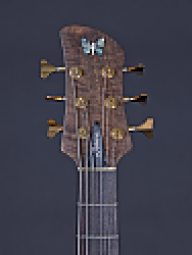
Jason, I always wanted to know...is your screen name a suggestion that you were recently "Thumpin'", or that you prefer to only "Thump"?
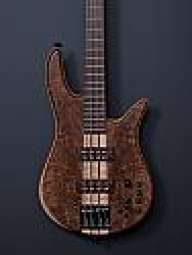
Jason, I always wanted to know...is your screen name a suggestion that you were recently "Thumpin'", or that you prefer to only "Thump"?
Actually, given my fairly pathetic slap technique and even inferior thumping technique, the name is just a screen name that I liked! I am a finger-style guy but I thought Just Fingerin' would not have gone over terribly well...
J

Actually, given my fairly pathetic slap technique and even inferior thumping technique, the name is just a screen name that I liked! I am a finger-style guy but I thought Just Fingerin' would not have gone over terribly well...
J


hey Jason, as a huge Bona fan I have been thrilled to see this newborn
Question: how do you have a passive bass with active EMG's ? or are that EMG Hz's ?
[Invalid or Expired Link Removed]
basswalker2004 said:I have to say I tried Fodera stings some years ago and wasn't that happy with them.. however, the new MG came with his signature set on them and i am really diggin them. The tone and intonation are spot on. From what I can tell, they've really improved a lot.
cheers
That's actually a very fair point! Since the EMG pups ARE active, Richard's Foderas are not technically passive. However, there is no preamp other than the ones that are an integral part of the EMG pups themselves...so we call it a passive bass (as compared to 95%+ of teh basses that we build that have our onboard Fodera / Pope Preamp).
His basses do need batteries to power the EMG's and the onboard MIDI controller...
Great catch!!
Thanks, I thought as much.... but could'nt help myself, I rarely catch anything
Another point tho - you mention in the descripion a "Non-solid" olive top.
It is solid and not a veneer, so it must be hollow/chambered ? Weight tuning ??
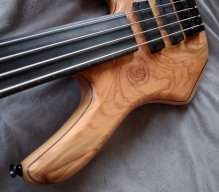
And, before everyone jumps on the "that's so heavy!" bandwagon, ...
And, before everyone jumps on the "that's so heavy!" bandwagon,