• TalkBass has been independent since 1998. Add your voice.
    Create a free account to reply to discussions, view embedded media, and browse with fewer display ads.
    Join freeLog in
    Want zero display ads or expanded classifieds tools? Compare plans.

Fodera Club Part XV

Status
Not open for further replies.
Okay guys...a question...

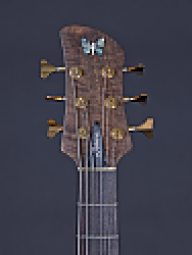
The one thing I've not made an absolute final decision on is the headstock shape of my upcoming 5 B-G MG Shape bass. Jason says that for a 34" 5 B-g bass, they usually use the 2+3 arrangement, for the best B string tension. The other option I have is, apparently, the extended B 2+3 headstock, which, apparently, imparts even greater tension on the B string. I'm wondering, from all you Fodera fanatics, if you've experienced both the regular 2+3 and the extended B 2+3, and whether you thought there was a significant difference in the instrument. As Jason wrote me, it's all personal preference, but I need some of your personal preferences since I can't play 'em myself.

My Emperor is 2+3, but I ordered my Viceroy shape with 3+2 for cosmetic reasons and the convenience of having only two tuners on the awkward underside of the headstock. I just prefer 3+2. Regardless of the rationale for having the extended B string, it does NOT increase the tension in the string. I'm not a true believer in that regard and, in my experience, the distance between the nut and the B string tuner has no effect on the sound or playability of the bass.

... don't hurt me, Fodera people ...

 
bassdoubler said:
I agree. I'm actually about to put in an order for a similar olive top Imperial 5 Elite to what I have now but with a 33" scale, 17.5mm spacing, and a walnut back and I'm definitely going for the extended B headstock....very unique looking and cool concept. I imagine with certain tension strings the player would definitely feel a difference in B string tension given the extra string length if not a little more tone. But I guess I'll find out in a year or so! :crying:

I went with the extended b and I know it doesn't change the tension. I did it so I can use strings made for 34" basses on a 33" scale. You can get an e string to go around a tuning peg, but a b is a different story. I'm not disregarding the possibility that other hard to measure improvements may be introduced per many other discussions here.
 
I have only good things to say about the extended b headstock. The b on my 34" 5-string emperor performs better than the 35" and 36" b strings on my other foderas. Only exception is the aj 6 I sold to Ville earlier this year. The b on that bass is sick.
 
My Emperor is 2+3, but I ordered my Viceroy shape with 3+2 for cosmetic reasons and the convenience of having only two tuners on the awkward underside of the headstock. I just prefer 3+2. Regardless of the rationale for having the extended B string, it does NOT increase the tension in the string. I'm not a true believer in that regard and, in my experience, the distance between the nut and the B string tuner has no effect on the sound or playability of the bass.

... don't hurt me, Fodera people ...

Rick Turner posted something really useful about this in another thread, and I think it probably captures the essence of what it is all about. As we all know, physics says that a string of certain length and density stretched to a certain tension is what it is. There's no changing tension without changing pitch in that scenario.

Rick did talk about string elasticity, though, which I thought was really relevant. It's a fairly widely accepted notion that break angle over the nut or bridge does affect the feel of the strings. No doubt that on a acoustic bass, raising the saddle where the tailpiece anchors makes the strings feel looser, for example. The string doesn't cut off at as sharp an angle over the bridge, and more of the string is able to "give" when it's pulled.

As for how this affects sound, on an acoustic bass it's kind of obvious, but on an electric bass I don't know. I've recently done some experiments along these lines and in the end, at least through an amp, they have been inconclusive.

And of course, just because a bass has a kick a$$ B string and an extended B doesn't mean there aren't just as many out there with normal B's that sound killer too.

Again, my whole reasoning with doing the extended B didn't have anything to do with wanting or hoping to increase tension. But that was 13 years ago.
 
To clarify, because I can already hear the argument coming, I know the extended B doesn't really change the break angle over the nut. But it does put more material between the termination points of the string at either end which is effectively similar to what making the angle shallower does....the shallower the angle, the more the material beyond the nut (or bridge in the acoustic bass example) comes into play. If it's cut off at a 90 degree angle like a string-through-body bass, the point where the string goes over the saddle is effectively both the end of the speaking length, AND the final termination anchor point.
 
Because it's not really higher tension...it's higher stiffness. Unless you use fatter strings, in which case, the tension is higher, and the inharmonicity (non-harmonic content...thump, thud, bad harmonics) of the string goes up. So you get a significant down side with the upside. It depends on what you're trying to achieve.
 
thepontif said:
Because it's not really higher tension...it's higher stiffness. Unless you use fatter strings, in which case, the tension is higher, and the inharmonicity (non-harmonic content...thump, thud, bad harmonics) of the string goes up. So you get a significant down side with the upside. It depends on what you're trying to achieve.

So if I put the same gage strings on made by different manufacturer's and can measure different neck reliefs and changes in tone what can we attribute that to?

Interestingly shouldn't nickel and stainless strings have different tensions in the same gage sine they have different masses: nickel is 8800 kg/m^3 and stainless is 7500 - 8000. Is this being compensated for by core size to keep the string tension consistent?
 
So if I put the same gage strings on made by different manufacturer's and can measure different neck reliefs and changes in tone what can we attribute that to?

Interestingly shouldn't nickel and stainless strings have different tensions in the same gage sine they have different masses: nickel is 8800 kg/m^3 and stainless is 7500 - 8000. Is this being compensated for by core size to keep the string tension consistent?

The mass of the material obviously plays into it too. I think it's the greater the mass, the slower the wave travels, so the higher the tension needs to be.

So I guess you're right, thickness isn't the only factor.

However, the benefit most people are after with a longer string is the fact that you can use a lower mass, and still have plenty of tension. A stiff string does have more inharmonicity, and to MY ear doesn't sound as good, as is the case with a fatter string. A 6 foot piano doesn't have as good bass as a 9 foot because the strings are shorter and hence need to be heavier, either through density or size or both. The thicker or stiffer the string, the sharper and sharper the partials get as you move away from the fundamental. The less in tune the upper partials are, the less they support the fundamental and vice-versa. There's no way to get all the advantages of a long string without having a long string.
 
I recently switched from using Fodera's 28-128 (medium light) to their 28-125 (light) on my 35" scale emp II. I made this decision because I wanted the strings to feel less stiff. After making the switch, I not only like the "less taut" feel of the strings, but the tone has noticeably improved as well. I wasn't sure why this was the case. I was actually worried that I'd be sacrificing tone for feel with this switch. After reading your post I understand why I like the tone of the lighter strings. Thanks for your always insightful posts!

thepontif said:
The mass of the material obviously plays into it too. I think it's the greater the mass, the slower the wave travels, so the higher the tension needs to be.

So I guess you're right, thickness isn't the only factor.

However, the benefit most people are after with a longer string is the fact that you can use a lower mass, and still have plenty of tension. A stiff string does have more inharmonicity, and to MY ear doesn't sound as good, as is the case with a fatter string. A 6 foot piano doesn't have as good bass as a 9 foot because the strings are shorter and hence need to be heavier, either through density or size or both. The thicker or stiffer the string, the sharper and sharper the partials get as you move away from the fundamental. The less in tune the upper partials are, the less they support the fundamental and vice-versa. There's no way to get all the advantages of a long string without having a long string.
 
thepontif said:
The mass of the material obviously plays into it too. I think it's the greater the mass, the slower the wave travels, so the higher the tension needs to be.

So I guess you're right, thickness isn't the only factor.

However, the benefit most people are after with a longer string is the fact that you can use a lower mass, and still have plenty of tension. A stiff string does have more inharmonicity, and to MY ear doesn't sound as good, as is the case with a fatter string. A 6 foot piano doesn't have as good bass as a 9 foot because the strings are shorter and hence need to be heavier, either through density or size or both. The thicker or stiffer the string, the sharper and sharper the partials get as you move away from the fundamental. The less in tune the upper partials are, the less they support the fundamental and vice-versa. There's no way to get all the advantages of a long string without having a long string.

On an acoustic instrument I get it, although I can't get my mind completely around why it isn't scalable on electric instruments...have to give it more thought.
 
nostatic said:
The walnut (top photo) will be:

Imperial/MG fretless 5-string (E-C)
walnut body, tone block, claro walnut top (non-solid)
ash neck, unlined ebony fb
33" scale, 24 fret, 17.5mm spacing
Dual coils, ebony ramp, D-tuner

The rosewood (bottom photo) will be:

Imperial/MG fretted 5-string (E-C)
walnut body, alder tone block, Brazilian rosewood top (non-solid)
maple neck, ebony fb
33" scale, 24 small frets, 17.5mm spacing
Dual coils, ebony ramp, D-tuner

Deposits in. Only question mark is wood pup covers but I can worry about that later. Both the koa Monarch and the MGS will go when these are done (the Monarch probably fairly soon) so I'll still be at 3 Foderas - these two Imperials and the YYD.

Have you considered a ask neck on the frettet version?
 
Hou said:
Have you considered a ask neck on the frettet version?

I don't want to speak for nostatic, but it looks like he's after something close to the MGS spec. I have an ash neck on my imperial and love the pop it has, but I went maple on the new bass since I was told it is more articulate. Just trying for variety in the collection.
 
Thought about it, but as nuwavedc said, I'm trying to get very close to the MGS. The ash is supposed to be a bit warmer and more percussive. The ebony f/b should give more ping so the maple on the fretted should give a lot of punch. On the fretless the ash should give it some good attack with a bit of warmth. Or at least that is the theory.
 
On an acoustic instrument I get it, although I can't get my mind completely around why it isn't scalable on electric instruments...have to give it more thought.

The inharmonicity in question happens in the string. So electric or acoustic, it's there. Still holds true that a short string at pitch will never sound like a long string at the same pitch.
 
Status
Not open for further replies.

Latest posts