
Enjoy the benefits of a premium membership!
Upgrade Account
-
TalkBass has been independent since 1998. Add your voice.
Create a free account to reply to discussions, view embedded media, and browse with fewer display ads.
Join free Log in
Want zero display ads or expanded classifieds tools? Compare plans.
You are using an out of date browser. It may not display this or other websites correctly.
You should upgrade or use an alternative browser.
You should upgrade or use an alternative browser.
Formica, wallpaper, and other kitschy tops
- Thread starter eddododo
- Start date
More options
Who Replied?


Lol why is it sometimes the simplest things we think of last! Wood glue as a base glue is a great idea and I suppose would be good for paper as well.
Probably. You might test with paper. I’d be a little concerned about the paper discoloring or irreversibly curling up.
Original Danelectros are made with Masonite, which is effectively Formica without the melamine coating.
Actual Masonite is much more paper-like than the Formica base material. The base material for countertop laminate fractures into splinters if you break it, not at all like true Masonite. Yes, the Danos are Masonite or a material with similar composition.
I'm surprised there aren't more examples of bodies being covered in the official Fender Tweed fabric. I've covered a few tube combos with that and lacquered afterwards.
I've also covered a few road cases and amp heads with upholstery fabric using Titebond Original. One of my old bass heads was done in an Egyptian hieroglyphics upholstery fabric that always got a lot of compliments.
I'm surprised there aren't more examples of bodies being covered in the official Fender Tweed fabric. I've covered a few tube combos with that and lacquered afterwards.
I've also covered a few road cases and amp heads with upholstery fabric using Titebond Original. One of my old bass heads was done in an Egyptian hieroglyphics upholstery fabric that always got a lot of compliments.

Tinfoil, Lil’ Daddy Roth Rattle Bomb Kandy, and a hand drawn paisley pattern?
Last edited:

My understanding was that the pink paisley and blue flower was not wallpaper, but was adhesive “Contact” brand shelf liner paper.Someone will correct me if I’m wrong, but it’s my understanding that Fender’s original 1968 run of Pink Paisley and Blue Flower Power instruments were simply wallpaper applied to the bodies with a halo of paint masking the edges. Many of those original finishes failed, with the paper lifting from the bodies. The lesson is not to avoid wallpaper, but rather that surface prep and proper materials are key to success. I have to wonder if Fender just used regular wallpaper paste.Considering how many home-crafted decoupage projects survive from the ‘70s to this day and populate the knick-knack shelves in Goodwill stores nationwide, it’s clear that paper on wood can be quite durable when done properly.

Then there was the "photo flame" eraMy understanding was that the pink paisley and blue flower was not wallpaper, but was adhesive “Contact” brand shelf liner paper.
With every neck having the Hamburgeler on it
Last edited:
If the top is flat you have a very wide range of materials you can use. You might even be able to use one of those fancy patterned paper gift bags they sell in dollar stores.
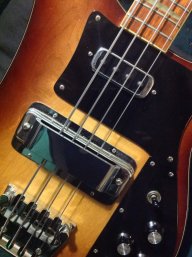
My understanding was that the pink paisley and blue flower was not wallpaper, but was adhesive “Contact” brand shelf liner paper.
Like I said, someone will correct me if I’m wrong.


Lol why is it sometimes the simplest things we think of last! Wood glue as a base glue is a great idea and I suppose would be good for paper as well.
I've tried paper a couple of times, I did find that wrapping paper worked quite well, it's thicker and less prone to wrinkles and tearing. The only problem is that it's harder to apply to curved surfaces, so heavily contoured body fronts are difficult.
I'm notoriously bad at taking pictures of builds, I keep meaning to do it, then find I'm a fair way into a build before I remember about photographing it, but by chance I have a couple of fabric topped bodies in the workshop at the moment.
The two shown have had their first couple of coats of clear coat, quite a few to go yet to cover the materials texture enough to allow flatting and polishing without burning through to the material.
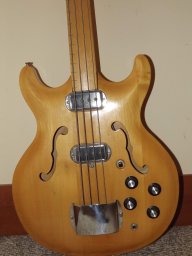
Did the contact paper thing on a silvertone back in the haze, er, days.

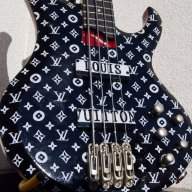
Yup. I've done fabric. Never managed to really get it shiny and smooth on top of that, though.@pklima

Did also own a bass painted with spray-in bedliner once.

I was once given an Eko plastic composite/Formica bodied violin bass by my band's singer-guitarist. It was pretty much unplayable but a nice ornament.
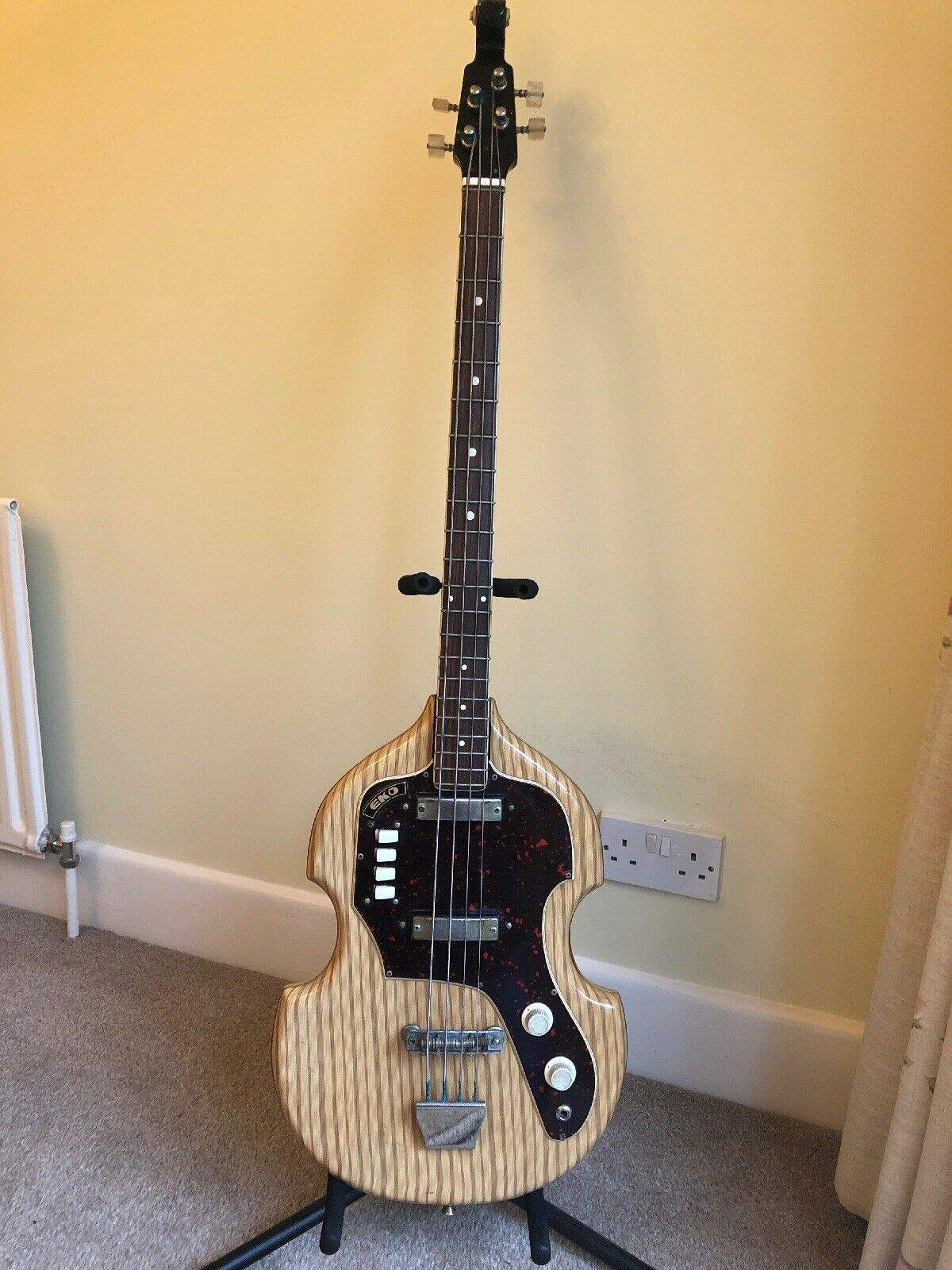
I liked the coffee table style gold strip that hid the joins.
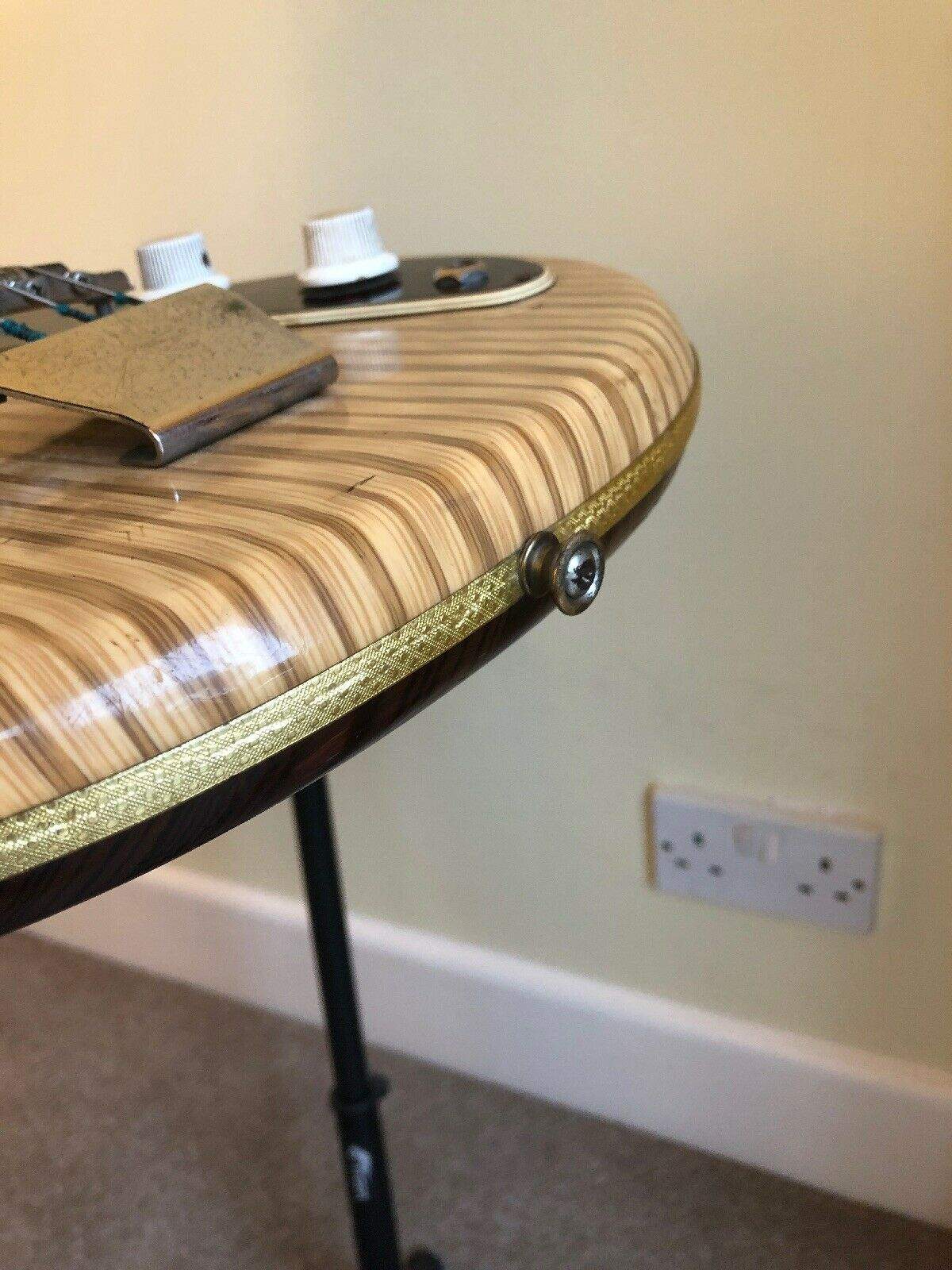
Unfortunately he asked for it back about a year later! They seem to be worth quite a bit these days.
I liked the coffee table style gold strip that hid the joins.
Unfortunately he asked for it back about a year later! They seem to be worth quite a bit these days.

Daddy Mojo has done some cool things with Formica - love the aluminum sides for the full 50's furniture vibe:


Being that 'someone' -- many people think it was wall paper but was actually a product called "Cling-Foil": aluminum adhesive decorative foil. Some did develop cracks while others survived without issue. Good detailed info here which shows unused examples as well: Fender's Summer of Love
Someone will correct me if I’m wrong, but it’s my understanding that Fender’s original 1968 run of Pink Paisley and Blue Flower Power instruments were simply wallpaper applied to the bodies with a halo of paint masking the edges. Many of those original finishes failed, with the paper lifting from the bodies. The lesson is not to avoid wallpaper, but rather that surface prep and proper materials are key to success. I have to wonder if Fender just used regular wallpaper paste.
Being that 'someone'
-- many people think it was wall paper but was actually a product called "Cling-Foil": aluminum adhesive decorative foil. Some did develop cracks while others survived without issue. Good detailed info here which shows unused examples as well: Fender's Summer of Love
Last edited:

As already stated, drum wrap has been in use for a long time on Gretsch jets
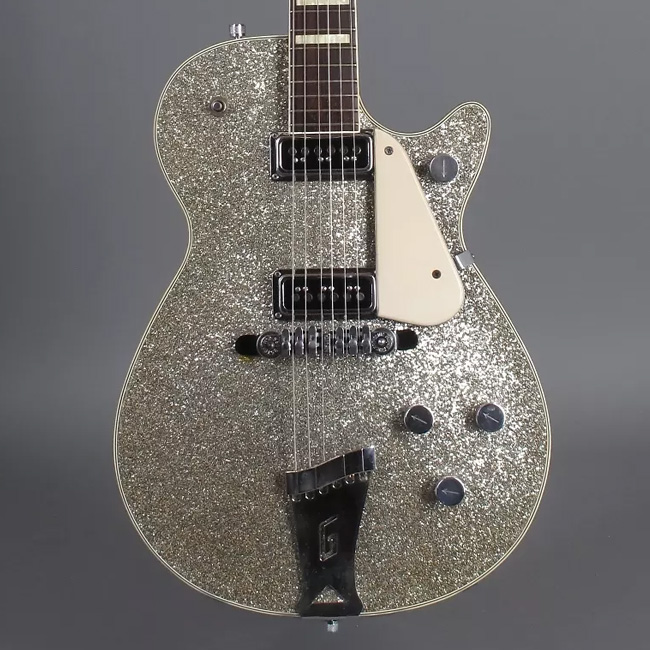
Ok. We’re back home so here’s what I can lay claim to: Formica, fabric, fabric, fabric. I’ve found that if you have a choice of colors in the same pattern with fabric you might want to go with a lighter color as the fabric tends to darken up once you start filling and clearing.


