• TalkBass has been independent since 1998. Add your voice.
    Create a free account to reply to discussions, view embedded media, and browse with fewer display ads.
    Join freeLog in
    Want zero display ads or expanded classifieds tools? Compare plans.

Fretless fingerboard wear with round-wounds

I've found ebony to be pretty impervious to serious dings. I could maintain my board by very fine sanding of the whole board occasionally. But of course there are alot of variables (quality of the wood, the type of strings you use, how hard you strike the strings, etc)...

What exactly is CA glue? That sounds like an cool option.

Ebony is pretty resistant to wear, but it does chip very easily (especially when removing frets and such). Still, it is wood, and will wear against metal -thus the layer of glue.

As it's been said CA glue is super glue. I prefer it for coating fingerboards rather than epoxy, as epoxy requires several coats and will need to be mixed several times. Inconsistencies in mixing will lead to some spots being softer than others, and sometimes it will flow well and sometimes not. CA is the same from batch to batch, and generally flows better and fills gaps more consistently.
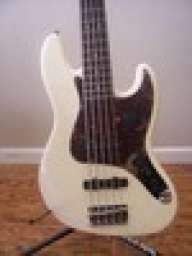
 
I have a Squier FVM Fretless and use roundwounds on it, plus I slap on it too. The ebonol fingerboard is holding up great, really no problems; I'm very pleased. It has a lot to due with your technique, for instance I use a side-to-side vibrato on my fretless as opposed to an up-and-down vibrato on my fretted basses. I also have a very strong finger plucking hand and I use just the right amount of pressure to hold the strings down when fingering on the fretboard, that inturn will lengthen the life of your fretless fingerboard.
 
Folks; What happens to the tone once the FB is coated with CA glue? Anyone notice a change for the worse, or just a change? I worry about adding a coating to an otherwise all wood instrument. Thanks ...

You may notice a bit more brightness, and possibly a tad more mwah, depending on how you set it up. When I impregnated my board with CA glue, I sanded it almost all the way back down to the wood, so it feels and sounds the same, just stronger.
 
Just have the bass set up by a qualified luthier first. he will let you know if you have a wear issue (hopefully he's honest and wont fabricate an issue). I feel that unless the instrument is a little older and really well played that fingerboard wear is not your issue. This same problem happens to my bass on occasion usually during more pronounced season or wheather changes and it's always the neck shifting. I have been playing fretless since 95 with steel roundwounds and have never put enough wear on the board to make much difference and I play fretless about 40% of the time.
 
I'm having my bass defretted professionally, and the luthier is spraying the board (rosewood) with poly (two-pack) once the defret is done (like the picture below). I'm interested to see how that will hold up against the rounds, but I do play lightly.

272-1034x713.jpg
 
play fretted at rehersal...

only frettless at the gig or recording if your that worried...

+1 on fretted at rehearsal.
FB is wood,strings are metal. there is going to be wear. Flats only slow it down.

-1 on fretted at rehearsal. Why own a fretless if you're not going to practice on it?

While it goes off topic a little, just remember Jaco Pastorius used to practice with a fretted as you have to place your finger close behind the fret to avoid buzzing. Having said that I would use fretless to practice. Just prefer the sound.:hmm:
 
Well I do have a fretted bass as well, but you are never going to get a fretted bass that feel exactly the same as the fretless, nor sound the same. While I do play with my fingers right on the frets, practicing intonation on the fretless is also important.

It's akin to saying "drive your harley on the roads when you are building your skills, then take your ducati racebike out on the track when you are racing". They are completely different beasts and don't immediately translate, even though the basic concept is the same.
 
After a year of play, I notice some grooves being worn into a phenolic fingerboard by the B, E and A strings, but while they are visible they're just barely apparent to the touch. I suppose the time will come when I'll need some repair. If stainles steel frets eventually wear down (and they do), I can't imagine any fretboard material that won't.
 
The last rehearsal I went to I noticed that every time I played a C on the A string there was a lot of buzzing with the note, not from the amp or anything but you know the "mwah" sound that you usually get when playing a fretless with round-wound strings... but MUCH more pronounced. Enough to be annoying and not sound good anymore.

I took a look at the fingerboard and it doesn't look too worn from the round-wounds but this being my only fretless I've ever had, and not having bought it new I don't know what is the point where the wear on the fingerboard deserves repair.

From my description does it sound like the fingerboard needs attention... or could it be the strings? (they are cheap ones... but not that old).

And in the case where it may be the fingerboard is there an easy way to repair the damage in the short term or will I need a full overhaul? I guess that opens up another can of worms line of questioning that I'll leave for another day. Thanks!

When you get a common note like a C on the A string worn, it's usually from the strings, there are two cures, use flatwounds which sound better IMHO anyway, or get your neck leveled and epoxied, changes the sound though.
 
how is it possible to put the CA glue on the fingerboard without the glue drying fast?
CA - crazy glue is fast drying glue, isn't it? or should it mixed with any material before applying?
thanks.

I think it depends on the type. There was an article in Bass Player a while back about doing the CA glue treatment, and the guy coats the board with it using the back of a piece of wet'n'dry sandpaper. He used No. 10 and No. 20 super glues from Stewmac. I'm going to be trying it soon on another bass.
 
The use of CA on the board to strengthen it is of interest to me. I recently got my first fretless (G&L L-1500) and the previous owner used round wounds which have left some fairly superficial grooves on the neck under the E and A strings, but still they bother me, so I'm taking the bass into Mike Lull for a leveling and setup. When I see him I'll ask about the CA treatment; maybe it's something he offers at his shop.