• TalkBass has been independent since 1998. Add your voice.
    Create a free account to reply to discussions, view embedded media, and browse with fewer display ads.
    Join freeLog in
    Want zero display ads or expanded classifieds tools? Compare plans.

Fretless - Lined or Unlined?

I much prefer unlined. I love the look. So elegant! However, I am not anywhere accomplished enough or practiced enough to play without lines. Both my fretless basses have them.

_DSC9283copy_zpsdc7d3344.gif

IMG_6006.jpg
 
I much prefer unlined. I love the look. So elegant! However, I am not anywhere accomplished enough or practiced enough to play without lines. Both my fretless basses have them.
_DSC9283copy_zpsdc7d3344.gif

IMG_6006.jpg
If you don't play without lines, you'll find it very difficult to play without lines. It's a vicious circle.

I was worried at first, but it just makes you listen more attentively to what you play, and you soon get used to no lines, as long as you have visual clues along the side of the neck.

I found that practicing with Ed Friedland's "Walking Bass" book was the best thing for me. I could already work that book without looking much at the fretboard on a fretted bass, and the muscle memory helps enormously. Learning to use the side markers wasn't much harder than getting used to a fretboard with no dots.

I personally found that playing fretless has improved my intonation skills because I'm forced to listen, and it has helped with fretted bass, because I find I fret less sloppily.

If I were to play much above the 14th fret, I miught consider getting a lined fretless, but I don't, so it's a bit moot really.

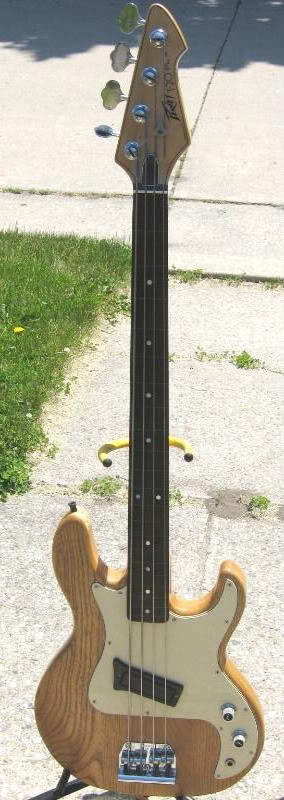
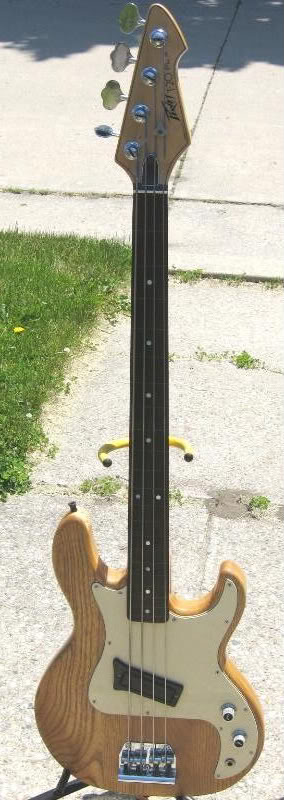
Nice looking "Phat" bass there. I've not seen one before.
 
  • Like
Reactions: iriegnome
I've gravitated to fretless ever since I started taking lessons 45 years ago. The shop where I took lessons had a bright orange Les Paul (knock off) body fretless with a blank fingerboard; and I used to play that thing waiting for the lessons. The guy I was taking the lessons from, Bart Fiori - a Motown era Detroit session guy, used to tell me I didn't want a fretless bass. "Yeah, right," I used to think.

Let's not get into the lines vs no lines thing too much. I will try to summarize some of the points, and hopefully just get it out of the way.

1) No lines looks cooler. It does. Plus, when I finally did start on fretless, Jaco was on the scene, he used lines, and I was doing everything I could NOT to be Jaco. LOL.

2) Lines can be confusing for a player transitioning from frets, depending on your fret target technique. Jaco discusses this in his video. If you are targeting the space between the frets, the lines will drive you nuts. If you are targeting the string stop right at the frets (which may be a better technique), then the lines will make more sense. Just depends on the player. I've seen both. Bottom line is the string needs to stop where the fret would be, and that's the line if it's there, not between. And, yes, you still have to use your ears.

3) In playing position (standing), you can't see the fingerboard for the first seven frets or so; so, in that lower (money) position, the fingerboard markings are somewhat irrelevant; and you just have to understand your fingerboard edge markings. I find that upright left hand fingering with shifts as taught in the Simandl books to be pretty useful down there, except when finger extensions may be needed, but YMMV.

You CAN see the fingerboard when you get up towards the octave, and IME the fingerboard markings up there are extremely useful for two reasons; first, large shifts are common into that register, and second, intonation is more sensitive because the notes are closer together. Lines work well for that, but some of the higher end builders put reference dots up there, and those are also good. Fingerboard markings are NOT training wheels, especially in this area. They are practical reference points.

As much as I adore fretless tones, they can be not worth the effort in certain mixes; especially those with heavy guitar wash. I mean you can do it, but what's the point? Fretless is particularly awesome with horn sections and in more intimate small group settings. IME. GL and MWAH!
Here are my $0.019 on fingerboard markings, FWIW.
 
I prefer the looks of unlined, but having lines does help with positioning and intonation, especially initially. Then again, using lines as a "crutch" may discourage proper "ear attention". Choose what makes you happy / comfortable, and don't stress over it.
 
I've been playing unlined fretless exclusively for the past 2 years.
I recently bought a fretted bass because there are some elements of slapping, tapping, and chording I want to learn that are not fretless' strong points.
Every time I pick it up and see that sea of fretlines my first thought is "where the h3ll am I?"
 
  • Like
Reactions: Imaginary Pony
I find lines confusing but ymmv. My theory is that our brains will tend to bias visual signals, so the lines are more information for your eyes, and you'll use less of your ears.

Electric is different than upright though so muscle memory only goes so far on electric. I find that side dots are the right balance of visual and then I'm using muscle memory and my ears.

For many years I played unlined fretless probably 90% of the time on gigs. Last couple months I've drifted back to that. Usually people can't tell that it is fretless by listening, so that means I'm doing it right. Saturday I was in the studio and played fretless on all 4 cuts we were doing but for whatever reason I was having some trouble on one track. I switched to fretted and got the take but went right back to fretless for the next one. Totally psychological.

Humans are weird...

One funny thing - in this lighting/angle it almost looks like there are lines. But actually it is just wear/oils/etc from where I play. Thankfully vibrato makes the "frets" wider :D

20jul15-1.jpg
 
  • Like
Reactions: Pocket4
For the music I'm playing there's not much money to be made past the 12th fret anyway.
This was true for me until this week.
Guitar guy decided he wanted to play 'Hideaway" and during the break, the riff on the V runs between the 9 and the 15. I've got a dot at the 9, one at the 12, one at the 15, and most of the notes I need are in the big spaces between them. Spent a big chunk of yesterday teaching my fingers the intervals. What the ear can hear the fingers can do...
 
  • Like
Reactions: Imaginary Pony
I'm not as proficient as I'd like on unlined fretless, but I don't have any arguments in favor of lines across the fingerboard. The whole lined phenomenon is really just a throwback to the first time some guy did a defret job, and did inlays to cover the gaps. No style points for that.
 
Just to add a couple of thoughts to my prior post...

There are so many different playing styles and objectives on here, that I am more than hesitant to proclaim one approach as being "best." I just know what I have learned from experience.

I do find posts somewhat frustrating to read when they essentially state that unlined is superior because you are a lesser player if you play lined. To me that is a kind of logic people use when they post on here, but don't do much actual playing. No offense to those playing unmarked boards because they happen to prefer them for their own kinds of gigs.

My first fretless neck had no marks. It was a really nice Warmoth in birdseye with an ebony board. When I started with it, I was playing a very regular blues open mic gig. I wanted neither lines nor a coating on the board; mainly because Jaco had both, and I wanted no part of doing anything Jaco did. I used that neck for a few years like that. Playing blues, most of the work was in the lower register, and I didn't need the lines at all. However, the strings did rut the board in time, and I had to cave on the hard coating thing. Some floor grade polyurethane after appropriate filling and leveling took care of what had become a significant intonation issue.

The next gig was more or less a jazz thing, except that I was covering a lot of the heads. We were playing out of Real Book charts and various other pop tunes, Motown etc, that we would chart ourselves. Playing the heads up in the upper register on the gig at tempo really exposed how much work is involved in playing without lines, IF you are covering melodies. Faced with that situation, MY conclusion was that I would rather cave to lines to play with good intonation with a little less work. Could I do it without lines? Yes; but, ultimately I decided that to play well in a melodic role with less effort (i.e. with lines) was a better choice than worrying about what I looked like. So, I went to lines.

I still have that Warmoth neck. I paid a lot of dues on it. I wouldn't think about going back to it. I know what I need in a gig situation when I am called upon to play upper register melodies on a fretless. When I do so, I would rather play with great intonation and have fun doing it. If some other player thinks I'm using training wheels or cheating, then so be it. Maybe I am. But, I haven't yet lost a gig for it.
 
I will disagree a hair with a couple of the above posts about "playing on the line". Keep in mind that the pad of your finger flattens out as you apply pressure to the string. This results in a sharp note if you center your finger on the line. Instead, use your ears to find the right spot slightly behind the line to get in tune! (Keep in mind that those lines are not going to be 100% accurate across the length of the neck too!)

I'm quoting this because it's the absolute truth. I see a lot of people recommending to playing right on the line, and unless your fingers are thin blades, this will make you sharp. The easiest way to test this is to play the harmonic directly over the 12th fret, and then press down and play the note in the same spot.Your finger will flatten out, causing the string to make contact with the fingerboard slightly in front of the fret line (i.e. sharp).

My first bass teacher did me a HUGE favor by having me positioning right behind the fret. This made the transition to fretless effortless.

As far as whether to go lined or unlined, go with whatever is going to make you sound the best. Learning on an unlined will definitely make your ear better, but it may be a frustrating learning curve. The advice to use your ears rather than your eyes is valid, but depending on the speed of the notes you're playing, you often don't have time to adjust your intonation. And the further up the next you go, the easier it is to get out of tune. And yes, upright players don;t have lines, but let's be honest — even the best right players don't have great intonation when they're soling up high on the neck (Brian Bromberg is one of the only ones I can think of who sounds good up there). I have both lined and unlined, and past the 7th fret to so, if I REALLY need to be accurate, I play the lined.
 

Latest posts