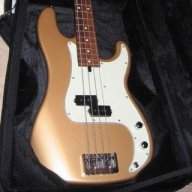
Good news. I played a US JB-2 a few years back and was floored by the quality feel of the instrument, how well it played, how nice it sounded and how balanced the bass felt. A simple instrument but does its job very well.Can't see why not. It's based on the L-series body and they'd have the routing info at hand. Beyond that, it's a simple instrument.

Enjoy the benefits of a premium membership!
Upgrade Account
-
TalkBass has been independent since 1998. Add your voice.
Create a free account to reply to discussions, view embedded media, and browse with fewer display ads.
Join free Log in
Want zero display ads or expanded classifieds tools? Compare plans.
You are using an out of date browser. It may not display this or other websites correctly.
You should upgrade or use an alternative browser.
You should upgrade or use an alternative browser.
More options
Who Replied?

Good news. I played a US JB-2 a few years back and was floored by the quality feel of the instrument, how well it played, how nice it sounded and how balanced the bass felt. A simple instrument but does its job very well.
I'm with you on that. I've just got a Tribute version but with a pickup swap it's a brilliant instrument: all the benefits of a J-bass's pickups and neck with a P-bass body, a beautiful mutant. And it sits nicely in a Hercules floor stand with the symmetric body shape.


Transparent blue, as well as green, red & natural were all available '80 & '81, ash bodied L1K & L2K. I think mahogany got different finishes - not sure, but somebody here likely is.It's a see-thru blue that lets the grain show through...

It's a see-thru blue that lets the grain show through...
Would love to see a pic!

Greetings. Here's one for the pickup nerds. I just watched this video about the MFD pickups. But there's something he doesn't explain or that I just don't get: once there's the big bar magnet in the pickup, how do the pole pieces work? I probably just don't understand magnets that well, but it seems like the bar magnet is doing the work of the bobbins in a traditional pickup design.

I'm with you on that. I've just got a Tribute version but with a pickup swap it's a brilliant instrument: all the benefits of a J-bass's pickups and neck with a P-bass body, a beautiful mutant. And it sits nicely in a Hercules floor stand with the symmetric body shape.
I bought one with the intention of swapping pups but like the stockers well enough so far.
Used to prefer the pick guard and front mounted controls look but the JB2 tribute in natural can be a beautiful instrument.
What year did they disco the JB2 from US production?
Greetings. Here's one for the pickup nerds. I just watched this video about the MFD pickups. But there's something he doesn't explain or that I just don't get: once there's the big bar magnet in the pickup, how do the pole pieces work? I probably just don't understand magnets that well, but it seems like the bar magnet is doing the work of the bobbins in a traditional pickup design.
If I'm not mistaken (and so far I'm 10 minutes without a mistake), the pole pieces in the usual guitar pickup are permanent magnets and the windings go around these magnets. The vibration of the ferromagnetic strings deforms the magnetic field in a time-varying manner which then induces current in the coils—producing the electrical signal. In MFD pickups, the poles are now ferromagnetic material but the principal permanent magnetic is the big honking bar at the base of the pickup, the field of which is extended upward by the pole pieces. This is a fundamental change in the design of the pickup and that's what gives them their distinctive character.

Regular pickup per Seymour Duncan.
MFD pickup per G&L.

... the principal permanent magnetic is the big honking bar at the base of the pickup, the field of which is extended upward by the pole pieces.
Working in tandem, for one awesome and unique sound.
Leo didn't like the deadzone in the middle of an alnico pickup, he felt that eliminating the deadzone would make the pickup more efficient at generating signal. So he bottom-loaded the magnet and the polepieces are one magnetic polarity all the way through the coil. The alnico poles are north at one end and south at the other, so in the middle there's some section that's neither north or south.
MFD polepieces are made of two pieces: an outer, fixed part that touches the magnet at the bottom, and an inner, threaded part that screws up and down to balance string volume. Both parts are magnetically active.
MFD polepieces are made of two pieces: an outer, fixed part that touches the magnet at the bottom, and an inner, threaded part that screws up and down to balance string volume. Both parts are magnetically active.
Leo didn't like the deadzone in the middle of an alnico pickup, he felt that eliminating the deadzone would make the pickup more efficient at generating signal. So he bottom-loaded the magnet and the polepieces are one magnetic polarity all the way through the coil. The alnico poles are north at one end and south at the other, so in the middle there's some section that's neither north or south.
MFD polepieces are made of two pieces: an outer, fixed part that touches the magnet at the bottom, and an inner, threaded part that screws up and down to balance string volume. Both parts are magnetically active.
That's an interesting take on the design, although I don't think I quite buy the "dead zone" effect suggested. It's salient that with the MFD pickups the coil is offset from the principal permanent magnet, surrounding only the polepieces and not the big magnet at the bottom. This doesn't change the fact that the assymetric magnetic field from the bar (distorted upward by the presence of the pole pieces on that side only) still passes through the coil and, when further altered by the movement of the strings, can induce a signal. But the character of that string effect is certain to be quite distinct. This is clearly a very different approach from the Music Man pickups with the huge permanent magnet pole pieces right inside the coil.
That's an interesting take on the design, although I don't think I quite buy the "dead zone" effect suggested. It's salient that with the MFD pickups the coil is offset from the principal permanent magnet, surrounding only the polepieces and not the big magnet at the bottom. This doesn't change the fact that the assymetric magnetic field from the bar (distorted upward by the presence of the pole pieces on that side only) still passes through the coil and, when further altered by the movement of the strings, can induce a signal. But the character of that string effect is certain to be quite distinct. This is clearly a very different approach from the Music Man pickups with the huge permanent magnet pole pieces right inside the coil.
MM Sterling pickups have steel poles with asymmetrical bottom loaded ceramic magnets, just like MFDs. MM Neo pickups are steel poles with a little disc of Neo at the bottom.
MM Sterling pickups have steel poles with asymmetrical bottom loaded ceramic magnets, just like MFDs. MM Neo pickups are steel poles with a little disc of Neo at the bottom.
So...evolution not revolution eh?

I converted my SB-2 to master volume, blend and master tone. Couldn't be happier. I really don't get separate volume controls for pickups.Yeah I really like the blend on the my M2500, although it could be more linear. I prefer that over 2 volumes or worse yet the pickup selector

If you go through the Custom Shop, I'd say that's a very likely yes.Does anyone know if the Fullerton factory would build me a JB-2 if I requested a custom order?
Transparent blue, as well as green, red & natural were all available '80 & '81, ash bodied L1K & L2K. I think mahogany got different finishes - not sure, but somebody here likely is.
Thanx, TomB!
Would love to see a pic!
I thought you'd never ask... ;->

Are these going to go into a custom build?
El Toro's the bass I'd like to see CLF'd but with the sharper end headstock.
Agreed. I'd love to see the El Toro made again, and much prefer the "eye gouger" headstock.
My current bandmstes and I are looking at doing a covers project to punctuate the non-gigging period due to Covid-19. Primarily 70s and 80s rock (Alice Cooper, Kiss, early Can Halen, Cheap Trick etc).
Now I have zero recording gear, but I have my L2000 basses (one strung with steel rounds, the other flats), a nice "direct to mixer" pedalboard and a halfway decent laptop. The basic signal chain is bass - tuner - EBS Billy Sheehan Drive - Boss EQ - Shiftline Cabzone - laptop mic input - Audacity.
The EBS pedal is not only a drive but I use the built in compressor to take the incoming signal if peaks.
I use the Cabzone primarily as cabinet emulation but it also has Aux in for my reference\drum track (played on my cell phone). Lastly it also has a great headphone out fir monitoring.
I wasn't expecting much - if I could get the signal to record and have it resemble a bass then I'd be happy with that. To be honest it shouldnt sound great with my crude set up, but I think it sounds great. Hoping this link works - I realise there is clipping and the playing is a bit off but it's literally my first run through. I'll get the input gain fixed and clean up the playing for the final take but I think this is a testament to the tone of the L2000 - this one done with steel rounds (Fatbeams).
Be gentle with me - first ever time posting a recording of me playing!
Dropbox - Department of Youth drum and bass very rough.wav - Simplify your life
Now I have zero recording gear, but I have my L2000 basses (one strung with steel rounds, the other flats), a nice "direct to mixer" pedalboard and a halfway decent laptop. The basic signal chain is bass - tuner - EBS Billy Sheehan Drive - Boss EQ - Shiftline Cabzone - laptop mic input - Audacity.
The EBS pedal is not only a drive but I use the built in compressor to take the incoming signal if peaks.
I use the Cabzone primarily as cabinet emulation but it also has Aux in for my reference\drum track (played on my cell phone). Lastly it also has a great headphone out fir monitoring.
I wasn't expecting much - if I could get the signal to record and have it resemble a bass then I'd be happy with that. To be honest it shouldnt sound great with my crude set up, but I think it sounds great. Hoping this link works - I realise there is clipping and the playing is a bit off but it's literally my first run through. I'll get the input gain fixed and clean up the playing for the final take but I think this is a testament to the tone of the L2000 - this one done with steel rounds (Fatbeams).
Be gentle with me - first ever time posting a recording of me playing!
Dropbox - Department of Youth drum and bass very rough.wav - Simplify your life
Last edited:

Are these going to go into a custom build?
Agreed. I'd love to see the El Toro made again, and much prefer the "eye gouger" headstock.
"Pointy" not "gougey"- like the one here on the Interceptor. Darn I never knew they used my old green two-tone Interceptor in an ad.
Attachments

"Pointy" not "gougey"- like the one here on the Interceptor. Darn I never knew they used my old green two-tone Interceptor in an ad.
I'd buy a CLF Interceptor! I've had a bunch and if they weren't so dang heavy I'd still have one.
I'd buy a CLF Interceptor! I've had a bunch and if they weren't so dang heavy I'd still have one.
Shouldn't be much of an issue as they wouldn't be using that dense maple.


