
My necks and bodies are a few weeks apart. Dec 81/Jan 82 is a possibility. I can't remember if you said you took the neck off or not? But if not, that is going to be our next poll. Original neck to body... Yes or no!Regarding this can you elaborate? Was it common for G&L to pair bodies w necks a year apart? Thanks!

Enjoy the benefits of a premium membership!
Upgrade Account
-
TalkBass has been independent since 1998. Add your voice.
Create a free account to reply to discussions, view embedded media, and browse with fewer display ads.
Join free Log in
Want zero display ads or expanded classifieds tools? Compare plans.
You are using an out of date browser. It may not display this or other websites correctly.
You should upgrade or use an alternative browser.
You should upgrade or use an alternative browser.
G&L L-1000 decisions, decisions
- Thread starter Drummerdan
- Start date
More options
Who Replied?
I've been experimenting and I slightly prefer the ebony neck on the other body...the one with the black hardware. The neck is stamped 81. The body on the other hand is not legible. I was told it was an 81.My necks and bodies are a few weeks apart. Dec 81/Jan 82 is a possibility. I can't remember if you said you took the neck off or not? But if not, that is going to be our next poll. Original neck to body... Yes or no!


Was it common for G&L to pair bodies w necks a year apart? Thanks!
Going by the Guitars by Leo site, looks like they are usually close, but scrolling around I find a few with some time between. This one seems like a normal gap, but spans 2 calendar years:

Regarding this can you elaborate? Was it common for G&L to pair bodies w necks a year apart? Thanks!
Sure. I wouldn't say a year was common, but not impossible either. We can assume that it just depends on circumstances at the factory during that production period. What are the month dates on neck and body? Your bass would seem to have a late '81 body, as indicated by the smooth black hardware. It's a transition model while switching over from all-chrome hardware to all-smooth black for '82. There were also some transitional units with "mixed" black and chrome hardware from the factory. Evidently, G&L was using up existing hardware stock without much regard to aesthetics. (Is the neck plate on yours black or chrome?)
The time span between completion date of the body and neck may amount to days, weeks, months, or longer. Alternatively the bass could possibly have had a faulty neck replaced at the factory. Or less likely, someone down the line may have swapped necks with a different bass altogether. Check the month dates of each, they may be closer than you think. Cheers.

dukeplaysbass
Supporting Member
Sure. I wouldn't say a year was common, but not impossible either. We can assume that it just depends on circumstances at the factory during that production period. What are the month dates on neck and body? Your bass would seem to have a late '81 body, as indicated by the smooth black hardware. It's a transition model while switching over from all-chrome hardware to all-smooth black for '82. There were also some transitional units with "mixed" black and chrome hardware from the factory. Evidently, G&L was using up existing hardware stock without much regard to aesthetics. (Is the neck plate on yours black or chrome?)
The time span between completion date of the body and neck may amount to days, weeks, months, or longer. Alternatively the bass could possibly have had a faulty neck replaced at the factory. Or less likely, someone down the line may have swapped necks with a different bass altogether. Check the month dates of each, they may be closer than you think. Cheers.
@Templar is correct. There are a number of factors at play here, and his conclusions reflect his study of these issues.
First of all, Leo Fender was a notoriously thrifty guy. If they were switching to black hardware, Leo would insist they use up the remaining chrome ones rather than dump them. And, to streamline the operation, necks were made in batches. I’ve seen necks with the exact same date on them. They then got mated to bodies, which also were made it batches. Depending on the orders coming in, that might mean a maple neck or two sat on the shelf until it was needed, and that might be a couple of months. A difference of 3-6 months between a neck and body date is not uncommon at all.
BTW, this is true for anything Leo was involved in - pre-CBS Fender, Music Man, or G&L. Leo was a very practical guy by all accounts. If there was a customer who wanted something special and was willing to pay for it, Leo found a way to get it to them.
I’m sure I’ve owned a bass with a smooth black bridge and control plate, but a chrome neck plate. Maybe even more than one. I’m pretty sure I owned one that mixed the smooth and the crinkle black as well. They needed to get product sold, not satisfy historians some 35-40 years later. G&L was not a roaring success out of the gate, they were doing everything they could to stay alive. If you don’t know the story of the Broadcaster/ASAT guitars, it’s worth looking up. It was a stunt designed to provoke a lawsuit - in the hopes that the attention might save the company. And it worked!
Thanks very much.Sure. I wouldn't say a year was common, but not impossible either. We can assume that it just depends on circumstances at the factory during that production period. What are the month dates on neck and body? Your bass would seem to have a late '81 body, as indicated by the smooth black hardware. It's a transition model while switching over from all-chrome hardware to all-smooth black for '82. There were also some transitional units with "mixed" black and chrome hardware from the factory. Evidently, G&L was using up existing hardware stock without much regard to aesthetics. (Is the neck plate on yours black or chrome?)
The time span between completion date of the body and neck may amount to days, weeks, months, or longer. Alternatively the bass could possibly have had a faulty neck replaced at the factory. Or less likely, someone down the line may have swapped necks with a different bass altogether. Check the month dates of each, they may be closer than you think. Cheers.
Thanks Duke! That's pretty much what I wanted to know. I think I'll print this out for reference. Very helpful.@Templar is correct. There are a number of factors at play here, and his conclusions reflect his study of these issues.
First of all, Leo Fender was a notoriously thrifty guy. If they were switching to black hardware, Leo would insist they use up the remaining chrome ones rather than dump them. And, to streamline the operation, necks were made in batches. I’ve seen necks with the exact same date on them. They then got mated to bodies, which also were made it batches. Depending on the orders coming in, that might mean a maple neck or two sat on the shelf until it was needed, and that might be a couple of months. A difference of 3-6 months between a neck and body date is not uncommon at all.
BTW, this is true for anything Leo was involved in - pre-CBS Fender, Music Man, or G&L. Leo was a very practical guy by all accounts. If there was a customer who wanted something special and was willing to pay for it, Leo found a way to get it to them.
I’m sure I’ve owned a bass with a smooth black bridge and control plate, but a chrome neck plate. Maybe even more than one. I’m pretty sure I owned one that mixed the smooth and the crinkle black as well. They needed to get product sold, not satisfy historians some 35-40 years later. G&L was not a roaring success out of the gate, they were doing everything they could to stay alive. If you don’t know the story of the Broadcaster/ASAT guitars, it’s worth looking up. It was a stunt designed to provoke a lawsuit - in the hopes that the attention might save the company. And it worked!
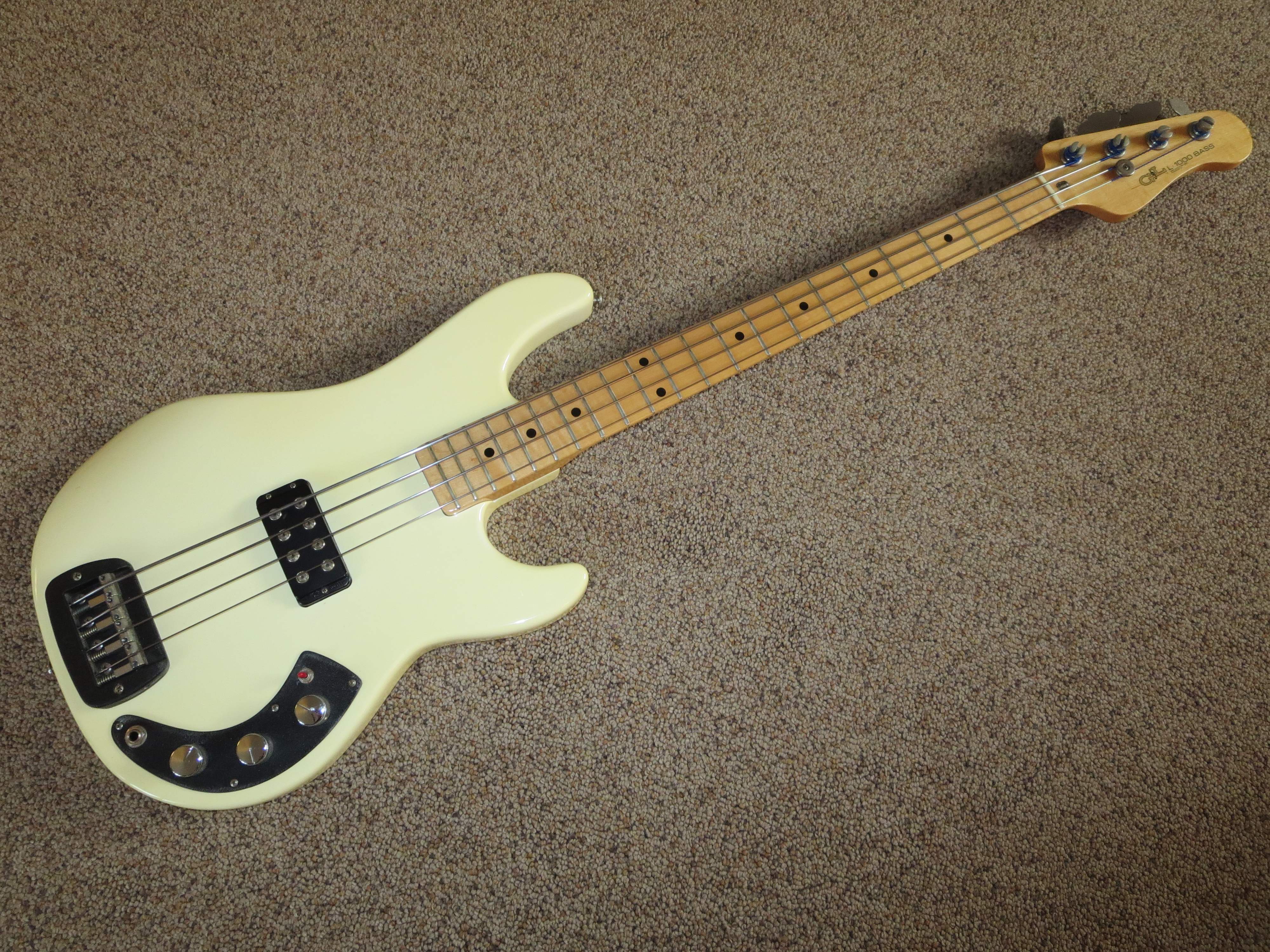
Speaking of transition models, this '83 features...
a bi-cut neck
old style headstock
black crinkle
serial # on neck plate
body is white wood of unknown origin.


a bi-cut neck
old style headstock
black crinkle
serial # on neck plate
body is white wood of unknown origin.

Got me wondering... OP stated 1 pound difference. If one is 10 and the other is 11, that wouldn't make much difference to me. But if one was 9 and the other 10, then that is major, though I still like the look of the one on the left, besides being lighter.


