

Enjoy the benefits of a premium membership!
Upgrade Account
-
TalkBass has been independent since 1998. Add your voice.
Create a free account to reply to discussions, view embedded media, and browse with fewer display ads.
Join free Log in
Want zero display ads or expanded classifieds tools? Compare plans.
You are using an out of date browser. It may not display this or other websites correctly.
You should upgrade or use an alternative browser.
You should upgrade or use an alternative browser.
GAS free guide to Bass purchasing
- Thread starter AngelCrusher
- Start date
More options
Who Replied?Just started using the REDDI DI box last month. A wise investment.
Yeah, I tried one at my friends music shop. Definitely on my wish list.

The original post and the Sean Hurley video mirror my personal experience almost exactly, and I wish I would have gotten on board at a much younger age. I used to hate Ps with a passion for years. The sound, feel, everything. They are now my very favorite, but I had to learn my lesson the hard way. If you are starting out and going anywhere near a studio, the P is the bass you want. Period. Yes, lots of different basses get used in a lot of different styles, and there's lots of killer stuff to choose from. But I think the point of the original post is this: the P never FAILS.
What I mean by that is that there are a lot of basses that sound amazing by themselves, and sound amazing on certain things. The Very Nice Bass I used to own fit this description. I thought it was the ultimate. Live, it was always great. But when I ran into recording situations where it sounded either very average or outright unusable because we couldn't get a good signal or dial in a good tone (even with the 18v preamp), I knew something was wrong. Especially when it was bested by a $150 Squier Affinity, I knew it was time to re-think my approach.
While there are many stories like this, I know of none where the opposite is true: the P never fails. It's plug and play, it works every time, it's what every engineer knows how to work with, and nothing else can do what it does. It sounds better on more things than anything else. This is a VERY important consideration when going into the studio. For the sake of your reputation, do not be the player who squanders precious and expensive minutes fiddling with knobs trying to get a usable sound. It may not be the ending point. You may wind up recording with something else. But imho, there is simply no better starting point, and having one will bring peace of mind to the artists, engineers, and producers who are paying you to make their material sound great.
What I mean by that is that there are a lot of basses that sound amazing by themselves, and sound amazing on certain things. The Very Nice Bass I used to own fit this description. I thought it was the ultimate. Live, it was always great. But when I ran into recording situations where it sounded either very average or outright unusable because we couldn't get a good signal or dial in a good tone (even with the 18v preamp), I knew something was wrong. Especially when it was bested by a $150 Squier Affinity, I knew it was time to re-think my approach.
While there are many stories like this, I know of none where the opposite is true: the P never fails. It's plug and play, it works every time, it's what every engineer knows how to work with, and nothing else can do what it does. It sounds better on more things than anything else. This is a VERY important consideration when going into the studio. For the sake of your reputation, do not be the player who squanders precious and expensive minutes fiddling with knobs trying to get a usable sound. It may not be the ending point. You may wind up recording with something else. But imho, there is simply no better starting point, and having one will bring peace of mind to the artists, engineers, and producers who are paying you to make their material sound great.

I'm a semi pro bassist. Sometimes I survive from just bass. Sometimes not.
I would disagree with you about your three basses to be a pro. If you want to eat because of bass, do this:
Get some kind of Fender or Fender looking and sounding electric bass. It doesn't necessary need to be a Fender P or J, but something close. Begin mastering this instrument.
Eventually get an upright bass. Do the same thing.
Get a keyboard bass. Same thing.
Anyone trying to just survive on electric bass is going to be in for a long shot. The pros that eat that I know double or triple on other basses.
After a good electric you are much, much better off beginning to save for an upright rather tan buying two other electrics in my opinion. If you want to live off of bass playing.
John
I would disagree with you about your three basses to be a pro. If you want to eat because of bass, do this:
Get some kind of Fender or Fender looking and sounding electric bass. It doesn't necessary need to be a Fender P or J, but something close. Begin mastering this instrument.
Eventually get an upright bass. Do the same thing.
Get a keyboard bass. Same thing.
Anyone trying to just survive on electric bass is going to be in for a long shot. The pros that eat that I know double or triple on other basses.
After a good electric you are much, much better off beginning to save for an upright rather tan buying two other electrics in my opinion. If you want to live off of bass playing.
John

wintremute
mediocrity at its finest
- Oct 16, 2014
- 6,942
- 29,551
- Disclosures
- Endorsing Artist: Langstrom Carrot Farms
OP, should that P have flats or rounds, in your opinion? Same question for the Jazz, actually... Either way, which strings are most likely to be appreciated by recording engineers (meaning LaBella or DR or GHS flats; in rounds, Hi-Beams or SwingBass 66 or...)?
The OP did say "Try it with Flats, Wounds, Neon Strings..whatever you want. This bass will sound good on everything.", but I was also wondering if he's partial to one of them.

I'm partial to round wounds honestly, since they are going to work on so many things. But the strings can help identify your sound on an instrument, so go with what works for you. My sound has always been pretty aggressive and had some top to it (from digging in just enough), so I tame that with the tone knob.
Strings are overlooked when it comes to gear sometimes. They can be a huge factor in defining your sound.
When it comes to strings that are appreciated by engineers, it matters the genre. If it is heavier rock n roll they usually appreciate new ones
Strings are overlooked when it comes to gear sometimes. They can be a huge factor in defining your sound.
When it comes to strings that are appreciated by engineers, it matters the genre. If it is heavier rock n roll they usually appreciate new ones

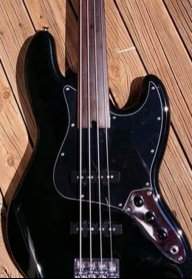
So for someone who doesn't like the fatter neck of the P would having a P with a Jazz neck be just as good? Would anyone notice? Does a P with a Jazz neck change the tone?

My goal is to live off bass playing without ever buying a p bass.

You can make yourself GAS free by buying the best bass you can (I agree with starting with a passive P) and spending all your time concentrating on what you play rather than what you're playing it on.
Technique, tone, playing skills and networking should be the only things on your mind from then on.
Technique, tone, playing skills and networking should be the only things on your mind from then on.

I was going to ask, doesn't it depend on what you are planning on doing, but the op was talking about making a living as a musician.
So that leads me to this, I have been what I call semi-pro all of my adult life. Meaning I have a real job with all the beni,s ,but played as many as 50 weeks a year any wear from 1 night to 6 nights a week. I've played in pit bands for musicals cover bands and praise team and have always and still worked at my skill set.
so my question is shouldn't skill set improvement always be the most important thing no matter the path?
Thanks
Duke
So that leads me to this, I have been what I call semi-pro all of my adult life. Meaning I have a real job with all the beni,s ,but played as many as 50 weeks a year any wear from 1 night to 6 nights a week. I've played in pit bands for musicals cover bands and praise team and have always and still worked at my skill set.
so my question is shouldn't skill set improvement always be the most important thing no matter the path?
Thanks
Duke
I want to get in on this freeing-yourself-from-GAS discussion. Seems to me that a lot of people here, after years of trying out stuff, came to the conclusion that a P Bass is the only bass you really need and are sageing it to the "bass noobs", but they are forgetting that the years of playing other stuff is what allowed them to truly understand and know the P Bass and its qualities..
While I agree with OPs general statement and think his approach may well work for some people, I don't think it would have worked for me. For me, the cure for GAS is not to treat it like an illness, but like the natural curiosity it is and to enjoy it. You shouldn't try to get rid of it, you should try to live it out successfully (i.e. without loosing all your cash in the process and ending up with hundreds of basses you dont actually use!).
I am not a pro player and would consider myself in stage 1 of OP's list. I don't have the interest in getting that serious about bass (ie become a professional bassist), i have too many other interests, musically alone, i am also too interested in playing keyboards, guitars, drums, singing and song writing, not to mention a range of other stuff outside of music, to really put in the time and focus on bass alone.
Guess I am just a different type of person to some of the other members on this thread that have somehow been able to truly commit to this one instrument. Personally that was never going to do it for me, but I am also a little jealous. It is the truly committed and focused without distractions that become the masters of their choosen path. I will never be able to compete with their chops and skills and will most likely stay a jack of many trades and never really become a master of any (unless some sort of holistic category of musicianship gets invented where I might be considers something special on day)
Here is my approach to GAS for those interested in researching, learning about, setting up and repairing basses:
Key for me is buying second hand and doing plenty of research before making any purchases. For this reason some basses have gotten away from me as I took to long to commit but I dont regret it, there are always more out there. My first bass was a musicman SUB and I still own it, though it has some real flaws, I am keeping it out of nostalgia. Its a great beginners bass, it has an active pre amp, but it is still very simple to use and it allows you to get a really harsh, aggressive tone that will make you really think about how you are playing the strings and work on your technique. I have taken it apart, learned how to set it up, tried loads of strings on it, recorded it by myself and on other peoples track and gigged with it. It has taught me a lot.
In this time I have also bought 6 other basses, always second hand stuff, never paid more than €400 for a bass, and have sold 4 of them again now, and have usually at least doubled my money on them (never sold for less than I bought). The key, for me, is to spend time looking for good deals and really doing your research (before and after buying).
Twice I have bought basses without a name on them and by identifying them, have been able to sell them for much more than I bought them for. Other times I have but basses in a bad state and by knowing how to set them up and repair minor problems I have been able to sell them easily and made money on them.
Doing it this way has allowed me to own really different basses without paying a lot of money, play them intensely for months at a time, learn about their strengths and weaknesses and then get rid of them in order to have a budget again for buying something different. This has really helped me understand what I like about a bass and about its sound and feel. If I make some more money on my next two sales, I think I may be ready to make a large investment (up to €1500) from my ever increasing bass fund pot and buy a bass that fits all the criteria I have learned that I enjoy.
For me, there are no shortcuts to personal experience, so go out and do it, but do it in a way that is (financially) sustainable (or even profitable ; ).
While I agree with OPs general statement and think his approach may well work for some people, I don't think it would have worked for me. For me, the cure for GAS is not to treat it like an illness, but like the natural curiosity it is and to enjoy it. You shouldn't try to get rid of it, you should try to live it out successfully (i.e. without loosing all your cash in the process and ending up with hundreds of basses you dont actually use!).
I am not a pro player and would consider myself in stage 1 of OP's list. I don't have the interest in getting that serious about bass (ie become a professional bassist), i have too many other interests, musically alone, i am also too interested in playing keyboards, guitars, drums, singing and song writing, not to mention a range of other stuff outside of music, to really put in the time and focus on bass alone.
Guess I am just a different type of person to some of the other members on this thread that have somehow been able to truly commit to this one instrument. Personally that was never going to do it for me, but I am also a little jealous. It is the truly committed and focused without distractions that become the masters of their choosen path. I will never be able to compete with their chops and skills and will most likely stay a jack of many trades and never really become a master of any (unless some sort of holistic category of musicianship gets invented where I might be considers something special on day)
Here is my approach to GAS for those interested in researching, learning about, setting up and repairing basses:
Key for me is buying second hand and doing plenty of research before making any purchases. For this reason some basses have gotten away from me as I took to long to commit but I dont regret it, there are always more out there. My first bass was a musicman SUB and I still own it, though it has some real flaws, I am keeping it out of nostalgia. Its a great beginners bass, it has an active pre amp, but it is still very simple to use and it allows you to get a really harsh, aggressive tone that will make you really think about how you are playing the strings and work on your technique. I have taken it apart, learned how to set it up, tried loads of strings on it, recorded it by myself and on other peoples track and gigged with it. It has taught me a lot.
In this time I have also bought 6 other basses, always second hand stuff, never paid more than €400 for a bass, and have sold 4 of them again now, and have usually at least doubled my money on them (never sold for less than I bought). The key, for me, is to spend time looking for good deals and really doing your research (before and after buying).
Twice I have bought basses without a name on them and by identifying them, have been able to sell them for much more than I bought them for. Other times I have but basses in a bad state and by knowing how to set them up and repair minor problems I have been able to sell them easily and made money on them.
Doing it this way has allowed me to own really different basses without paying a lot of money, play them intensely for months at a time, learn about their strengths and weaknesses and then get rid of them in order to have a budget again for buying something different. This has really helped me understand what I like about a bass and about its sound and feel. If I make some more money on my next two sales, I think I may be ready to make a large investment (up to €1500) from my ever increasing bass fund pot and buy a bass that fits all the criteria I have learned that I enjoy.
For me, there are no shortcuts to personal experience, so go out and do it, but do it in a way that is (financially) sustainable (or even profitable ; ).
Last edited:
So... All we really need is an MIA P bass with flats. Hmmm, never heard that one before.
Honestly, I appreciate the OP sharing his experience with the ambitious young 'uns (a rolodex of contacts? Rolodex?). But threads like this make me feel happy to be a weekend warrior who can play a bass I happen to like, rather than worrying I won't be able to make a living if I don't play a bass some producer likes.
Honestly, I appreciate the OP sharing his experience with the ambitious young 'uns (a rolodex of contacts? Rolodex?). But threads like this make me feel happy to be a weekend warrior who can play a bass I happen to like, rather than worrying I won't be able to make a living if I don't play a bass some producer likes.

But threads like this make me feel happy to be a weekend warrior who can play a bass I happen to like, rather than worrying I won't be able to make a living if I don't play a bass some producer likes.
Couldn't agree more.
If I had to to get the big gig/session I would, but I don't see that happening anytime soon.

I don't know guys, I mean, I don't currently own a P-bass, but I'm going to go get one after reading this and watching the video AND talking to a few engineers I know.
I'm not really looking to be a Pro (if it happens great) because I have a nice day job that is flexible, but it would be cool to record for a big name artist one day. And I would hate to get that opportunity and lose it because of a $1600 bass. My day job isn't very rewarding as far as experiences and telling stories in the vein of "This one time, I did [insert super cool thing]". Lol!
So be cool to add a few cool stories to my list and $1600 is worth that ALL DAY!
I'm not really looking to be a Pro (if it happens great) because I have a nice day job that is flexible, but it would be cool to record for a big name artist one day. And I would hate to get that opportunity and lose it because of a $1600 bass. My day job isn't very rewarding as far as experiences and telling stories in the vein of "This one time, I did [insert super cool thing]". Lol!
So be cool to add a few cool stories to my list and $1600 is worth that ALL DAY!
So... All we really need is an MIA P bass with flats. Hmmm, never heard that one before.
Honestly, I appreciate the OP sharing his experience with the ambitious young 'uns (a rolodex of contacts? Rolodex?). But threads like this make me feel happy to be a weekend warrior who can play a bass I happen to like, rather than worrying I won't be able to make a living if I don't play a bass some producer likes.
I never said that.
Rolodex is just a term man. My goodness, the internet can be unforgiving.
I don't know guys, I mean, I don't currently own a P-bass, but I'm going to go get one after reading this and watching the video AND talking to a few engineers I know.
I'm not really looking to be a Pro (if it happens great) because I have a nice day job that is flexible, but it would be cool to record for a big name artist one day. And I would hate to get that opportunity and lose it because of a $1600 bass. My day job isn't very rewarding as far as experiences and telling stories in the vein of "This one time, I did [insert super cool thing]". Lol!
So be cool to add a few cool stories to my list and $1600 is worth that ALL DAY!
Its funny you say that. One of my first breaks was that exact situation. Ended up getting hired to do a demo for an artist that got signed to a major label. I got the gig because the producer loved how I played. He also was a meat and potatoes guy so he REALLY liked the PBass. I showed up, stayed through the entire tracking session (16 hours - because I'm a studio rat at heart) and helped him with other stuff as well when needed. It ended up changing my career.
Its funny you say that. One of my first breaks was that exact situation. Ended up getting hired to do a demo for an artist that got signed to a major label. I got the gig because the producer loved how I played. He also was a meat and potatoes guy so he REALLY liked the PBass. I showed up, stayed through the entire tracking session (16 hours - because I'm a studio rat at heart) and helped him with other stuff as well when needed. It ended up changing my career.
Who are you? Lol!
Sounds as if you have been on successful recordings with successful people. Seems like you would be a cool contact to know.
My first pro studio situation I got lucky. The producer and engineer LOVED Ernie balls. The entire hallway leading to their drum room was covered in them. Lol!
Lucky for me, I had gotten EBMM about 4 months prior. So they loved me.


