How did all their mics not feedback bing in front of the system like that? Am I missing something?Not that I've seen.
View attachment 3216590

Enjoy the benefits of a premium membership!
Upgrade Account
-
TalkBass has been independent since 1998. Add your voice.
Create a free account to reply to discussions, view embedded media, and browse with fewer display ads.
Join free Log in
Want zero display ads or expanded classifieds tools? Compare plans.
You are using an out of date browser. It may not display this or other websites correctly.
You should upgrade or use an alternative browser.
You should upgrade or use an alternative browser.
Genzler Amplification Club
- Thread starter Discount Saint
- Start date
More options
Who Replied?
Even two to the amp are parallel. And the load is always calculated parallel.
Yes, I got that reversed. The concepts are clear enough, it's the terminology that gets bungled up sometimes


How did all their mics not feedback bing in front of the system like that? Am I missing something?
They (Alembic, I think) came up with paired differential mics. Anything, like feedback, that came into both mics got cancelled out because the 2 mics were 180 degrees out of phase with each other, so they'd sing into one of them while the other caused everything else to be cancelled.
Grateful Dead mic question.

svtb15
Inactive
- Mar 22, 2004
- 13,004
- 4,741
- Disclosures
- I play it all. Whatever works for the gig. Q+
i agree 100%
Yes, don't repeat this but we have a few players that run the MG-800 at 2 ohms. We feel that when using our cabs it is much "safer" than if you might be using other cabs on the market which may tend to have lower impedance than shown. You won't blow up the amp but if there were an issue it might be premature distortion or something along those lines. We have certainly overbuilt this design for any potential issue.

I just run a speakon to the top cab, and then daisy chain them on down... which, as I learned on the previous page, is a series connection
But isn't that still based on parallel or series connectivity?
I think it's always going to be a series connection in our case, unless the head has multiple power amps with their own separate loads. My band's PA does this, like it's rated to put out 800 Watts total, but it actually has two separate power amps which each can handle their own 400 Watt 2 Ohm load, so you can hook up 8 speakers total without actually going below 2 Ohms on either power amp.
In the case of most bass heads you're just dealing with a single power amp with a single load, so each additional cabinet will directly influence the load.
By this statement (BOLD) you mean with Genzler 800 amp and cabinets? The panel on the back of my Genzler cabinets (410-3 & 12-3) have two 1/4 females marked PARALLEL, which I assumed is to be used when connection to additional cabinet(s). I guess I need a Bass Cabinet Connectivity 101 course!
Repost#4093 on page 205.Sorry, I wasn't very clear - The connection itself may be series (one cable from each cab to the amp) or parallel (daisy chain from cab to cab), but as far as the amp is concerned the load is calculated as series either way.

From amp to cab or cab to cab daisy chained it is all parallel. + to + and - to - bringing your impedance lower so your two 8 Ohm cabs result in a 4 Ohm load.
Series is a reversing of the polarity, + to - and - to + resulting in a higher impedance, so your two 8 Ohm cabs would result in a 16 Ohms load. To do this you would need a special cable wired up in such a way.
Yes, don't repeat this but we have a few players that run the MG-800 at 2 ohms. We feel that when using our cabs it is much "safer" than if you might be using other cabs on the market which may tend to have lower impedance than shown. You won't blow up the amp but if there were an issue it might be premature distortion or something along those lines. We have certainly overbuilt this design for any potential issue.
your secret is safe with us, boss

Repost#4093 on page 205.
From amp to cab or cab to cab daisy chained it is all parallel. + to + and - to - bringing your impedance lower so your two 8 Ohm cabs result in a 4 Ohm load.
Series is a reversing of the polarity, + to - and - to + resulting in a higher impedance, so your two 8 Ohm cabs would result in a 16 Ohms load. To do this you would need a special cable wired up in such a way.
If you reverse the polarity you'll get phase cancellation and poor sound. That's an entirely different thing than series vs. parallel. If you reverse the phase in either mode you will get undesirable cancellation.
Most every amp and speaker I've seen has whatever output connectors they have wired in parallel. If you wire two speakers to separate connectors on most amps they're in parallel (unless it's a stereo or bridged mono amp, but don't there for this discussion). If you connect one speaker to another speaker and that one to the amp, they're still in parallel.
All the +'s tied together and all the -'s tied together. The total impedance is the value of one speaker divided by the total number of speakers. In this case 8 ohms divided by 2 = 4 ohms. Three 8ohm speakers in parallel gives you 8 ohms/3 = 2.6666 ohms
Two speakers in series and in phase would be the jack to + then that speaker's - to the next speaker's + and that speaker's - to the other side of the jack. In that case each speaker's impedance is added.
8 ohms + 8 ohms = 16 ohms.
The only way I know of to run two separate cabs in series is to use a specially wired box with two jacks wired in series.
If you want to get deeper into it, think about a 4x10 wired in series/parallel. That's (two 8 ohm drivers in series for 16 ohms) in parallel with (two 8 ohm drivers in series for 16 ohms) to end up with a total load of 8 ohms.
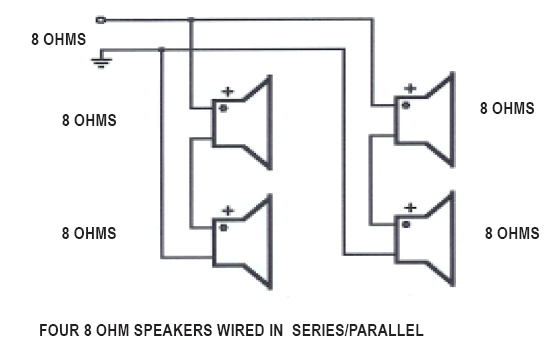
8+8=16
---------- 16/2=8
8+8=16
8+8=16
---------- 16/2=8
8+8=16
Last edited:
whether you connect two cabs to the outputs on the amp, or daisy chain from amp to cab to second cab, it's a parallel connection and adding cabs in this way will lower the impedance that the amp sees. Series connection requires different wiring, I've not seen any amp or cab that was wired for series when connecting multiple cabs.Sorry, I wasn't very clear - The connection itself may be series (one cable from each cab to the amp) or parallel (daisy chain from cab to cab), but as far as the amp is concerned the load is calculated as series either way.
BTW running the amp at lower impedance then it is rated for is IME not likely to damage the amp, but may very well cause the amp to shut itself down in self protection mode.

Sorry- I was attempting to make fun of myself from earlier (hence the smiley face), but apparently I just caused even more confusion.You mean parallel lol
My confusion around the terminology has clearly resulted in some very apt educational material LOL.
You're welcome.
You're welcome.
THANKS @ric426!!!!
All minds should be clear(er)! I know mine is.
And if anybody starts posting about series as it relates to bass speaker connectivity, I’m just going to ignore them because, obviously, I don’t know what they are talking about!
All minds should be clear(er)! I know mine is.
And if anybody starts posting about series as it relates to bass speaker connectivity, I’m just going to ignore them because, obviously, I don’t know what they are talking about!
Last edited:
I thought that is what was said without going into exactly how to make it with this.Two speakers in series and in phase would be the jack to + then that speaker's - to the next speaker's + and that speaker's - to the other side of the jack. In that case each speaker's impedance is added.
8 ohms + 8 ohms = 16 ohms.
Just a simple way of informing that Series is not just plugging in your Speakon, it is a special wiring.+ to - and - to + resulting in a higher impedance, so your two 8 Ohm cabs would result in a 16 Ohms load. To do this you would need a special cable wired up in such a way.

With complete cabs, yes, and/or with a series wired cable.The only way I know of to run two separate cabs in series is to use a specially wired box with two jacks wired in series.
If some want just know or do it here is the Series cable diagram for hooking up two cabs to one amp for a higher impedance load. 8+8=16 or 4+4=8
Using a Speakon the tip would be +1 sleeve is -1 and make sure to mark the end that goes to the Amp and the two ends that go to the cabs.
THANKS @ric426!!!!
All minds should be clear(er)! I know mine is.
Not mine, it's as clouded as ever.

Note that I have been talking about how to hook up Cabs to an Amp (regardless of the cabs speaker count) without opening or changing them, while you were thinking and talking about hooking up individual drivers in a cab.Not mine, it's as clouded as ever.
Reasons for doing this besides adding more speakers Click>Ran my Streamliner at 16 ohms tonight -- a revelation
Note that I have been talking about how to hook up Cabs to an Amp (regardless of the cabs speaker count) without opening or changing them, while you were thinking and talking about hooking up individual drivers in a cab.
Not really. If you imagine a box around each driver in the diagrams they can be considered as separate cabs and the same rules apply.
I understand parallel and series wiring and the impact it has on the impedance of a cab... but for most folk, all of that is irrelevant. What most folk need to know is that plugging into two outputs on the back of a mono head gives the exact same results as plugging into one and then daisy changing from that cab to a second cab. Two 8 ohms cabs, plugged either way, equals 4 ohms. Two 4 ohm cabs plugged either way equals 2 ohms. An 8 ohm and a 4 ohm cab, plugged either way equals 2.67 ohms.

And 3 8ohms also 2.67ohms so...I understand parallel and series wiring and the impact it has on the impedance of a cab... but for most folk, all of that is irrelevant. What most folk need to know is that plugging into two outputs on the back of a mono head gives the exact same results as plugging into one and then daisy changing from that cab to a second cab. Two 8 ohms cabs, plugged either way, equals 4 ohms. Two 4 ohm cabs plugged either way equals 2 ohms. An 8 ohm and a 4 ohm cab, plugged either way equals 2.67 ohms.
3 BA12-3's is time to switch to the 2.67 setting.
Or if you like removing even more plaster from the walls the 410-3 and 210-3 also 2.67setting...
2 410-3 would be 2ohms and is not recommended...
svtb15
Inactive
- Mar 22, 2004
- 13,004
- 4,741
- Disclosures
- I play it all. Whatever works for the gig. Q+
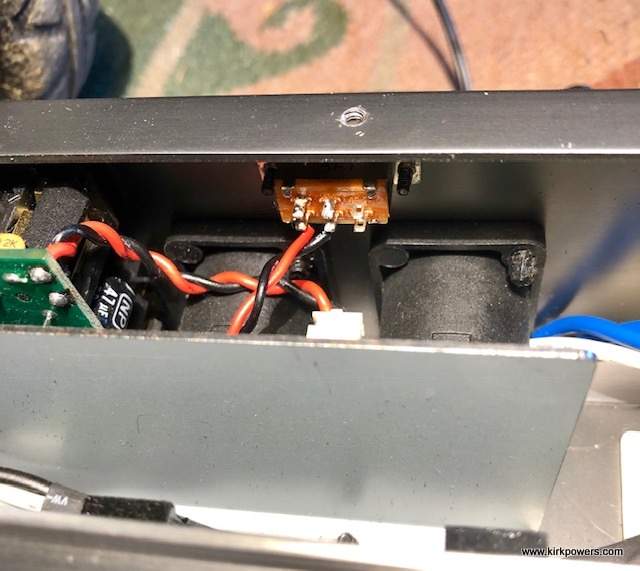
I or my crew guy broke the OHMS switch on the rear of my amp. Jeff got me a new one REAL FAST.. Its back to being perfect. Thank you @Jeff Genzler for being a model of Great customer service