

Enjoy the benefits of a premium membership!
Upgrade Account
-
TalkBass has been independent since 1998. Add your voice.
Create a free account to reply to discussions, view embedded media, and browse with fewer display ads.
Join free Log in
Want zero display ads or expanded classifieds tools? Compare plans.
You are using an out of date browser. It may not display this or other websites correctly.
You should upgrade or use an alternative browser.
You should upgrade or use an alternative browser.
Genzler Amplification Club
- Thread starter Discount Saint
- Start date
More options
Who Replied?

I would love to benchmark the BA410-3 with my Glockenklang Take Five. Unfortunately Genzler cabs are rare beasts around here (Germany).It is the best 410 cab on the market…period!! Next, grab a Magellan 800 for the complete package!!!

Joeykun
pronounced ジョーイくん
- Jun 22, 2007
- 4,200
- 16,150
- Disclosures
- Endorsing: LAKLAND SADOWSKY GENZLER DARKGLASS NORDSTRAND TEMPLEBOARD KIRLIN DRSTRINGS ACCESS
I would love to benchmark the BA410-3 with my Glockenklang Take Five.
Similar specs with the BA2-410-3 coming in a little smaller, a little lighter.
However, (taken from the website) with the 6 x 3” Neodymium paper cone driver line array element between the 10” woofers, it further provides an extremely broad projection pattern, immediate quickness and clarity that is not possible with standard 4×10” design.
Also due to line array principles the all-important mid and high frequencies have a much wider horizontal dispersion with a more controlled vertical pattern. This offers the most even projection possible around the perimeter of the stage and audience.
^^^This is the big difference. And man, do you hear it on stage!

That’s what I’ve been hearing, and mine is now home so I look forward to the experience.
Here’s proof: outdoors, no PA, everything is full, warm, and crystal clear as evidenced from the audio taken from the audience. BA15-3 underneath the BA410-3 S2. @Jeff Genzler, I’ve never been so inspired. THANK YOU
ensemble playing:
Dan Robbins on Instagram: "“Lines Head” by @wasabitheband ft. special guest Paul Hanson on bassoon @genzleramps @jimdunlopusa @emgpickups @nordstrandaudio @conklinguitars Dan Robbins, bass Ron Work, guitar Alex Work, drums"
bass solo on “Bernie’s Tune”:
Dan Robbins on Instagram
Outstanding and to get that bass quality from a cell phone video is rare (assuming that is how it was recorded). And fine playing as well.Here’s proof: outdoors, no PA, everything is full, warm, and crystal clear as evidenced from the audio taken from the audience. BA15-3 underneath the BA410-3 S2. @Jeff Genzler, I’ve never been so inspired. THANK YOU
ensemble playing:
Dan Robbins on Instagram: "“Lines Head” by @wasabitheband ft. special guest Paul Hanson on bassoon @genzleramps @jimdunlopusa @emgpickups @nordstrandaudio @conklinguitars Dan Robbins, bass Ron Work, guitar Alex Work, drums"
bass solo on “Bernie’s Tune”:
Dan Robbins on Instagram
I actually just picked up a nice used Magellan 800 that should be here this week so I can have the entire 'experience' if you will.
I have a question for @Jeff Genzler (or anyone else with an opinion of course) if you'd indulge me. Why don't more amp designers put a simple compression or limiting circuit feature on their amps? I see many now incorporate some manner of 2 or 3 knob overdrive but rarely if ever see compression or limiting. To me, some level of adjustable dynamic control for things like pops, or maybe even more so, the big low B or C on a 5 or 6 string, just to keep things inside the lines would be a nice option.
I actually employ an old Alesis Nano compressor that feeds the stage amp, and the Sansamp Bass DI for the FOH XLR feed so both get fed a nice controlled but not squashed signal no matter what or how hard I am playing. If that feature was on an amp I could get rid of that additional 'vintage' outboard gear. Just curious.
Thank you,
I actually employ an old Alesis Nano compressor that feeds the stage amp, and the Sansamp Bass DI for the FOH XLR feed so both get fed a nice controlled but not squashed signal no matter what or how hard I am playing. If that feature was on an amp I could get rid of that additional 'vintage' outboard gear. Just curious.
Thank you,

Joeykun
pronounced ジョーイくん
- Jun 22, 2007
- 4,200
- 16,150
- Disclosures
- Endorsing: LAKLAND SADOWSKY GENZLER DARKGLASS NORDSTRAND TEMPLEBOARD KIRLIN DRSTRINGS ACCESS
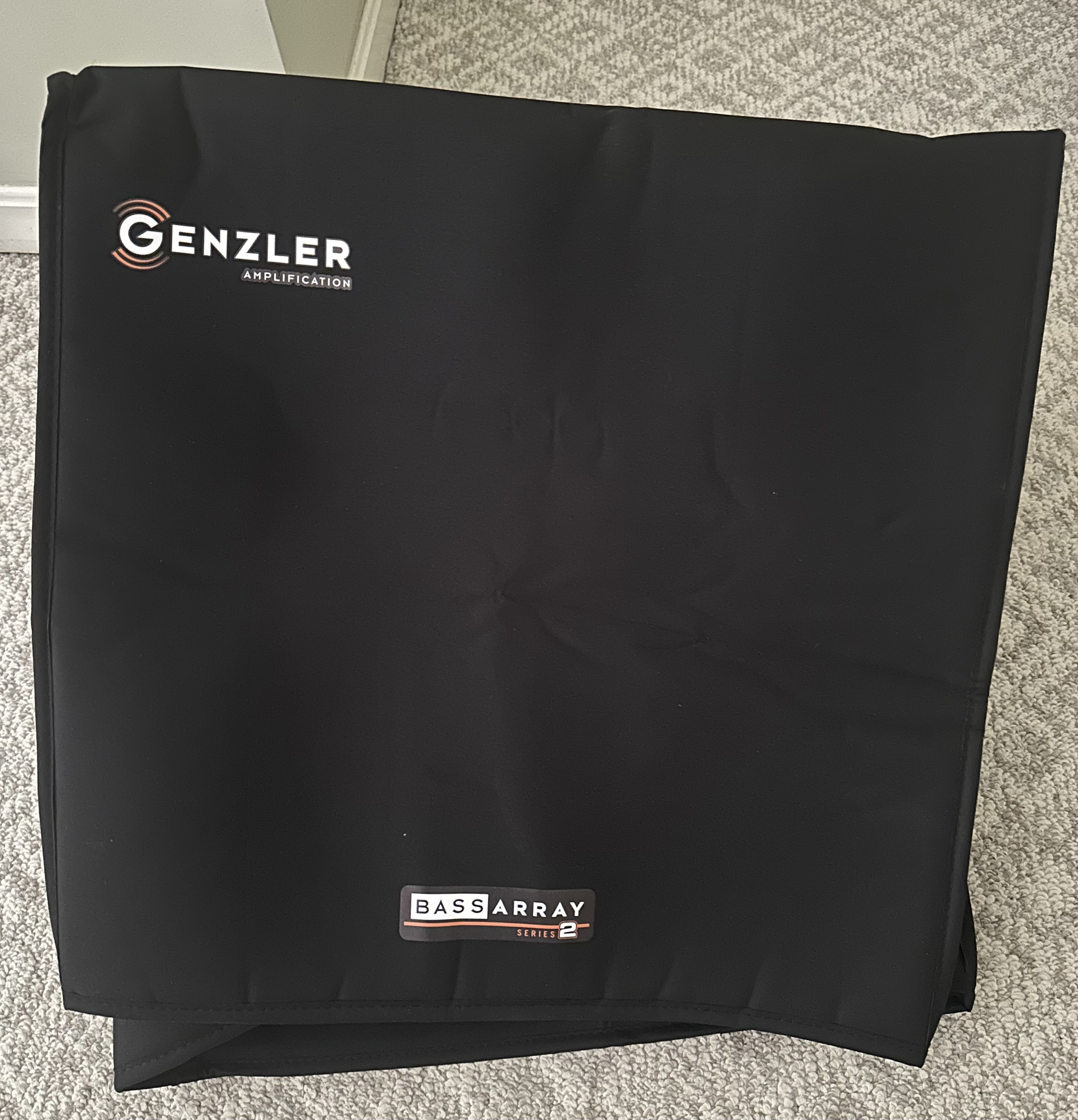
Getting ready to hit the road again. Got the Series 2 cover for my BA2-410-3 to keep it looking new. Let’s Go!!
I’d expect that to be part of the consideration or reasoning but anything you add or remove will impact production costs. Tubes, distortion circuits etc. but many amps employ those. And we’re not talking about price point amps. Certain economies of scale would make that more manageable. Offering that a $100, $200 outboard pedal option is more cost effective doesn’t work. And the same can be said of overdrives where an outboard pedal might be better yet many higher end amps have those.It would increase the price and a compressor more suited to your taste might be had for the same $…
As far as the low strings go - there is an hpf incorporated in the Magellan ( I believe it’s around 30hz)
And, I’m not talking about rolling off or handicapping the lowest notes but controlling amplitude as a compressor/limiter would.

Jeff Genzler
Commercial User
- Feb 9, 2007
- 1,819
- 11,893
- Disclosures
- Currently GENZLER AMPLIFICATION / Formerly GENZ BENZ
I’d expect that to be part of the consideration or reasoning but anything you add or remove will impact production costs. Tubes, distortion circuits etc. but many amps employ those. And we’re not talking about price point amps. Certain economies of scale would make that more manageable. Offering that a $100, $200 outboard pedal option is more cost effective doesn’t work. And the same can be said of overdrives where an outboard pedal might be better yet many higher end amps have those.
And, I’m not talking about rolling off or handicapping the lowest notes but controlling amplitude as a compressor/limiter would.
@nervous --- our amp designs have always offered a "soft-limit" design that allows the amp to be driven harder without nasty clipping, but it does allow the amp to get "louder" than you may expect. This is achieved by slight rounding of the response waves as the amp starts to clip. This helps to enhance the bigness of the output.
But in reference to a compression/limiting, because there has always been a wide degree of what users like, we've felt that this is better handled via a pedal or outboard option. While many players enjoy some compression for their tone, we've always wanted to player to use our amp as their "bare canvas" starting point, and let their instrument and technique be the brush strokes and splashes of color.
Wow, that sounds kind of artsy.
Thank you for the explanation. I wasn’t aware of the soft limit design.@nervous --- our amp designs have always offered a "soft-limit" design that allows the amp to be driven harder without nasty clipping, but it does allow the amp to get "louder" than you may expect. This is achieved by slight rounding of the response waves as the amp starts to clip. This helps to enhance the bigness of the output.
But in reference to a compression/limiting, because there has always been a wide degree of what users like, we've felt that this is better handled via a pedal or outboard option. While many players enjoy some compression for their tone, we've always wanted to player to use our amp as their "bare canvas" starting point, and let their instrument and technique be the brush strokes and splashes of color.
Wow, that sounds kind of artsy.
I appreciate this approach. There are too much different likes and tastes for compression to cover it all with one single design. For myself I even use several compressors with different sounds for different basses. I would only expect some kind of damage protection.@nervous --- our amp designs have always offered a "soft-limit" design that allows the amp to be driven harder without nasty clipping, but it does allow the amp to get "louder" than you may expect. This is achieved by slight rounding of the response waves as the amp starts to clip. This helps to enhance the bigness of the output.
But in reference to a compression/limiting, because there has always been a wide degree of what users like, we've felt that this is better handled via a pedal or outboard option. While many players enjoy some compression for their tone, we've always wanted to player to use our amp as their "bare canvas" starting point, and let their instrument and technique be the brush strokes and splashes of color.
Wow, that sounds kind of artsy.
However it would be nice to have a power supply output for external pedals. This would eliminate the need for a nasty power supply wall wart which tend to hum or crackle during the worst moments.
So, I was trying the new Magellan 800 head tonight and noticed that this recently purchased cab seems to have a ‘fuzzy” speaker, especially noticeable with the low G note. It does the same with three different heads, and at low volumes. My MB210 combo does not do this with the same bass, location and volume so that takes the environmental factor out. Thoughts or options?
This short video shows the condition.
https://youtube.com/shorts/G-gQajQDCAg?si=ZobG_CmxpMiW15jS
This short video shows the condition.
https://youtube.com/shorts/G-gQajQDCAg?si=ZobG_CmxpMiW15jS

- Feb 12, 2006
- 61,030
- 5
- 220,909
- Disclosures
- Development Engineer-Mesa Boogie, Development Engineer-Genzler (pedals), Product Support-Genz Benz
First, double-check that it's not something in the room vibrating, and that there's no tags still attached to the handle.
Just guessing - may be a loose dust cap ?So, I was trying the new Magellan 800 head tonight and noticed that this recently purchased cab seems to have a ‘fuzzy” speaker, especially noticeable with the low G note. It does the same with three different heads, and at low volumes. My MB210 combo does not do this with the same bass, location and volume so that takes the environmental factor out. Thoughts or options?
This short video shows the condition.
https://youtube.com/shorts/G-gQajQDCAg?si=ZobG_CmxpMiW15jS
Did that when I did the same test with an MB210 combo. Same relative EQ, same bass, same volume, no buzz.First, double-check that it's not something in the room vibrating, and that there's no tags still attached to the handle.
Just guessing - may be a loose dust cap ?
Certainly an option, I may have to pull the grill this weekend.
- Feb 12, 2006
- 61,030
- 5
- 220,909
- Disclosures
- Development Engineer-Mesa Boogie, Development Engineer-Genzler (pedals), Product Support-Genz Benz
It's not a loose dust cap.
Don't go taking it apart and messing with it before talking with Jeff about how he would like to address it.
Just because it did it powered with the GK amp doesn't mean that it's not something in the room causing it.
Other things to check it try turning the cabinet upside down and see if the noise changes. Place a gentle bit pf pressure on the grille and see if anything changes.
Don't go taking it apart and messing with it before talking with Jeff about how he would like to address it.
Just because it did it powered with the GK amp doesn't mean that it's not something in the room causing it.
Other things to check it try turning the cabinet upside down and see if the noise changes. Place a gentle bit pf pressure on the grille and see if anything changes.
It's not a loose dust cap.
Don't go taking it apart and messing with it before talking with Jeff about how he would like to address it.
Just because it did it powered with the GK amp doesn't mean that it's not something in the room causing it.
Other things to check it try turning the cabinet upside down and see if the noise changes. Place a gentle bit pf pressure on the grille and see if anything changes.
Perhaps I wasn't clear in my description. I powered this 410 cab with three different heads, the Magellan 800, the GL legacy 500 and a GK MB500. All exhibited the exact same condition. To test the possibility of, or to try to duplicate, a possible room rattle I pulled out my GK MB500 combo, and entirely different amp and speaker combination, played that in the same location, same bass, same volume and it did not cause a room rattle. So that takes the room out of the equation.
I did try the grill pressing to see if that made any difference, it did not.
Turning it upside down is something I did not try yet.
Last edited:


