well, shoot, that makes a lot of sense.Are you guys not using the clipping light?
just turn up the gain till it barely clips on a hard note and back a smidge to allow for live exuberance…

TalkBass has been independent since 1998. Add your voice.
Create a free account to reply to discussions, view embedded media, and browse with fewer display ads.
Join free Log in
Want zero display ads or expanded classifieds tools? Compare plans.
well, shoot, that makes a lot of sense.Are you guys not using the clipping light?
just turn up the gain till it barely clips on a hard note and back a smidge to allow for live exuberance…

For instance, the manual for an Acoustic Image Coda (the first series, prior to there being "series") states...
"The input level controls the level of the signal at the input stage of the preamp. The master volume controls the level of the signal at the output of the preamp (at the input of the power amp). Set the master control at “12 o’clock” and the input level at zero. The input level should then be used to control the overall output of the unit."
Is the AI advice weird? If not, and it IS standard practice with bass and guitar amps.... why?

In the second photo both cabs are illuminated, only the top one glows. Here's a better shot:Both pictures are of the top cab
Is the top an SLT ?In the second photo both cabs are illuminated, only the top one glows.
Both are SLT, the top being the newer.Is the top an SLT ?
from the photo it looks like angle of incidence / angle of reflection issue but hey - Jeff could be using a different batch of powder coating that’s more reflective…
So different angles and the camera is on axis for the top cab. Try shooting with the camera below the cabs and see if it’s the same situation.Both are SLT, the top being the newer.

I kid but I do find this interesting though. A fun find.In the second photo both cabs are illuminated, only the top one glows. Here's a better shot:
View attachment 5377900

This post reminds me of someone playing records backwards to find the hidden secrets of life.One grill reflects substantially more UV light than the other.
How about this? Your pet is devoted to "loving" one of your cabinets.


Has anyone tried using a series 2 array 15 inch cab along with two series 2 10 inch cabs on top? I'm thinking of adding a third cab to match up well with my two 10 inch array cabs and was wondering if the 15 with it being more efficient would overwhelm the 2 tens in volume? Would I be better off just adding a third 10, or lastly maybe put a 12 inch array on bottom instead. Which of three combinations would work best? Thanks

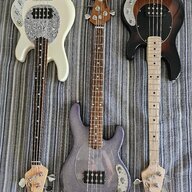
So tell us what you think of the pedalI love demoing new pedals. This was a fun one. Trondheim Audio Devices - SkarBassOne. Of course, my Magellan pre is always used to get the Genzler tone after the pedal!
View attachment 5381564
So tell us what you think of the pedal

Obviously the cab that showed the most reflection is best for metal! For non-technical types, I will attempt an explanation. You see, as the acoustic waves are outbound, the reflective UV interacts in a manner that results in a 3 db gain filtered for Metal notes only, thus creating metal notes that are more acoustically enhanced than the non-reflective coating. For more info read my forthcoming article, “Reflective UV Coatings Acoustic Interaction for Metal Music Enhancement”."What's the best UV responsive powdercoat for Metal"?