I posted this as a reply in my own thread which didn’t start off with anything to do with this unit, but I figured this might help someone as I had a hard time finding much in the way of reviews on this preamp.
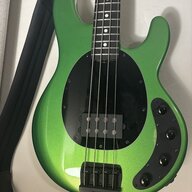
I pulled the trigger on the Genzler Magellan Preamp pedal. It’s pretty amazing. Very transparent while offering a very diverse set of EQ controls. Definitely tames some of the extremes of the Stingray Special. The contour controls on this preamp are game changing for me. It’s like having 2 amps. With contour A, I’m getting a very GK vibe that can get really mid-scooped at extreme settings, but at modest settings it’s just a slight enough scoop and slight boost to the bass and treble. Very modern and ultra-pristine, but not at all harsh. It’s still taming the zing a bit and isn’t boomy or wooly. Contour B gets me a more Mark Bass (but not quite as sterile and dull) mixed with Ampeg tone (but not super low end thick and wooly). Again, not boomy or wooly, takes most of the zing away, but it’s still slightly there… it just takes more of a back seat. A bump in the mids and low mids while the low end stays defined and tight, but breathes. The mid frequency sweep is really useful too, going all the way up to 2.5khz if I remember correctly from 4 hours ago. The entire sweep is useable depending on the tone you’re going for. The high pass filter is nice and I had really never considered one before. It is a very, very subtle effect. I had trouble hearing much of a difference in the few YouTube videos I found on this preamp, but in person it really cleans up the extreme low end. It seems to retain the good usable parts of the bass frequencies while getting rid of the super low, “vibrating” rumble that seems to want to make my speaker flub. Even on its highest setting (120 hz I believe), there is still plenty of solid low end that’s kept tight and responsive… musical I dare say.
The only downside I’ve found so far is that the XLR out into the Mic level XLR input on my QSC CP8 is very noisy. It has a constant hiss that reminds me of my first PA’s noise floor issues (Alto 12” powered speaker), and I get a slight warbling when a note is just finishing decay. Now, running 1/4” from the preamp into the line level input of the QSC is dead silent and works perfectly. However, I could chalk this up to my inexperience with XLR and mic level overall. In order to get usable volume that matches the 1/4” line level input, I’m turning the +db boost for the mic level input with the XLR up to max. This might be what’s introducing the noise. I don’t know for sure and this might simply be a case of the user not understanding how these interactions occur and proper use scenario.
Another thing to note: this preamp is ultra clean. I maxed the input gain and turned my stingray all the way up (both the volume and all three on-board EQ knobs) and this this is still crystal clear. Zero clipping from what I can tell. Maybe slight clipping with the very lowest frequencies, but barely noticeable.
Like I have heard this described in The Bass Negus YouTube review, it doesn’t color your sound, but it just does something… indescribable. It seems to take the best parts of your bass’s sound and enhance them. It also seems to take the parts that are usually difficult to get rid of and most people (me especially) learn to live with and work around, and get rid of them. It really is a great preamp pedal and is making me focus more on playing, less on fiddling and adjusting. It sounds cliche, but there really isn’t a bad sounding setting to be found in this unit.
I pulled the trigger on the Genzler Magellan Preamp pedal. It’s pretty amazing. Very transparent while offering a very diverse set of EQ controls. Definitely tames some of the extremes of the Stingray Special. The contour controls on this preamp are game changing for me. It’s like having 2 amps. With contour A, I’m getting a very GK vibe that can get really mid-scooped at extreme settings, but at modest settings it’s just a slight enough scoop and slight boost to the bass and treble. Very modern and ultra-pristine, but not at all harsh. It’s still taming the zing a bit and isn’t boomy or wooly. Contour B gets me a more Mark Bass (but not quite as sterile and dull) mixed with Ampeg tone (but not super low end thick and wooly). Again, not boomy or wooly, takes most of the zing away, but it’s still slightly there… it just takes more of a back seat. A bump in the mids and low mids while the low end stays defined and tight, but breathes. The mid frequency sweep is really useful too, going all the way up to 2.5khz if I remember correctly from 4 hours ago. The entire sweep is useable depending on the tone you’re going for. The high pass filter is nice and I had really never considered one before. It is a very, very subtle effect. I had trouble hearing much of a difference in the few YouTube videos I found on this preamp, but in person it really cleans up the extreme low end. It seems to retain the good usable parts of the bass frequencies while getting rid of the super low, “vibrating” rumble that seems to want to make my speaker flub. Even on its highest setting (120 hz I believe), there is still plenty of solid low end that’s kept tight and responsive… musical I dare say.
The only downside I’ve found so far is that the XLR out into the Mic level XLR input on my QSC CP8 is very noisy. It has a constant hiss that reminds me of my first PA’s noise floor issues (Alto 12” powered speaker), and I get a slight warbling when a note is just finishing decay. Now, running 1/4” from the preamp into the line level input of the QSC is dead silent and works perfectly. However, I could chalk this up to my inexperience with XLR and mic level overall. In order to get usable volume that matches the 1/4” line level input, I’m turning the +db boost for the mic level input with the XLR up to max. This might be what’s introducing the noise. I don’t know for sure and this might simply be a case of the user not understanding how these interactions occur and proper use scenario.
Another thing to note: this preamp is ultra clean. I maxed the input gain and turned my stingray all the way up (both the volume and all three on-board EQ knobs) and this this is still crystal clear. Zero clipping from what I can tell. Maybe slight clipping with the very lowest frequencies, but barely noticeable.
Like I have heard this described in The Bass Negus YouTube review, it doesn’t color your sound, but it just does something… indescribable. It seems to take the best parts of your bass’s sound and enhance them. It also seems to take the parts that are usually difficult to get rid of and most people (me especially) learn to live with and work around, and get rid of them. It really is a great preamp pedal and is making me focus more on playing, less on fiddling and adjusting. It sounds cliche, but there really isn’t a bad sounding setting to be found in this unit.


 stating the XLR out on this thing is super quiet. Seems like I’m introducing the noise with the mic gain on the QSC. Like I said, using the 1/4” out and into the regular 1/4” in on the QSC, I get zero (and I mean ZERO) noise or hiss. Even the db boost from the EQ at their most extreme settings isn’t introducing any unwanted noise, which I’ve never experienced before with the few other preamps I’ve used. Needless to say, I’m extremely happy with this product. It’s doing everything I want and more, and solving tone problems I figured were just part of life playing bass. Really a well-thought-out, practical, extremely pleasant sounding preamp.