• TalkBass has been independent since 1998. Add your voice.
    Create a free account to reply to discussions, view embedded media, and browse with fewer display ads.
    Join freeLog in
    Want zero display ads or expanded classifieds tools? Compare plans.

Get off my LAWN! "Grumpy Old Farts"

Status
Not open for further replies.
I started talking online Skype lessons with a long time blues bass player/teacher from California. For the first couple of lessons, I used my HP laptop camera and microphone. I then picked up the Presonus Audiobox USB 96 interface along with an XLR microphone. I plugged the instrument cable directly from my bass into the Presonus along with the mic and my headphones. I adjusted the headphone output for zero latency and life was great. Come to find out, Skype only accepts one channel (LH) versus a 2 channel input. The teacher could only hear me speak. The bass channel did not go through. After staying up half the night to figure it out, I found that you can download Voicemeter (free software) to combine the outputs sent to Skype. Short story long, I ended up sending back the Presonus interface and XLR mic and decided to go the route of a USB mic that I can speak into and then also use the mic to pick up the bass coming out of the amp a foot away. I will connect my laptop to the amp aux in so I can bring in backing tracks and lesson songs if I need to play along with and I plug in my headphones also in my amp to hear the lesson, my bass, and the backing tracks. I call this the PAI (Polish Audio Interface)

If anyone has experience with Skype lessons that can provide some suggestions, I am all ears. Since the audio and video of Skype is not of high quality, it did not make sense to get the interface set up. FWIW, the Presonus was a great interface, but I am interested in lessons via Skype lessons versus home recording.

Also, any recommendations on USB mics that sound good with vocals but can get by micing the bass amp at low volumes?
 
I'm seeing similar but different difficulties in my bi-weekly smrtphn video uploads for Ari Cap's course. The bass overmodulates the device (no surprise). Several (many?) weeks after buying the PerSonus, I've got the computer going the way I want and am ready to record with the Webcam on my monitor.

But for Skype? Lost there, sorry. I'd think a platform like Zoom or Uberconference paired with a decent mike would do it. Can't help on decent mikes either :bag:
 
In a purely imaginary world I'd use my Senn HD 4.50 BTNCs as both mike and monitor with the video. It's an even bet if the mike in the Senns will overmodulate with the bass.

As it stands I can use the Senns on a corded headphone out from the ProSonus, and drive the ProSonus directly from either the VT Bass Deluxe or, possibly, a Line Out from the PJB. The video capture pairs with the audio input. How I would work a mike into this requires a complete rethink. The second input on the ProSonus would take a mike. Ordinary headphones to monitor, and a mic of choice ought to do it.

Don't make no difference to me cause I ain't singing :woot:
 
Then you would like Chris Mara’s place in Nashville. They record and also do vinyl. A good place to buy a multitrack recorder is Mara Machines.

Welcome to 1979 – A Recording Studio Like No Other

Home - Mara Machines


That is nice to see, there was a time when it seemed like analog recording was going to end up being a lost art. I used to do a lot of recording during the 70's and was always fascinated by the process. I watched an engineer put flanging into one of our songs by touching one tape machine with his arm to get it slightly behind the other one which created the slow swish sound, it was an art. On this video it took the engineer an hour and a half to get it right but as he said he hadn't done it in 20 years, he sped it up (I guess) The guy I saw do it did it fairly quickly, tried it a few times and boom, done.


Last edited:
That is nice to see, there was a time when it seemed like analog recording was going to end up being a lost art. I used to do a lot of recording during the 70's and was always fascinated by the process. I watched an engineer put flanging into one of our songs by touching one tape machine with his arm to get it slightly behind the other one which created the slow swish sound, it was an art. On this video it took the engineer an hour and a half to get it right but as he said he hadn't done it in 20 years, he sped it up (I guess) The guy I saw do it did it fairly quickly, tried it a few times and boom, done.


That’s a Studer machine. They used a Studer J37 at Abbey Road Studios when they invented Automatic Double Tracking for the Beatles. They didn’t have to sing the songs twice to layer.

Nice flagging effect made popular by the Small Faces, covered here. Eventide sells a plug-in that was used in this song. It’s fun to play with.


Last edited:
That’s a Studer machine. They used a Studer J37 at Abbey Road Studios when they invented Automatic Double Tracking for the Beatles.

Nice flagging effect made popular by the Small Faces, covered here.


Nice to see he did that little woo woo bass part with that Kay bass.

Here are some early tunes that were flanged:
  • "Mammy's Boogie" (1952) by Les Paul. Paul invents the technique in his garage studio using two disk recorders, one with a variable speed control.[25][26]
  • "The Big Hurt" (1959) by Toni Fisher – first hit song with a very discernible flanging effect.
Flanging - Wikipedia


Last edited:
That is nice to see, there was a time when it seemed like analog recording was going to end up being a lost art. I used to do a lot of recording during the 70's and was always fascinated by the process. I watched an engineer put flanging into one of our songs by touching one tape machine with his arm to get it slightly behind the other one which created the slow swish sound, it was an art. On this video it took the engineer an hour and a half to get it right but as he said he hadn't done it in 20 years, he sped it up (I guess) The guy I saw do it did it fairly quickly, tried it a few times and boom, done.


I learned something today, thank you! :) I didn't realize it was literally a manually achieved effect.
 
That’s a Studer machine. They used a Studer J37 at Abbey Road Studios when they invented Automatic Double Tracking for the Beatles. They didn’t have to sing the songs twice to layer.

Nice flagging effect made popular by the Small Faces, covered here. Eventide sells a plug-in that was used in this song. It’s fun to play with.


Been digging that song since my first listen. :D
 
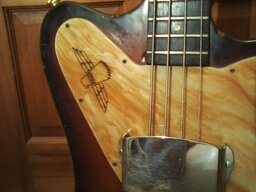
Speaking of recording

20200727_054822.jpg
 
Status
Not open for further replies.