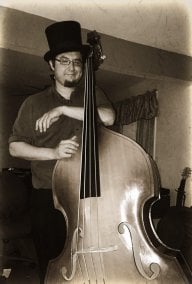
David,
You're already ahead of where I was in college. I was one of the worst people in my university, especially in the beginning. Imagine bombing at a concert and Stanley Cowell asking,"what the heck happened up there?" afterward. That was my first combo concert experience at Rutgers.
I'm doing just fine now because I stuck it out. That's really a lot of what you need to do, just commit to stay in it whenever some external garbage is telling you to quit.
You're going to have some ups and downs. If you're in a slump, don't beat yourself up over it. It happens. The best way I know to get out of a slump is to try to inspire myself. Change it up. That passion project you've been meaning to work on on? Go for it. Explore some music that is way out of your wheelhouse. Slumps are a great time to hit the reset button. Sometimes it's best to take some time off to go do something to refresh. Go hiking, fish, basketweave, enter a sandbox building competition, whatever you're into. You want to use some outside input to halt the circular thinking that gets you feeling stuck and discouraged. There's almost always a way to turn things around for yourself.
And definitely do not use auditions as a measuring stick for your worth as a musician. One of the hands down best bass players I've ever met subs with top tier orchestras who won't hire him permanently because they don't want to lose such a solid sub. Imagine being able to make it to finals consistently, but never win because of politics. The classical music world likes to act like it is an air tight meritocracy, but it certainly is not. Don't buy into it too much.
Make your own measuring stick. I take a lot of inspiration from the electronic music world. Lots of those people make their own definitions of success because there is no Bass Synthesizer Philharmonic section opening at a salary of $41,000 a year with benefits. There's this wonderful, almost childlike spirit in that community where people follow their inspiration more (excluding the uber commercial EDM DJ types who don't actually make music).
Rather than focusing on competition and winning auditions, explore the many. many ways you can make it work as a career and keep pushing yourself artistically.
Focus on process, not events. Process will lead to events. Working on music everyday, taking lessons, playing with different groups, and picking people's brains are all examples of process that lead to events like winning an audition or being called for a great gig.
Hang in there, keep fighting the good fight, and don't ever be shy about saying hello on here or elsewhere. Email anytime:
[email protected]



 I use it as fodder to motivate me to practice more, harder, or in different ways. After all, if THEY can get to that level, there is no reason that I cannot. We are all of the same species after all.