- Mar 13, 2008
- 18,904
- 142,307
- Disclosures
- Endorsing Artist Mike Lull T Bass pickups, The Bass Shop, Seattle WA.
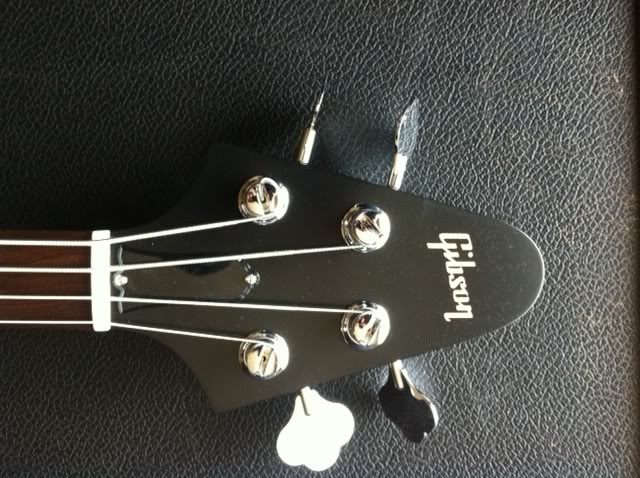
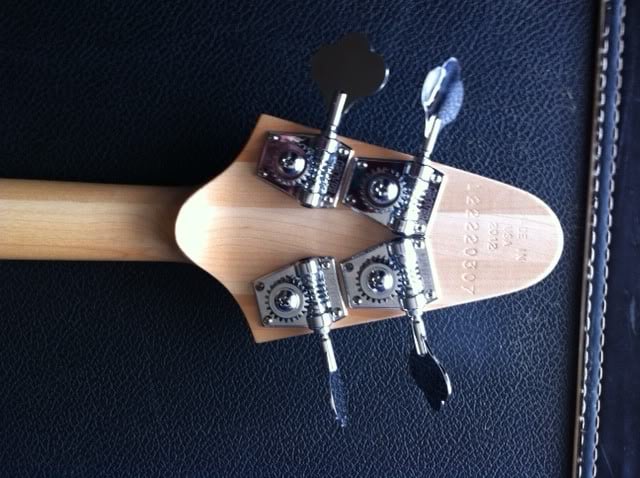
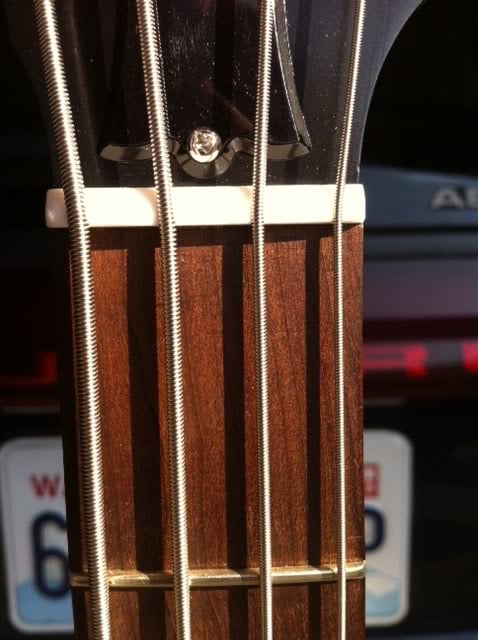
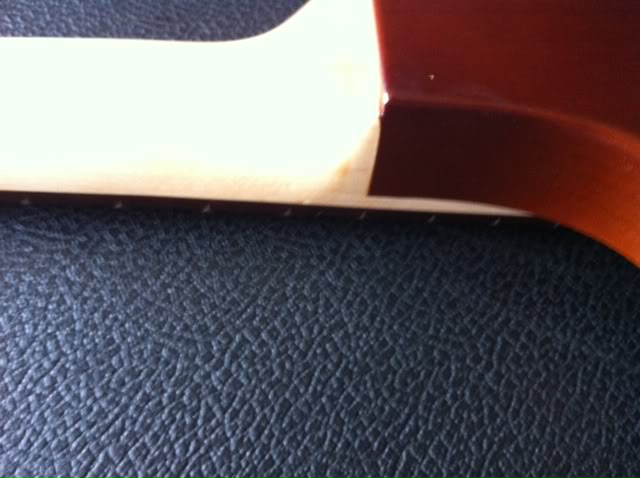
Gibson's latest release is an update of the '70s classic G-3 bass, like the original the body is maple, (grade A on my 'burst finish example) overall thin with nicely contoured edge, especially nice on the upper 'bout. The neck is also maple, with a baked maple fretboard, the frets are factory plek'ed, has a Corian nut, the headstock is a depature from the original issue, being more of the shape seen on a Flying V guitar. The neck and body are glued or "set" together, a construction method used on many of Gibson's guitars and basses over the years, this along with the maple typically helps a bass produce a brighter tone with focus, chrome Grover clover tuners are used, and have a nice easy movement and vintage look about them. There is a rather substantial volute at just past the nut on the backside of the neck, which at first glance did cuase me some concern - more on that later. The finish on my example was a very neatly applied satin Honey 'Burst, which nicely accentuates the body lines and is a pleasant variation on traditional colors without going too far, the neck is finished in a clear satin which played quite easily and had no "tack" as some gloss finishes can. The bridge is Gibson's Three Point, again finished in chrome, I know this design gets slagged a lot, I've never understood why - with a proper understanding of how it works, low action and perfect intonation can be had. I'm pretty fussy about set ups on my basses, I don't expect any factory bass, or used bass that I may buy the be set up to my preference. At one point or another, all of my basses go to Mike Lull for some tweaking and while my G-3's factory set up was certainly good and easily playable, a trip to Mike's shop would make it perfect. As I understand it, the G-3's new pickups were designed by Jim DeCola, once of the Fender custom shop, they are a large single coil type using Alnico V magnets. The middle pickup is reverse wound, reverse polarity which cancels hum normally associated with single coil pickups. A three position toggle switch allows you to use the middle and neck pickups in the up position, all three in the middle, and the bridge and middle in the down position.
I played the G-3 through my GK 700RBII with a 4x10SBX for the review, all the controls were at noon to start, as I played I found backing the bass off a bit to 10:30 and the lo-mid to 11:00 helped maintain clarity and punch. Working the switch while playing fingerstyle I found I enjoyed the mid position with all three pups on the most with the down position using the bridge and mid pups following closely. The up position yeilds a lot of bass response which was fine in a bedroom tone setting, but got lost when I used the bass at band rehearsal. Going thru the switch postion playing with a pick gave different results, the down position was much too thin to be useful, the mid postion was good with nice balance and a lot of grind and growl coming out - very pleasing tone. Using a pick and the switch in the up position was a bit of surprise, again there is more bass response but with a pick it's not so dominate as to be muddy or undefined, again with a lot of growl, great tone! Fellow LBO'r and TBer (PWV) Dave came for a visit and had his RipperII in tow, we sat down and compared the two basses, obviously the ergonomics are similar with the pickups being the big difference. Between the two I felt the G-3 to be the better bass, after a little time with it Dave had decided that he'd be selling his Nash P bass to fund a G-3!
I also gave the G-3 a tryout at band rehearsal as we worked thru a 50 minute set, I'm primarily a pick player and for the most used the bass with the switch in the mid position and occasionally in the up, the G-3 has a lot of very growly tone, the maple neck, body and set neck give it a bit snap and note decay is shorter, more like a Fender, very pleasing overall. Fingerstyle had me pretty much in the mid postion, tho I did try the down position too - In the band context that felt a little on the thin side tho. I really thought the substantial volute would somehow impede comfortable playing, honestly, it turned out to be a big non-issue!
As always there are things that attract or scare potential buyers, overall I felt this to be a very pleasing bass, the paintwork, wood finishing and tone all seem quite nice. I have one complaint tho, and that is that the fret ends could really use a better finishing at the factory, I really noticed as played up and down the neck that there was a bit sharpness there and that it likely was not fret sprout but something that should be addressed at the factory.
I'm sure most DIY guys or good luthier could take care of it quickly, but Gibson should look at this - Other than this, the overall QC was quite nice with no flaws and a very pleasing bass at a nice price, $999.00 shipped for a U.S made instrument makes this a definate winner.
There's a Subaru near so you know it's here

The new headstock shape, also used on RipperII
The volute in the back of the headstock
Body close up

A closeup of the nut, baked maple fretboard and plek'd frets.
Neck and body joint
The test rig

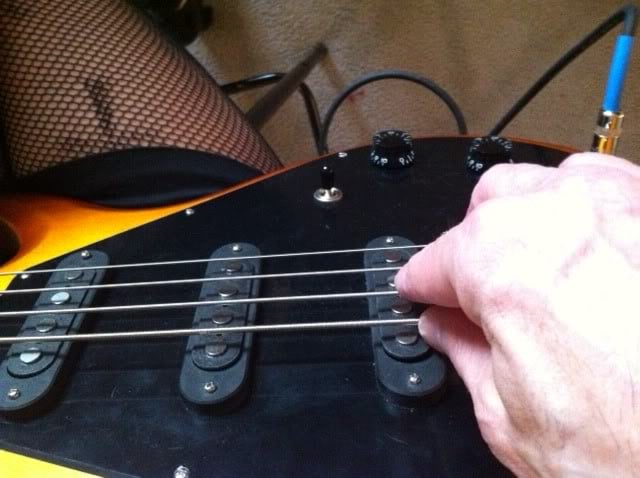
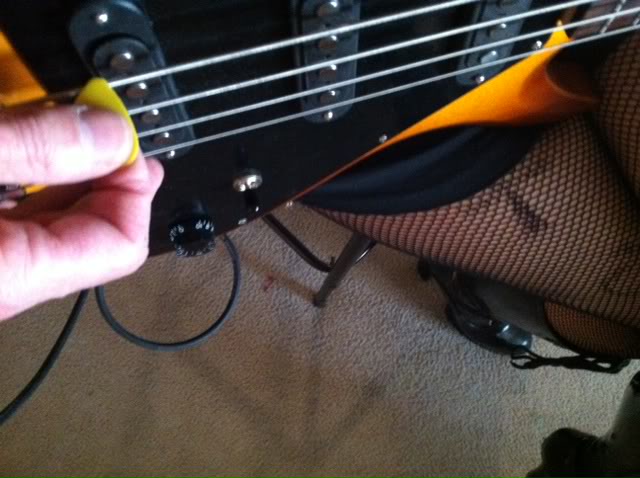
And playing the bass
I played the G-3 through my GK 700RBII with a 4x10SBX for the review, all the controls were at noon to start, as I played I found backing the bass off a bit to 10:30 and the lo-mid to 11:00 helped maintain clarity and punch. Working the switch while playing fingerstyle I found I enjoyed the mid position with all three pups on the most with the down position using the bridge and mid pups following closely. The up position yeilds a lot of bass response which was fine in a bedroom tone setting, but got lost when I used the bass at band rehearsal. Going thru the switch postion playing with a pick gave different results, the down position was much too thin to be useful, the mid postion was good with nice balance and a lot of grind and growl coming out - very pleasing tone. Using a pick and the switch in the up position was a bit of surprise, again there is more bass response but with a pick it's not so dominate as to be muddy or undefined, again with a lot of growl, great tone! Fellow LBO'r and TBer (PWV) Dave came for a visit and had his RipperII in tow, we sat down and compared the two basses, obviously the ergonomics are similar with the pickups being the big difference. Between the two I felt the G-3 to be the better bass, after a little time with it Dave had decided that he'd be selling his Nash P bass to fund a G-3!
I also gave the G-3 a tryout at band rehearsal as we worked thru a 50 minute set, I'm primarily a pick player and for the most used the bass with the switch in the mid position and occasionally in the up, the G-3 has a lot of very growly tone, the maple neck, body and set neck give it a bit snap and note decay is shorter, more like a Fender, very pleasing overall. Fingerstyle had me pretty much in the mid postion, tho I did try the down position too - In the band context that felt a little on the thin side tho. I really thought the substantial volute would somehow impede comfortable playing, honestly, it turned out to be a big non-issue!
As always there are things that attract or scare potential buyers, overall I felt this to be a very pleasing bass, the paintwork, wood finishing and tone all seem quite nice. I have one complaint tho, and that is that the fret ends could really use a better finishing at the factory, I really noticed as played up and down the neck that there was a bit sharpness there and that it likely was not fret sprout but something that should be addressed at the factory.
I'm sure most DIY guys or good luthier could take care of it quickly, but Gibson should look at this - Other than this, the overall QC was quite nice with no flaws and a very pleasing bass at a nice price, $999.00 shipped for a U.S made instrument makes this a definate winner.
There's a Subaru near so you know it's here
The new headstock shape, also used on RipperII
The volute in the back of the headstock
Body close up
A closeup of the nut, baked maple fretboard and plek'd frets.
Neck and body joint
The test rig
And playing the bass