Thanks for all the suggestions, the trouble isn't my sound thru the IEMs, but the FOH sound. It sounds like a bass plugged directly into the board. I spent years developing a great tone through my rig, now it's back to the beginning. I tried a Hartke Bass Attack (1), and the "shape" feature helps, but, I really, really miss the characters of a cranked GK

I would say you are in good company with the rest of us.
FOH systems, as good as they may be, are simply not optimized for the bass guitar.
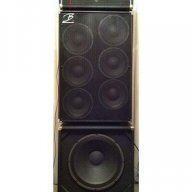
Before anyone starts criticizing me for not knowing what I’m saying; the gig I’m doing has QSC 153i mains sitting on JBL subs. That may not be the absolutely best FOH speaker system, but it’s none too shabby. Yet, I have not been able to get close to what my Bergantino cabinets can dish out. There are several aspects to this.
For one thing, higher end bass rigs went through the biamp thing, and that approach simply was not as good as a bass specific cab or pair of matching cabs. I mean, if biamp was better for bass tone, those with the money to afford it would be using it on the gig now. Yet, that never happened, and it’s not like we didn’t try it. I hated the tone I got out of every single biamp bass rig I ever played through; and that included some VERY high end versions.
So, with FOH, here we are back to playing through essentially biamp rigs again; especially if the bassist is ampless. I’m struggling to understand how this is suddenly a good thing. Sure, I get the overall mix concept etc etc. I buy into the concept, and that’s why I’m doing it. But, the bass tone in a practical club gig has suffered badly IME/O.
And if someone wants to take issue with this, then I would like to know why bassists everywhere aren’t running out and swapping their Fearless/Bergantino/Audiokinesis/Barefaced/SVT cabs for QSC 153i’s.
Sure, if you are gigging some huge arena somewhere and have array drivers etc etc, that’s a different deal. I’m talking about the practical aspects of using an ampless rig in the the club circuit.
On top of all this, it is essential to add a member to the band (another mouth to feed) who is sitting out in the club mixing the band so that the presentation is correct. But, what does “correct” mean? So that it sounds like the studio mix? So everyone in the band can be heard at all times? So that the mix sounds like what the mixing guy THINKS music should sound like, which may not be what’s on the record? I mean you’ve got a whole lot of sound engineering issues you have to work through as a band with a laundry list of variables and little objective reference to go by. The politics can get complicated. Etc etc. In general, it can get difficult.
In my gig, I’ve at least got the band recording what’s going going on out in the house with a Zoom recorder. That way, we get to hear that in our mix presentation, the rhythm guitars are driving the groove in Brick House. Well, gee, is that what we want? I don’t know, but at least we get to talk about it. Bottom line is the bass player isn’t controlling the bass in the mix anymore, and the tone coming out of decent quality mains isn’t close to what our rigs produce. But, I get and support the concept. I’m just not getting the improvement. Yet.