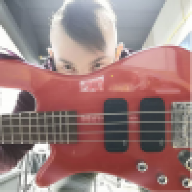
I knew a bit of guitar before going to bass (to accommodate buddy musicians), and had a four-string.
Then we did some songs that required a D, so I detuned, then got a HipShot D-tuner thingie, but ended up finding a deal on a fiver, and not being so used to playing a four-string, it was pretty natural for me, and man, so much easier playing things in the box that the B string afforded me.
Afaic, it takes more skill to play a four-string, having to know your neck better and move around more. I couldn’t imagine playing a four-string now, I’d just get lost.
I use that B string on most songs and play higher up the neck, and even songs I don’t need to, it allows me to vary what notes I play and add drama to a song, going deeper on certain parts and adding variety, especially since we’re just one guitar, bass, drums, and whatever toys the front guy incorporates.
Also, the guitar player, good at filling in the sonic range of a song to keep it sounding full, often gets into my space, so it’s nice to be able to stay lower instead of transposing up.
And also, I can learn a song using no open strings, so if/when the key is dropped to accommodate a singer, I can just slide my hand down a fret or two and I’m there.
Just sooo many advantages to having the B there.
As far a my plucking hand, I find that I rest my thumb on the B string and just float off of it when I use it. I didn’t plan it that way, but actually noticed one day that that’s how I was doing it.
My thoughts on a four-string player playing a fiver, my mind tells me you should just use the B as a thumb rest, then ignore the fretboard, just use the edge markers (all I see anyways), and keep your mind on the top four strings (E-G) instead of the bottom, and the B should be kinda invisible. Maybe easier said than done, but that’s how I would imagine a good way to do it when first making the switch.


 .
.




 to
to  because I didn't understand why I couldn't play some of the notes. After a quick web search, I discovered about the fabled (or infamous) "Drop D" tuning people use to play those sort of songs..however, I had been advised against doing that because it would confuse me/mess up my finger patters/chords.