• TalkBass has been independent since 1998. Add your voice.
    Create a free account to reply to discussions, view embedded media, and browse with fewer display ads.
    Join freeLog in
    Want zero display ads or expanded classifieds tools? Compare plans.

Going into battle vs. distorted guitars

What pickup configuration would be your weapon of choice (see below)?

  • P

    Votes: 92 29.8%
  • J

    Votes: 36 11.7%
  • PJ

    Votes: 57 18.4%
  • H

    Votes: 35 11.3%
  • HH

    Votes: 61 19.7%
  • Other (e.g. PP, JH, PH, etc. etc.)

    Votes: 14 4.5%
  • The premise is flawed, you dope!

    Votes: 77 24.9%

  • Total voters
    309
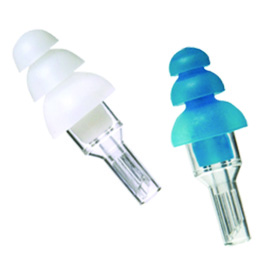
Whatever you're doing, get some of these to protect your hearing

Figure-5A.jpg
 
If you're bringing your J, you can try favoring the bridge pickup just a tad and then do like a few others have suggested: Boost 80-150, cut 300-400, boost the honk at 800-1.2k. If you have to push the honk past your comfort zone, try rolling off the treble a bit since that region is going to be masked by the distorted guitars anyway. Ask your guitarist pals to roll off below 150 if you can get away with it!
 
If it were me I'd put rounds on the P and call it a day. If it's gonna be the Jazz, try favoring one pickup or the other. You can have deep growly tone favoring neck or burpy growly favoring bridge. But I'd still pick the P even with the 'vintage' pickup. 'Vintage' doesn't automatically mean polite or mellow.

Stellertone Tele plate would give the OP a bunch of voicing options in a passive bass.

You want to feed it with the hottest pickups you can find so it has the most to work with thru the cap stack and blend. Mellower pickups don't produce as much variety.

It comes with passive/series options to shape around which can be overlooked when defining a sound with a J. There's no good or bad, there's just tonal options to boost or cut.
 
My last band had two loud guitarists with serious amps, and sometimes the distortion was pretty thick. It wasn't metal, but some tracks were serious hard rock. At first, the rhythm guitarist often used the neck pickup on his Les Paul, which produced too much low end, and made for a muddled mix. Once that was sorted out, I never had trouble with any of my basses: a couple of J-basses, a Precision, G&L SB-2, and G&L M-2500. They were all great.

But for being heard clearly in the mix when the guitars were at full boil, the M-2500 was the best. Nothing beats G&L MFD humbuckers (though the MFD split-coil in the SB-2 is darned close). The L-2x00 might be even better. Note what Ed Friedland says here at 9:49:

 
  • Like
Reactions: klokker
I guess the question I meant to ask is more like: what would you bring to rehearsal? What do you like the sound of, combined with distorted guitars?

OK, I'll play for GAS. G&L L-2000, or L-2500. Hottest pickups around come with it. Neck pickup, active mode, SS strings, plenty of wang and clang in your tone, and mid heavy like everyone else has said. I use the standard VT Deluxe for extra grind and clang and it works great.

I've played a single 15" 250 watt combo with a couple of guitars and it was enough but I had to thrash it pretty good. A little bigger amp and cab wouldn't hurt a 15" combo is pretty much the minimum for your situation IMO.

It doesn't always have to a bulldozer like that though if you can work with your bandmates.
 
  • Like
Reactions: DoctorZee
I use an active, 3-band eq Ibanez Musician and an HPF to dial in what I need to work with 2 guit players.

Theses guitar players use 1x12 combos so they're not putting out tons of bass but still they are way loud(ear plug zone).

Since you have a passive J, I suggest setting your amp flat and picking up a HPF along with a 10 band eq to dial in what you need.

Another thing I do is put foam under the strings at the Bridge so the notes don't ring out as much and overlap each other.

Try to get the guitarists to pull out of your sonic range. EQ yourself accordingly.
Yeah, get them each a HPF and set it to around 200_250hz.
 
Maybe pickup configuration is the least important thing! I saw people playing Rush on a precision, Iron Maiden on a jazz and they got good tones. I guess if they did that on a original sig bass they would have to work hard on technique.

I rolled over this thread quickly and maybe I missed a point and repeat this advise but try to play with a pick, by far is the best cost/benefit way to change tone and works GREAT on rock/metal.
 
My instinct is humbucker if you're going to plug straight into any given amplifier. One is enough. But you can make any setup work. Buckers, to my ear, also have a special relationship to small amounts of overdrive, or just crunchy amp gain, that helps the cause.
 
  • Like
Reactions: DoctorZee
Over the years I've mostly played with groups doing lighter rock, pop, acoustic, piano, etc. For the first time I'm now playing with a group with two distorted guitars and, whoo boy, my usual bag of tricks isn't cutting it yet. I still have some tinkering to do with my amp and EQ, so I haven't given up... but I am indulging some mental GAS exercises in case I need a Plan B ;)

What pickup configuration would be your weapon of choice, going into battle against two distorted guitars in modern/alt rock?
Straight P. Js tend to get lost. You're hoghs blend with them, and the mids aren't strong enough. A split in the sweet spot will stand it's ground.
 
The premise is flawed, but it sounds like you already know that. It's not a battle. Remember why you're there: the audience. Except for musicians in the audience, they're not usually there to listen to one instrument (and if they are it's probably not the bass). Step back from your role and think about what you want the band to sound like. What kind of bass sound is part of that band sound? The first clue you get is the kind of songs your band plays. What do the players in those bands play? Where do they fit in the mix? There are some bands where the bass isn't intended to stand out and doesn't. It adds subtly and supports what the others are doing. There's nothing wrong with combining with one or more other instruments to create a whole that's greater than the sum of its parts (for example, string bass + Fender bass + tic tac bass, but the same principle can apply with a bass and one or more guitars). In that context the last thing you want is to make your instrument's voice cut through the mix. The fulfillment comes from being a good ensemble player. For other bands, the bass plays a more upfront rhythmic or melodic role. Figure out what those players are doing and learn to cop that. For what it's worth, I like STP and Foo Fighters, but when I listen to either one I don't think first about the bass. I'd be shooting more for a supporting, propelling role than a cutting through approach.

If making your tone heard is an important factor, don't compete. Figure out where the guitars are centered in the frequency spectrum and be somewhere else. If you're trying to compete with the guitars where they live, the whole thing turns into a bigger mess, the audience's ears bleed, and no one gets heard (especially the vocals, which is a bummer for the audience). For instance, if the guitars are heavy from 400-800 hz, maybe you want a little low-mid scoop so your sound comes deep with a little tang at 1-2k. If the guitars are scooped and booming in the sub-lows, focus your sound where they scoop. Don't get drastic with the knobs. Make slight adjustments and try subtracting before you try adding (depends on how your EQ is configured of course). And you're thinking in the right direction with instrument and pickup selection before resorting to EQ: if the best place for you is in the mids, play a p-bass and ride the tone control to see where it fits best. If everyone else is in the mids, a j-bass configuration can put you over and under them in the mix.

The attack and decay of your tone is also really important. The reason many of us use compressors is that the bass is capable of putting out a great deal of attack - typically more than a guitar. You can take advantage of this by, for instance, using flats and a mute (which it sounds like you are already ready for). As counter intuitive as this may sound, getting rid of the sustain accentuates the front of the note in a way that sounds different from the guitars and will stand out not through EQ but through the shape of the notes. It may be the same gear setup as for the light pop gig, but using a different approach with your mind and hands. Playing with a relatively stiff pick can do something similar with either flats or rounds.

if you're playing fingerstyle, make sure you're not just smashing the strings into the frets in order to cut through, because this tends to backfire. Using good conventional technique by plucking through the string and coming to rest on the next string gives your notes a thick attack that's bolstered by the near-simultaneous dead note of your finger coming to rest on the next string. This technique is well-illustrated in Chuck Rainey's first method book. Alternately, you might develop a technique that actually relies on the impact of the string into the frets, punk rock style. Whatever the approach, make it deliberate. Think about the shape of your notes - how they start, where the emphasis is, and where they end, and how that shape melds or contrasts with the other instruments.

Whatever your technique, the setup and action of your bass matters too. If your neck is too flat and your strings too low it's hard to get a punchy sound. Thoughtful EQ can help but can't fix tone that isn't there to start with.

Best of luck here. These situations can be tough to figure out, but some careful listening and thoughtful planning can make things better for the band as a whole and for your personal satisfaction.