The premise is flawed, but it sounds like you already know that. It's not a battle. Remember why you're there: the audience. Except for musicians in the audience, they're not usually there to listen to one instrument (and if they are it's probably not the bass). Step back from your role and think about what you want the band to sound like. What kind of bass sound is part of that band sound? The first clue you get is the kind of songs your band plays. What do the players in those bands play? Where do they fit in the mix? There are some bands where the bass isn't intended to stand out and doesn't. It adds subtly and supports what the others are doing. There's nothing wrong with combining with one or more other instruments to create a whole that's greater than the sum of its parts (for example, string bass + Fender bass + tic tac bass, but the same principle can apply with a bass and one or more guitars). In that context the last thing you want is to make your instrument's voice cut through the mix. The fulfillment comes from being a good ensemble player. For other bands, the bass plays a more upfront rhythmic or melodic role. Figure out what those players are doing and learn to cop that. For what it's worth, I like STP and Foo Fighters, but when I listen to either one I don't think first about the bass. I'd be shooting more for a supporting, propelling role than a cutting through approach.
If making your tone heard is an important factor, don't compete. Figure out where the guitars are centered in the frequency spectrum and be somewhere else. If you're trying to compete with the guitars where they live, the whole thing turns into a bigger mess, the audience's ears bleed, and no one gets heard (especially the vocals, which is a bummer for the audience). For instance, if the guitars are heavy from 400-800 hz, maybe you want a little low-mid scoop so your sound comes deep with a little tang at 1-2k. If the guitars are scooped and booming in the sub-lows, focus your sound where they scoop. Don't get drastic with the knobs. Make slight adjustments and try subtracting before you try adding (depends on how your EQ is configured of course). And you're thinking in the right direction with instrument and pickup selection before resorting to EQ: if the best place for you is in the mids, play a p-bass and ride the tone control to see where it fits best. If everyone else is in the mids, a j-bass configuration can put you over and under them in the mix.
The attack and decay of your tone is also really important. The reason many of us use compressors is that the bass is capable of putting out a great deal of attack - typically more than a guitar. You can take advantage of this by, for instance, using flats and a mute (which it sounds like you are already ready for). As counter intuitive as this may sound, getting rid of the sustain accentuates the front of the note in a way that sounds different from the guitars and will stand out not through EQ but through the shape of the notes. It may be the same gear setup as for the light pop gig, but using a different approach with your mind and hands. Playing with a relatively stiff pick can do something similar with either flats or rounds.
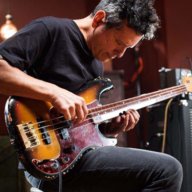
if you're playing fingerstyle, make sure you're not just smashing the strings into the frets in order to cut through, because this tends to backfire. Using good conventional technique by plucking through the string and coming to rest on the next string gives your notes a thick attack that's bolstered by the near-simultaneous dead note of your finger coming to rest on the next string. This technique is well-illustrated in Chuck Rainey's first method book. Alternately, you might develop a technique that actually relies on the impact of the string into the frets, punk rock style. Whatever the approach, make it deliberate. Think about the shape of your notes - how they start, where the emphasis is, and where they end, and how that shape melds or contrasts with the other instruments.
Whatever your technique, the setup and action of your bass matters too. If your neck is too flat and your strings too low it's hard to get a punchy sound. Thoughtful EQ can help but can't fix tone that isn't there to start with.
Best of luck here. These situations can be tough to figure out, but some careful listening and thoughtful planning can make things better for the band as a whole and for your personal satisfaction.