• TalkBass has been independent since 1998. Add your voice.
    Create a free account to reply to discussions, view embedded media, and browse with fewer display ads.
    Join freeLog in
    Want zero display ads or expanded classifieds tools? Compare plans.

Good advice from a brilliant player

I have been away from TB for a while due to lack of motivation due to the pandemic, and the shutdown of live music.
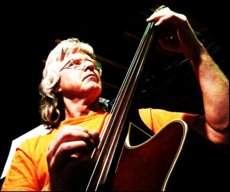
This morning I was talking to one of my favorite bass player friends- Terry Wilkins (Rough Trade, Big Sugar, Dr. John, Levon Helm etc, etc) and he said something I thought was worth sharing.
"The bass is truly such a weird instrument. The longer I play, the less I want to be a great bass player. Good bass players beat great bass players in the trenches. I was never much into chops from both an aesthetic or physical point of view and I always liked the 'creative song player' approach. It was with Rough Trade that I totally formalized my relationship with the vocal and the bass. Though they are separated by a lot of other things it is the first line I draw in the song (and not the kick). Like I am a weighty mobile attached by a string to the melody and hanging below it. The position and weight of the bass note would make it always feel like it is being prodded by the melody. I am pretty much always looking for the fattest simplest and most creative approach. I am starting to get the hang of it."
Food for thought from a veteran of the trenches.

RE: bass drum kick

The drummer also needs to be in sync with the melody as well or the project is going to sound weird. Hal Blaine always wanted to listen to the vocals to formulate his parts.

Thanks for sharing your conversation with your buddy. Great advice.
 
I think this is why I like Joe Osborn so much.

Another popular session player from the singer/songwriter era 1970's to the present who is too much of a great player makes him almost unlistenable. I won't name him. But it's not even music, at least to my ears.

This is also what makes outlaw country so great. There is more feel and musicality in one song played by those guys so very simply, than in a thousand by the super pro.
 
Last edited:
The OP is wrong on one critical point: What he’s describing as a “good” bass player IS the definition of a great bass player.

Bass (aside from a literal handful of counter examples) is a support instrument. Our job is to make the band and/or singer sound good. If you’re hung up on showing off your chops and/or attracting attention to yourself, you’re in the wrong place.
 
I have been away from TB for a while due to lack of motivation due to the pandemic, and the shutdown of live music.
This morning I was talking to one of my favorite bass player friends- Terry Wilkins (Rough Trade, Big Sugar, Dr. John, Levon Helm etc, etc) and he said something I thought was worth sharing.
"The bass is truly such a weird instrument. The longer I play, the less I want to be a great bass player. Good bass players beat great bass players in the trenches. I was never much into chops from both an aesthetic or physical point of view and I always liked the 'creative song player' approach. It was with Rough Trade that I totally formalized my relationship with the vocal and the bass. Though they are separated by a lot of other things it is the first line I draw in the song (and not the kick). Like I am a weighty mobile attached by a string to the melody and hanging below it. The position and weight of the bass note would make it always feel like it is being prodded by the melody. I am pretty much always looking for the fattest simplest and most creative approach. I am starting to get the hang of it."
Food for thought from a veteran of the trenches.

Love this! Excellent lesson for all of us.
 
Good stuff.

Yeah. But....

Great players can play good when needed. There are a slew of stellar players out there, playing what the song needs on a daily basis.

Can good players play great when needed?

As someone who has played a handful of different instruments professionally, and only ever managed to be ‘good’ and never reached ‘great’ on any of them, I can say that a) he’s correct, and b) there were times when I lost the gig specifically because I lacked sufficient chops to execute difficult material.
 
Apples and oranges, composers create a song from the ground up. A sideman or woman has to fit a part into an existing piece of music.
So where does a Paul McCartney or a Sting fit in? I’m not sure I buy your argument, with all due respect. ...too many shades of grey to say apples or oranges for me. My point is that it’s an ages-old endeavor.
 
Last edited:
I'm not a fan of all or nothing statements. Sometimes I'm focused like a laser on the kick. Sometimes it's the snare, or the hi hat. Or the guitar player. Or the singer/melody. Whatever seems best for the music at the moment.

As to chops, I'm not a monster, but I'm not bad either. I do work on them because the more tools in the toolbox, the more options I have to play what works for the situation. I also just really like playing bass and want to be as good as I can be. It's fun and interesting. I've also noticed that the better I get at playing 'fast', the better I am playing 'slow'.
 
The original statement is thoughtful and qualified. I see no problem with it. It seems some of the comments are suggesting that it is more absolute than it is.

But it is also true that there are a great many different kinds of music; and bass plays different roles in different settings. Music is a social relationship with other musicians and with an audience when there is one. And a committed audience of your peers, or 2 or 20 or 200 is as artistically valid as 2 million.
 
  • Like
Reactions: stratovani and TomB
Yeah. But....

Great players can play good when needed. There are a slew of stellar players out there, playing what the song needs on a daily basis.

Can good players play great when needed?

As someone who has played a handful of different instruments professionally, and only ever managed to be ‘good’ and never reached ‘great’ on any of them, I can say that a) he’s correct, and b) there were times when I lost the gig specifically because I lacked sufficient chops to execute difficult material.

I feel like I am in a strange position of being good enough to accomplish a lot of what I want to do as a bassist, while remaining fairly limited in the grand scheme of things. The people I collaborate with are the ones who help elevate my “good” material into something that transcends my own abilities.

Outside of my comfortable niche, I would be considered a hack and laughed out of most auditions. But I’m still trying to improve every day.
 
  • Like
Reactions: LBS-bass
I have been away from TB for a while due to lack of motivation due to the pandemic, and the shutdown of live music.
This morning I was talking to one of my favorite bass player friends- Terry Wilkins (Rough Trade, Big Sugar, Dr. John, Levon Helm etc, etc) and he said something I thought was worth sharing.
"The bass is truly such a weird instrument. The longer I play, the less I want to be a great bass player. Good bass players beat great bass players in the trenches. I was never much into chops from both an aesthetic or physical point of view and I always liked the 'creative song player' approach. It was with Rough Trade that I totally formalized my relationship with the vocal and the bass. Though they are separated by a lot of other things it is the first line I draw in the song (and not the kick). Like I am a weighty mobile attached by a string to the melody and hanging below it. The position and weight of the bass note would make it always feel like it is being prodded by the melody. I am pretty much always looking for the fattest simplest and most creative approach. I am starting to get the hang of it."
Food for thought from a veteran of the trenches.
Well...

I have to say, it sounds like he's rationalizing his choices. He wants to focus on other things, and play a support role, and good for him. But it just isn't the case that the simplest bass line is the best bass line.

I have no idea what "in the trenches" means, it sounds like, well... a bit of macho nonsense. Does he mean that a bass player who sticks to the root and shuts up gets more calls for work? Is a "great player" incapable of playing a solid bass line, when the music calls for it? Hasn't the pandemic fill the "trenches" with mud for another year or so anyway?

Given a choice between being a "good" bass player who works consistently on boring projects, and a "great" bass player who works on challenging projects, I'd take the latter. YMMV.
 
  • Like
Reactions: smeet
So where does a Paul McCartney or a Sting fit in? I’m not sure I buy your argument, with all due respect. ...too many shades of grey to say apples or oranges for me. My point is that it’s an ages-old endeavor.


McCartney used to add his bass lines last, he would stay overnight sometimes with Geoff Emerick and work on his lines, especially during the Sgt Pepper period so yeah, you're right.
 
My favorite part of the quote is where he says a good bassist will beat a great one " in the trenches".
Wisdom beats intelligence..... I'll second that :thumbsup:


To me part of being a "great" bassist (Not saying I'm a great bassist by any means) is knowing when to add bling and when to support the song, 99% of the time supporting the song with maybe a little tiny added bling is best for me.
 
  • Like
Reactions: Pdaddy1978
McCartney used to add his bass lines last, he would stay overnight sometimes with Geoff Emerick and work on his lines, especially during the Sgt Pepper period so yeah, you're right.
Whether you’re writing the line or just a hired gun playing what’s written, you still need to put the right notes in the right place. It’s a lifelong quest :). I appreciate all the insights this thread has provided.
 
  • Like
Reactions: bobyoung53
Well...

I have to say, it sounds like he's rationalizing his choices. He wants to focus on other things, and play a support role, and good for him. But it just isn't the case that the simplest bass line is the best bass line.

I have no idea what "in the trenches" means, it sounds like, well... a bit of macho nonsense. Does he mean that a bass player who sticks to the root and shuts up gets more calls for work? Is a "great player" incapable of playing a solid bass line, when the music calls for it? Hasn't the pandemic fill the "trenches" with mud for another year or so anyway?

Given a choice between being a "good" bass player who works consistently on boring projects, and a "great" bass player who works on challenging projects, I'd take the latter. YMMV.
I felt the trenches are playing in various cover band in bars, do session, be hired gun for cover band in bars. In other words ... pay your dues... which is also a stupid cliché nonsense spew by some people.
 

Latest posts