Seller has to agree to accept the return. Which I’ve received zero response regarding.
A general diagnosis, if it helps:
From the picture, the neck has developed a significant twist and a mild forward bow.
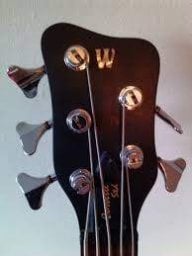
The reason it twisted and bowed is because the neck was poorly built. Look at the orientation of the grain/rings on the end of the headstock, near the camera. One of the principles of building strong, stable bass necks is to align the grain and rings down the length of the neck, approximately symmetrical and facing upward. On this neck, Warwick put it together wrong. The left side and right side don't match, and the right side is facing outward and downward. As the wood dries out, the neck bends and moves unevenly, and twists. Sorry, Warwick fans, but that's the truth. Warwick does a lot of good engineering and craftsmanship on their basses, but they missed it here. Several Warwick necks that I've rebuilt were the same way.
Anyway, some twist in a neck isn't really much of a problem, as long as the overall relief is in a workable range. The twist just means that the relief will be a little higher on one side than the other. If the relief is about right, the twist doesn't really affect how the bass plays.
The big question is: Where is the truss rod right now? With the strings off, in the picture, there's some forward bow and too much relief. If you tighten the truss rod, with the strings off, will the neck pull down to flat? Not taking out the twist, but just flattening out the forward bow. Without overloading or snapping the truss rod. Will it do that?
If it will do that okay, then you don't need to repair the twist. If you can get the relief down in the right range, and the fingerboard surface is reasonably true, then it should play just fine. Twist, alone, is mostly a cosmetic thing, not a functional problem. If everything else is okay, leave the bass alone and enjoy it.